Leopard wrasse
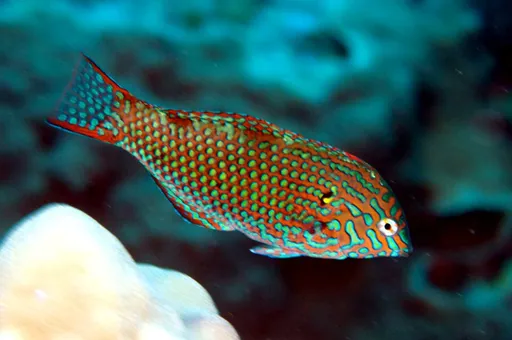
Macropharyngodon meleagris
Also known as Guinea Fowl Wrasse, Blackspotted Wrasse, Meleagris Leopard Wrasse
SaltwaterFish
Care at a glance
- Temperature
- 72–79°F
- 22–26°C
- pH
- 8.1–8.4
- Adult size
- 5.9 in
- 15 cm
- Minimum tank
- 90 gal
- 340 L
- Temperament
- Peaceful
- Social behavior
- Social
- Swim level
- Bottom
- Difficulty
- Difficult
- Breeding
- No record
- Rarity
- Common
- Reef safe
- Reef safe
- Family
- Labridae
- Origin
- Indo-Pacific reefs, from the Cocos-Keeling Islands to the western Pacific and the islands of Oceania
Overview
Peaceful and shy, easily pushed away from food by bolder tankmates, so it does best in a calm community and, where the tank allows it, in a group of three or more introduced together. It is fully reef safe and never touches corals or clams. The catch is diet: this wrasse feeds almost entirely on live copepods and other tiny invertebrates picked out of sand and rock, and a newly imported fish dropped into an immature tank will often starve within weeks even with regular feedings, which is why it is rated for experienced keepers only.
In the wild
Found across the Indo-Pacific from the Cocos-Keeling Islands through the western Pacific to the islands of Oceania, on sand and rubble flats next to reefs at roughly 0–30 m, occasionally deeper. It needs a mature, well established aquarium of at least 340 litres (90 gallons) with a fine sand bed at least 5 cm deep, since it dives into the sand every night to sleep and whenever it feels threatened. Only add this fish to a tank old enough to be carrying a healthy natural population of copepods and other tiny invertebrates, and keep the lid tight and gap-free, since it can and will jump.
Good to know
Macropharyngodon meleagris is a protogynous hermaphrodite, and the dominant female in a group will change into a male if needed. The sexes look strikingly different: females are white with irregular black or brown spots, echoing the guinea fowl feather pattern that gives the fish its other common name, while males turn an orange-red mottled with green. Adults max out around 15 cm.
Did you know
Because it depends so heavily on live pods and other natural foods, a leopard wrasse is really a referendum on how established the tank already is: the same fish that wastes away in a new setup can thrive for years in an aquarium with a mature sand bed and live rock doing the feeding for it.
Weekly picks
Tank mates
Leopard wrasse is a peaceful, social species that keeps to the bottom. These picks share a community profile with it, are safe together in both directions, and overlap on water type, temperature and pH.
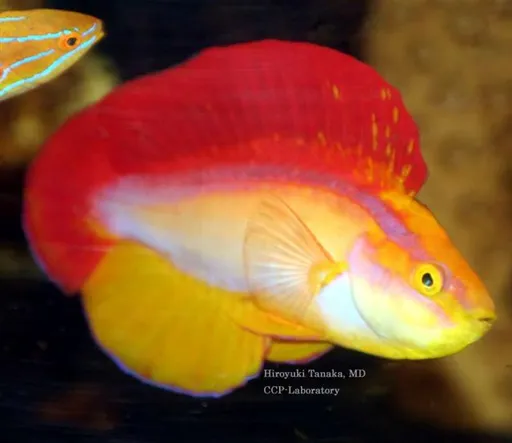
Flame fairy wrasse
Cirrhilabrus jordani
Saltwater3.9 in (10 cm) · 90 gal (340 L)72–79°F (22–26°C)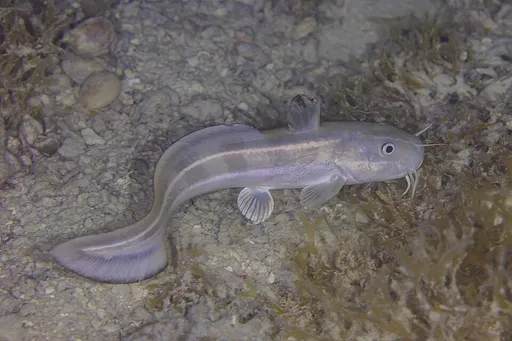
Striped eel catfish
Plotosus lineatus
Saltwater12.6 in (32 cm) · 106 gal (400 L)75–82°F (24–28°C)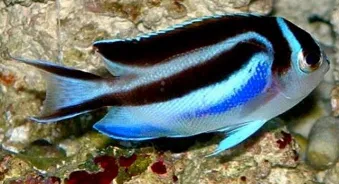
Bellus angelfish
Genicanthus bellus
Saltwater7.1 in (18 cm) · 85 gal (320 L)72–79°F (22–26°C)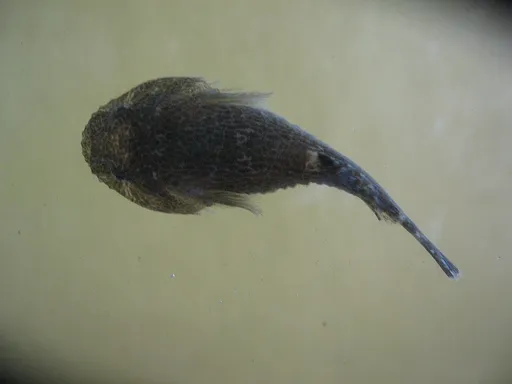
Skilletfish
Gobiesox strumosus
Saltwater3.1 in (8 cm) · 20 gal (76 L)72–79°F (22–26°C)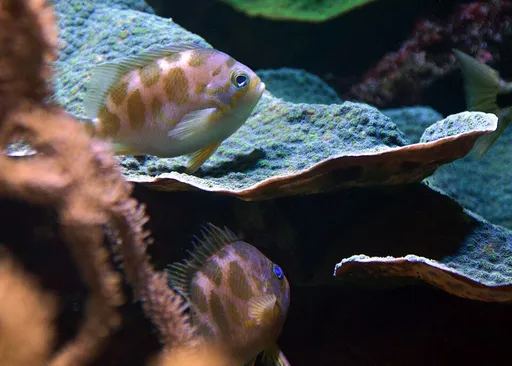
Blotched anthias
Odontanthias borbonius
Saltwater5.9 in (15 cm) · 100 gal (380 L)72–79°F (22–26°C)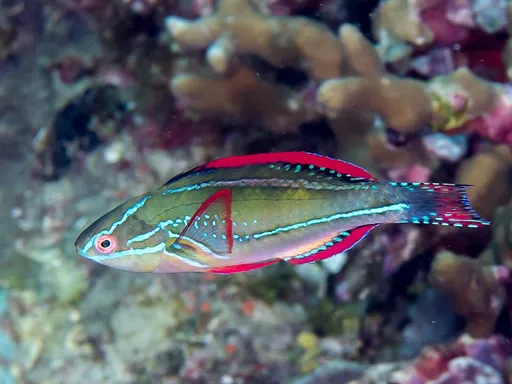
Exquisite fairy wrasse
Cirrhilabrus exquisitus
Saltwater4.7 in (12 cm) · 90 gal (340 L)72–79°F (22–26°C)
Common questions
What size tank does a Leopard wrasse need?
A Leopard wrasse needs at least 90 gal (340 L). It spends most of its time in the bottom.
What temperature and pH does a Leopard wrasse need?
A Leopard wrasse is comfortable at 72–79°F (22–26°C) with a pH of 8.1–8.4.
How big does a Leopard wrasse get?
An adult Leopard wrasse reaches about 5.9 in (15 cm).
Related species
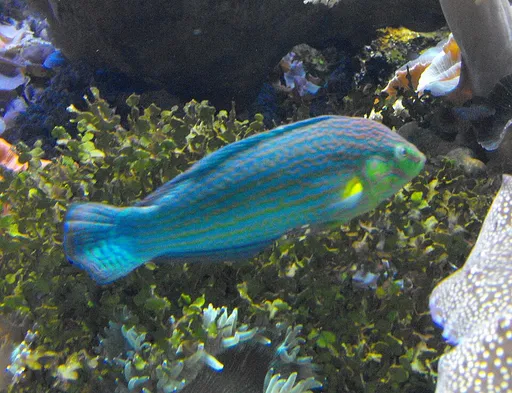
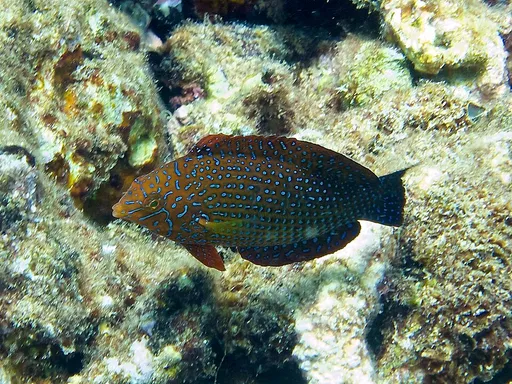 5.1 in (13 cm)55 gal (208 L)72–79°F (22–26°C)
Divided leopard wrasse
Macropharyngodon bipartitus
5.1 in (13 cm) · 55 gal (208 L)
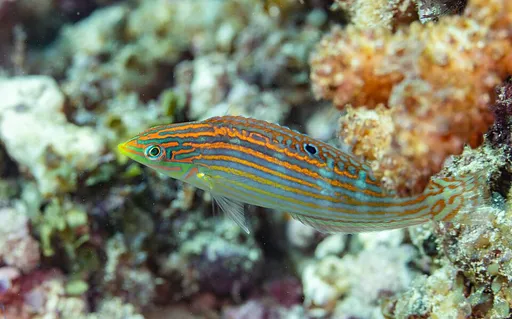
 5.5 in (14 cm)100 gal (380 L)72–79°F (22–26°C)
Melanurus wrasse
Halichoeres melanurus
5.5 in (14 cm) · 100 gal (380 L)
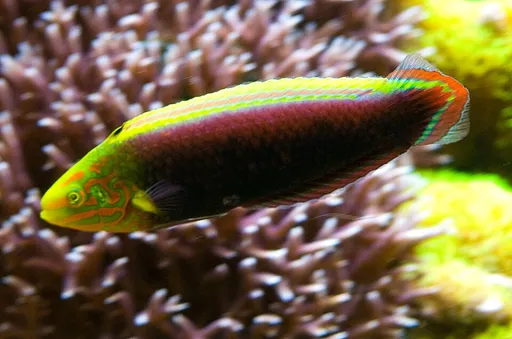
 5.1 in (13 cm)50 gal (190 L)73–81°F (23–27°C)
Adorned wrasse
Halichoeres cosmetus
5.1 in (13 cm) · 50 gal (190 L)
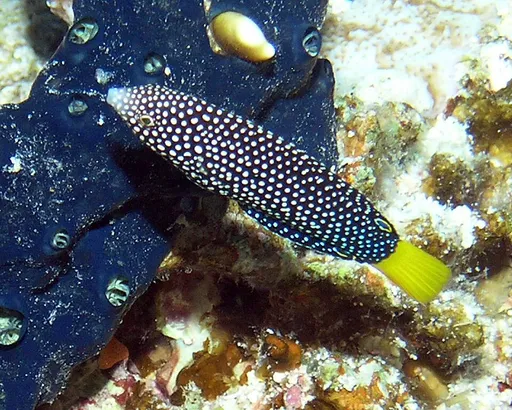
 4.5 in (11.5 cm)75 gal (284 L)72–79°F (22–26°C)
Radiant wrasse
Halichoeres iridis
4.5 in (11.5 cm) · 75 gal (284 L)
 8.7 in (22 cm)90 gal (340 L)73–81°F (23–27°C)
Yellowtail tamarin wrasse
Anampses meleagrides
8.7 in (22 cm) · 90 gal (340 L)
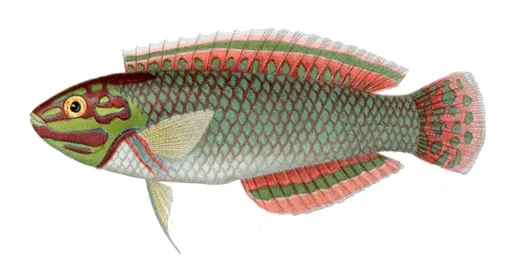 5.9 in (15 cm)70 gal (265 L)72–79°F (22–26°C)
Christmas wrasse
Halichoeres ornatissimus
5.9 in (15 cm) · 70 gal (265 L)