Yellowtail tamarin wrasse
Anampses meleagrides
Also known as Spotted Wrasse, Yellowtail Wrasse, Spotted Tamarin Wrasse
SaltwaterFish
Care at a glance
- Temperature
- 73–81°F
- 23–27°C
- pH
- 8.1–8.4
- Adult size
- 8.7 in
- 22 cm
- Minimum tank
- 90 gal
- 340 L
- Temperament
- Peaceful
- Social behavior
- Solitary
- Swim level
- Bottom
- Difficulty
- Difficult
- Breeding
- No record
- Rarity
- Common
- Reef safe
- Reef safe with caution
- Family
- Labridae
- Origin
- Widespread in the Indo-Pacific from the Red Sea and East Africa to the western Pacific, over sand and rubble around coral reefs.
Overview
This is a difficult fish that needs a well established 340 litre or larger tank with a deep fine sand bed, kept at 23 to 27 C and pH 8.1 to 8.4. New arrivals often ignore prepared food at first, so live mysis, brine shrimp, and pods are usually needed to get it eating. It is reef safe with caution around small shrimp and worms. Keep it with calm tankmates that will not outcompete it for food.
In the wild
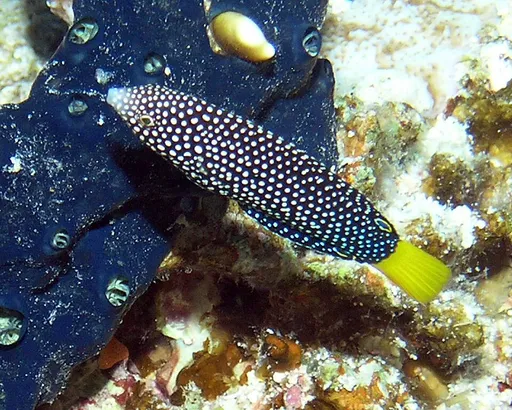
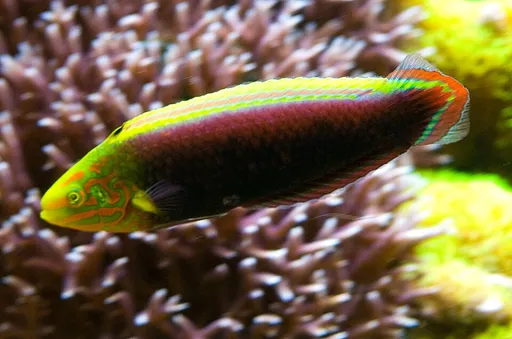
The yellowtail tamarin wrasse forages over open sand and rubble, picking tiny crustaceans and worms from the bottom. Adults are dark with white spots and a yellow tail, while juveniles are brown with a couple of pale blotches. It buries in the sand at night and when frightened. This is a delicate wrasse that needs a mature tank with a healthy population of small bottom life.
Good to know
Anampses meleagrides is a tamarin wrasse in the family Labridae. Members of this genus have hinged, forward pointing teeth used to pluck prey from the substrate. It is a protogynous hermaphrodite, changing from female to male with age.
Did you know
Tamarin wrasses are among the trickiest wrasses to settle in, and success depends on picking a healthy fish that is already feeding.
Weekly picks
Tank mates
Yellowtail tamarin wrasse is a peaceful, solitary species that keeps to the bottom. These picks share a community profile with it, are safe together in both directions, and overlap on water type, temperature and pH.
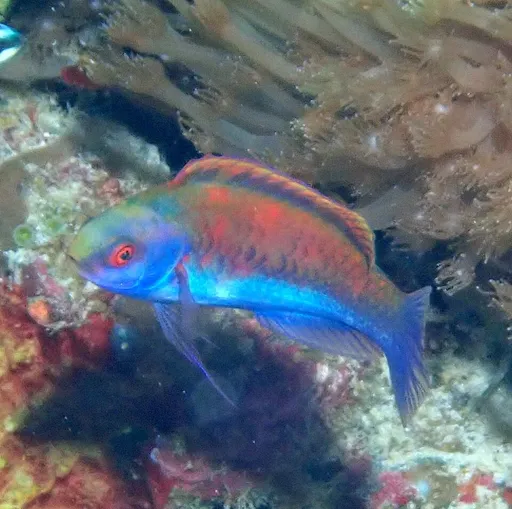
Solar fairy wrasse
Cirrhilabrus solorensis
Saltwater4.3 in (11 cm) · 90 gal (340 L)72–79°F (22–26°C)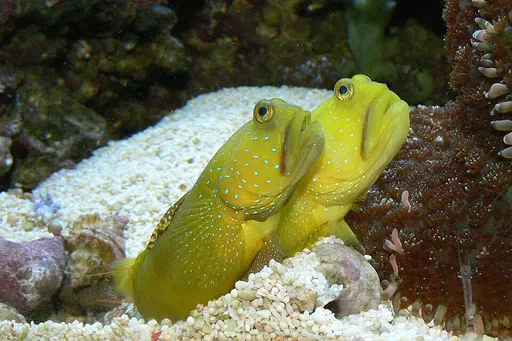
Yellow watchman goby
Cryptocentrus cinctus
Saltwater3.5 in (9 cm) · 20 gal (75 L)72–81°F (22–27°C)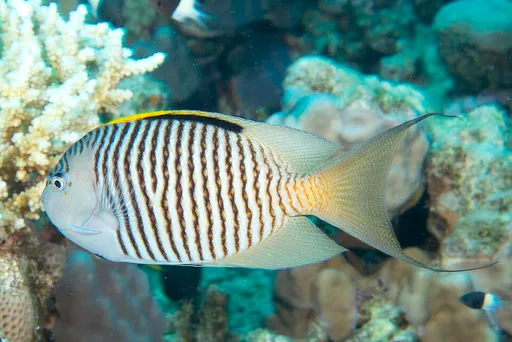
Zebra angelfish
Genicanthus caudovittatus
Saltwater7.9 in (20 cm) · 90 gal (340 L)75–82°F (24–28°C)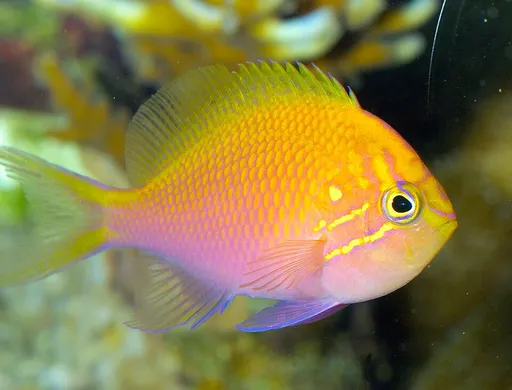
Sunburst anthias
Serranocirrhitus latus
Saltwater5.1 in (13 cm) · 70 gal (265 L)72–81°F (22–27°C)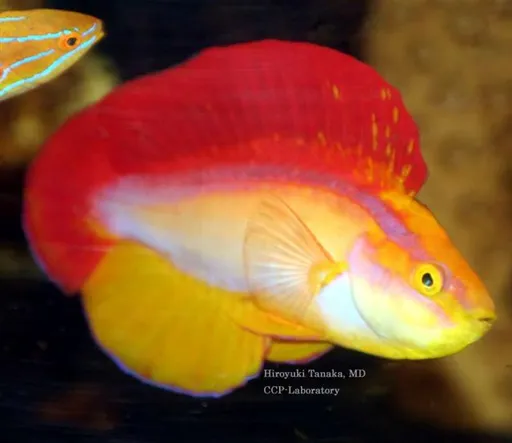
Flame fairy wrasse
Cirrhilabrus jordani
Saltwater3.9 in (10 cm) · 90 gal (340 L)72–79°F (22–26°C)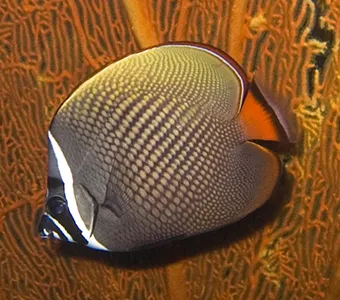
Collare butterflyfish
Chaetodon collare
Saltwater7.1 in (18 cm) · 90 gal (340 L)73–81°F (23–27°C)
Common questions
What size tank does a Yellowtail tamarin wrasse need?
A Yellowtail tamarin wrasse needs at least 90 gal (340 L). It spends most of its time in the bottom.
What temperature and pH does a Yellowtail tamarin wrasse need?
A Yellowtail tamarin wrasse is comfortable at 73–81°F (23–27°C) with a pH of 8.1–8.4.
How big does a Yellowtail tamarin wrasse get?
An adult Yellowtail tamarin wrasse reaches about 8.7 in (22 cm).
Related species
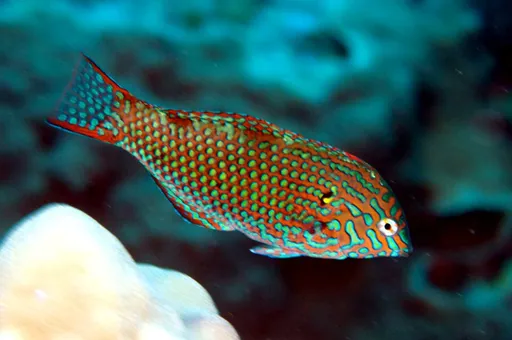 5.9 in (15 cm)90 gal (340 L)72–79°F (22–26°C)
Leopard wrasse
Macropharyngodon meleagris
5.9 in (15 cm) · 90 gal (340 L)
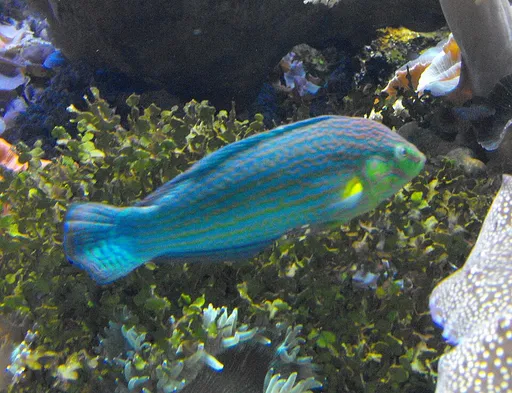 5.5 in (14 cm)100 gal (380 L)72–79°F (22–26°C)
Melanurus wrasse
Halichoeres melanurus
5.5 in (14 cm) · 100 gal (380 L)
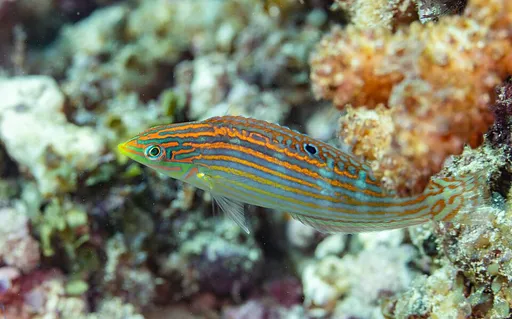 5.1 in (13 cm)50 gal (190 L)73–81°F (23–27°C)
Adorned wrasse
Halichoeres cosmetus
5.1 in (13 cm) · 50 gal (190 L)
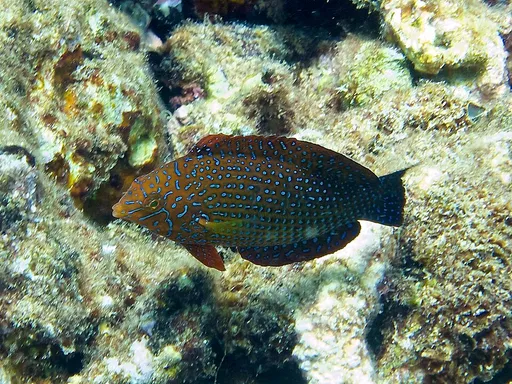 5.1 in (13 cm)55 gal (208 L)72–79°F (22–26°C)
Divided leopard wrasse
Macropharyngodon bipartitus
5.1 in (13 cm) · 55 gal (208 L)
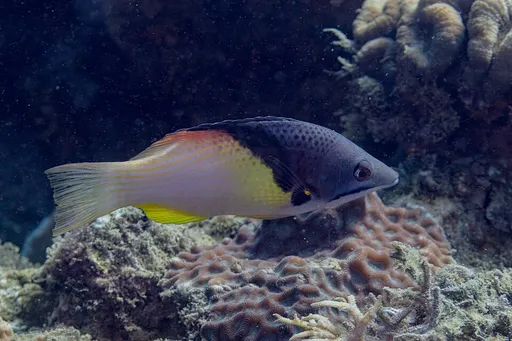 7.9 in (20 cm)90 gal (340 L)72–79°F (22–26°C)
Coral hogfish
Bodianus mesothorax
7.9 in (20 cm) · 90 gal (340 L)
 4.5 in (11.5 cm)75 gal (284 L)72–79°F (22–26°C)
Radiant wrasse
Halichoeres iridis
4.5 in (11.5 cm) · 75 gal (284 L)