Divided leopard wrasse
Macropharyngodon bipartitus
Also known as Blue Star Leopard Wrasse, Vermiculate Wrasse, Splendid Leopard Wrasse
SaltwaterFish
Care at a glance
- Temperature
- 72–79°F
- 22–26°C
- pH
- 8.1–8.4
- Adult size
- 5.1 in
- 13 cm
- Minimum tank
- 55 gal
- 208 L
- Temperament
- Peaceful
- Social behavior
- Social
- Swim level
- Bottom
- Difficulty
- Difficult
- Breeding
- No record
- Rarity
- Common
- Reef safe
- Reef safe
- Family
- Labridae
- Origin
- Western Indian Ocean reefs, from Zanzibar and Tanzania to Mozambique, Madagascar, the Seychelles, and the Maldives
Overview
Peaceful and shy, it can become territorial toward other wrasses of similar size and shape but otherwise ignores tankmates and corals alike, making it fully reef safe. Like other leopard wrasses it is an extremely sensitive feeder that depends on a steady supply of live copepods and other small invertebrates from an established sand bed and live rock, and it is considered an expert only fish because so many specimens starve or waste away in tanks that are not ready for them. Offer small, frequent meals of mysis, brine shrimp, and other meaty foods alongside whatever it forages naturally.
In the wild
Native to the western Indian Ocean, from Zanzibar and Tanzania south to Mozambique and out to Madagascar, the Seychelles, and the Maldives, on sand flats and rubble to about 30 m. It needs a mature aquarium of at least 208 litres (55 gallons) with a soft sand bed of at least 5–7.5 cm, since it buries itself completely to sleep at night and whenever it feels threatened. Add plenty of live rock riddled with hiding spots to help it settle in, and keep the lid tight and gap-free, since leopard wrasses are expert jumpers.
Good to know
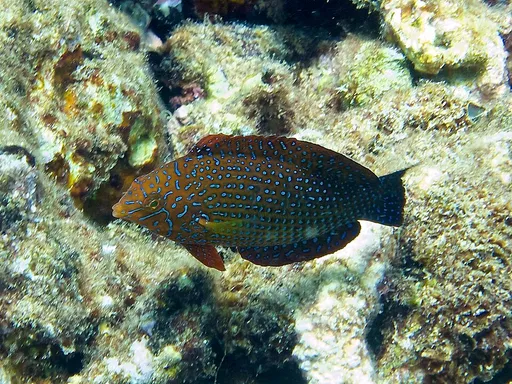
Macropharyngodon bipartitus is a protogynous hermaphrodite. Females and juveniles are white mottled with orange, yellow, brown, and light blue spots, while terminal phase males turn a vivid neon green and blue broken up by black outlined markings, a dramatic enough change that the two sexes are sometimes sold under different names. Adults reach about 13 cm. The Red Sea population once considered part of this species was reclassified as its own species, Macropharyngodon marisrubri, in 2013, so true bipartitus is now understood to range only through the western Indian Ocean.
Did you know
What aquarists long called the Red Sea leopard wrasse turned out to be different enough from this species to earn its own scientific name in 2013, Macropharyngodon marisrubri, which means true bipartitus is only found in the western Indian Ocean and not the Red Sea at all.
Weekly picks
Tank mates
Divided leopard wrasse is a peaceful, social species that keeps to the bottom. These picks share a community profile with it, are safe together in both directions, and overlap on water type, temperature and pH.
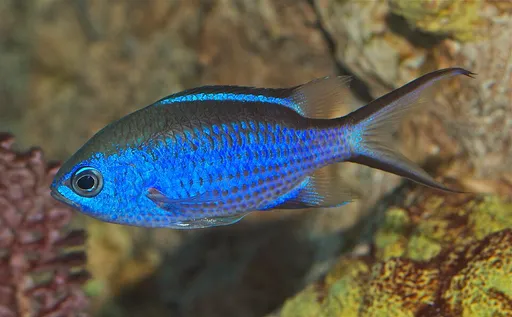
Blue chromis
Chromis cyanea
Saltwater5.1 in (13 cm) · 53 gal (200 L)73–81°F (23–27°C)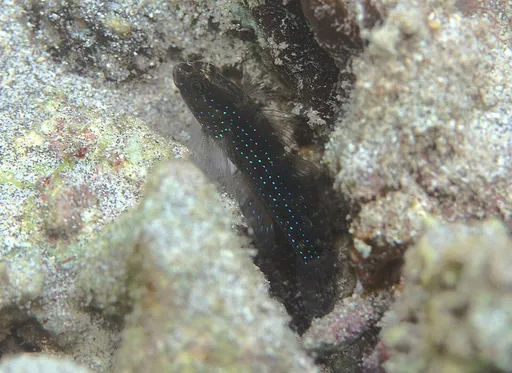
Starry goby
Asterropteryx semipunctata
Saltwater2.8 in (7 cm) · 13 gal (50 L)73–81°F (23–27°C)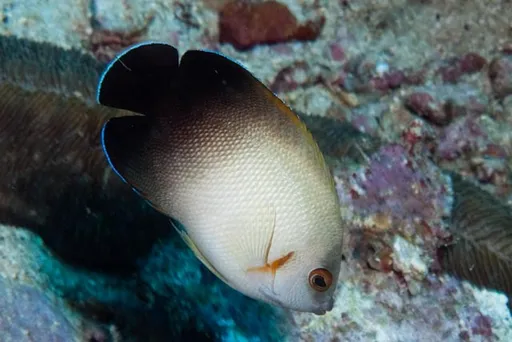
Half-black angelfish
Centropyge vroliki
Saltwater3.9 in (10 cm) · 55 gal (210 L)72–79°F (22–26°C)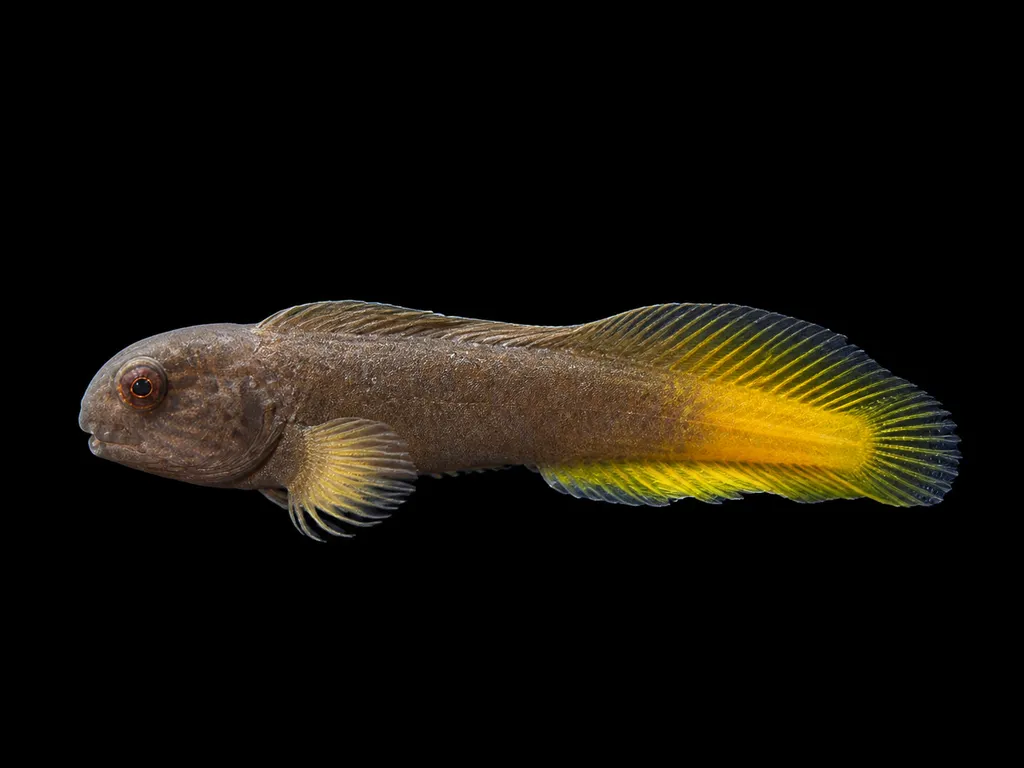
Flametail blenny
Enchelyurus flavipes
Saltwater3 in (7.5 cm) · 29 gal (110 L)72–79°F (22–26°C)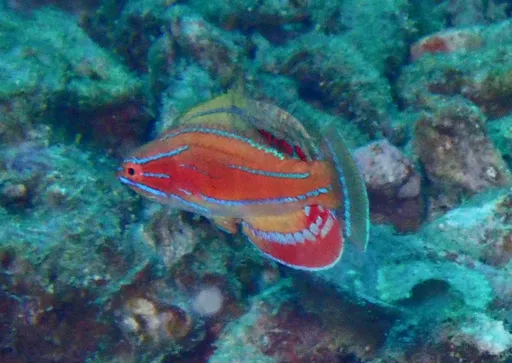
McCosker's flasher wrasse
Paracheilinus mccoskeri
Saltwater3.1 in (8 cm) · 55 gal (208 L)72–79°F (22–26°C)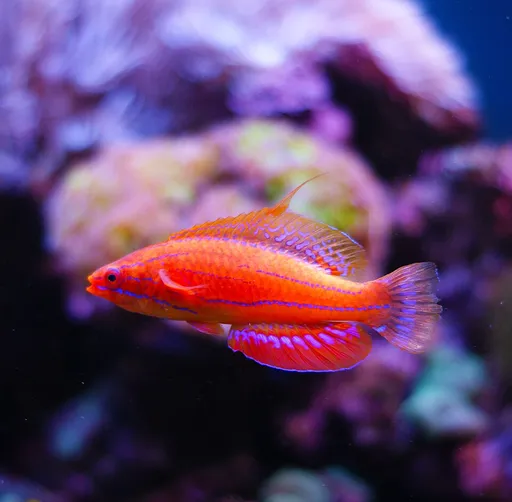
Carpenter's flasher wrasse
Paracheilinus carpenteri
Saltwater3.1 in (8 cm) · 53 gal (200 L)73–81°F (23–27°C)
Common questions
What size tank does a Divided leopard wrasse need?
A Divided leopard wrasse needs at least 55 gal (208 L). It spends most of its time in the bottom.
What temperature and pH does a Divided leopard wrasse need?
A Divided leopard wrasse is comfortable at 72–79°F (22–26°C) with a pH of 8.1–8.4.
How big does a Divided leopard wrasse get?
An adult Divided leopard wrasse reaches about 5.1 in (13 cm).
Related species
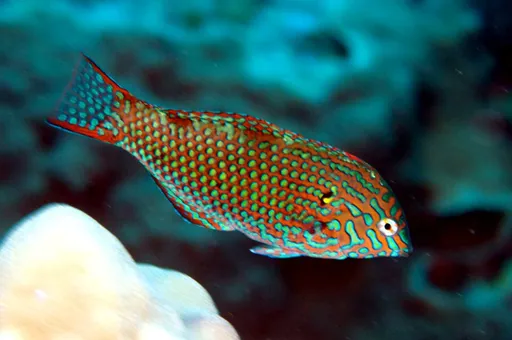 5.9 in (15 cm)90 gal (340 L)72–79°F (22–26°C)
Leopard wrasse
Macropharyngodon meleagris
5.9 in (15 cm) · 90 gal (340 L)
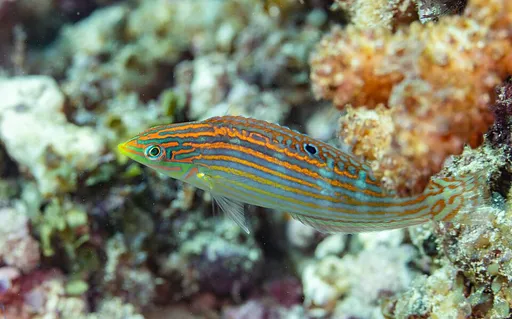 5.1 in (13 cm)50 gal (190 L)73–81°F (23–27°C)
Adorned wrasse
Halichoeres cosmetus
5.1 in (13 cm) · 50 gal (190 L)
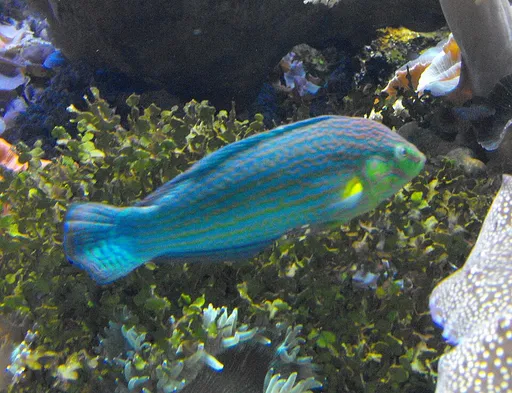 5.5 in (14 cm)100 gal (380 L)72–79°F (22–26°C)
Melanurus wrasse
Halichoeres melanurus
5.5 in (14 cm) · 100 gal (380 L)
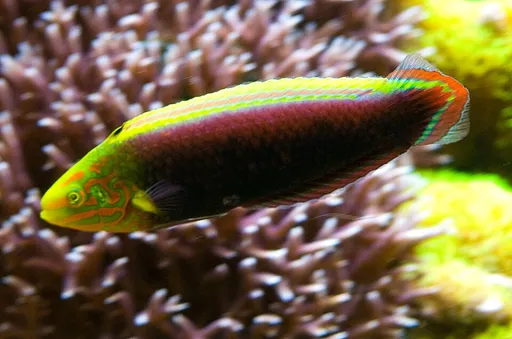 4.5 in (11.5 cm)75 gal (284 L)72–79°F (22–26°C)
Radiant wrasse
Halichoeres iridis
4.5 in (11.5 cm) · 75 gal (284 L)
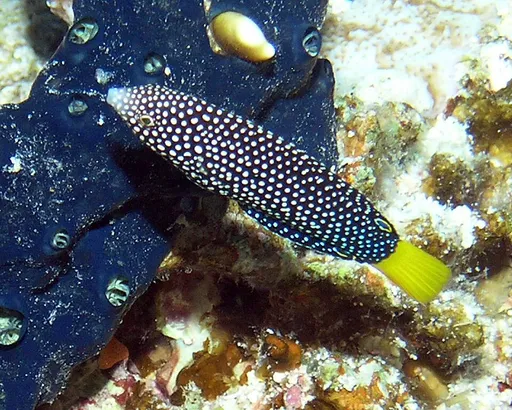 8.7 in (22 cm)90 gal (340 L)73–81°F (23–27°C)
Yellowtail tamarin wrasse
Anampses meleagrides
8.7 in (22 cm) · 90 gal (340 L)
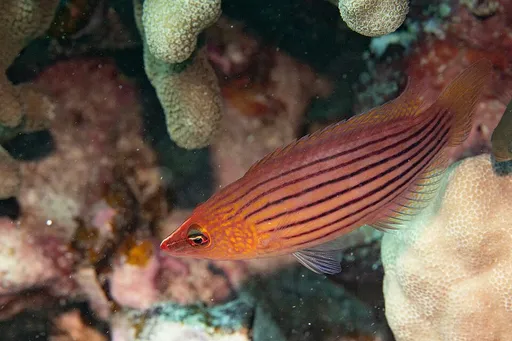 4.7 in (12 cm)55 gal (208 L)72–79°F (22–26°C)
Eightline wrasse
Pseudocheilinus octotaenia
4.7 in (12 cm) · 55 gal (208 L)