Eightline wrasse
Pseudocheilinus octotaenia
Also known as Eight-Line Wrasse, Eightstripe Wrasse, Eight Lined Wrasse
SaltwaterFish
Care at a glance
- Temperature
- 72–79°F
- 22–26°C
- pH
- 8.1–8.4
- Adult size
- 4.7 in
- 12 cm
- Minimum tank
- 55 gal
- 208 L
- Temperament
- Aggressive
- Social behavior
- Solitary
- Own kind
- One per tank
- Tankmates
- With caution
- Swim level
- Bottom
- Difficulty
- Medium
- Breeding
- No record
- Rarity
- Common
- Reef safe
- Reef safe
- Family
- Labridae
- Origin
- Indo-Pacific reefs, from East Africa to Hawaii and the Ducie Islands, north to the Yaeyama Islands
Overview
Do not let the family resemblance to the mellow sixline wrasse fool you: this is one of the more aggressive small wrasses in the trade, quick to claim a territory and pick fights with other wrasses, and it should be kept singly, added after any other wrasses are already settled in. It is generally considered reef safe, leaving corals alone while hunting down flatworms, bristleworms, and pyramidellid snails, but it will also eat small ornamental shrimp, crabs, and snails it decides are prey, so factor that in with a cleanup crew. Feed a varied diet of mysis, brine shrimp, and marine pellet or flake several times a day.
In the wild
Widely distributed across the Indo-Pacific, from East Africa to Hawaii and the Ducie Islands and north to the Yaeyama Islands, where it hides among coral branches and rubble on reefs at 2–50 m rather than staying out in the open. It does fine in a smaller wrasse tank, at least 208 litres (55 gallons), as long as there is enough broken rock and rubble to give it a network of hiding spots to retreat into between forays. Keep the lid tight, since this species will jump given the chance.
Good to know
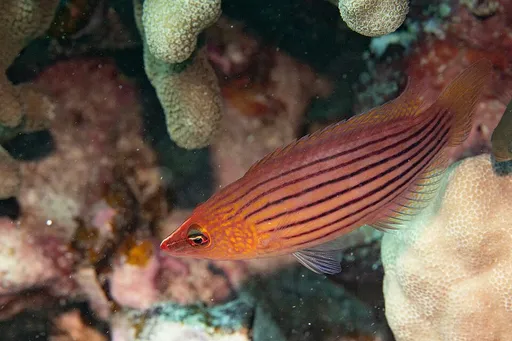
Pseudocheilinus octotaenia is a protogynous hermaphrodite, closely related to the smaller and much more placid sixline wrasse. It is named for the eight thin red to reddish brown stripes running down an orange body, with red eyes rimmed in pale blue. Adults reach about 12 cm and can live 5 to 7 years in captivity, a solid lifespan for a small reef wrasse.
Did you know
Hobbyists who know the easygoing sixline wrasse often assume its eight-striped cousin will act the same way, and are surprised when the eightline turns out to be one of the scrappiest small wrasses they can put in a tank.
Common questions
What size tank does an Eightline wrasse need?
An Eightline wrasse needs at least 55 gal (208 L). It spends most of its time in the bottom.
What temperature and pH does an Eightline wrasse need?
An Eightline wrasse is comfortable at 72–79°F (22–26°C) with a pH of 8.1–8.4.
How big does an Eightline wrasse get?
An adult Eightline wrasse reaches about 4.7 in (12 cm).
Related species
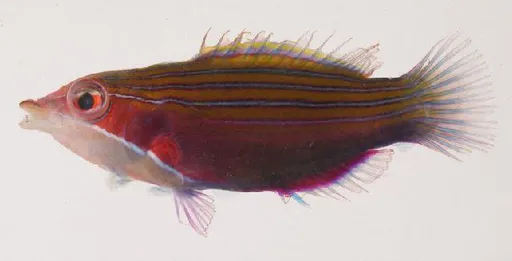 3 in (7.5 cm)30 gal (114 L)72–79°F (22–26°C)
Fourline wrasse
Pseudocheilinus tetrataenia
3 in (7.5 cm) · 30 gal (114 L)
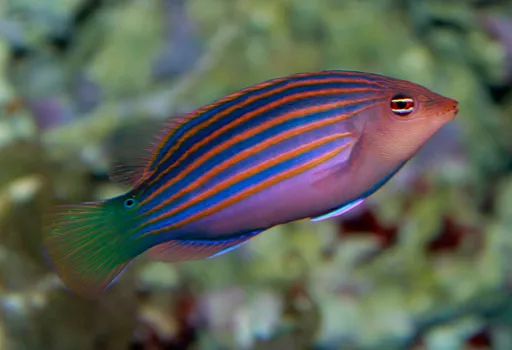 3.1 in (8 cm)29 gal (110 L)72–79°F (22–26°C)
Six-line wrasse
Pseudocheilinus hexataenia
3.1 in (8 cm) · 29 gal (110 L)
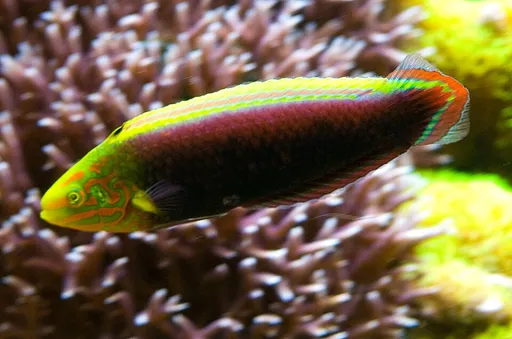 4.5 in (11.5 cm)75 gal (284 L)72–79°F (22–26°C)
Radiant wrasse
Halichoeres iridis
4.5 in (11.5 cm) · 75 gal (284 L)
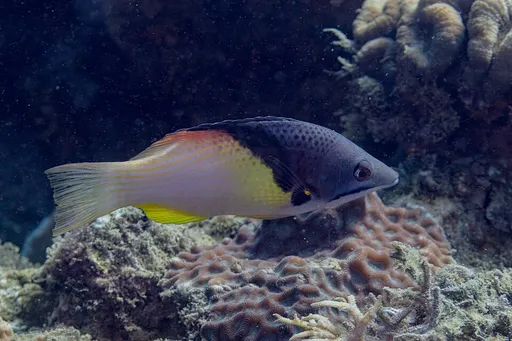 7.9 in (20 cm)90 gal (340 L)72–79°F (22–26°C)
Coral hogfish
Bodianus mesothorax
7.9 in (20 cm) · 90 gal (340 L)
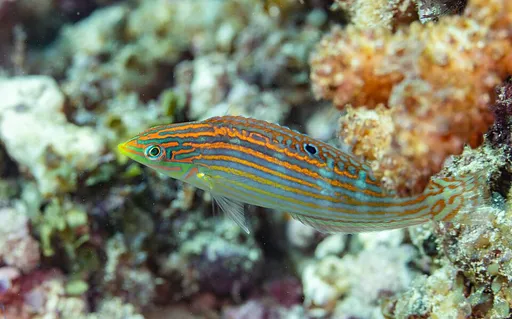 5.1 in (13 cm)50 gal (190 L)73–81°F (23–27°C)
Adorned wrasse
Halichoeres cosmetus
5.1 in (13 cm) · 50 gal (190 L)
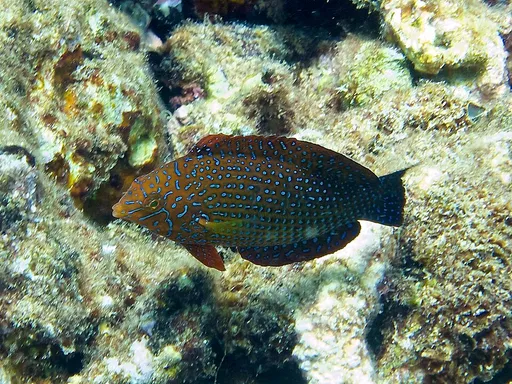 5.1 in (13 cm)55 gal (208 L)72–79°F (22–26°C)
Divided leopard wrasse
Macropharyngodon bipartitus
5.1 in (13 cm) · 55 gal (208 L)