Fourline wrasse
Pseudocheilinus tetrataenia
Also known as Fourstripe Wrasse, Four-Lined Wrasse, Pyjama Wrasse
SaltwaterFish
Care at a glance
- Temperature
- 72–79°F
- 22–26°C
- pH
- 8.1–8.4
- Adult size
- 3 in
- 7.5 cm
- Minimum tank
- 30 gal
- 114 L
- Temperament
- Mostly peaceful
- Social behavior
- Solitary
- Own kind
- One per tank
- Tankmates
- With caution
- Swim level
- Bottom
- Difficulty
- Easy
- Breeding
- No record
- Rarity
- Common
- Reef safe
- Reef safe
- Family
- Labridae
- Origin
- Pacific reefs, from Japan to Hawaii and the Austral Islands
Overview
Reef safe toward corals and anemones, and a useful hunter of pyramidellid snails, bristleworms, and flatworm pests, but it is feisty for its size and does best as the only member of its species or genus in the tank, since it fights with other line wrasses and can bully small, delicate tankmates like ornamental shrimp. That temperament shows more in cramped quarters, so give it enough rockwork to establish its own territory away from similar bottom-dwelling fish. Feed a varied diet of mysis, brine shrimp, and marine flake or pellet; it will also forage on its own all day for pods and worms. Keep the lid sealed, since this small wrasse can launch itself through surprisingly narrow gaps.
In the wild
Distributed across the Pacific from Japan to Hawaii and the Austral Islands, where it hides among live coral and rubble on seaward reefs at 6–44 m rather than staying out in the open. In the tank it wants at least 114 litres (30 gallons) of rockwork riddled with crevices to patrol and duck into. A soft sand bed is fine to include, but this species leans on rubble and rock gaps for cover rather than burying itself the way Halichoeres wrasses do. It is a determined jumper, so the lid needs to be completely gap-free.
Good to know
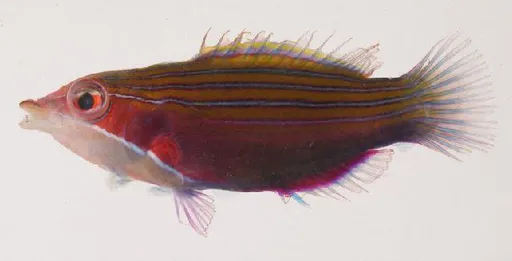
Pseudocheilinus tetrataenia is the smallest of the line wrasses commonly kept in reef tanks, reaching only about 7.5 cm, and is named for the four bright blue stripes that run the length of its green body, with yellow to orange coloring showing between them and red eyes ringed by a whitish-blue line. Rather than diving into sand at night the way a Halichoeres does, it tucks into a rock crevice and wraps itself in a self-secreted mucous cocoon before sleeping, a behavior it shares with parrotfish and that is thought to mask its scent from predators.
Did you know
Despite being barely 3 inches long, the fourline wrasse is sold in parts of the trade as the pyjama wrasse for its bold striped pattern, and it backs that flashy look up with an outsized attitude, readily squaring off against other wrasses several times its size if it feels its territory is threatened.
Common questions
What size tank does a Fourline wrasse need?
A Fourline wrasse needs at least 30 gal (114 L). It spends most of its time in the bottom.
What temperature and pH does a Fourline wrasse need?
A Fourline wrasse is comfortable at 72–79°F (22–26°C) with a pH of 8.1–8.4.
How big does a Fourline wrasse get?
An adult Fourline wrasse reaches about 3 in (7.5 cm).
Related species
 3.1 in (8 cm)29 gal (110 L)72–79°F (22–26°C)
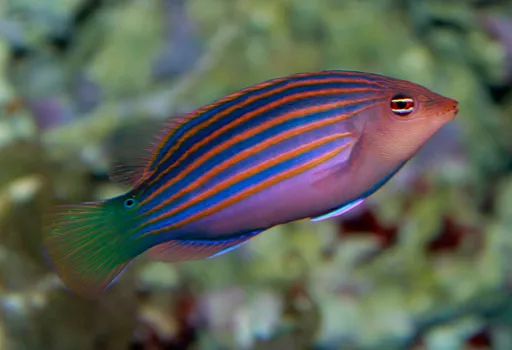
Six-line wrasse
Pseudocheilinus hexataenia
3.1 in (8 cm) · 29 gal (110 L)
 4.7 in (12 cm)55 gal (208 L)72–79°F (22–26°C)
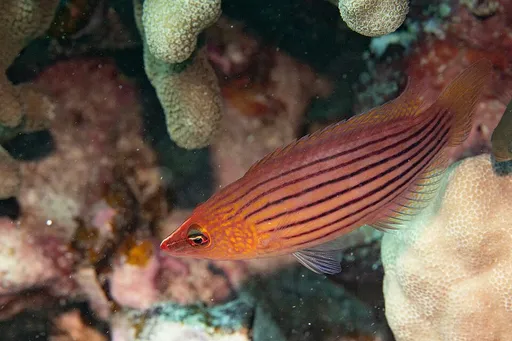
Eightline wrasse
Pseudocheilinus octotaenia
4.7 in (12 cm) · 55 gal (208 L)
 3.9 in (10 cm)30 gal (114 L)72–79°F (22–26°C)
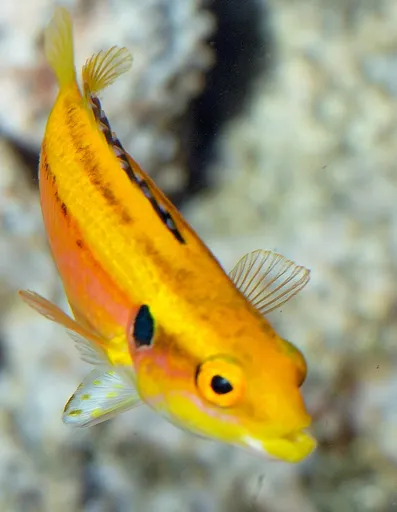
Twospot hogfish
Bodianus bimaculatus
3.9 in (10 cm) · 30 gal (114 L)
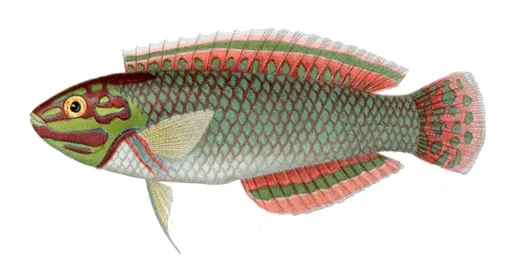 5.9 in (15 cm)70 gal (265 L)72–79°F (22–26°C)
Christmas wrasse
Halichoeres ornatissimus
5.9 in (15 cm) · 70 gal (265 L)
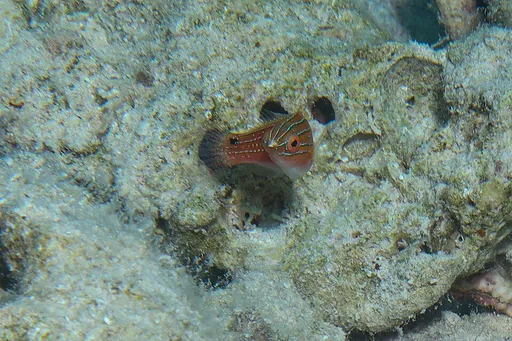 2.8 in (7 cm)53 gal (200 L)73–81°F (23–27°C)
Social fairy wrasse
Cirrhilabrus rubriventralis
2.8 in (7 cm) · 53 gal (200 L)
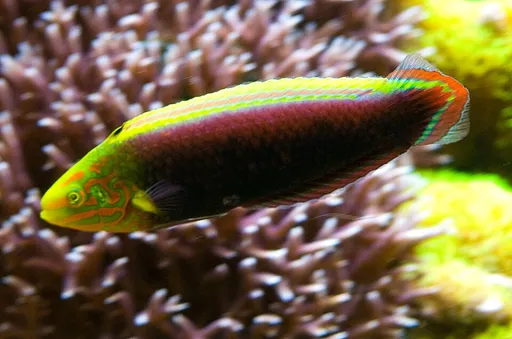 4.5 in (11.5 cm)75 gal (284 L)72–79°F (22–26°C)
Radiant wrasse
Halichoeres iridis
4.5 in (11.5 cm) · 75 gal (284 L)