Six-line wrasse
Pseudocheilinus hexataenia
Also known as Sixline wrasse, Six-stripe wrasse, Sixstripe wrasse, Pyjama wrasse
SaltwaterFish
Care at a glance
- Temperature
- 72–79°F
- 22–26°C
- pH
- 8.1–8.4
- Adult size
- 3.1 in
- 8 cm
- Minimum tank
- 29 gal
- 110 L
- Temperament
- Mostly peaceful
- Social behavior
- Solitary
- Own kind
- One per tank
- Tankmates
- With caution
- Swim level
- Middle
- Difficulty
- Easy
- Breeding
- Hard
- Rarity
- Very common
- Reef safe
- Reef safe
- Family
- Labridae
- Origin
- Indo-Pacific reefs from the Red Sea and East Africa to the central Pacific
Overview
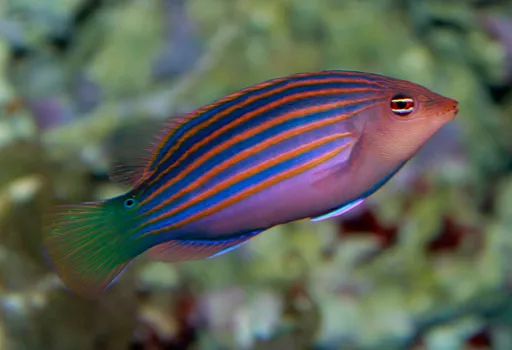
This is the aggression caveat of the group. The six-line is reef safe and will not touch corals, and it earns its keep hunting pest snails, commensal flatworms, and small bristleworms in the rock, which is a real plus for a reef. But it is only mostly peaceful, and it turns into a scrappy bully as it settles in, chasing other wrasses, fairy wrasses, and shy or slow tankmates around the tank. The standard advice is to add it last so it cannot claim the whole tank as territory, and to keep just one per tank. It swims through the middle of the water column and rockwork rather than schooling. Hold stable marine water at a pH of 8.1 to 8.4 and 22 to 26 C with a covered top. Feed meaty foods like mysis and enriched brine, though an established tank supplies much of its natural pod and worm diet.
In the wild
Six-line wrasses live on Indo-Pacific reefs from the Red Sea and East Africa across to the central Pacific, threading through branching corals and live rock in search of tiny crustaceans. They are small, restless fish that spend the day working over the rockwork and coral, so they want a mature tank with plenty of live rock full of pods and hiding places. Keep them in stable marine water at a pH of 8.1 to 8.4 and a temperature of 22 to 26 C, with a tight lid, since like most wrasses they can jump. They wedge into a crevice to sleep and can vanish for a day or two after being added.
Good to know
This is a small wrasse in the family Labridae, reaching about 8 cm, marked with six horizontal blue lines over an orange to purple body and a small false eyespot near the tail. Unlike sand-diving wrasses it does not bury itself but sleeps wedged in the rock. It is a protogynous hermaphrodite like many wrasses, but it is only very rarely bred in captivity, so trade fish are wild-caught.
Did you know
It is a favorite for pest control, since it hunts and eats pyramidellid snails that attack clams, along with commensal flatworms and small bristleworms. The trade-off is temperament: a fish sold as reef safe and peaceful frequently grows into the tank bully, so the six-line is best added last and kept as the only wrasse in a smaller reef.
Common questions
What size tank does a Six-line wrasse need?
A Six-line wrasse needs at least 29 gal (110 L). It spends most of its time in the middle.
What temperature and pH does a Six-line wrasse need?
A Six-line wrasse is comfortable at 72–79°F (22–26°C) with a pH of 8.1–8.4.
How big does a Six-line wrasse get?
An adult Six-line wrasse reaches about 3.1 in (8 cm).
Related species
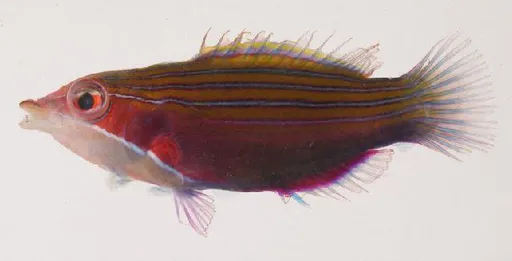 3 in (7.5 cm)30 gal (114 L)72–79°F (22–26°C)
Fourline wrasse
Pseudocheilinus tetrataenia
3 in (7.5 cm) · 30 gal (114 L)
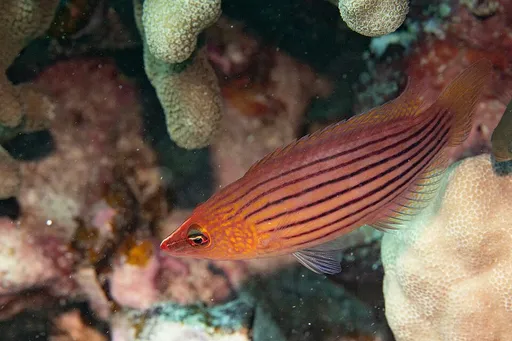 4.7 in (12 cm)55 gal (208 L)72–79°F (22–26°C)
Eightline wrasse
Pseudocheilinus octotaenia
4.7 in (12 cm) · 55 gal (208 L)
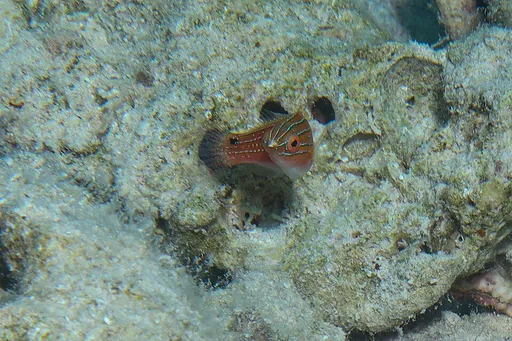 2.8 in (7 cm)53 gal (200 L)73–81°F (23–27°C)
Social fairy wrasse
Cirrhilabrus rubriventralis
2.8 in (7 cm) · 53 gal (200 L)
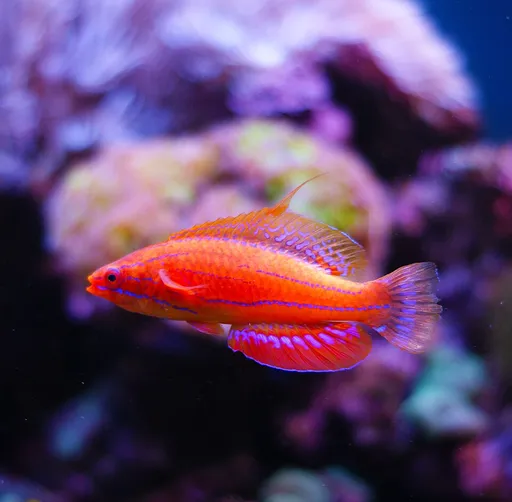 3.1 in (8 cm)53 gal (200 L)73–81°F (23–27°C)
Carpenter's flasher wrasse
Paracheilinus carpenteri
3.1 in (8 cm) · 53 gal (200 L)
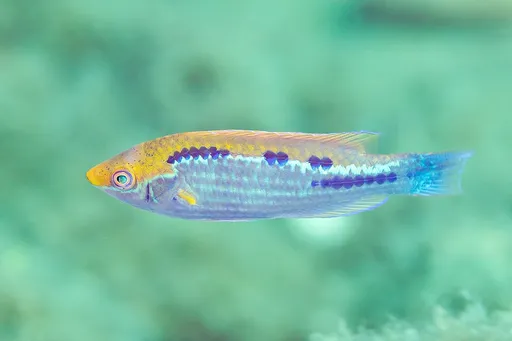 3.1 in (8 cm)55 gal (208 L)72–79°F (22–26°C)
Lubbock's fairy wrasse
Cirrhilabrus lubbocki
3.1 in (8 cm) · 55 gal (208 L)
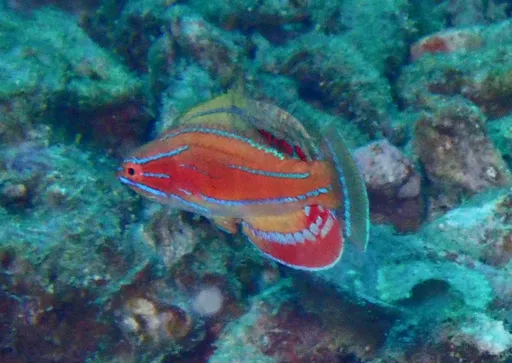 3.1 in (8 cm)55 gal (208 L)72–79°F (22–26°C)
McCosker's flasher wrasse
Paracheilinus mccoskeri
3.1 in (8 cm) · 55 gal (208 L)