Carpenter's flasher wrasse
Paracheilinus carpenteri
Also known as Carpenter flasher wrasse, Redfin flasher wrasse, Carpenter's wrasse
SaltwaterFish
Care at a glance
- Temperature
- 73–81°F
- 23–27°C
- pH
- 8.1–8.4
- Adult size
- 3.1 in
- 8 cm
- Minimum tank
- 53 gal
- 200 L
- Temperament
- Peaceful
- Social behavior
- Social
- Swim level
- Middle
- Difficulty
- Easy
- Breeding
- Hard
- Rarity
- Common
- Reef safe
- Reef safe
- Family
- Labridae
- Origin
- Western Pacific reefs around the Philippines, Indonesia, and nearby waters
Overview
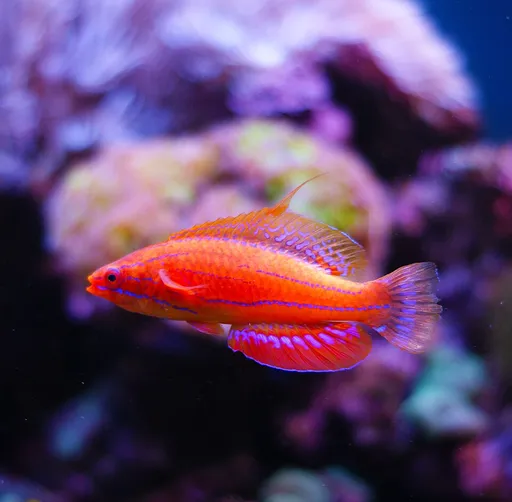
Carpenter's flasher is a genuinely peaceful, colorful reef wrasse and one of the easier flasher wrasses to keep. It is fully reef safe and ignores corals, though a very hungry one may take the odd tiny invertebrate. It is best kept in a group, typically one male with several females introduced first, which draws out the male's flashing displays; a lone male often stays comparatively drab. It is peaceful toward tankmates and even toward its own kind when there is only one male, so it suits a mixed peaceful community. It swims actively in the middle water column. Hold stable marine water at a pH of 8.1 to 8.4 and 23 to 27 C with a tightly covered top. Feed small meaty foods like mysis and enriched brine two or three times a day, plus marine flake and pellet, since these active feeders eat frequently.
In the wild
Carpenter's flasher wrasses live on western Pacific reefs around the Philippines and Indonesia, gathering over rubble and reef slopes in groups where a dominant male flashes his fins and colors at the surrounding females, especially near dusk. They are active midwater fish that hover and dart above the rock feeding on drifting zooplankton. Give them a reef tank with live rock for shelter and plenty of open water to swim in, at a pH of 8.1 to 8.4 and a temperature of 23 to 27 C. A tight lid is essential, since flasher wrasses jump readily.
Good to know
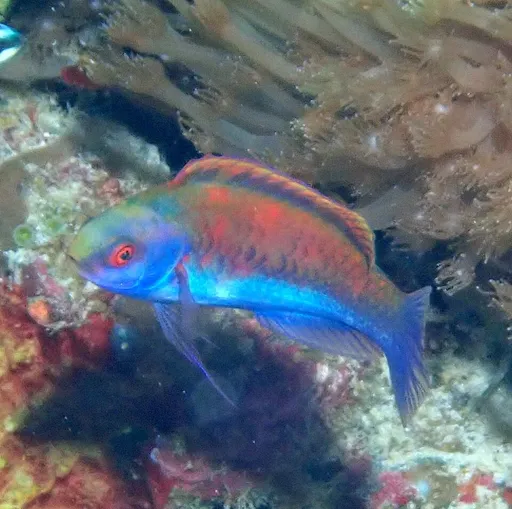
This is a flasher wrasse in the family Labridae, reaching about 8 cm, the males marked with red, orange, and blue and extended dorsal fin rays that they raise during their flashing display. Like other wrasses it is a protogynous hermaphrodite, so females can change into males, and the display male is far more colorful than the females and subadults. It is only very rarely bred in captivity, so trade fish are wild-caught.
Did you know
The flasher name comes from the courtship display: the male suddenly intensifies his color and snaps his fins open to signal to the females, most dramatically in the last light of the day. Keeping several females alongside one male is what keeps him flashing, so a proper group is far more colorful than a single fish.
Weekly picks
Tank mates
Carpenter's flasher wrasse is a peaceful, social species that keeps to the middle. These picks share a community profile with it, are safe together in both directions, and overlap on water type, temperature and pH.
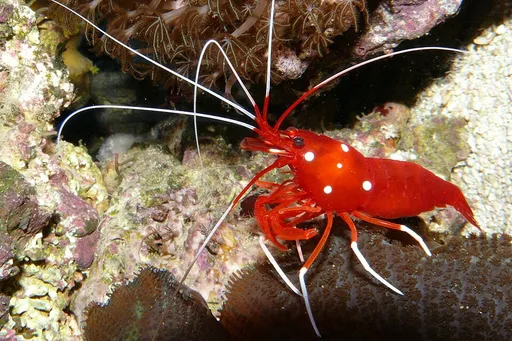
Fire shrimp
Lysmata debelius
Saltwater2.4 in (6 cm) · 20 gal (75 L)72–79°F (22–26°C)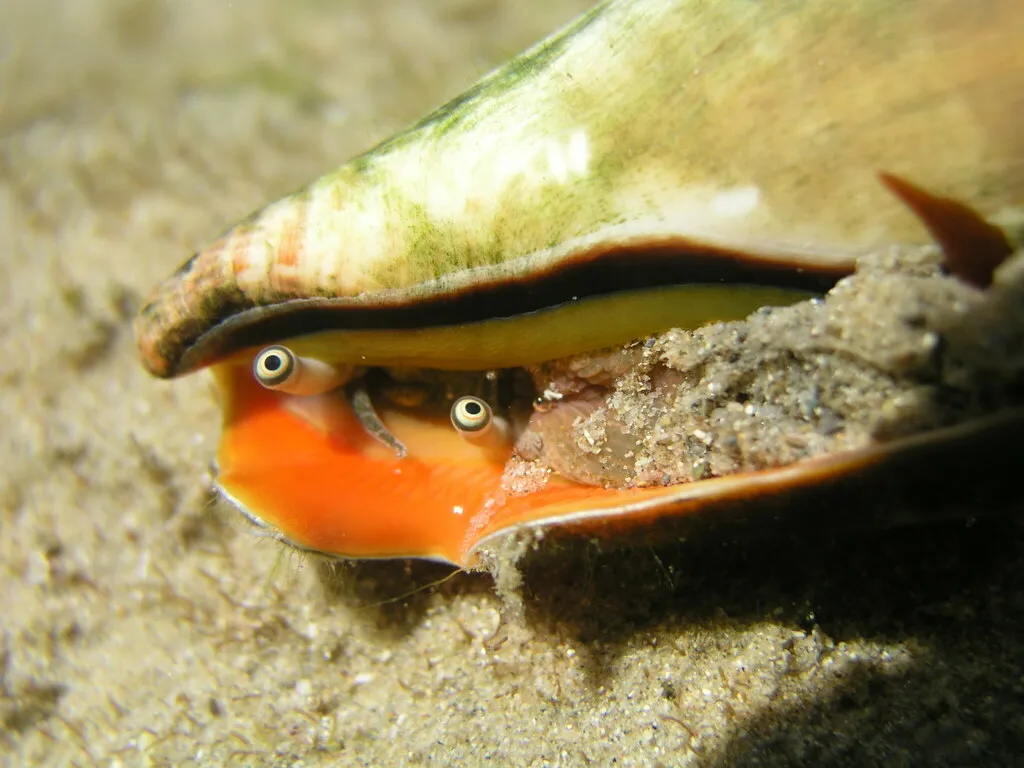
Tiger / strawberry conch
Conomurex luhuanus
Saltwater2.8 in (7 cm) · 20 gal (75 L)75–81°F (24–27°C)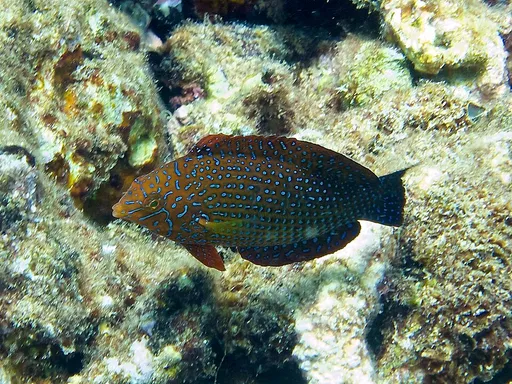
Divided leopard wrasse
Macropharyngodon bipartitus
Saltwater5.1 in (13 cm) · 55 gal (208 L)72–79°F (22–26°C)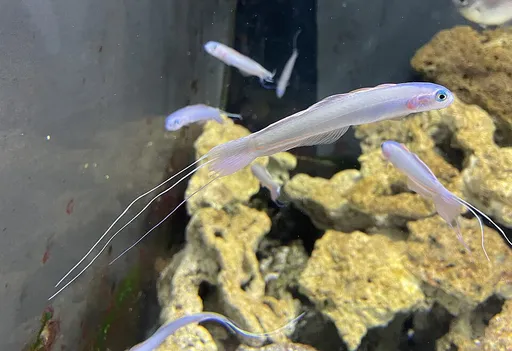
Blue hana goby
Ptereleotris hanae
Saltwater4.7 in (12 cm) · 40 gal (150 L)73–81°F (23–27°C)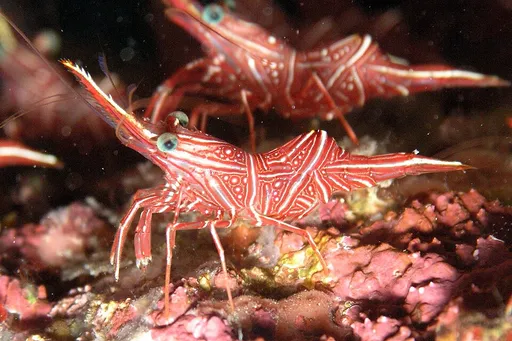
Camel / dancing shrimp
Rhynchocinetes durbanensis
Saltwater2 in (5 cm) · 16 gal (60 L)75–81°F (24–27°C)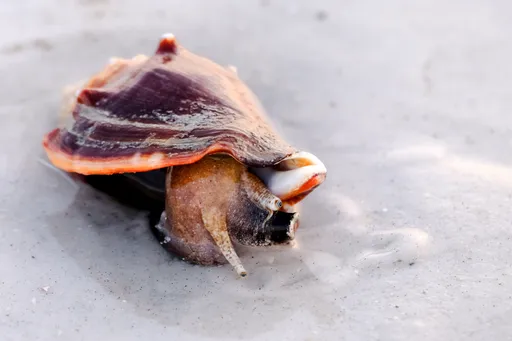
Fighting conch
Strombus alatus
Saltwater3.1 in (8 cm) · 20 gal (75 L)75–81°F (24–27°C)
Common questions
What size tank does a Carpenter's flasher wrasse need?
A Carpenter's flasher wrasse needs at least 53 gal (200 L). It spends most of its time in the middle.
What temperature and pH does a Carpenter's flasher wrasse need?
A Carpenter's flasher wrasse is comfortable at 73–81°F (23–27°C) with a pH of 8.1–8.4.
How big does a Carpenter's flasher wrasse get?
An adult Carpenter's flasher wrasse reaches about 3.1 in (8 cm).
Related species
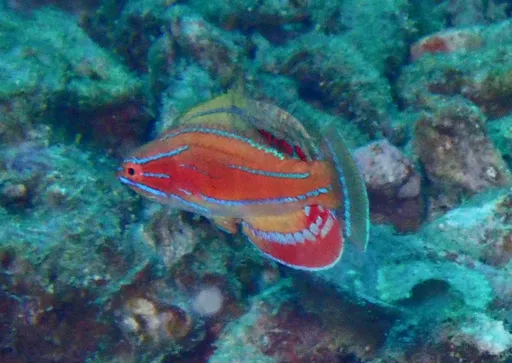 3.1 in (8 cm)55 gal (208 L)72–79°F (22–26°C)
McCosker's flasher wrasse
Paracheilinus mccoskeri
3.1 in (8 cm) · 55 gal (208 L)
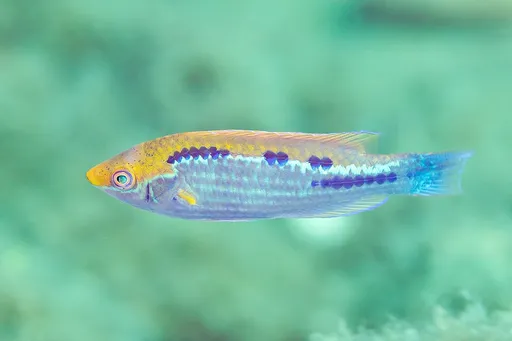 3.1 in (8 cm)55 gal (208 L)72–79°F (22–26°C)
Lubbock's fairy wrasse
Cirrhilabrus lubbocki
3.1 in (8 cm) · 55 gal (208 L)
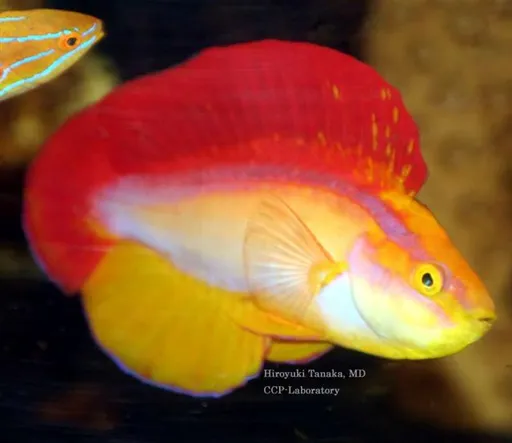 3.9 in (10 cm)90 gal (340 L)72–79°F (22–26°C)
Flame fairy wrasse
Cirrhilabrus jordani
3.9 in (10 cm) · 90 gal (340 L)
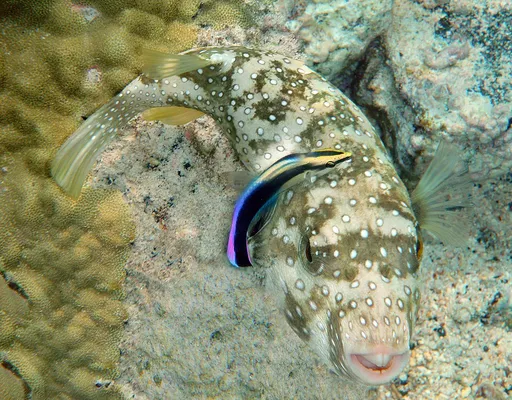 3.9 in (10 cm)70 gal (265 L)75–81°F (24–27°C)
Hawaiian cleaner wrasse
Labroides phthirophagus
3.9 in (10 cm) · 70 gal (265 L)
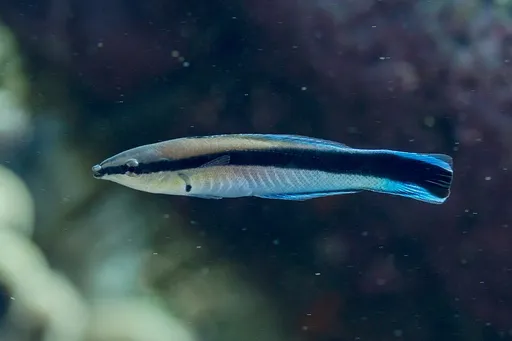 4.3 in (11 cm)106 gal (400 L)75–81°F (24–27°C)
Bluestreak cleaner wrasse
Labroides dimidiatus
4.3 in (11 cm) · 106 gal (400 L)
 4.3 in (11 cm)90 gal (340 L)72–79°F (22–26°C)
Solar fairy wrasse
Cirrhilabrus solorensis
4.3 in (11 cm) · 90 gal (340 L)