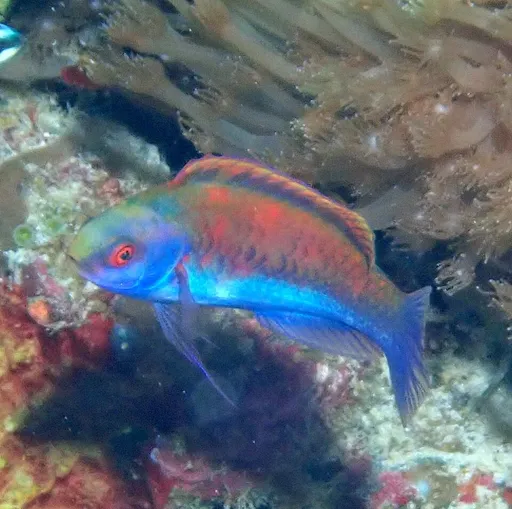
Solar fairy wrasse
Cirrhilabrus solorensis
Also known as Red-Head Solon Fairy Wrasse, Tricolor Fairy Wrasse, Red-Eye Wrasse
SaltwaterFish
Care at a glance
- Temperature
- 72–79°F
- 22–26°C
- pH
- 8.1–8.4
- Adult size
- 4.3 in
- 11 cm
- Minimum tank
- 90 gal
- 340 L
- Temperament
- Peaceful
- Social behavior
- Social
- Swim level
- Middle
- Difficulty
- Easy
- Breeding
- Hard
- Rarity
- Common
- Reef safe
- Reef safe
- Family
- Labridae
- Origin
- Western Pacific reefs, from Indonesia to northern Australia
Overview
A peaceful plankton picker that ignores corals, clams, and other invertebrates, making it fully reef safe. It mixes well with clownfish, gobies, blennies, tangs, and other calm community fish, but keep only one male per tank since males spar with each other and with males of similar Cirrhilabrus species. Offer small amounts of mysis, brine shrimp, and other meaty foods two to three times a day to match its active metabolism. Do not skip the tight lid: fairy wrasses are notorious for jumping out of open or poorly covered tanks.
In the wild
Found on coastal and outer reef lagoons from Indonesia to northern Australia, usually over shallow patch reefs and rubble at 5–35 m. In the aquarium it needs at least 340 litres (90 gallons) with open water in the middle of the tank for cruising, plus live rock for grazing and a shaded ledge to retreat to. Like every fairy wrasse it is an excellent jumper, so the tank needs a tight-fitting lid with no gaps around cords, plumbing, or overflow boxes.
Good to know
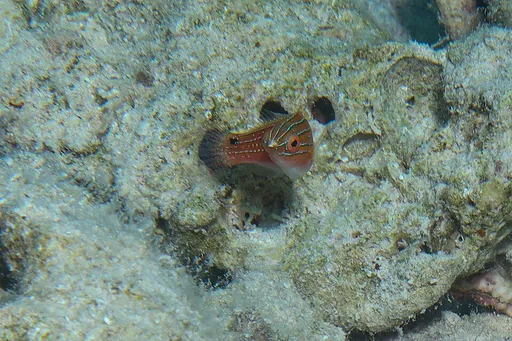
Cirrhilabrus solorensis is a protogynous hermaphrodite: every fish starts out as a female, and the most dominant female in a group will change sex into the terminal-phase male if none is present. Terminal males grow larger than females and develop the blue body, red dorsal stripe, and yellow-orange face that give the species its common names, with the colors intensifying further during courtship. Adults reach about 11 cm.
Did you know
The common names redhead and solar fairy wrasse both point to the same feature: a bright red saddle running down the back that looks like it is glowing against the blue body, a pattern that gets noticeably more intense whenever a male is showing off for a female.
Weekly picks
Tank mates
Solar fairy wrasse is a peaceful, social species that keeps to the middle. These picks share a community profile with it, are safe together in both directions, and overlap on water type, temperature and pH.
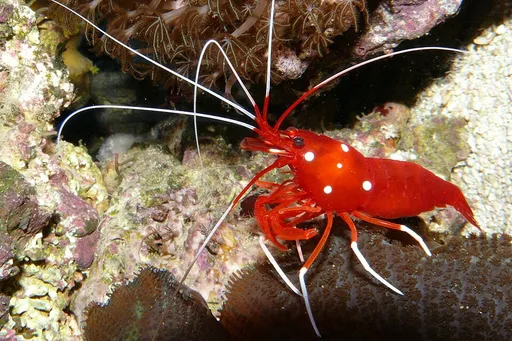
Fire shrimp
Lysmata debelius
Saltwater2.4 in (6 cm) · 20 gal (75 L)72–79°F (22–26°C)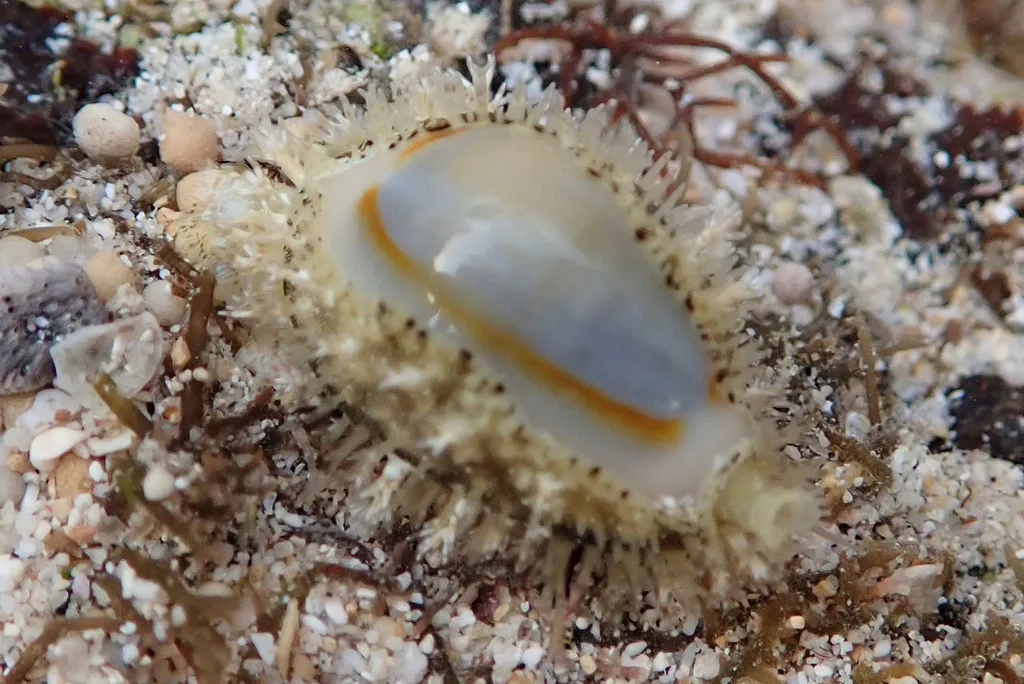
Ring cowrie
Monetaria annulus
Saltwater1.2 in (3 cm) · 20 gal (75 L)75–81°F (24–27°C)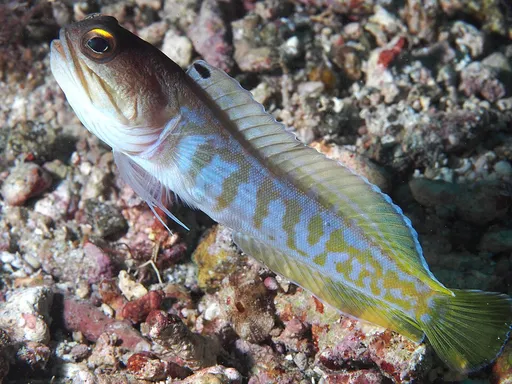
Gold-specs jawfish
Opistognathus randalli
Saltwater3.9 in (10 cm) · 30 gal (115 L)73–81°F (23–27°C)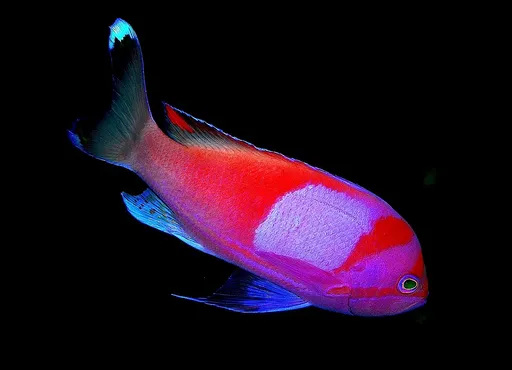
Square anthias
Pseudanthias pleurotaenia
Saltwater7.9 in (20 cm) · 100 gal (380 L)72–79°F (22–26°C)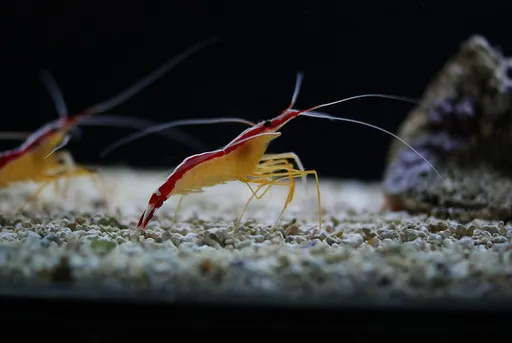
Skunk cleaner shrimp
Lysmata amboinensis
Saltwater2.4 in (6 cm) · 20 gal (75 L)73–81°F (23–27°C)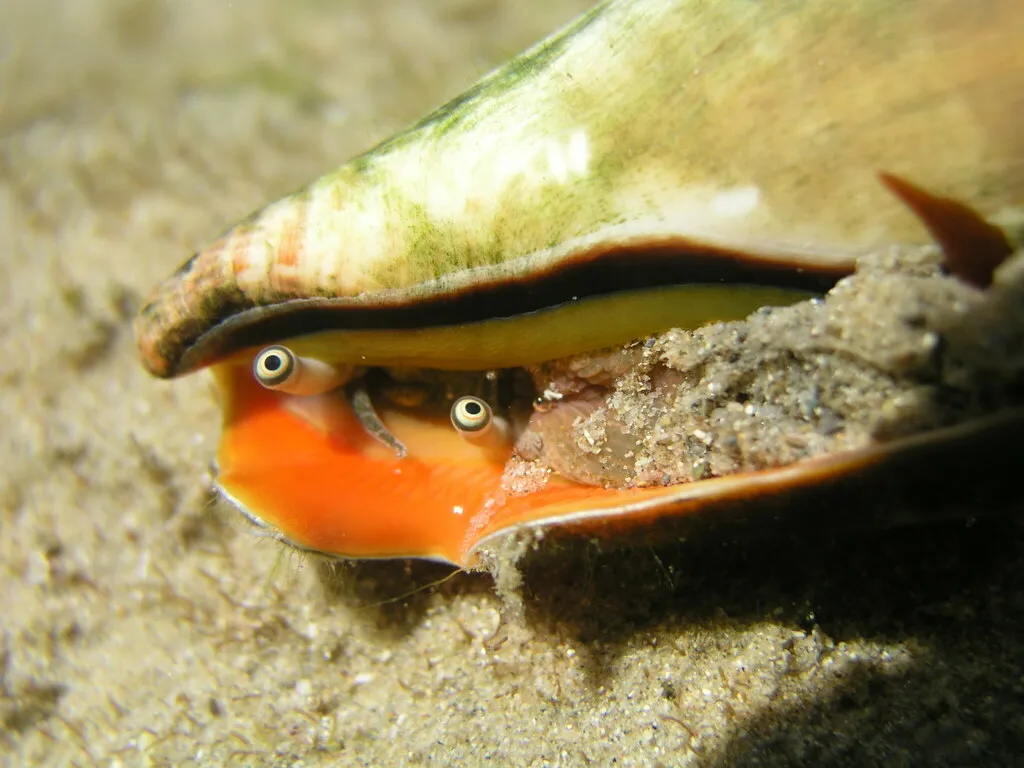
Tiger / strawberry conch
Conomurex luhuanus
Saltwater2.8 in (7 cm) · 20 gal (75 L)75–81°F (24–27°C)
Common questions
What size tank does a Solar fairy wrasse need?
A Solar fairy wrasse needs at least 90 gal (340 L). It spends most of its time in the middle.
What temperature and pH does a Solar fairy wrasse need?
A Solar fairy wrasse is comfortable at 72–79°F (22–26°C) with a pH of 8.1–8.4.
How big does a Solar fairy wrasse get?
An adult Solar fairy wrasse reaches about 4.3 in (11 cm).
Related species
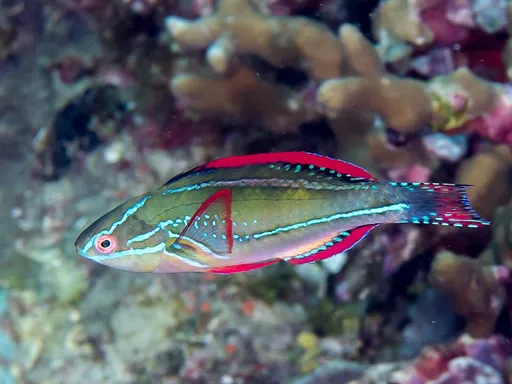 4.7 in (12 cm)90 gal (340 L)72–79°F (22–26°C)
Exquisite fairy wrasse
Cirrhilabrus exquisitus
4.7 in (12 cm) · 90 gal (340 L)
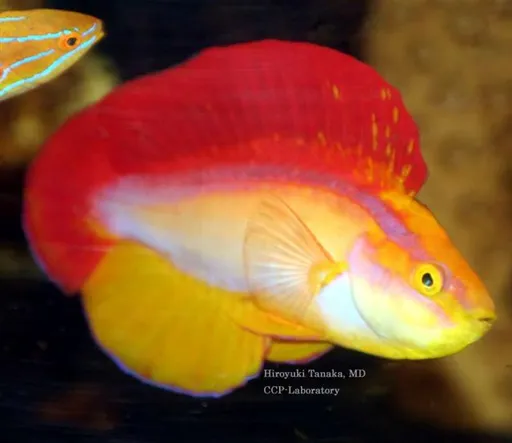
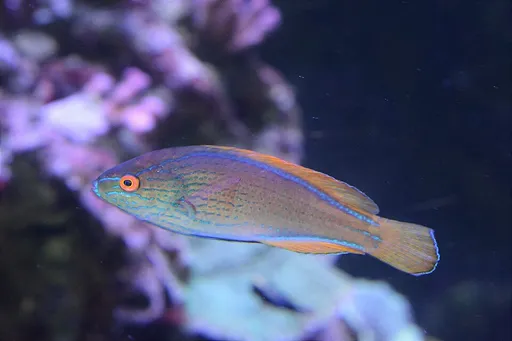 4.7 in (12 cm)90 gal (340 L)73–81°F (23–27°C)
Lineatus fairy wrasse
Cirrhilabrus lineatus
4.7 in (12 cm) · 90 gal (340 L)
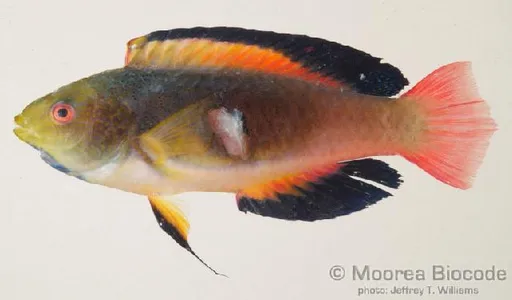
 3.9 in (10 cm)90 gal (340 L)72–79°F (22–26°C)
Flame fairy wrasse
Cirrhilabrus jordani
3.9 in (10 cm) · 90 gal (340 L)
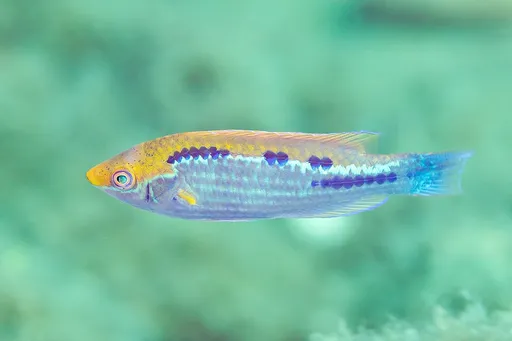
 5.1 in (13 cm)90 gal (340 L)73–81°F (23–27°C)
Scott's fairy wrasse
Cirrhilabrus scottorum
5.1 in (13 cm) · 90 gal (340 L)
 3.1 in (8 cm)55 gal (208 L)72–79°F (22–26°C)
Lubbock's fairy wrasse
Cirrhilabrus lubbocki
3.1 in (8 cm) · 55 gal (208 L)
 2.8 in (7 cm)53 gal (200 L)73–81°F (23–27°C)
Social fairy wrasse
Cirrhilabrus rubriventralis
2.8 in (7 cm) · 53 gal (200 L)