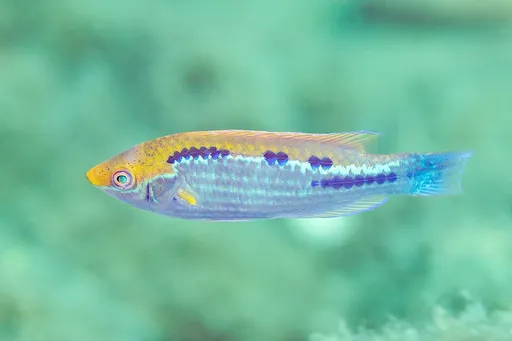
Lubbock's fairy wrasse
Cirrhilabrus lubbocki
Also known as Multicolor Fairy Wrasse, Lubbock's Wrasse
SaltwaterFish
Care at a glance
- Temperature
- 72–79°F
- 22–26°C
- pH
- 8.1–8.4
- Adult size
- 3.1 in
- 8 cm
- Minimum tank
- 55 gal
- 208 L
- Temperament
- Peaceful
- Social behavior
- Social
- Swim level
- Middle
- Difficulty
- Easy
- Breeding
- Hard
- Rarity
- Very common
- Reef safe
- Reef safe
- Family
- Labridae
- Origin
- Western Pacific reefs, Philippines and Indonesia
Overview
Lubbock's fairy wrasse is a hardy, peaceful wrasse and one of the smaller fairy wrasses commonly kept. It swims in the middle of a reef tank and is easy to keep.
Did you know
Lubbock's fairy wrasse is one of the most affordable and widely stocked fairy wrasses in the hobby. Its unusual tolerance for other males makes it one of the few Cirrhilabrus species where two males might share a large tank.
Caring for the Lubbock's fairy wrasse
Give a Lubbock's fairy wrasse at least 55 gal (208 L), with room to cruise in midwater. Add live rock for cover and a few shaded pockets to duck into. It is a persistent jumper, so fit a tight, gap-free lid.
Keep the water at 72 to 79°F (22 to 26°C) with a pH of 8.1 to 8.4. It is a plankton eater, so feed a varied diet of mysis, brine shrimp and enriched flake or pellet food several times a day.
Lubbock's fairy wrasse is peaceful and completely reef safe, ignoring corals and invertebrates. It does well with other peaceful reef fish. Its males tolerate each other better than most fairy wrasses do, but a single male is still the safer choice outside a very large tank.
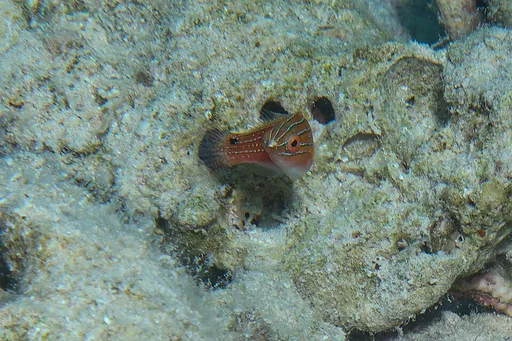
Males show a red back fading into a yellow band across the upper body and dorsal fin. Their pelvic and anal fins are yellow, and the tail is tipped in blue. Females stay a plainer orange-red. Breeding Lubbock's fairy wrasses is hard.
Good to know
Cirrhilabrus lubbocki is a protogynous hermaphrodite in the wrasse family Labridae. It starts life as a female and can change to a male when a harem loses its dominant male.
In the wild
Lubbock's fairy wrasse is native to reefs around the Philippines and Sulawesi in Indonesia. It is typically found over rubble and coral at 5 to 30 m.
Weekly picks
Tank mates
The Lubbock's fairy wrasse is a peaceful, social species that keeps to the middle. These picks share a community profile with it, are safe together in both directions, and overlap on water type, temperature and pH.
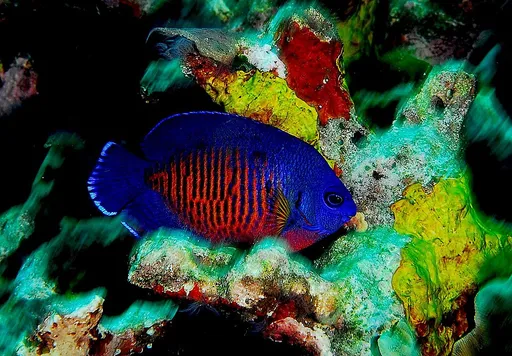
Coral beauty angelfish
Centropyge bispinosa
Saltwater3.9 in (10 cm) · 50 gal (190 L)72–79°F (22–26°C)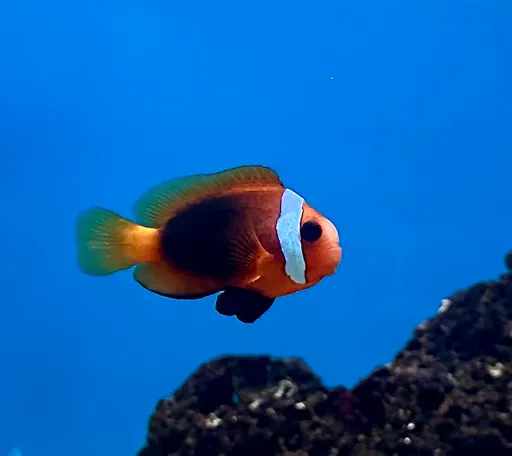
Cinnamon clownfish
Amphiprion melanopus
Saltwater4.7 in (12 cm) · 30 gal (115 L)75–82°F (24–28°C)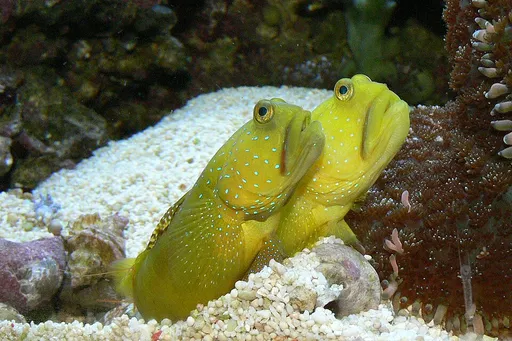
Yellow watchman goby
Cryptocentrus cinctus
Saltwater3.5 in (9 cm) · 20 gal (75 L)72–81°F (22–27°C)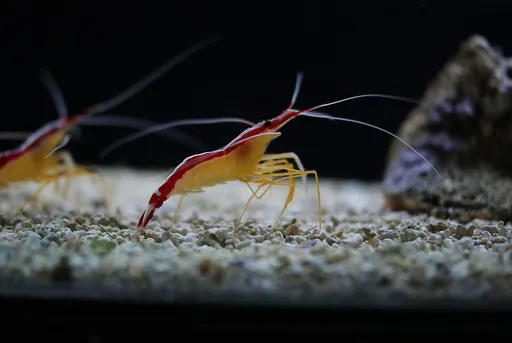
Skunk cleaner shrimp
Lysmata amboinensis
Saltwater2.4 in (6 cm) · 20 gal (75 L)73–81°F (23–27°C)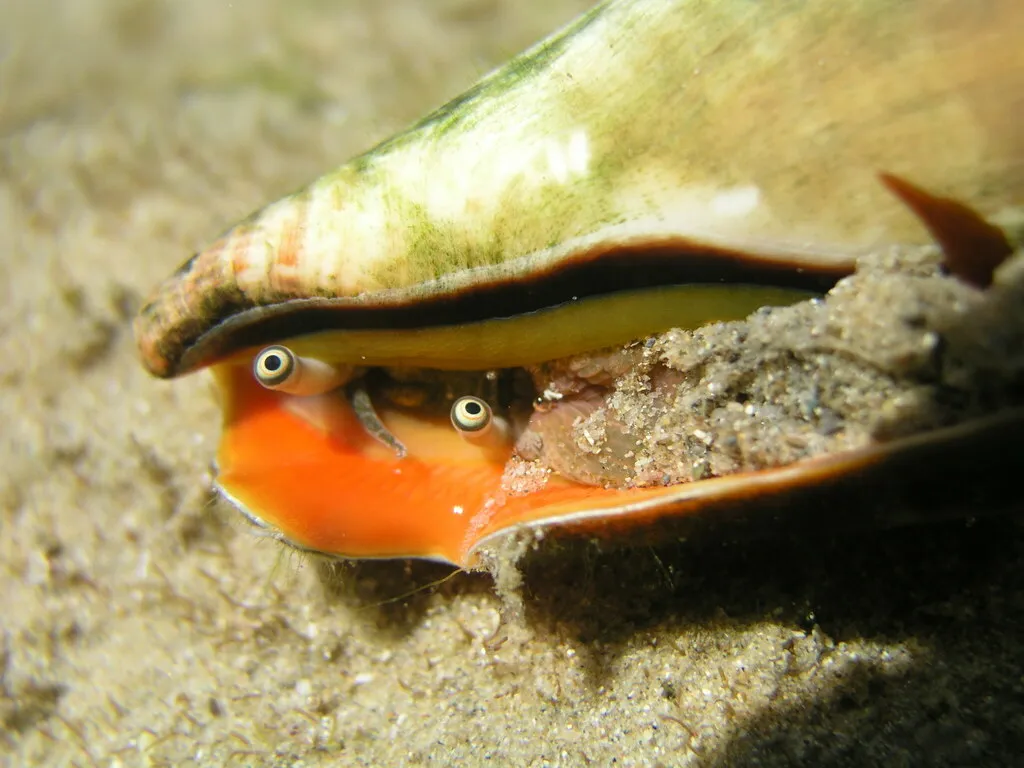
Tiger / strawberry conch
Conomurex luhuanus
Saltwater2.8 in (7 cm) · 20 gal (75 L)75–81°F (24–27°C)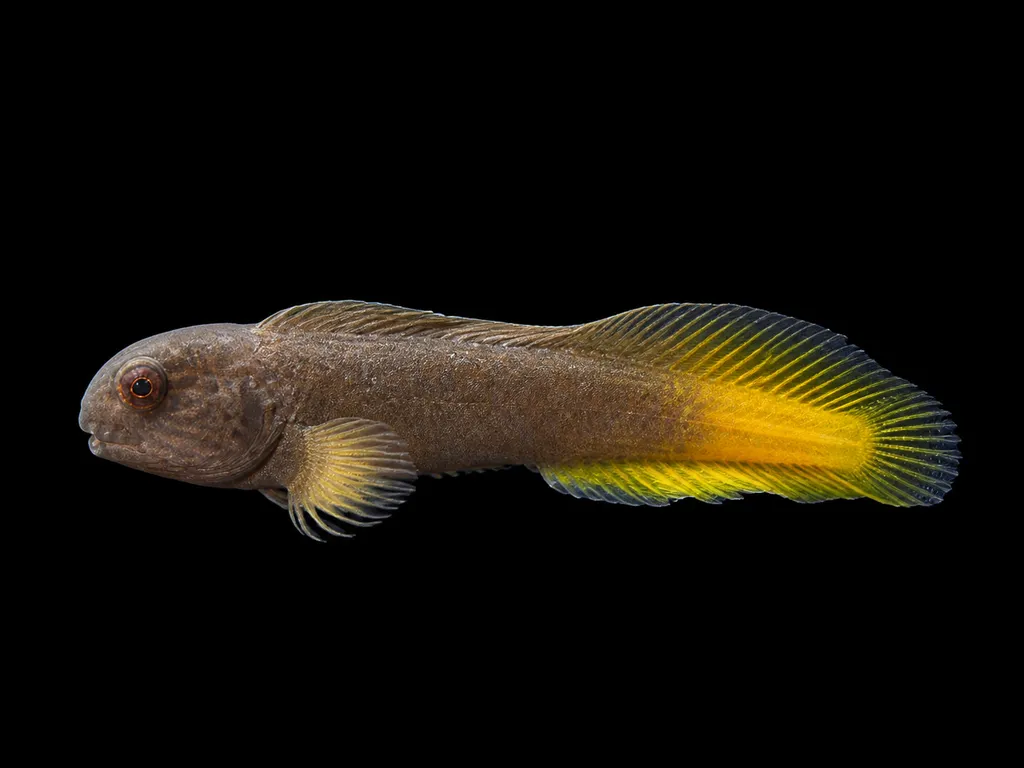
Flametail blenny
Enchelyurus flavipes
Saltwater3 in (7.5 cm) · 29 gal (110 L)72–79°F (22–26°C)
Common questions
What size tank does a Lubbock's fairy wrasse need?
A Lubbock's fairy wrasse needs at least 55 gal (208 L). It spends most of its time in the middle.
What temperature and pH does a Lubbock's fairy wrasse need?
A Lubbock's fairy wrasse is comfortable at 72–79°F (22–26°C) with a pH of 8.1–8.4.
What does a Lubbock's fairy wrasse eat?
A Lubbock's fairy wrasse is a plankton eater. Feed it a varied diet of mysis, brine shrimp and enriched flake or pellet food several times a day.
How big does a Lubbock's fairy wrasse get?
An adult Lubbock's fairy wrasse reaches about 3.1 in (8 cm).
How can you tell a male Lubbock's fairy wrasse from a female?
Males show a red back fading into a yellow band across the upper body and dorsal fin. Their pelvic and anal fins are yellow, and the tail is tipped in blue. Females stay a plainer orange-red.
Related species
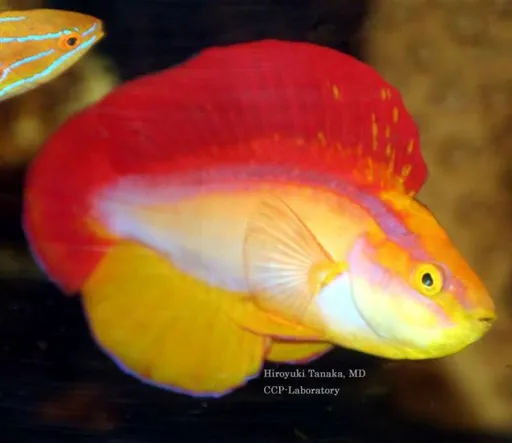 3.9 in (10 cm)90 gal (340 L)72–79°F (22–26°C)
Flame fairy wrasse
Cirrhilabrus jordani
3.9 in (10 cm) · 90 gal (340 L)
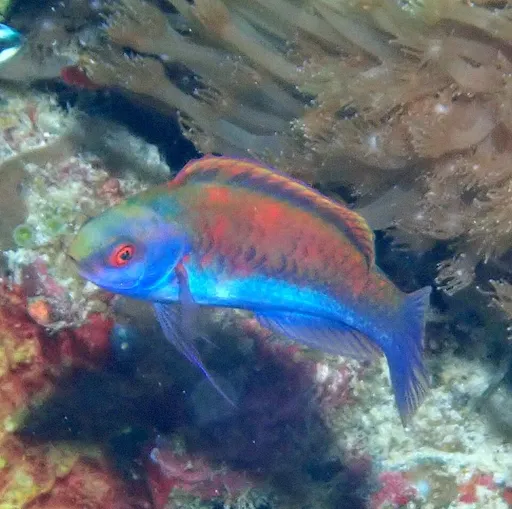 4.3 in (11 cm)90 gal (340 L)72–79°F (22–26°C)
Solar fairy wrasse
Cirrhilabrus solorensis
4.3 in (11 cm) · 90 gal (340 L)
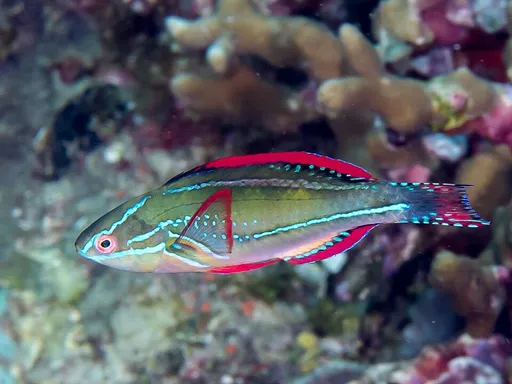 4.7 in (12 cm)90 gal (340 L)72–79°F (22–26°C)
Exquisite fairy wrasse
Cirrhilabrus exquisitus
4.7 in (12 cm) · 90 gal (340 L)
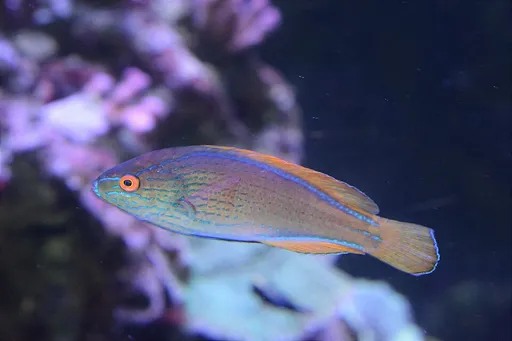 4.7 in (12 cm)90 gal (340 L)73–81°F (23–27°C)
Lineatus fairy wrasse
Cirrhilabrus lineatus
4.7 in (12 cm) · 90 gal (340 L)
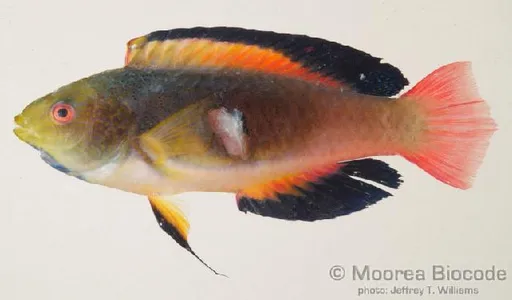 5.1 in (13 cm)90 gal (340 L)73–81°F (23–27°C)
Scott's fairy wrasse
Cirrhilabrus scottorum
5.1 in (13 cm) · 90 gal (340 L)
 2.8 in (7 cm)53 gal (200 L)73–81°F (23–27°C)
Social fairy wrasse
Cirrhilabrus rubriventralis
2.8 in (7 cm) · 53 gal (200 L)