Exquisite fairy wrasse
Cirrhilabrus exquisitus
Also known as Exquisite Wrasse
SaltwaterFish
Care at a glance
- Temperature
- 72–79°F
- 22–26°C
- pH
- 8.1–8.4
- Adult size
- 4.7 in
- 12 cm
- Minimum tank
- 90 gal
- 340 L
- Temperament
- Peaceful
- Social behavior
- Social
- Swim level
- Middle
- Difficulty
- Easy
- Breeding
- Hard
- Rarity
- Common
- Reef safe
- Reef safe
- Family
- Labridae
- Origin
- Indo-Pacific reefs, from East Africa to the Tuamotu Islands
Overview
Peaceful toward essentially every tankmate and completely reef safe, never bothering corals, clams, or other invertebrates. Males can be rough on females of their own species introduced after they are already settled in, so add females before or alongside the male rather than afterward, and keep only one Cirrhilabrus male per tank to avoid fighting. Offer enriched mysis and brine shrimp along with marine flake and pellet several times a day. It is a strong, accurate jumper, so a snug-fitting lid is not optional.
In the wild
Ranges across the Indo-Pacific from the East African coast to the Tuamotu Islands, living on reef slopes and lagoons at 6–40 m, most often in the shallower 6–10 m band. It needs a tank of at least 340 litres (90 gallons) with plenty of live rock to graze over, bright lighting with a few shaded ledges to retreat to, and open water above the rock for cruising. As with all fairy wrasses, a tight-fitting canopy is essential, since this fish will find any gap in the lid.
Good to know
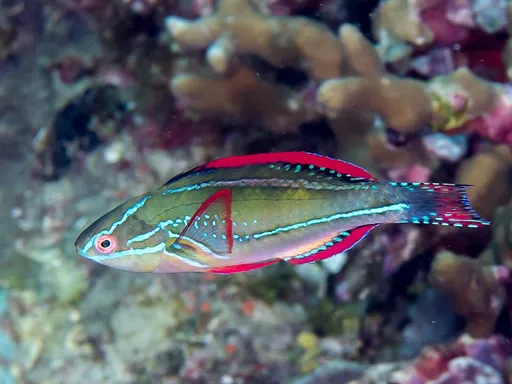
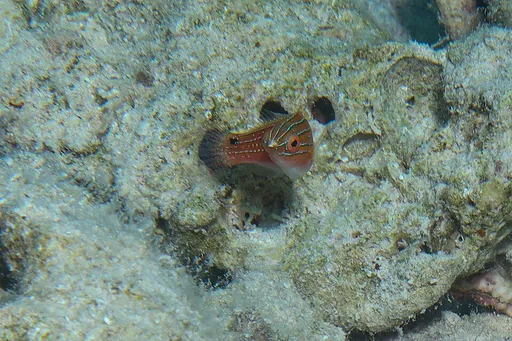
Cirrhilabrus exquisitus is a protogynous hermaphrodite, starting life as a female and changing to a male if the dominant male in its group disappears. Terminal males grow larger, more pointed fins and far more color than females: a pale gray-green body with pink and blue markings on the face, red in the dorsal and anal fins, and a black spot at the base of the tail underlined with a blue streak. Adults reach about 12 cm, making this one of the larger fairy wrasses in the trade. Coloration also shifts by collection region, with African and Maldivian fish showing more red and Fijian fish running more blue.
Did you know
This species is one of the few reef fish where the same species looks noticeably different depending on where it was collected: aquarists comparing an African-caught male to an Indonesian one are often surprised to learn they are looking at the same fish, just with more red in one and more green in the other.
Weekly picks
Tank mates
Exquisite fairy wrasse is a peaceful, social species that keeps to the middle. These picks share a community profile with it, are safe together in both directions, and overlap on water type, temperature and pH.
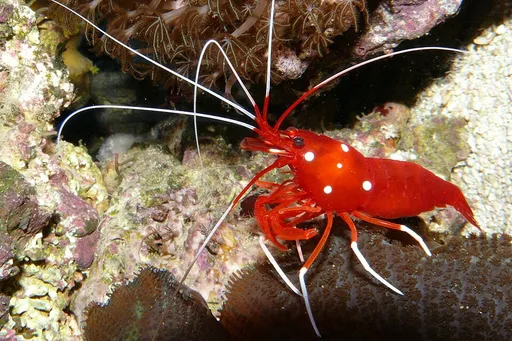
Fire shrimp
Lysmata debelius
Saltwater2.4 in (6 cm) · 20 gal (75 L)72–79°F (22–26°C)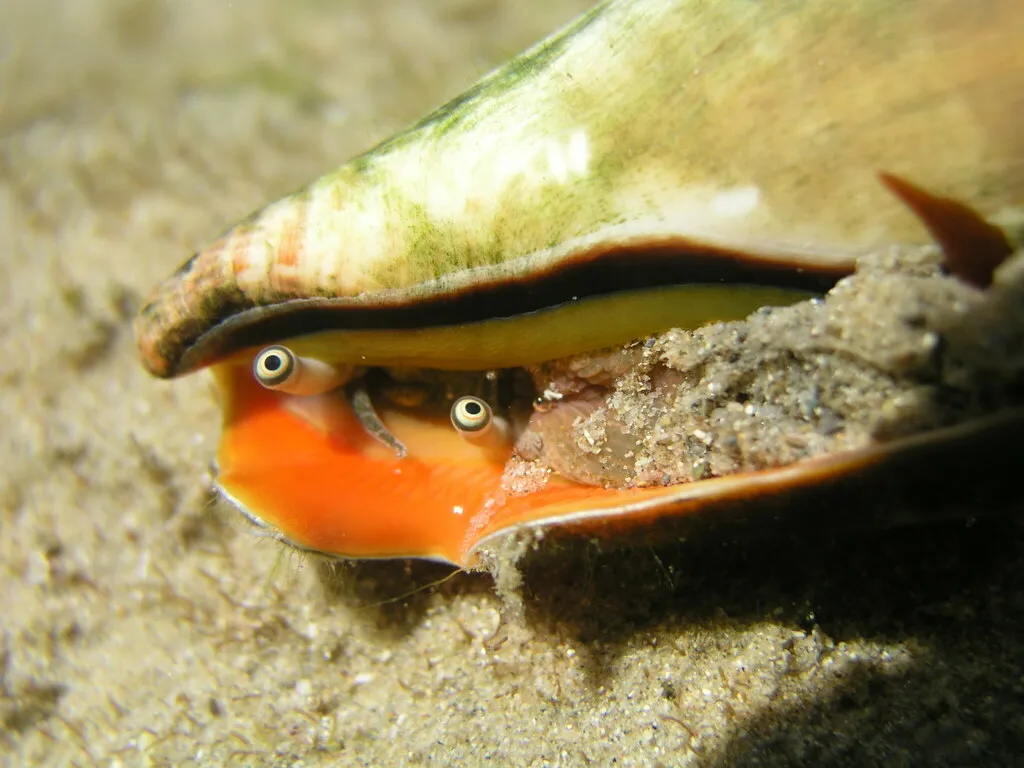
Tiger / strawberry conch
Conomurex luhuanus
Saltwater2.8 in (7 cm) · 20 gal (75 L)75–81°F (24–27°C)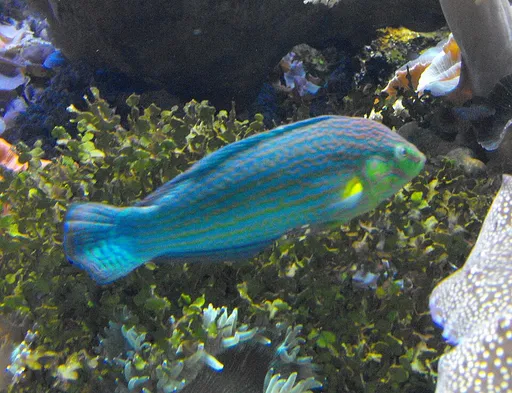
Melanurus wrasse
Halichoeres melanurus
Saltwater5.5 in (14 cm) · 100 gal (380 L)72–79°F (22–26°C)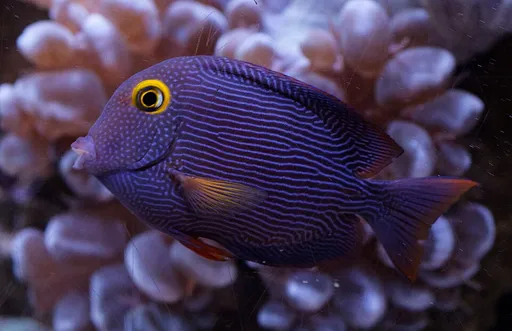
Kole tang
Ctenochaetus strigosus
Saltwater7.1 in (18 cm) · 79 gal (300 L)75–81°F (24–27°C)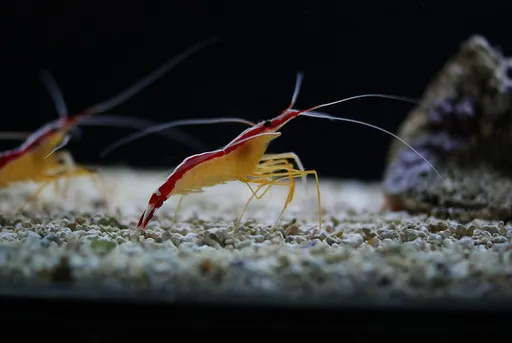
Skunk cleaner shrimp
Lysmata amboinensis
Saltwater2.4 in (6 cm) · 20 gal (75 L)73–81°F (23–27°C)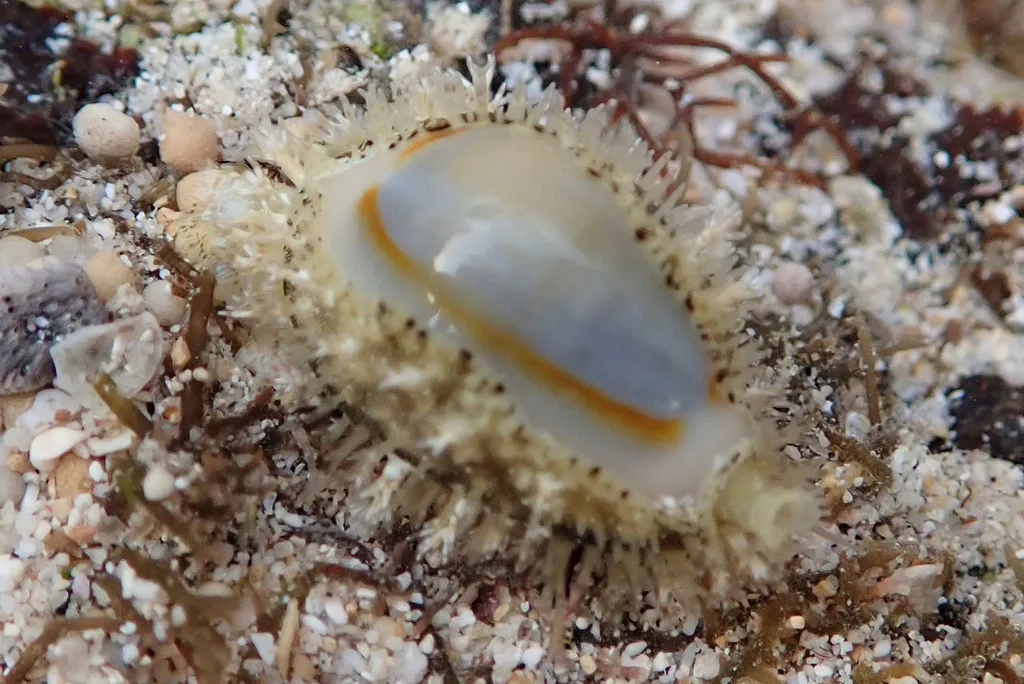
Ring cowrie
Monetaria annulus
Saltwater1.2 in (3 cm) · 20 gal (75 L)75–81°F (24–27°C)
Common questions
What size tank does an Exquisite fairy wrasse need?
An Exquisite fairy wrasse needs at least 90 gal (340 L). It spends most of its time in the middle.
What temperature and pH does an Exquisite fairy wrasse need?
An Exquisite fairy wrasse is comfortable at 72–79°F (22–26°C) with a pH of 8.1–8.4.
How big does an Exquisite fairy wrasse get?
An adult Exquisite fairy wrasse reaches about 4.7 in (12 cm).
Related species
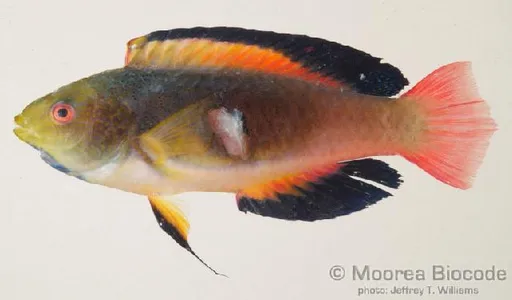
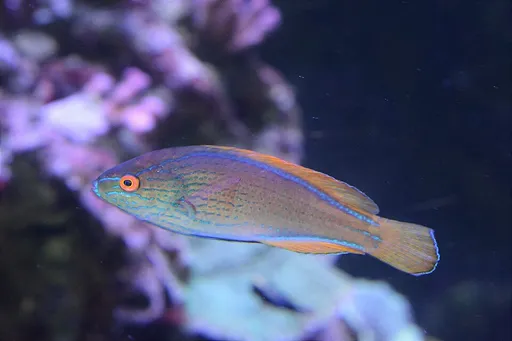 4.7 in (12 cm)90 gal (340 L)73–81°F (23–27°C)
Lineatus fairy wrasse
Cirrhilabrus lineatus
4.7 in (12 cm) · 90 gal (340 L)
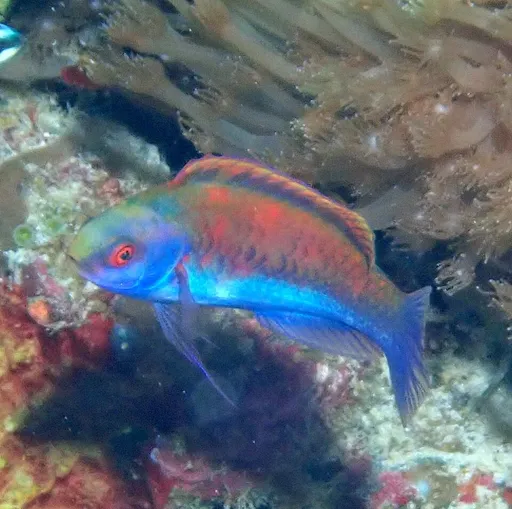
 5.1 in (13 cm)90 gal (340 L)73–81°F (23–27°C)
Scott's fairy wrasse
Cirrhilabrus scottorum
5.1 in (13 cm) · 90 gal (340 L)
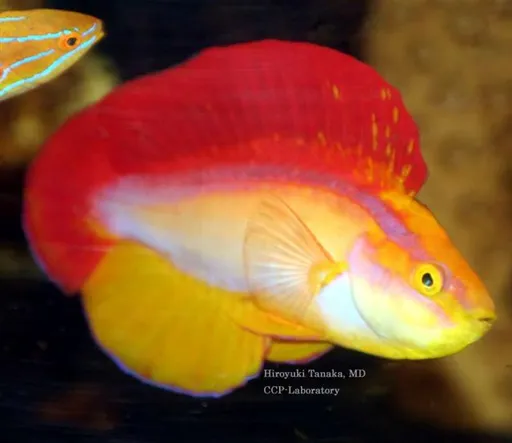
 4.3 in (11 cm)90 gal (340 L)72–79°F (22–26°C)
Solar fairy wrasse
Cirrhilabrus solorensis
4.3 in (11 cm) · 90 gal (340 L)
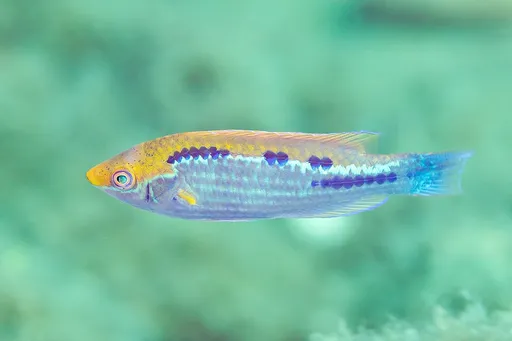
 3.9 in (10 cm)90 gal (340 L)72–79°F (22–26°C)
Flame fairy wrasse
Cirrhilabrus jordani
3.9 in (10 cm) · 90 gal (340 L)
 3.1 in (8 cm)55 gal (208 L)72–79°F (22–26°C)
Lubbock's fairy wrasse
Cirrhilabrus lubbocki
3.1 in (8 cm) · 55 gal (208 L)
 2.8 in (7 cm)53 gal (200 L)73–81°F (23–27°C)
Social fairy wrasse
Cirrhilabrus rubriventralis
2.8 in (7 cm) · 53 gal (200 L)