McCosker's flasher wrasse
Paracheilinus mccoskeri
Also known as McCosker's Wrasse, McCosker Wrasse
SaltwaterFish
Care at a glance
- Temperature
- 72–79°F
- 22–26°C
- pH
- 8.1–8.4
- Adult size
- 3.1 in
- 8 cm
- Minimum tank
- 55 gal
- 208 L
- Temperament
- Peaceful
- Social behavior
- Social
- Swim level
- Middle
- Diet
- Carnivore
- Difficulty
- Easy
- Breeding
- Hard
- Rarity
- Common
- Reef safe
- Reef safe
- Family
- Labridae
- Origin
- Indo-Pacific reefs, from the western Indian Ocean to Fiji
Overview
McCosker's flasher wrasse is a peaceful zooplankton eater that hovers in the open water of a reef tank. It is easy to keep.
Did you know
The flashing that names the McCosker's flasher wrasse is a real courtship move. The male spreads his dorsal and anal fins fully and pulses through his brightest colors in quick bursts while darting around a female. Each display lasts only seconds but repeats over and over around dawn and dusk.
Caring for the McCosker's flasher wrasse
Give a McCosker's flasher wrasse at least 55 gal (208 L) of mostly open swimming space above live rock. It spends most of the day hovering and displaying rather than perching on the rockwork. Like all flasher and fairy wrasses, it is a strong, accurate jumper, so seal the lid completely.
Keep the water at 72 to 79°F (22 to 26°C) with a pH of 8.1 to 8.4. It picks zooplankton from the water column, so feed enriched mysis, brine shrimp and other small meaty foods several times a day.
McCosker's flasher wrasse is peaceful and completely reef safe, and it does not bother corals or invertebrates. Keep a single male, ideally with two or three females. Males spar with rival males of their own or similar flasher wrasse species.
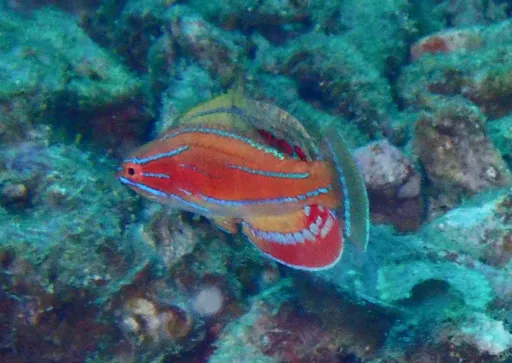
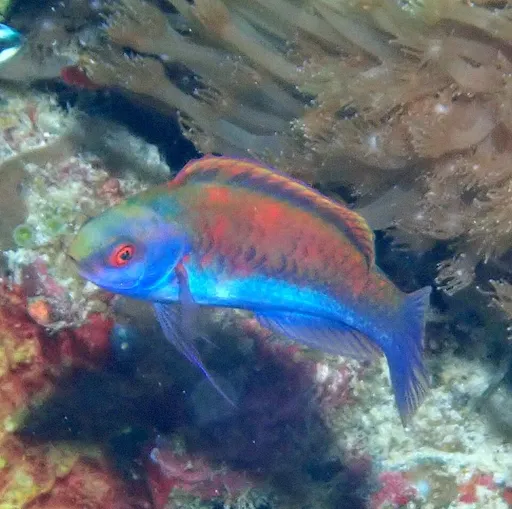
The male has an orange-red body with iridescent blue horizontal stripes and a yellow belly. The first ray of his dorsal fin is elongated and used in display. Females and juveniles stay a duller orange, with faint purple lines near the head. Breeding McCosker's flasher wrasses is hard.
Good to know
Paracheilinus mccoskeri is a protogynous hermaphrodite in the wrasse family Labridae. Like several other reef wrasses, it sleeps wrapped in a self-secreted mucous cocoon at night.
In the wild
McCosker's flasher wrasse lives over outer reef slopes, rubble and algae beds from the western Indian Ocean to Fiji. It is found at depths of 5 to 50 m.
Weekly picks
Tank mates
The McCosker's flasher wrasse is a peaceful, social species that keeps to the middle. These picks share a community profile with it, are safe together in both directions, and overlap on water type, temperature and pH.
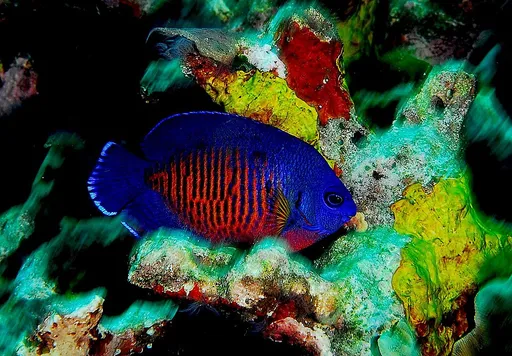
Coral beauty angelfish
Centropyge bispinosa
Saltwater3.9 in (10 cm) · 50 gal (190 L)72–79°F (22–26°C)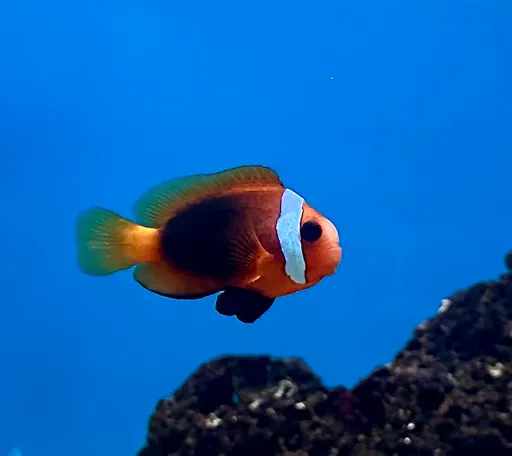
Cinnamon clownfish
Amphiprion melanopus
Saltwater4.7 in (12 cm) · 30 gal (115 L)75–82°F (24–28°C)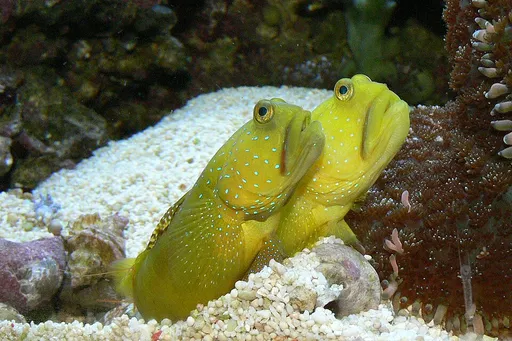
Yellow watchman goby
Cryptocentrus cinctus
Saltwater3.5 in (9 cm) · 20 gal (75 L)72–81°F (22–27°C)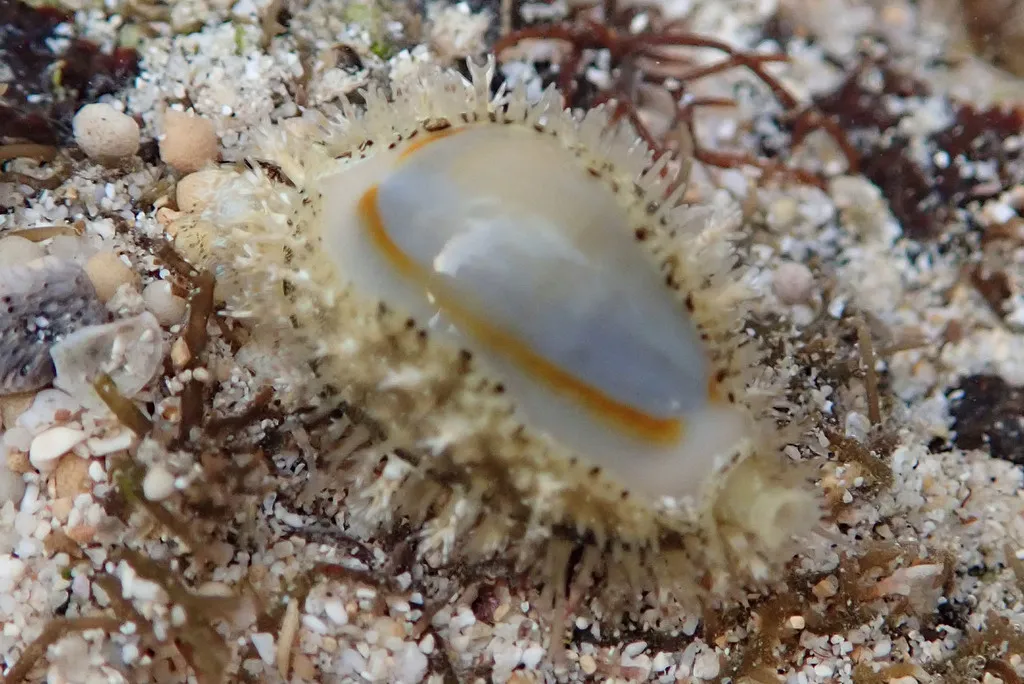
Ring cowrie
Monetaria annulus
Saltwater1.2 in (3 cm) · 20 gal (75 L)75–81°F (24–27°C)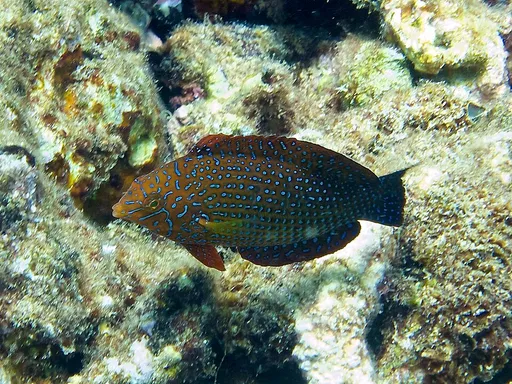
Divided leopard wrasse
Macropharyngodon bipartitus
Saltwater5.1 in (13 cm) · 55 gal (208 L)72–79°F (22–26°C)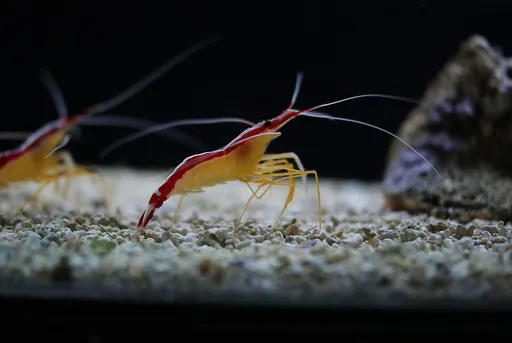
Skunk cleaner shrimp
Lysmata amboinensis
Saltwater2.4 in (6 cm) · 20 gal (75 L)73–81°F (23–27°C)
Common questions
What size tank does a McCosker's flasher wrasse need?
A McCosker's flasher wrasse needs at least 55 gal (208 L). It spends most of its time in the middle.
What temperature and pH does a McCosker's flasher wrasse need?
A McCosker's flasher wrasse is comfortable at 72–79°F (22–26°C) with a pH of 8.1–8.4.
What does a McCosker's flasher wrasse eat?
A McCosker's flasher wrasse picks zooplankton from the water column. Feed it enriched mysis, brine shrimp and other small meaty foods several times a day.
How big does a McCosker's flasher wrasse get?
An adult McCosker's flasher wrasse reaches about 3.1 in (8 cm).
How can you tell a male McCosker's flasher wrasse from a female?
Males have an orange-red body with iridescent blue horizontal stripes, a yellow belly and an elongated first ray on the dorsal fin. Females stay a duller orange, with faint purple lines near the head.
Related species
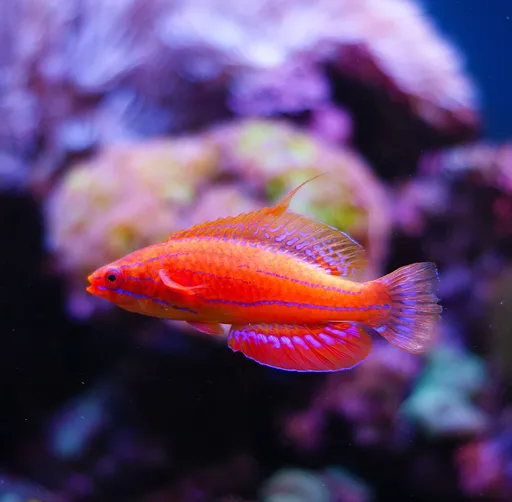 3.1 in (8 cm)53 gal (200 L)73–81°F (23–27°C)
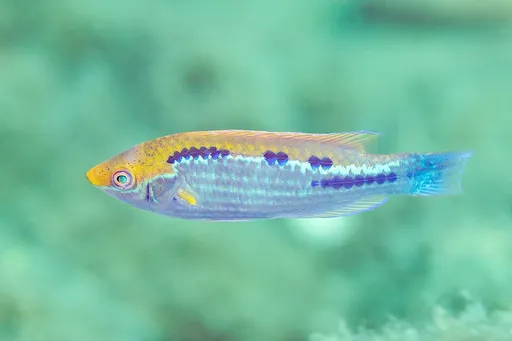
Carpenter's flasher wrasse
Paracheilinus carpenteri
3.1 in (8 cm) · 53 gal (200 L)
 3.1 in (8 cm)55 gal (208 L)72–79°F (22–26°C)
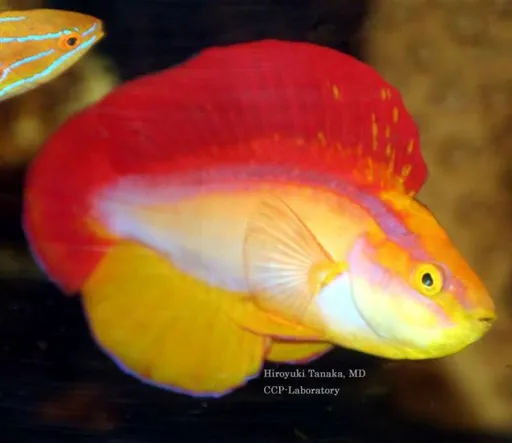
Lubbock's fairy wrasse
Cirrhilabrus lubbocki
3.1 in (8 cm) · 55 gal (208 L)
 3.9 in (10 cm)90 gal (340 L)72–79°F (22–26°C)
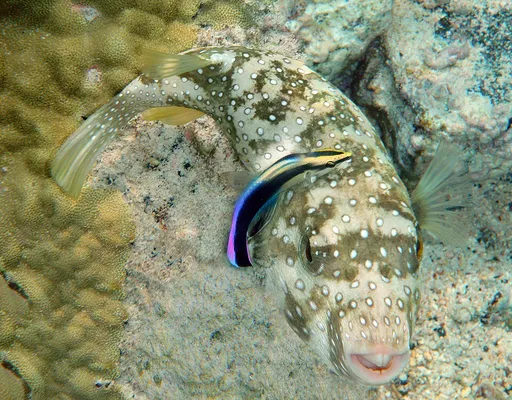
Flame fairy wrasse
Cirrhilabrus jordani
3.9 in (10 cm) · 90 gal (340 L)
 3.9 in (10 cm)70 gal (265 L)75–81°F (24–27°C)
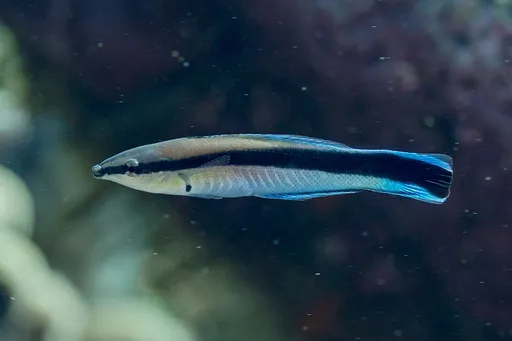
Hawaiian cleaner wrasse
Labroides phthirophagus
3.9 in (10 cm) · 70 gal (265 L)
 4.3 in (11 cm)106 gal (400 L)75–81°F (24–27°C)
Bluestreak cleaner wrasse
Labroides dimidiatus
4.3 in (11 cm) · 106 gal (400 L)
 4.3 in (11 cm)90 gal (340 L)72–79°F (22–26°C)
Solar fairy wrasse
Cirrhilabrus solorensis
4.3 in (11 cm) · 90 gal (340 L)