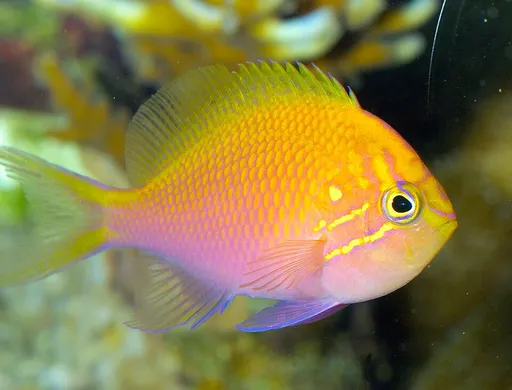
Sunburst anthias
Serranocirrhitus latus
Also known as Fathead Anthias, Fathead Sunburst Anthias, Hawkfish Anthias, Swallowtail Basslet
SaltwaterFish
Care at a glance
- Temperature
- 72–81°F
- 22–27°C
- pH
- 8.1–8.4
- Adult size
- 5.1 in
- 13 cm
- Minimum tank
- 70 gal
- 265 L
- Temperament
- Peaceful
- Social behavior
- Solitary
- Swim level
- Bottom
- Difficulty
- Medium
- Breeding
- Hard
- Rarity
- Common
- Reef safe
- Reef safe
- Family
- Serranidae
- Origin
- Western Pacific reefs, from Indonesia's Molucca Islands to Fiji, north to Japan's Izu Islands and Taiwan
Overview
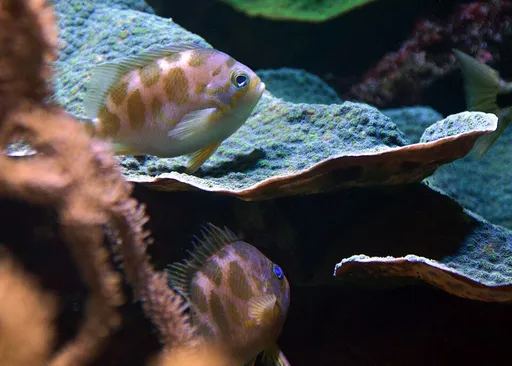
A shy, retiring fish that spends much of its time near cover and can be slow to come out and eat when first introduced, but it is widely considered the hardiest and most forgiving anthias in the hobby once it settles in, which makes it a realistic option for a smaller reef tank than most anthias would tolerate. It still needs several small feedings a day of mysis, enriched brine shrimp, and other meaty foods. It is peaceful toward tankmates, reef safe with corals and invertebrates, and pairs well with gobies and other calm, cave-oriented fish. Keep only one male per tank.
In the wild
Native to the western Pacific, where it hangs in the shade of outer reef drop-offs, caves, and overhangs at 15–70 m, often swimming upside down along cave ceilings rather than out in open water. In the aquarium it wants a tall rockwork structure with real caves and overhangs to patrol, moderate to low lighting, and good flow, but it does not need the wide-open swimming lanes that shoaling anthias require, since it spends most of its time close to shelter.
Good to know
Still a protogynous hermaphrodite despite its more solitary habits: it is usually found alone, in pairs, or in small loose groups rather than large harems, and the dominant fish of a pair will become male if needed. Its genus name, Serranocirrhitus, combines Serranus (grouper) and Cirrhitus (hawkfish), a nod to its unsettled taxonomic history; it was originally classified as a hawkfish before being reassigned to the grouper and anthias family in 1978.
Did you know
Unlike most anthias, which shoal in open water above the reef, this species is usually seen swimming upside down against the ceilings of caves and overhangs, a habit that also earned it the name hawkfish anthias.
Weekly picks
Tank mates
Sunburst anthias is a peaceful, solitary species that keeps to the bottom. These picks share a community profile with it, are safe together in both directions, and overlap on water type, temperature and pH.
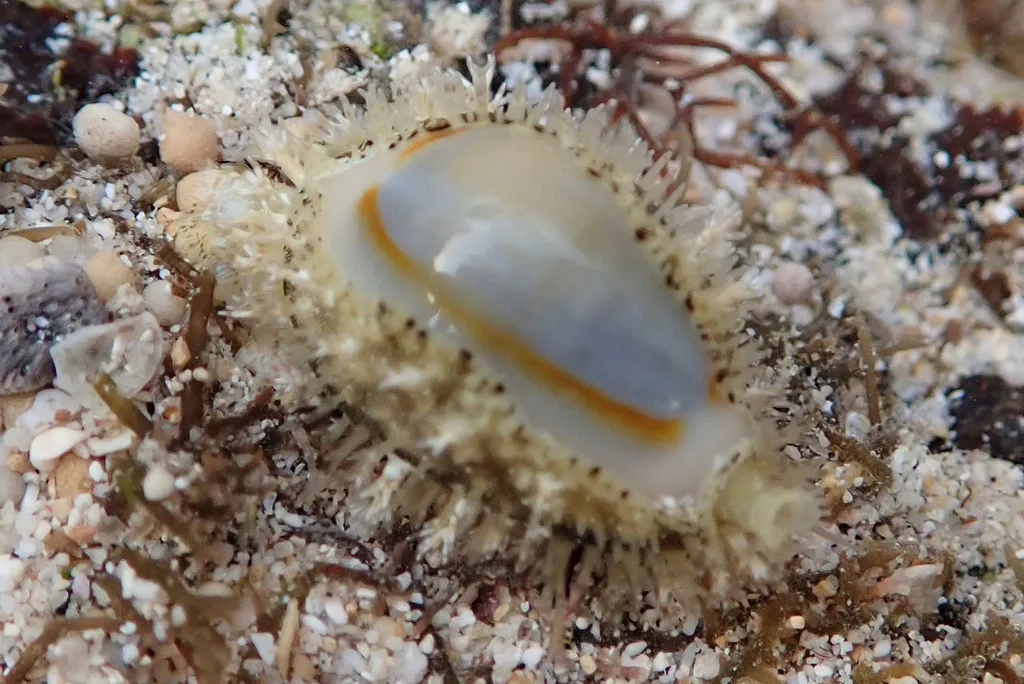
Ring cowrie
Monetaria annulus
Saltwater1.2 in (3 cm) · 20 gal (75 L)75–81°F (24–27°C)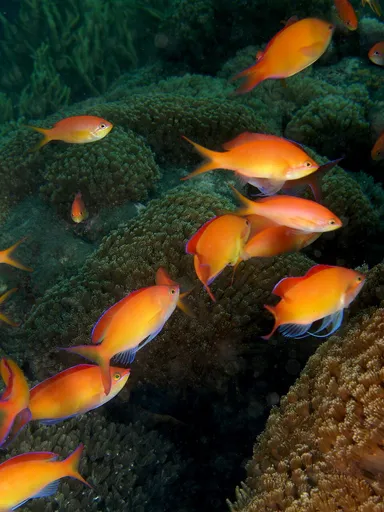
Dispar anthias
Pseudanthias dispar
Saltwater3.7 in (9.5 cm) · 70 gal (265 L)72–79°F (22–26°C)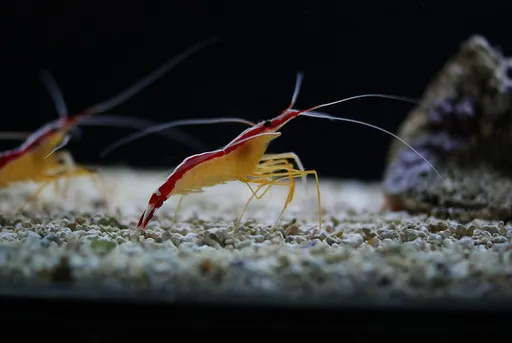
Skunk cleaner shrimp
Lysmata amboinensis
Saltwater2.4 in (6 cm) · 20 gal (75 L)73–81°F (23–27°C)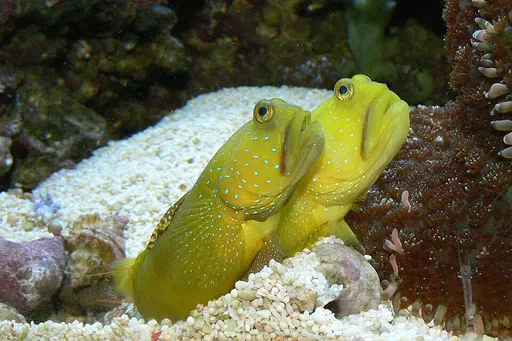
Yellow watchman goby
Cryptocentrus cinctus
Saltwater3.5 in (9 cm) · 20 gal (75 L)72–81°F (22–27°C)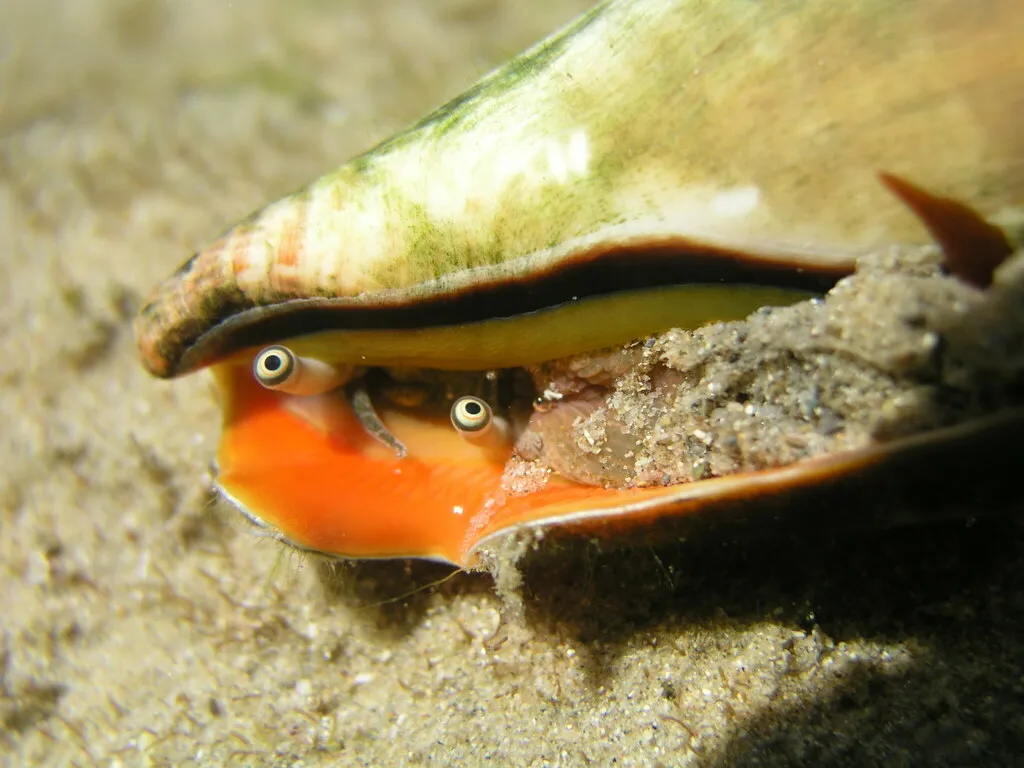
Tiger / strawberry conch
Conomurex luhuanus
Saltwater2.8 in (7 cm) · 20 gal (75 L)75–81°F (24–27°C)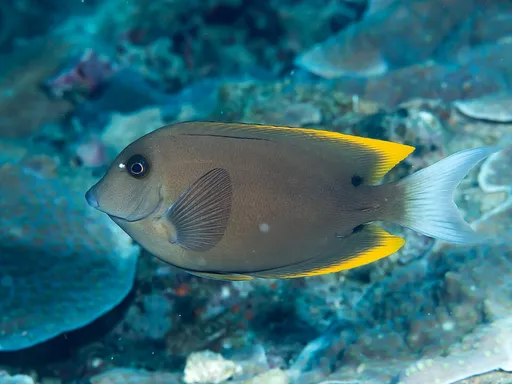
Tomini tang
Ctenochaetus tominiensis
Saltwater6.3 in (16 cm) · 70 gal (265 L)75–81°F (24–27°C)
Common questions
What size tank does a Sunburst anthias need?
A Sunburst anthias needs at least 70 gal (265 L). It spends most of its time in the bottom.
What temperature and pH does a Sunburst anthias need?
A Sunburst anthias is comfortable at 72–81°F (22–27°C) with a pH of 8.1–8.4.
How big does a Sunburst anthias get?
An adult Sunburst anthias reaches about 5.1 in (13 cm).
Related species
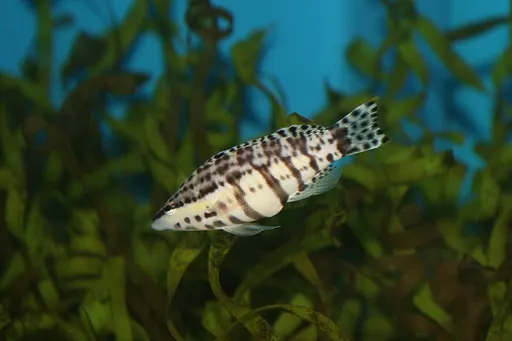 5.1 in (13 cm)53 gal (200 L)73–81°F (23–27°C)
Harlequin bass
Serranus tigrinus
5.1 in (13 cm) · 53 gal (200 L)
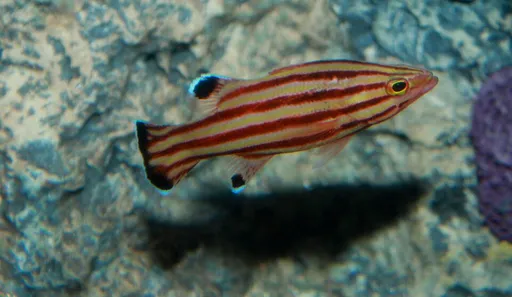 3.1 in (8 cm)29 gal (110 L)75–81°F (24–27°C)
Swissguard basslet
Liopropoma rubre
3.1 in (8 cm) · 29 gal (110 L)
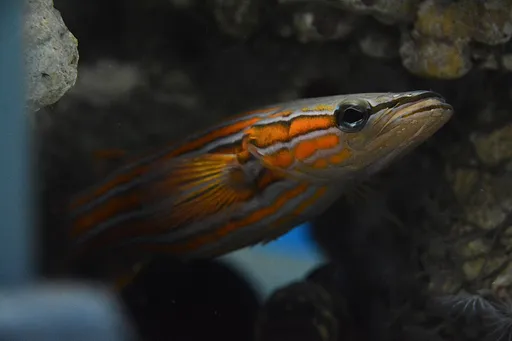 5.9 in (15 cm)79 gal (300 L)72–79°F (22–26°C)
Australian flathead perch
Rainfordia opercularis
5.9 in (15 cm) · 79 gal (300 L)
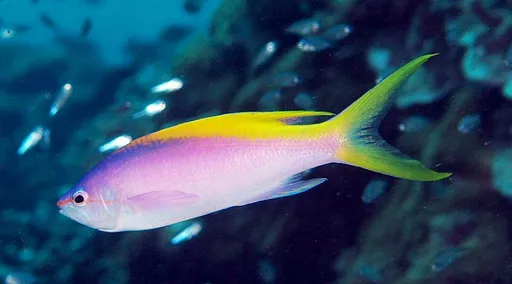 4.7 in (12 cm)75 gal (285 L)75–81°F (24–27°C)
Evansi anthias
Pseudanthias evansi
4.7 in (12 cm) · 75 gal (285 L)
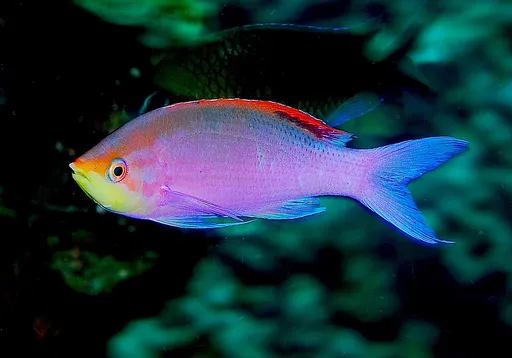 4.7 in (12 cm)75 gal (285 L)75–81°F (24–27°C)
Purple queen anthias
Pseudanthias tuka
4.7 in (12 cm) · 75 gal (285 L)
 5.9 in (15 cm)100 gal (380 L)72–79°F (22–26°C)
Blotched anthias
Odontanthias borbonius
5.9 in (15 cm) · 100 gal (380 L)