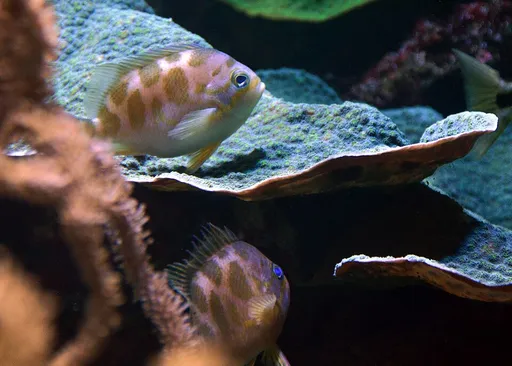
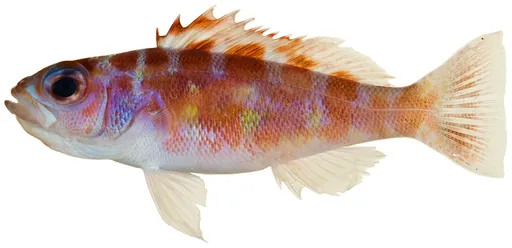
Blotched anthias
Odontanthias borbonius
Also known as Borbonius Anthias, Blotchy Anthias
SaltwaterFish
Care at a glance
- Temperature
- 72–79°F
- 22–26°C
- pH
- 8.1–8.4
- Adult size
- 5.9 in
- 15 cm
- Minimum tank
- 100 gal
- 380 L
- Temperament
- Peaceful
- Social behavior
- Solitary
- Swim level
- Middle
- Difficulty
- Medium
- Breeding
- Hard
- Rarity
- Rare
- Reef safe
- Reef safe
- Family
- Serranidae
- Origin
- Indo-West Pacific deep reefs
Overview
The blotched anthias is a peaceful deepwater anthias for the middle of a reef tank. It is among the hardier anthias once it is feeding.
Did you know
The blotched anthias was captive bred by Biota Palau in 2017, one of the first anthias ever raised in commercial numbers. That turned a deepwater rarity into a fish that arrives already used to aquarium life.
Caring for the blotched anthias
Give the blotched anthias a tank of at least 100 gal (380 L), with substantial rockwork, shaded overhangs and open water in front. Go easy on lighting at first, since new arrivals often hide under bright reef lights.
Keep the temperature at the cool end of the reef range, within 72 to 79°F (22 to 26°C), with a pH of 8.1 to 8.4. Feed small meaty foods such as mysis, enriched brine shrimp and fine pellets a few times a day. Several small meals suit it far better than one large one.
Unlike the shallow-water Pseudanthias, the blotched anthias is usually kept one to a tank. Kept singly, it avoids the harem infighting that complicates other anthias. Choose calm tank mates, because it holds its own but should not share a tank with bullies.
It ignores corals and ornamental invertebrates, so it is fully reef safe. Breeding it is hard.
Good to know
Odontanthias borbonius was described by Valenciennes in 1828 and belongs to the family Serranidae. It is a planktivore, built for picking food from the water column.
In the wild
The blotched anthias comes from deep reef walls and rubble slopes in the Indo-West Pacific, roughly 90 to 300 meters down. The light there is dim and the water stays cool. It hovers near ledges and ducks into caves.
Weekly picks
Tank mates
The blotched anthias is a peaceful, solitary species that keeps to the middle. These picks share a community profile with it, are safe together in both directions, and overlap on water type, temperature and pH.
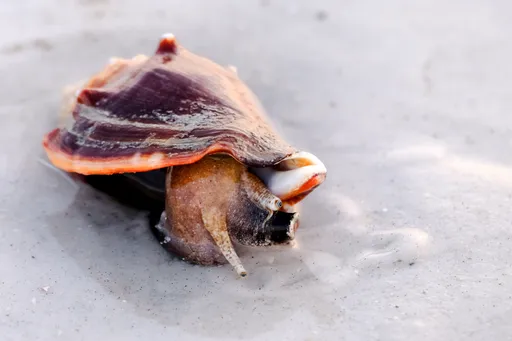
Fighting conch
Strombus alatus
Saltwater3.1 in (8 cm) · 20 gal (75 L)75–81°F (24–27°C)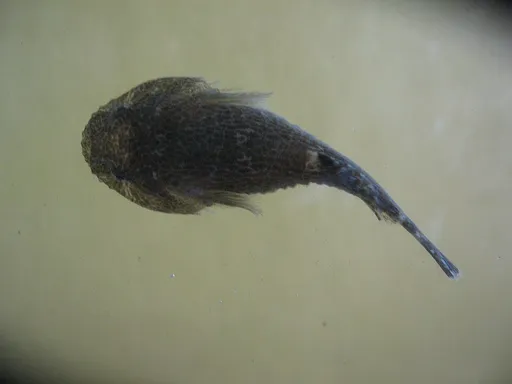
Skilletfish
Gobiesox strumosus
Saltwater3.1 in (8 cm) · 20 gal (76 L)72–79°F (22–26°C)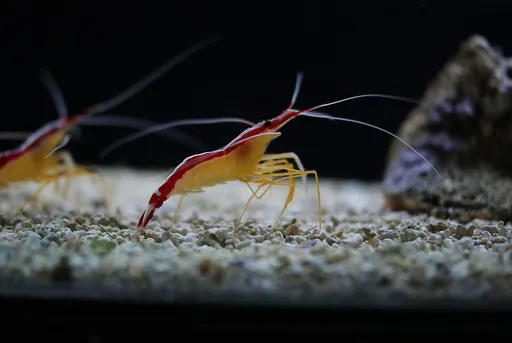
Skunk cleaner shrimp
Lysmata amboinensis
Saltwater2.4 in (6 cm) · 20 gal (75 L)73–81°F (23–27°C)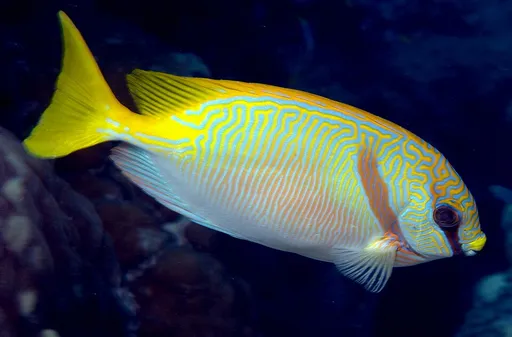
Barred rabbitfish
Siganus doliatus
Saltwater9.8 in (25 cm) · 106 gal (400 L)75–81°F (24–27°C)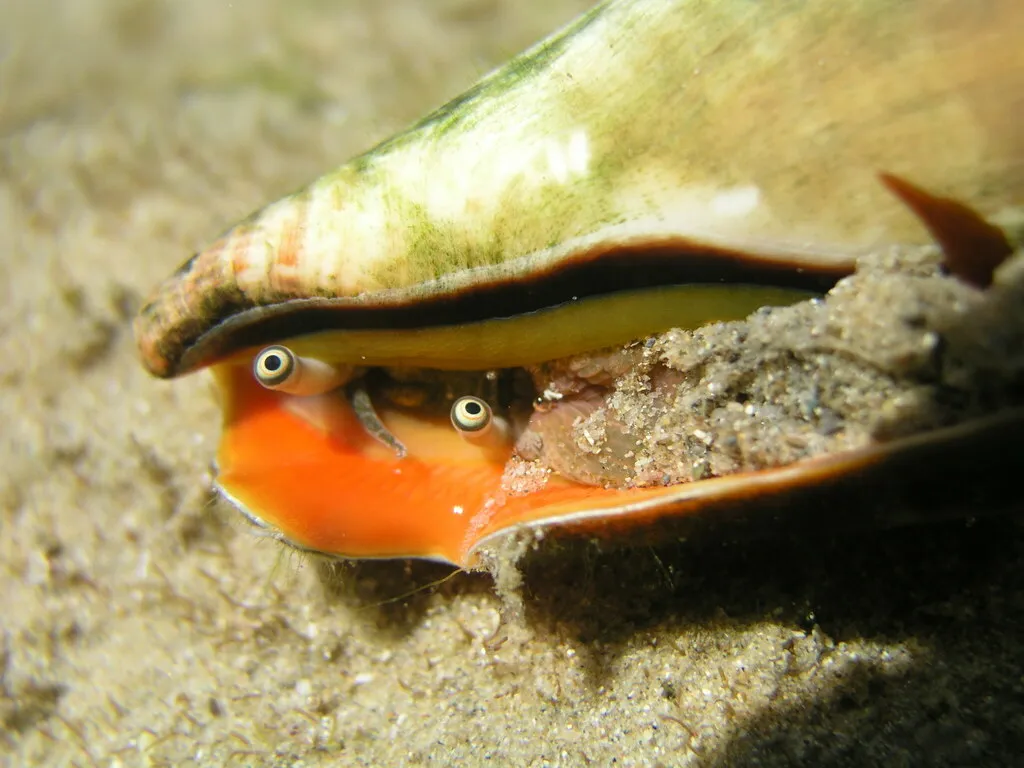
Tiger / strawberry conch
Conomurex luhuanus
Saltwater2.8 in (7 cm) · 20 gal (75 L)75–81°F (24–27°C)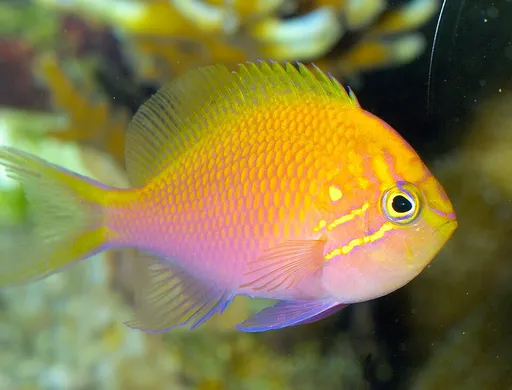
Sunburst anthias
Serranocirrhitus latus
Saltwater5.1 in (13 cm) · 70 gal (265 L)72–81°F (22–27°C)
Common questions
What size tank does a blotched anthias need?
A blotched anthias needs at least 100 gal (380 L). It spends most of its time in the middle.
What temperature and pH does a blotched anthias need?
A blotched anthias is comfortable at 72–79°F (22–26°C) with a pH of 8.1–8.4.
What does a blotched anthias eat?
A blotched anthias eats small meaty foods such as mysis, enriched brine shrimp and fine pellets. Feed it a few times a day, since several small meals suit it better than one large one.
How big does a blotched anthias get?
An adult blotched anthias reaches about 5.9 in (15 cm).
Related species
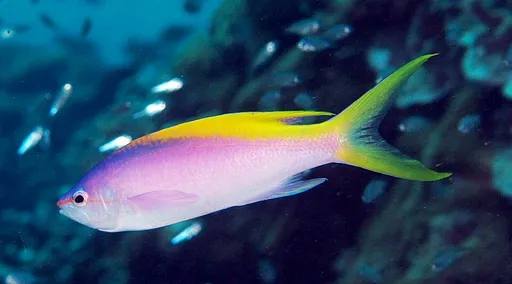 4.7 in (12 cm)75 gal (285 L)75–81°F (24–27°C)
Evansi anthias
Pseudanthias evansi
4.7 in (12 cm) · 75 gal (285 L)
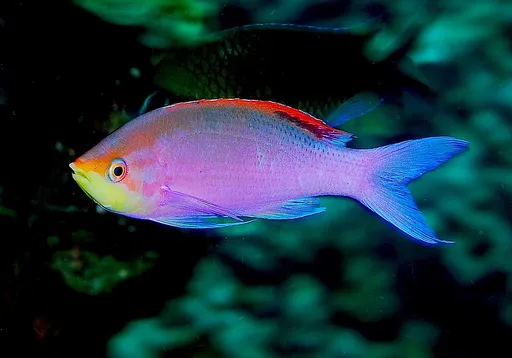 4.7 in (12 cm)75 gal (285 L)75–81°F (24–27°C)
Purple queen anthias
Pseudanthias tuka
4.7 in (12 cm) · 75 gal (285 L)
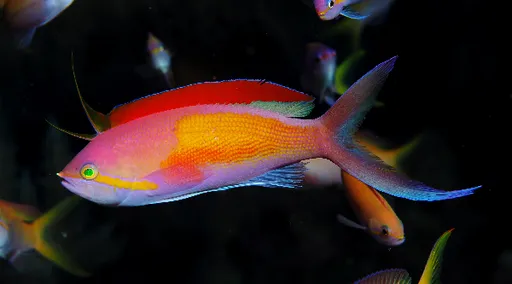 3.9 in (10 cm)70 gal (265 L)72–79°F (22–26°C)
Threadfin anthias
Nemanthias carberryi
3.9 in (10 cm) · 70 gal (265 L)
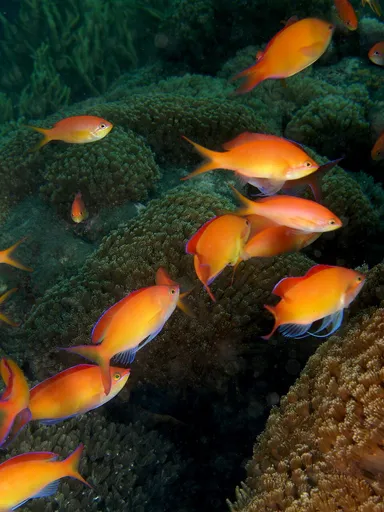 3.7 in (9.5 cm)70 gal (265 L)72–79°F (22–26°C)
Dispar anthias
Pseudanthias dispar
3.7 in (9.5 cm) · 70 gal (265 L)
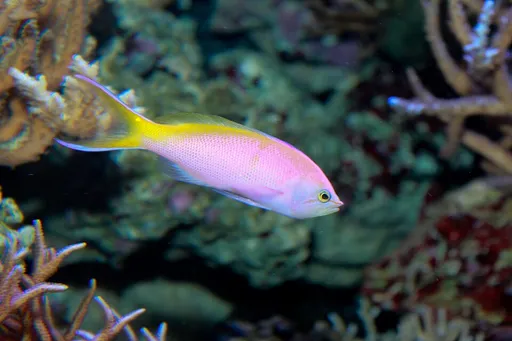 3.5 in (9 cm)70 gal (265 L)72–79°F (22–26°C)
Bartlett's anthias
Pseudanthias bartlettorum
3.5 in (9 cm) · 70 gal (265 L)
 3.1 in (8 cm)29 gal (110 L)72–81°F (22–27°C)
Chalk bass
Serranus tortugarum
3.1 in (8 cm) · 29 gal (110 L)