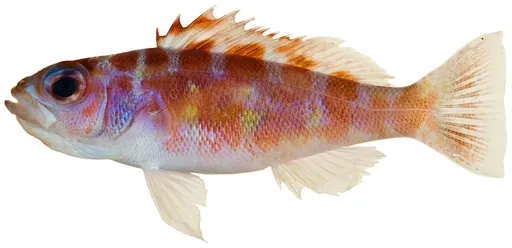
Chalk bass
Serranus tortugarum
Also known as Chalk Basslet, Tortugas Bass
SaltwaterFish
Care at a glance
- Temperature
- 72–81°F
- 22–27°C
- pH
- 8.1–8.4
- Adult size
- 3.1 in
- 8 cm
- Minimum tank
- 29 gal
- 110 L
- Temperament
- Peaceful
- Social behavior
- Social
- Swim level
- Middle
- Difficulty
- Beginner
- Breeding
- Hard
- Rarity
- Common
- Reef safe
- Reef safe
- Family
- Serranidae
- Origin
- Western Atlantic, from the Bahamas and southern Florida through the Caribbean to Venezuela
Overview
Chalk bass are genuinely peaceful and among the easiest small fish to keep with a wide range of tankmates, showing little aggression toward anything outside their own genus. Unlike most fish in this group they do well in a group: add three or five at once, ideally collected or introduced together, and they settle into a loose hierarchy rather than fighting. They are completely reef safe, though a larger chalk bass may eat very small ornamental shrimp. A hardy, unfussy carnivore, it takes chopped seafood, mysis, brine shrimp, and flake food without hesitation.
In the wild
Native to the western Atlantic, from the Bahamas and southern Florida through the Caribbean to Venezuela, where it hovers over sand, rubble, and rocky bottoms and shelters inside empty conch shells and crevices. It stays close to the substrate in loose, easygoing groups rather than roaming open water. A tank of 110 liters or more with live rock and some open sand suits a single fish, with roughly another 55 to 75 liters of space for each additional chalk bass added to the group.
Good to know
Serranus tortugarum belongs to the sea bass family Serranidae, in the same subfamily as the groupers and anthias, and its species name comes from the Dry Tortugas. Unlike the protogynous dottybacks and basslets in this group, it is a simultaneous hermaphrodite: every adult carries functional ovaries and testes at the same time. Paired chalk bass take turns in the male and female role from one spawning bout to the next, a well-studied behavior called egg trading, and a bonded pair may swap roles many times in a single day.
Did you know
Because every chalk bass is both male and female at once, a bonded pair trades eggs back and forth and swaps which partner plays the male role, sometimes switching roles up to twenty times over the course of a single day so that both fish get a turn fertilizing eggs and being fertilized.
Weekly picks
Tank mates
Chalk bass is a peaceful, social species that keeps to the middle. These picks share a community profile with it, are safe together in both directions, and overlap on water type, temperature and pH.
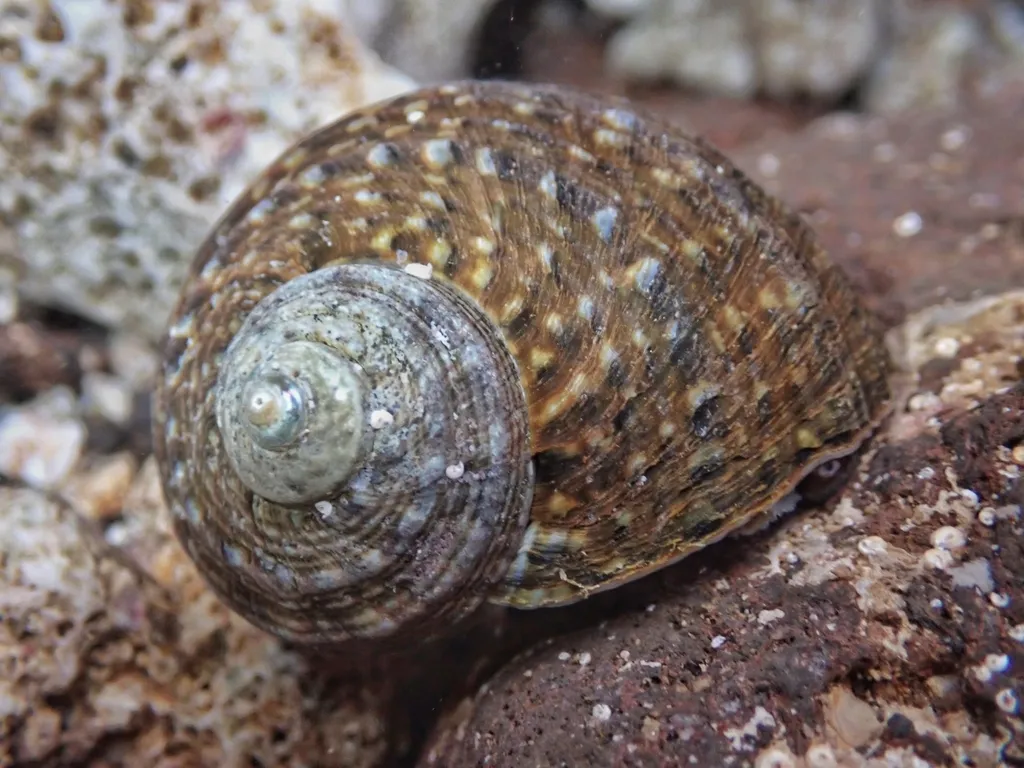
Mexican turbo snail
Turbo fluctuosus
Saltwater2.4 in (6 cm) · 11 gal (40 L)75–81°F (24–27°C)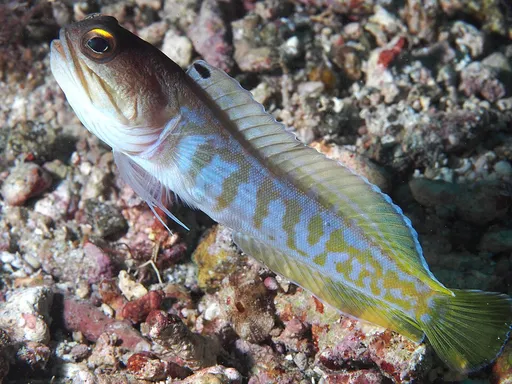
Gold-specs jawfish
Opistognathus randalli
Saltwater3.9 in (10 cm) · 30 gal (115 L)73–81°F (23–27°C)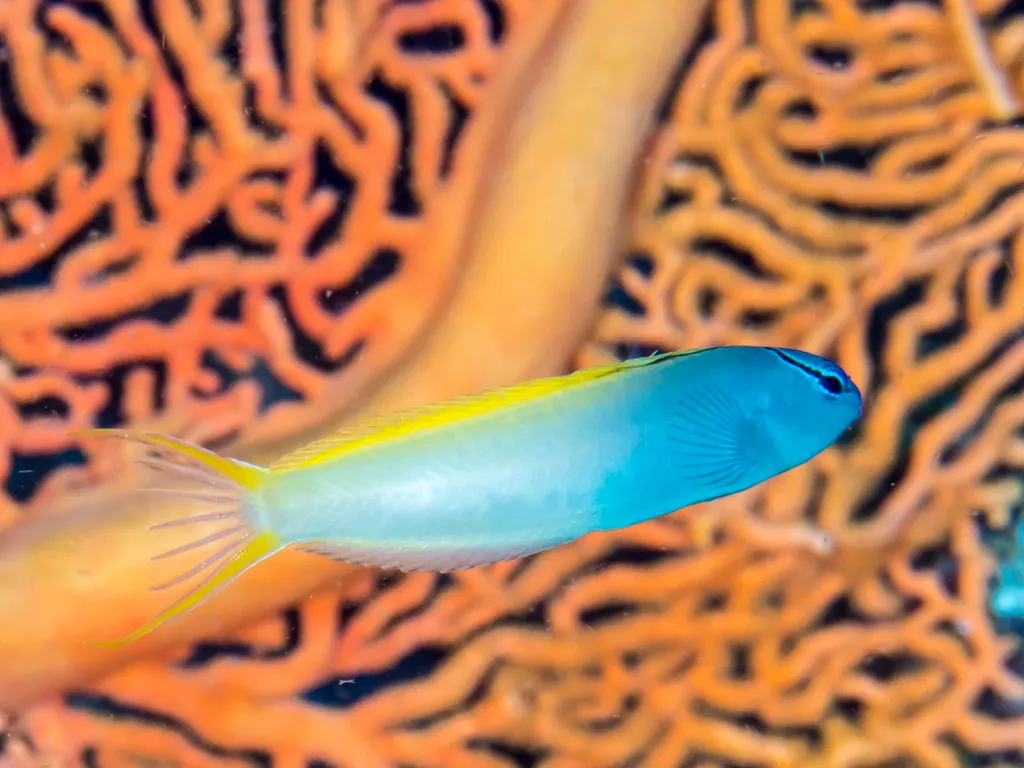
Forktail fang blenny
Meiacanthus atrodorsalis
Saltwater4.3 in (11 cm) · 30 gal (114 L)72–79°F (22–26°C)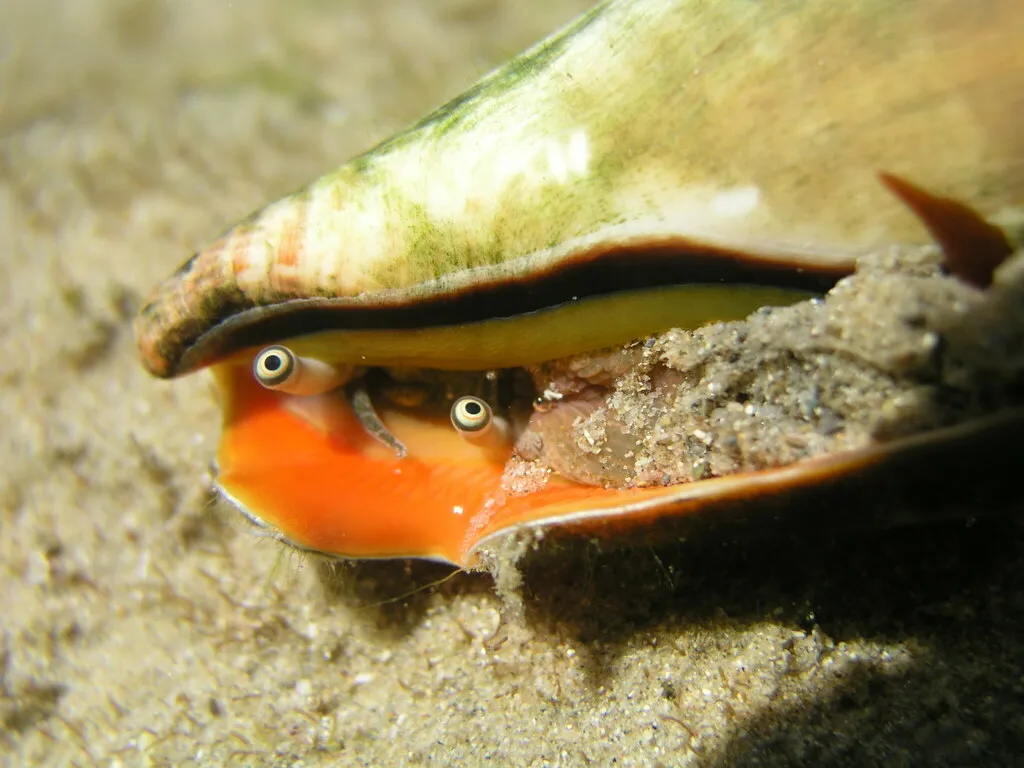
Tiger / strawberry conch
Conomurex luhuanus
Saltwater2.8 in (7 cm) · 20 gal (75 L)75–81°F (24–27°C)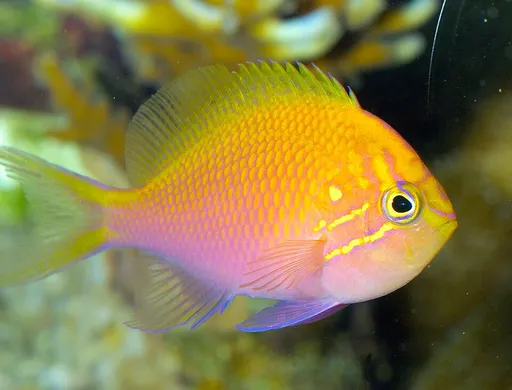
Sunburst anthias
Serranocirrhitus latus
Saltwater5.1 in (13 cm) · 70 gal (265 L)72–81°F (22–27°C)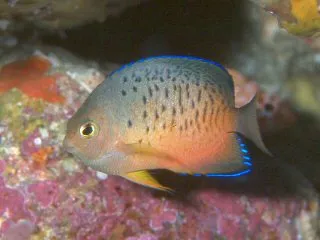
Rusty angelfish
Centropyge ferrugata
Saltwater3.9 in (10 cm) · 30 gal (115 L)72–79°F (22–26°C)
Common questions
What size tank does a Chalk bass need?
A Chalk bass needs at least 29 gal (110 L). It spends most of its time in the middle.
What temperature and pH does a Chalk bass need?
A Chalk bass is comfortable at 72–81°F (22–27°C) with a pH of 8.1–8.4.
How big does a Chalk bass get?
An adult Chalk bass reaches about 3.1 in (8 cm).
Related species
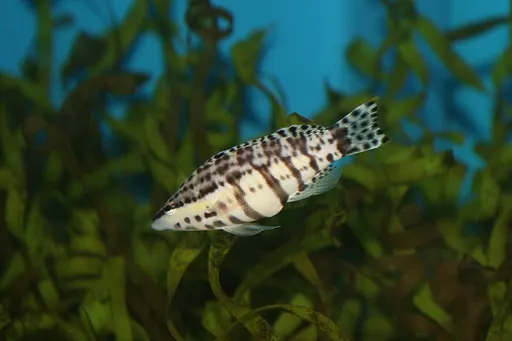 5.1 in (13 cm)53 gal (200 L)73–81°F (23–27°C)
Harlequin bass
Serranus tigrinus
5.1 in (13 cm) · 53 gal (200 L)
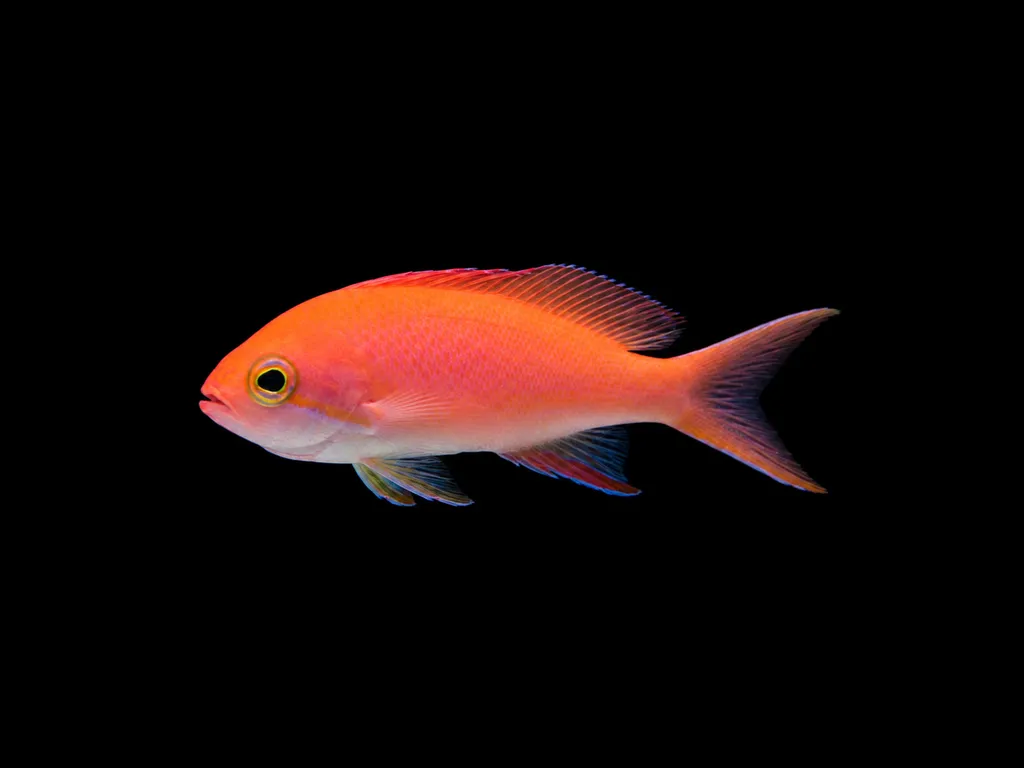 3.1 in (8 cm)75 gal (285 L)75–81°F (24–27°C)
Randall's anthias
Pseudanthias randalli
3.1 in (8 cm) · 75 gal (285 L)
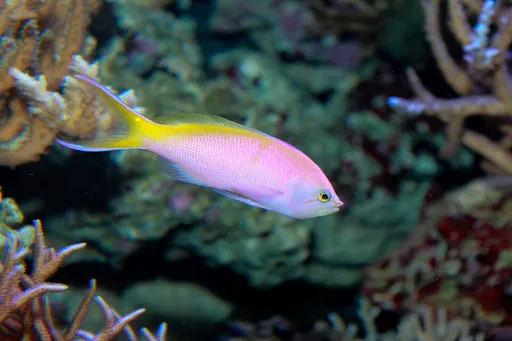 3.5 in (9 cm)70 gal (265 L)72–79°F (22–26°C)
Bartlett's anthias
Pseudanthias bartlettorum
3.5 in (9 cm) · 70 gal (265 L)
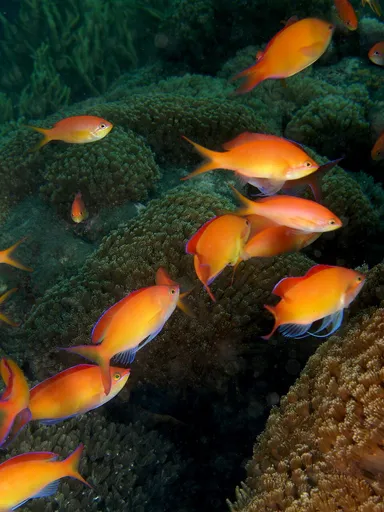 3.7 in (9.5 cm)70 gal (265 L)72–79°F (22–26°C)
Dispar anthias
Pseudanthias dispar
3.7 in (9.5 cm) · 70 gal (265 L)
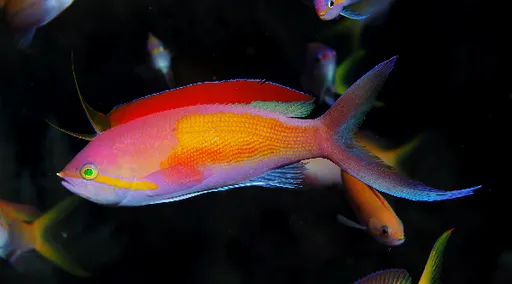 3.9 in (10 cm)70 gal (265 L)72–79°F (22–26°C)
Threadfin anthias
Nemanthias carberryi
3.9 in (10 cm) · 70 gal (265 L)
 4.7 in (12 cm)75 gal (285 L)75–81°F (24–27°C)
Evansi anthias
Pseudanthias evansi
4.7 in (12 cm) · 75 gal (285 L)