Purple queen anthias
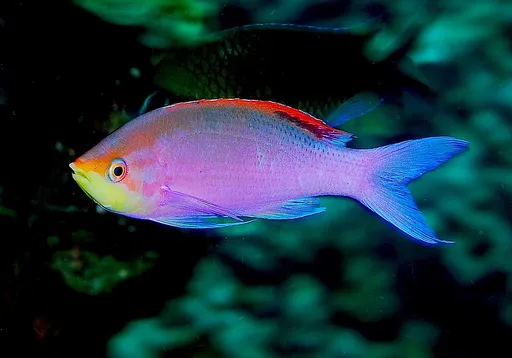
Pseudanthias tuka
Also known as Purple Anthias, Yellowstriped Fairy Basslet, Tuka Anthias, Purple Queen
SaltwaterFish
Care at a glance
- Temperature
- 75–81°F
- 24–27°C
- pH
- 8.1–8.4
- Adult size
- 4.7 in
- 12 cm
- Minimum tank
- 75 gal
- 285 L
- Temperament
- Peaceful
- Social behavior
- Social
- Swim level
- Middle
- Difficulty
- Difficult
- Breeding
- Hard
- Rarity
- Common
- Reef safe
- Reef safe
- Family
- Serranidae
- Origin
- Western Pacific from Indonesia and the Philippines to the Great Barrier Reef, over outer reef slopes in large aggregations.
Overview
The purple queen anthias is a peaceful plankton feeder for the open middle water of a reef tank. It is for experienced keepers who can commit to frequent feedings.
Did you know
The purple queen anthias will only eat food that is still drifting in the water. It ignores anything that has landed on the rock or sand.
Caring for the purple queen anthias
Give purple queen anthias at least 75 gal (285 L), with strong, constant flow and open swimming room in the middle of the tank. They are reef safe and ignore corals and clams.
Keep the water at 75 to 81°F (24 to 27°C) with a pH of 8.1 to 8.4. Feeding is the hard part, since they are notoriously fussy about food in captivity. Offer copepods, mysis, enriched brine shrimp and micro-pellets three to five times a day. Aim each feeding into the current so it drifts past them before it settles.
The purple queen anthias is peaceful and community safe, and it does fine alone or in a group. Males are deep magenta, while females are purple with a yellow stripe along the back. Breeding it is hard.
Good to know
The purple queen anthias, Pseudanthias tuka, is an anthias in the family Serranidae. It also goes by purple anthias, yellowstriped fairy basslet and tuka anthias. As with other anthias, the dominant fish in a group is a male that began life as a female.
In the wild
Purple queen anthias live in the western Pacific, from Indonesia and the Philippines to the Great Barrier Reef. They gather in big mixed-sex shoals over the outer reef slopes, hanging in the current to snatch plankton. Their diet is almost entirely zooplankton picked from the water column.
Weekly picks
Tank mates
The purple queen anthias is a peaceful, social species that keeps to the middle. These picks share a community profile with it, are safe together in both directions, and overlap on water type, temperature and pH.
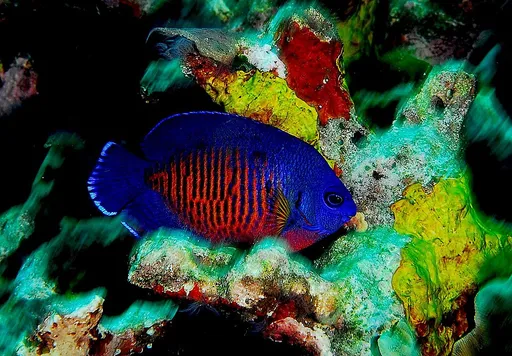
Coral beauty angelfish
Centropyge bispinosa
Saltwater3.9 in (10 cm) · 50 gal (190 L)72–79°F (22–26°C)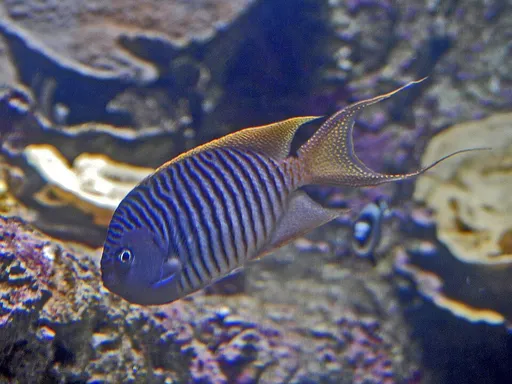
Swallowtail angelfish
Genicanthus melanospilos
Saltwater7.1 in (18 cm) · 106 gal (400 L)72–79°F (22–26°C)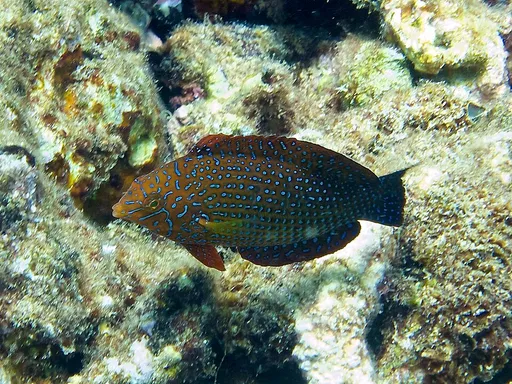
Divided leopard wrasse
Macropharyngodon bipartitus
Saltwater5.1 in (13 cm) · 55 gal (208 L)72–79°F (22–26°C)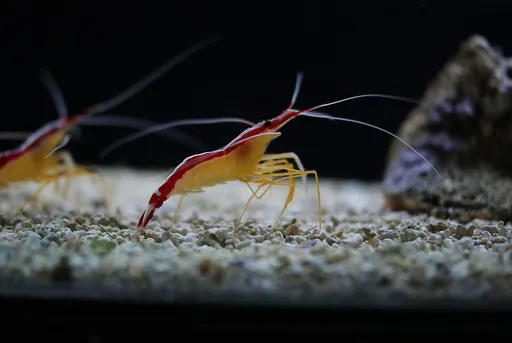
Skunk cleaner shrimp
Lysmata amboinensis
Saltwater2.4 in (6 cm) · 20 gal (75 L)73–81°F (23–27°C)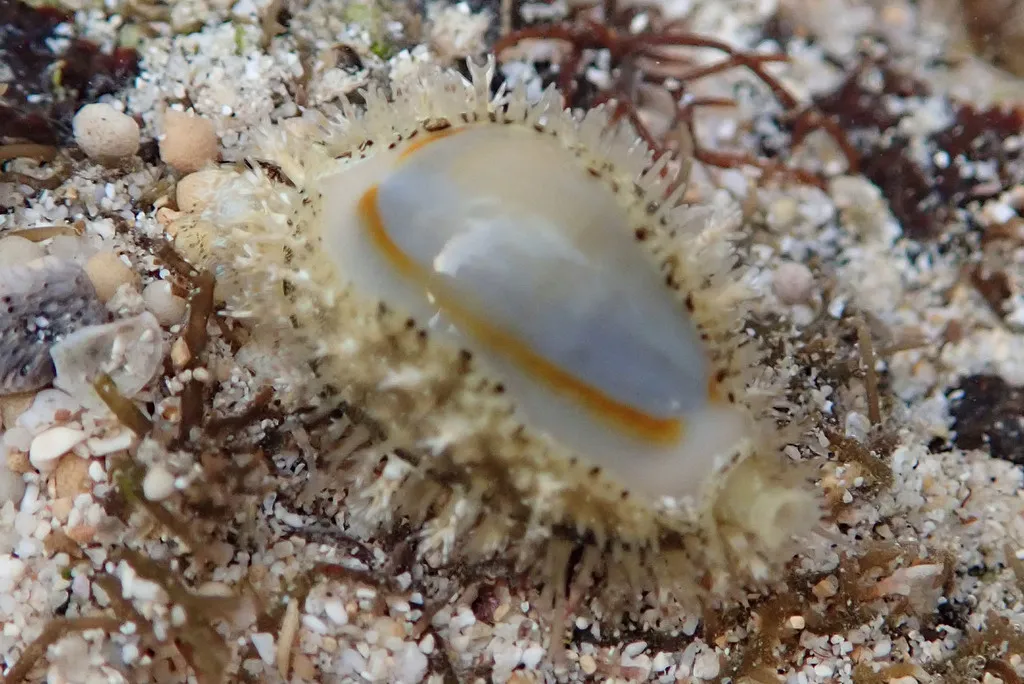
Ring cowrie
Monetaria annulus
Saltwater1.2 in (3 cm) · 20 gal (75 L)75–81°F (24–27°C)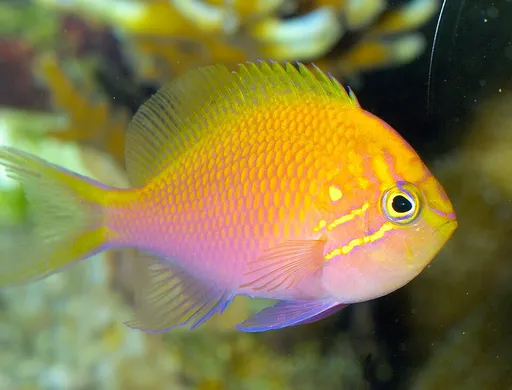
Sunburst anthias
Serranocirrhitus latus
Saltwater5.1 in (13 cm) · 70 gal (265 L)72–81°F (22–27°C)
Common questions
What size tank does a purple queen anthias need?
A purple queen anthias needs at least 75 gal (285 L). It spends most of its time in the middle.
What temperature and pH does a purple queen anthias need?
A purple queen anthias is comfortable at 75–81°F (24–27°C) with a pH of 8.1–8.4.
What does a purple queen anthias eat?
A purple queen anthias eats copepods, mysis, enriched brine shrimp and micro-pellets. Feed it three to five times a day, aiming the food into the current.
How big does a purple queen anthias get?
An adult purple queen anthias reaches about 4.7 in (12 cm).
How can you tell a male purple queen anthias from a female?
Males are deep magenta, while females are purple with a yellow stripe along the back.
Related species
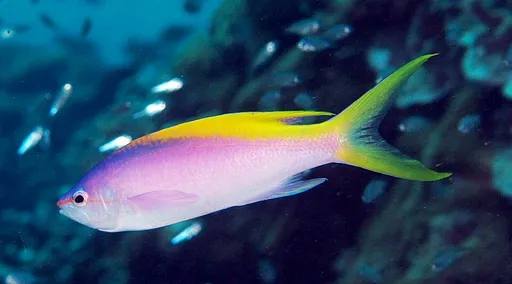 4.7 in (12 cm)75 gal (285 L)75–81°F (24–27°C)
Evansi anthias
Pseudanthias evansi
4.7 in (12 cm) · 75 gal (285 L)
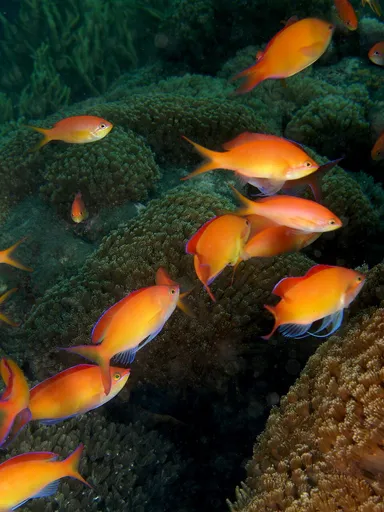 3.7 in (9.5 cm)70 gal (265 L)72–79°F (22–26°C)
Dispar anthias
Pseudanthias dispar
3.7 in (9.5 cm) · 70 gal (265 L)
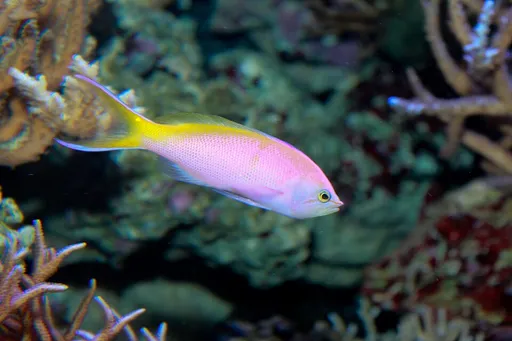 3.5 in (9 cm)70 gal (265 L)72–79°F (22–26°C)
Bartlett's anthias
Pseudanthias bartlettorum
3.5 in (9 cm) · 70 gal (265 L)
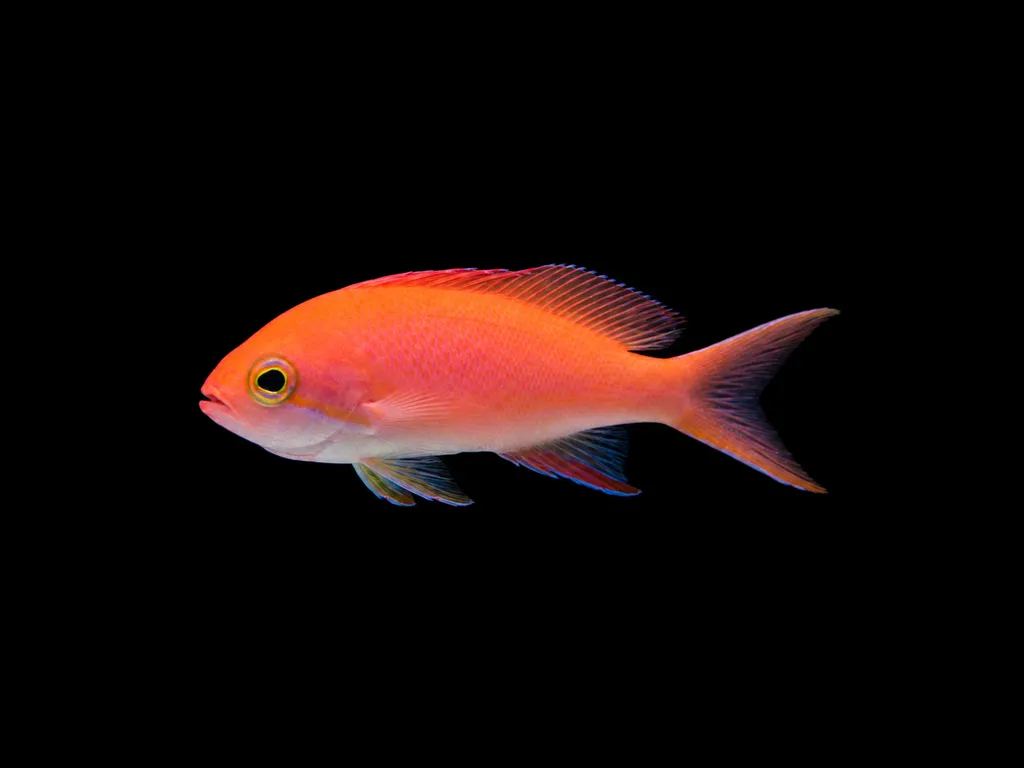 3.1 in (8 cm)75 gal (285 L)75–81°F (24–27°C)
Randall's anthias
Pseudanthias randalli
3.1 in (8 cm) · 75 gal (285 L)
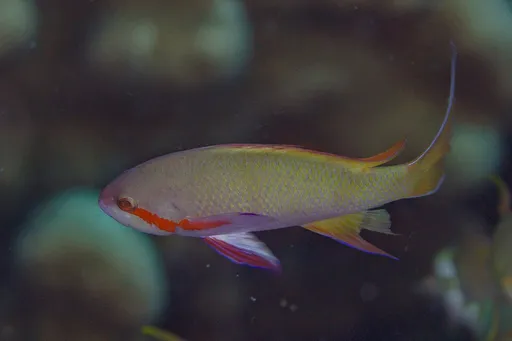 4.7 in (12 cm)90 gal (340 L)75–81°F (24–27°C)
Huchtii anthias
Pseudanthias huchtii
4.7 in (12 cm) · 90 gal (340 L)
 5.1 in (13 cm)125 gal (475 L)72–79°F (22–26°C)
Bicolor anthias
Pseudanthias bicolor
5.1 in (13 cm) · 125 gal (475 L)