Bicolor anthias
Pseudanthias bicolor
Also known as Yellowback Basslet, Yellowback Anthias, Bicolor Basslet
SaltwaterFish

Care at a glance
- Temperature
- 72–79°F
- 22–26°C
- pH
- 8.1–8.4
- Adult size
- 5.1 in
- 13 cm
- Minimum tank
- 125 gal
- 475 L
- Temperament
- Mostly peaceful
- Social behavior
- Social
- Swim level
- Middle
- Difficulty
- Easy
- Breeding
- Hard
- Rarity
- Common
- Reef safe
- Reef safe
- Family
- Serranidae
- Origin
- Indo-Pacific reefs, from East Africa and Mauritius to Hawaii and the Line Islands
Overview
Considered one of the easier anthias to start with, but it still has a small stomach and needs several feedings a day to hold its weight and color. It can be territorial toward its own kind and other similarly built anthias, so give it room if keeping more than one male, but it leaves corals, clams, and ornamental shrimp completely alone and is a safe reef tankmate. Best kept singly or as one male with multiple females in a tank with enough open water for it to hold a loose territory.
In the wild
Found on coastal and outer reef slopes across a wide stretch of the Indo-Pacific, usually in small groups at 5–60 m where current is strong and zooplankton is abundant. It shelters among ledges and overhangs in the rockwork and rises into open water to feed. In the aquarium it wants a large footprint of open swimming room over a rockscape with plenty of caves and an overhang or two for shade, along with brisk water movement broken up by a few calmer pockets to rest in.
Good to know
A protogynous hermaphrodite that lives in small harems: every individual starts out female, and the largest female will convert to male if the group loses its male. Males are pale violet with a yellow back that extends onto the upper tail and an elongated first dorsal spine trimmed in purple, while females are lavender with a more subdued yellow back. It is the most widely distributed species in the genus Pseudanthias, found from the western Indian Ocean to the central Pacific.
Did you know
It is the most widely ranging anthias in the genus Pseudanthias, turning up on reefs from the East African coast all the way to Hawaii, a spread far wider than any of its close relatives.
Weekly picks
Tank mates
Bicolor anthias is a mostly peaceful, social species that keeps to the middle. These picks share a community profile with it, are safe together in both directions, and overlap on water type, temperature and pH.
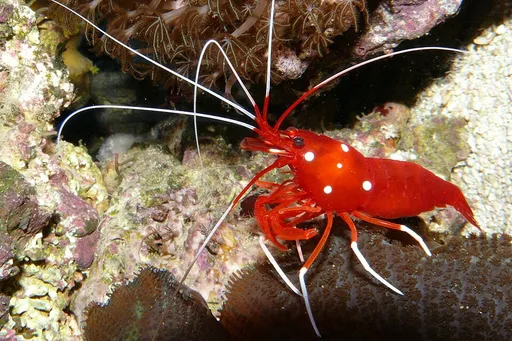
Fire shrimp
Lysmata debelius
Saltwater2.4 in (6 cm) · 20 gal (75 L)72–79°F (22–26°C)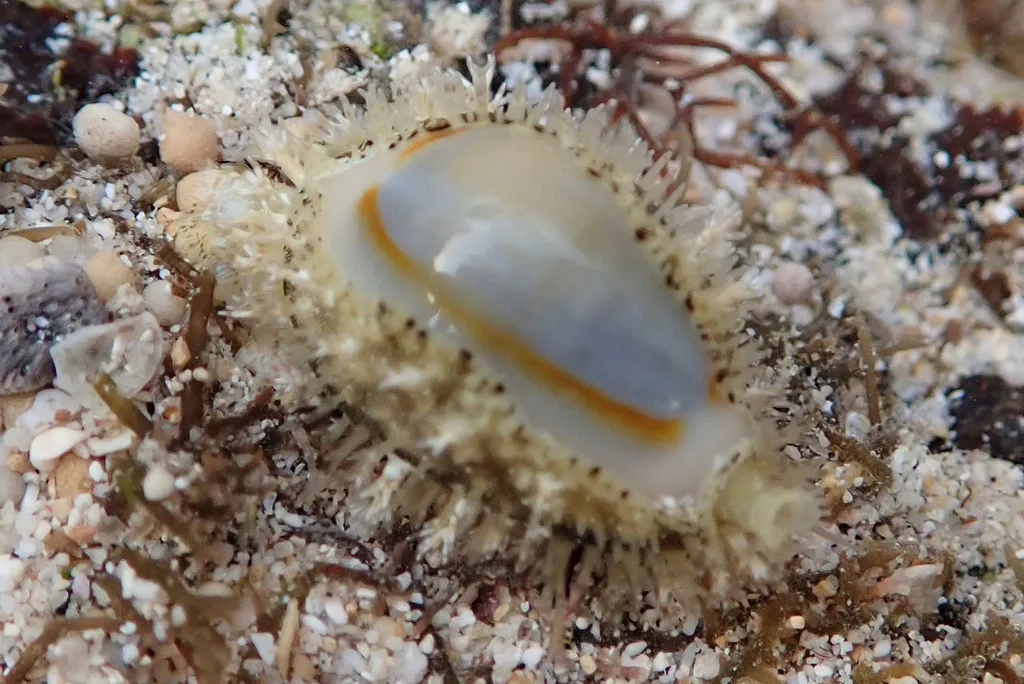
Ring cowrie
Monetaria annulus
Saltwater1.2 in (3 cm) · 20 gal (75 L)75–81°F (24–27°C)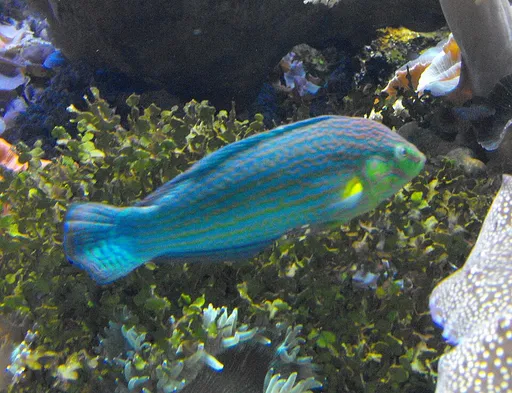
Melanurus wrasse
Halichoeres melanurus
Saltwater5.5 in (14 cm) · 100 gal (380 L)72–79°F (22–26°C)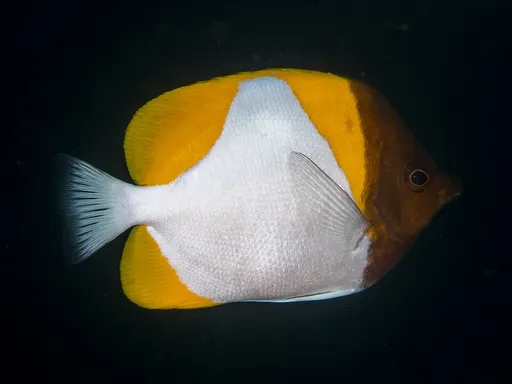
Pyramid butterflyfish
Hemitaurichthys polylepis
Saltwater7.1 in (18 cm) · 124 gal (470 L)75–81°F (24–27°C)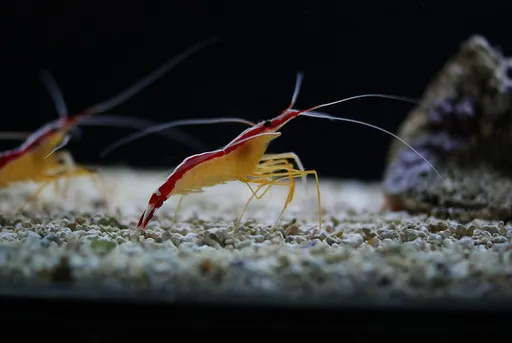
Skunk cleaner shrimp
Lysmata amboinensis
Saltwater2.4 in (6 cm) · 20 gal (75 L)73–81°F (23–27°C)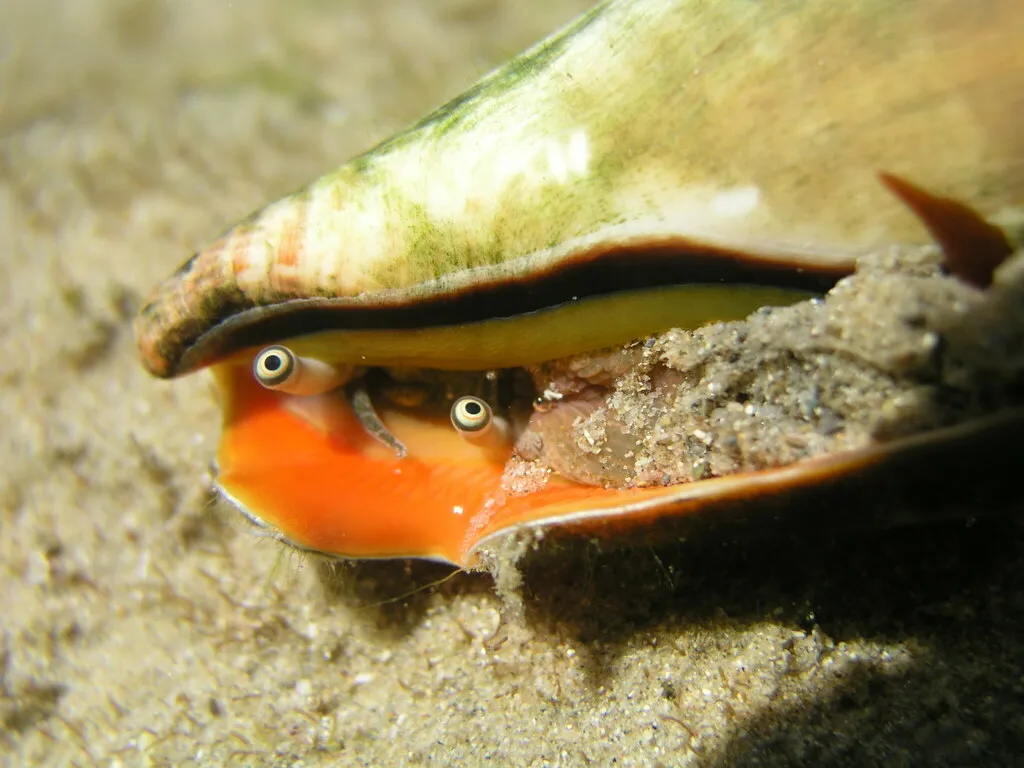
Tiger / strawberry conch
Conomurex luhuanus
Saltwater2.8 in (7 cm) · 20 gal (75 L)75–81°F (24–27°C)
Common questions
What size tank does a Bicolor anthias need?
A Bicolor anthias needs at least 125 gal (475 L). It spends most of its time in the middle.
What temperature and pH does a Bicolor anthias need?
A Bicolor anthias is comfortable at 72–79°F (22–26°C) with a pH of 8.1–8.4.
How big does a Bicolor anthias get?
An adult Bicolor anthias reaches about 5.1 in (13 cm).
Related species
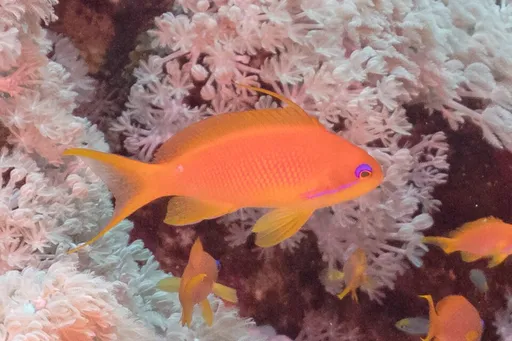 5.1 in (13 cm)79 gal (300 L)75–81°F (24–27°C)
Lyretail anthias
Pseudanthias squamipinnis
5.1 in (13 cm) · 79 gal (300 L)
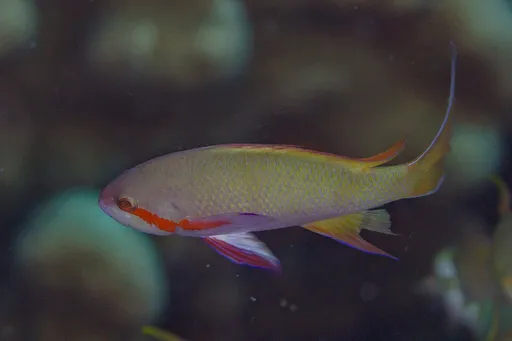 4.7 in (12 cm)90 gal (340 L)75–81°F (24–27°C)
Huchtii anthias
Pseudanthias huchtii
4.7 in (12 cm) · 90 gal (340 L)
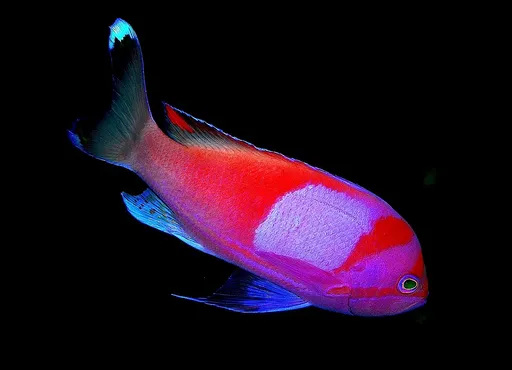 7.9 in (20 cm)100 gal (380 L)72–79°F (22–26°C)
Square anthias
Pseudanthias pleurotaenia
7.9 in (20 cm) · 100 gal (380 L)
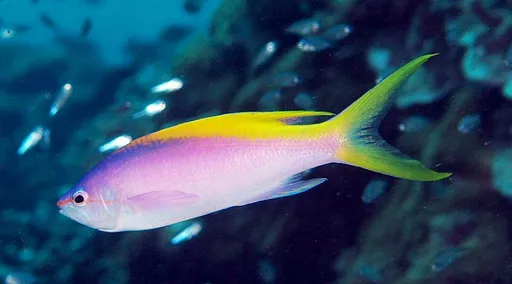 4.7 in (12 cm)75 gal (285 L)75–81°F (24–27°C)
Evansi anthias
Pseudanthias evansi
4.7 in (12 cm) · 75 gal (285 L)
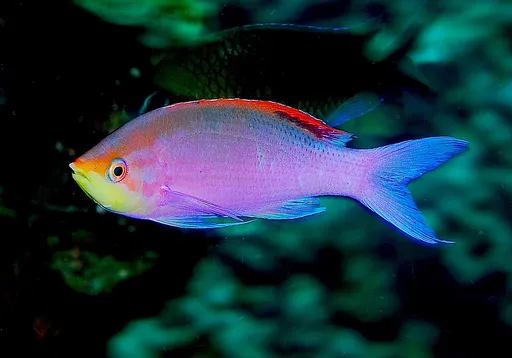 4.7 in (12 cm)75 gal (285 L)75–81°F (24–27°C)
Purple queen anthias
Pseudanthias tuka
4.7 in (12 cm) · 75 gal (285 L)
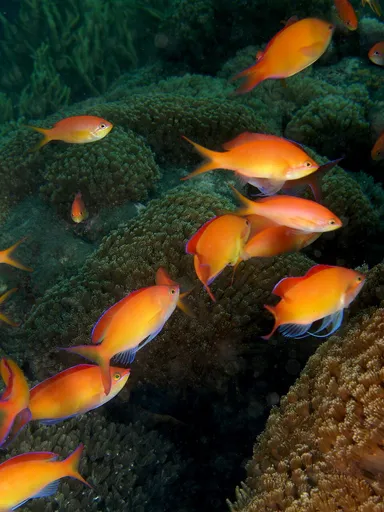 3.7 in (9.5 cm)70 gal (265 L)72–79°F (22–26°C)
Dispar anthias
Pseudanthias dispar
3.7 in (9.5 cm) · 70 gal (265 L)