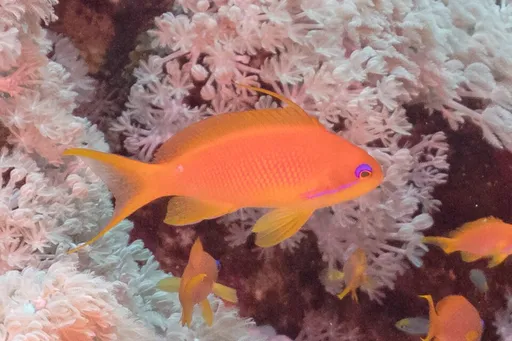
Lyretail anthias
Pseudanthias squamipinnis
Also known as Sea Goldie, Scalefin Anthias, Orange Anthias
SaltwaterFish
Care at a glance
- Temperature
- 75–81°F
- 24–27°C
- pH
- 8.1–8.4
- Adult size
- 5.1 in
- 13 cm
- Minimum tank
- 79 gal
- 300 L
- Temperament
- Mostly peaceful
- Social behavior
- Social
- Swim level
- Middle
- Difficulty
- Medium
- Breeding
- Hard
- Rarity
- Common
- Reef safe
- Reef safe
- Family
- Serranidae
- Origin
- Indo-Pacific and Red Sea
Overview
A planktivore that needs feeding several small meaty meals a day (mysis, enriched brine, copepods, finely prepared foods) or it slowly wastes away, which is the main reason it is rated harder than a typical damsel. Best kept as one male with a group of females, or as several females alone; two males will fight. Peaceful toward unrelated tankmates but competitive at feeding time and can nip very small shrimp. Keep only one male per tank unless the system is very large.
In the wild
Lives over coral reef slopes and drop-offs in the Indo-Pacific and Red Sea, hovering in large aggregations in the water column just above the reef where it picks plankton from passing currents. Females stay close to shelter and dart back into the rockwork when threatened. In the aquarium it wants plenty of open swimming room above the rock plus caves and overhangs to retreat into.
Good to know
Pseudanthias squamipinnis is a protogynous hermaphrodite: fish start life as females and the dominant individual in a group changes sex to become a brightly colored male. Males are orange-red with an elongated dorsal spine and a purple spot on the pectoral fin, while females are orange-gold, so the two sexes look like different fish. If a male dies, the top-ranking female will begin transforming into a male within days.
Did you know
A single group can hold dozens of females ruled by one dominant male, and the whole social order is fluid: remove the male and the boldest female literally becomes the new male within a week or two.
Weekly picks
Tank mates
Lyretail anthias is a mostly peaceful, social species that keeps to the middle. These picks share a community profile with it, are safe together in both directions, and overlap on water type, temperature and pH.
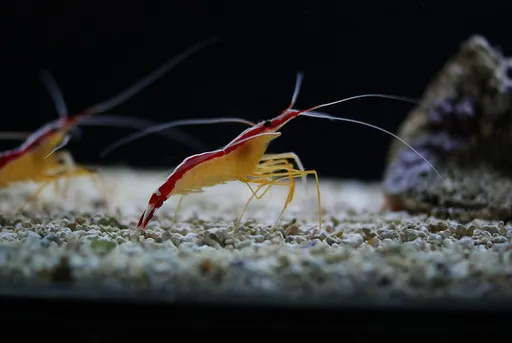
Skunk cleaner shrimp
Lysmata amboinensis
Saltwater2.4 in (6 cm) · 20 gal (75 L)73–81°F (23–27°C)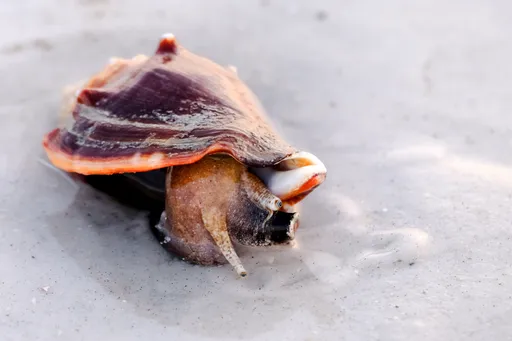
Fighting conch
Strombus alatus
Saltwater3.1 in (8 cm) · 20 gal (75 L)75–81°F (24–27°C)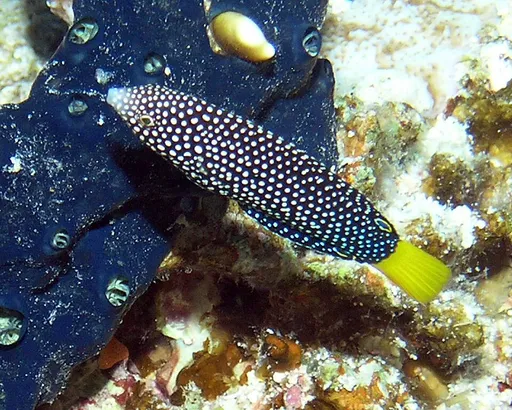
Yellowtail tamarin wrasse
Anampses meleagrides
Saltwater8.7 in (22 cm) · 90 gal (340 L)73–81°F (23–27°C)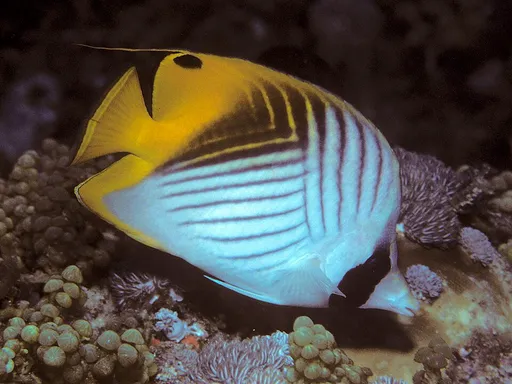
Threadfin butterflyfish
Chaetodon auriga
Saltwater9.1 in (23 cm) · 79 gal (300 L)75–81°F (24–27°C)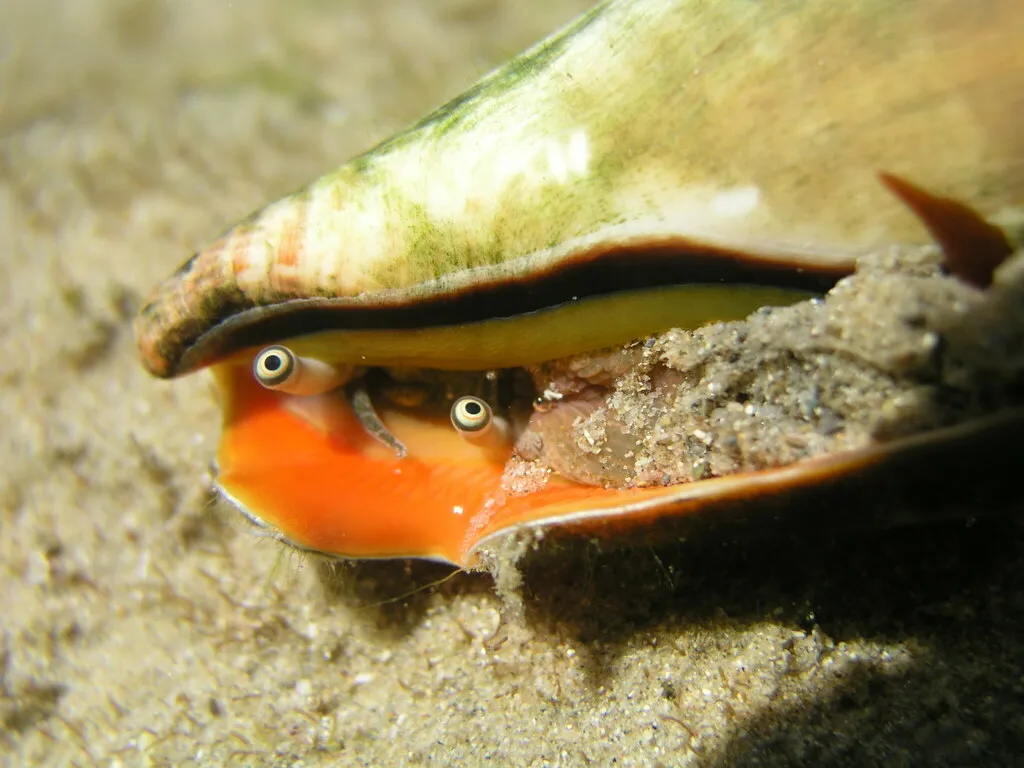
Tiger / strawberry conch
Conomurex luhuanus
Saltwater2.8 in (7 cm) · 20 gal (75 L)75–81°F (24–27°C)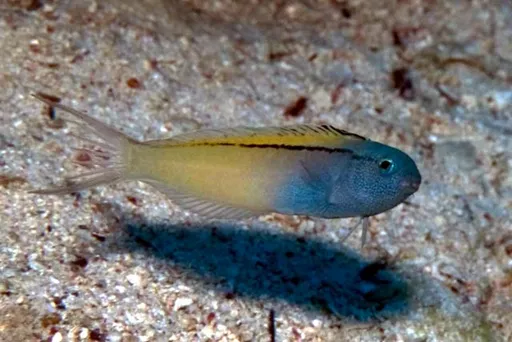
Blackline fang blenny
Meiacanthus nigrolineatus
Saltwater3.5 in (9 cm) · 20 gal (75 L)75–81°F (24–27°C)
Common questions
What size tank does a Lyretail anthias need?
A Lyretail anthias needs at least 79 gal (300 L). It spends most of its time in the middle.
What temperature and pH does a Lyretail anthias need?
A Lyretail anthias is comfortable at 75–81°F (24–27°C) with a pH of 8.1–8.4.
How big does a Lyretail anthias get?
An adult Lyretail anthias reaches about 5.1 in (13 cm).
Related species
 5.1 in (13 cm)125 gal (475 L)72–79°F (22–26°C)
Bicolor anthias
Pseudanthias bicolor
5.1 in (13 cm) · 125 gal (475 L)
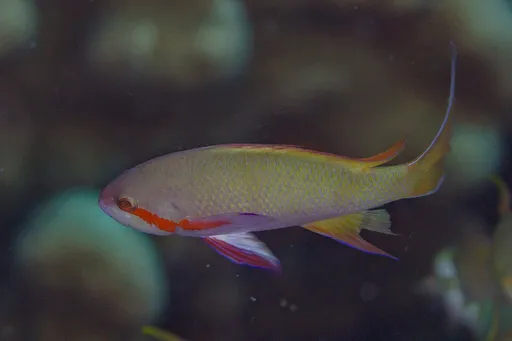 4.7 in (12 cm)90 gal (340 L)75–81°F (24–27°C)
Huchtii anthias
Pseudanthias huchtii
4.7 in (12 cm) · 90 gal (340 L)
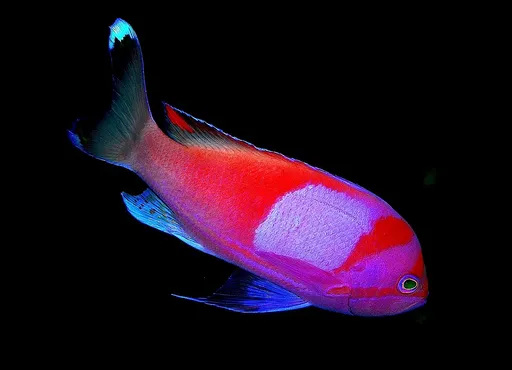 7.9 in (20 cm)100 gal (380 L)72–79°F (22–26°C)
Square anthias
Pseudanthias pleurotaenia
7.9 in (20 cm) · 100 gal (380 L)
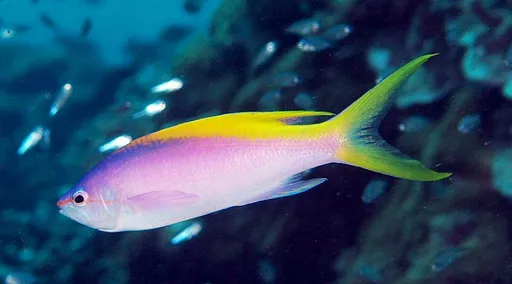 4.7 in (12 cm)75 gal (285 L)75–81°F (24–27°C)
Evansi anthias
Pseudanthias evansi
4.7 in (12 cm) · 75 gal (285 L)
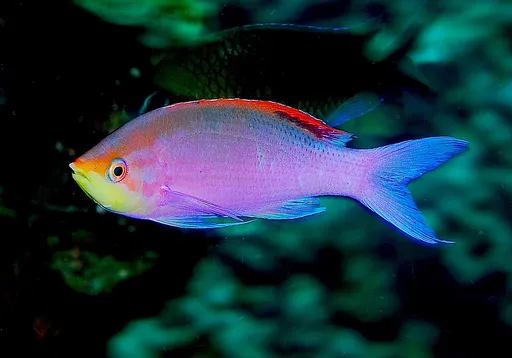 4.7 in (12 cm)75 gal (285 L)75–81°F (24–27°C)
Purple queen anthias
Pseudanthias tuka
4.7 in (12 cm) · 75 gal (285 L)
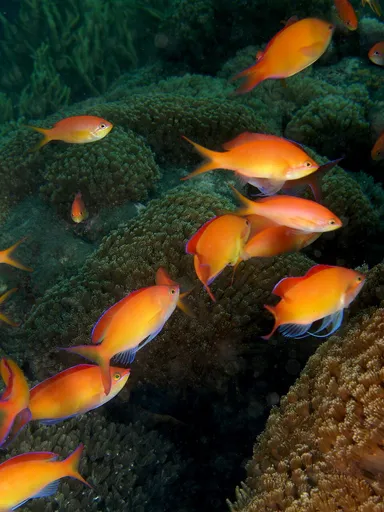 3.7 in (9.5 cm)70 gal (265 L)72–79°F (22–26°C)
Dispar anthias
Pseudanthias dispar
3.7 in (9.5 cm) · 70 gal (265 L)