Red coris wrasse
Coris gaimard
Also known as Yellowtail Coris, Clown Coris, African Coris, Red Labrid
SaltwaterFish
Care at a glance
- Temperature
- 72–79°F
- 22–26°C
- pH
- 8.1–8.4
- Adult size
- 11.8 in
- 30 cm
- Minimum tank
- 150 gal
- 568 L
- Temperament
- Mostly peaceful
- Social behavior
- Solitary
- Own kind
- One male per tank
- Tankmates
- With caution
- Swim level
- Bottom
- Difficulty
- Medium
- Breeding
- Hard
- Rarity
- Very common
- Reef safe
- Not reef safe
- Family
- Labridae
- Origin
- Indo-Pacific reefs, from Christmas Island and the Cocos-Keeling Islands to the Society and Tuamotu Islands, north to Japan and Hawaii, south to Australia
Overview
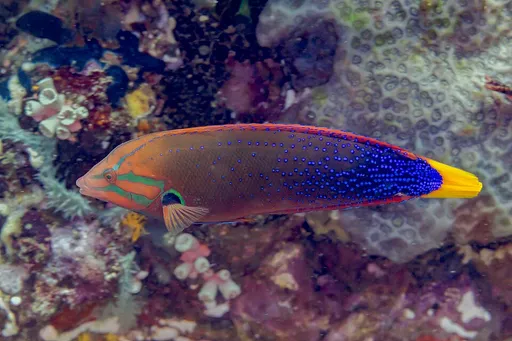
Hardy and generally easygoing with fish tankmates, though larger adults can be semi-aggressive toward new additions and should usually go into a tank last. It is not reef safe: this wrasse flips rocks and digs through sand hunting mollusks, worms, and small crustaceans, and it will eventually eat cleanup crew snails and hermit crabs and can even nip at clam mantles, so keep it in a fish-only or FOWLR system rather than with invertebrates. Feed a varied diet of mysis, brine shrimp, and other meaty foods, and expect it to rearrange the sand bed on a regular basis while foraging.
In the wild
Found across a huge stretch of the Indo-Pacific, from Christmas Island and the Cocos-Keeling Islands to the Society and Tuamotu Islands, north to Japan and Hawaii, and south to Australia, on sand and rubble patches around reefs at 1–50 m. This wrasse needs serious room to grow into, at least 568 litres (150 gallons), plus a soft sand bed a good 7.5–10 cm deep, since it dives headfirst into the sand to sleep at night and to hide the instant it feels threatened. It is also an accomplished jumper, especially right after introduction, so the tank needs a tight, gap-free lid from day one.
Good to know
Coris gaimard is a protogynous hermaphrodite, and a dominant female will convert to male if a group's male disappears. Few aquarium fish change appearance as dramatically as this one: juveniles are bright orange-red with black-edged white saddle markings, while adults turn blue-green with a pink face, a bright yellow tail, and fine blue speckling near the tail base, a transformation so complete that new keepers sometimes do not realize the juvenile and adult are the same species. In the wild it can reach 40 cm, though aquarium specimens usually settle in the 20–30 cm range.
Did you know
In 2019 Biota's Hawaii facility produced the world's first captive-bred red coris wrasse, though the initial batch numbered fewer than a handful of fish, so nearly every specimen sold today is still collected from the wild.
Common questions
What size tank does a Red coris wrasse need?
A Red coris wrasse needs at least 150 gal (568 L). It spends most of its time in the bottom.
What temperature and pH does a Red coris wrasse need?
A Red coris wrasse is comfortable at 72–79°F (22–26°C) with a pH of 8.1–8.4.
How big does a Red coris wrasse get?
An adult Red coris wrasse reaches about 11.8 in (30 cm).
Related species
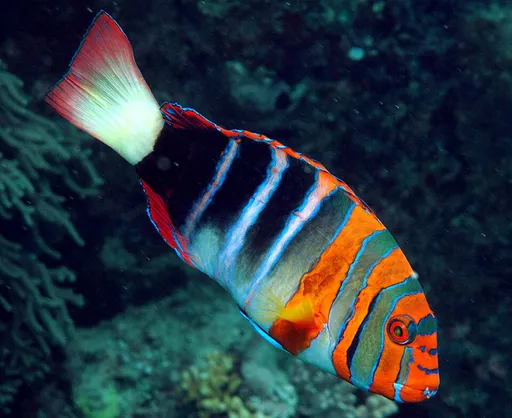 11.8 in (30 cm)125 gal (473 L)72–79°F (22–26°C)
Harlequin tuskfish
Choerodon fasciatus
11.8 in (30 cm) · 125 gal (473 L)
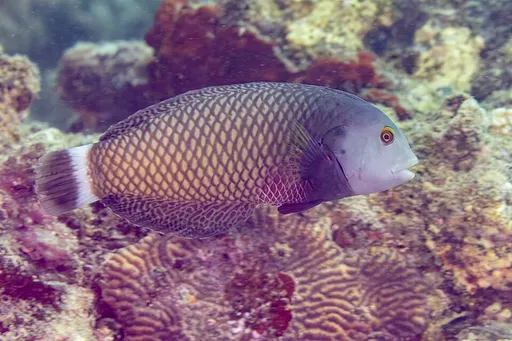 11.8 in (30 cm)106 gal (400 L)73–81°F (23–27°C)
Dragon wrasse
Novaculichthys taeniourus
11.8 in (30 cm) · 106 gal (400 L)
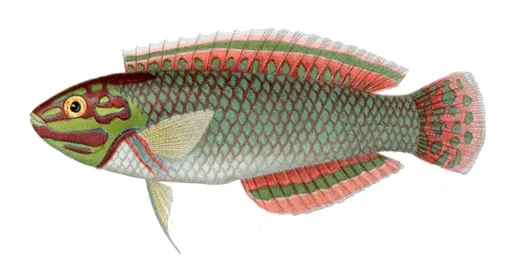 5.9 in (15 cm)70 gal (265 L)72–79°F (22–26°C)
Christmas wrasse
Halichoeres ornatissimus
5.9 in (15 cm) · 70 gal (265 L)
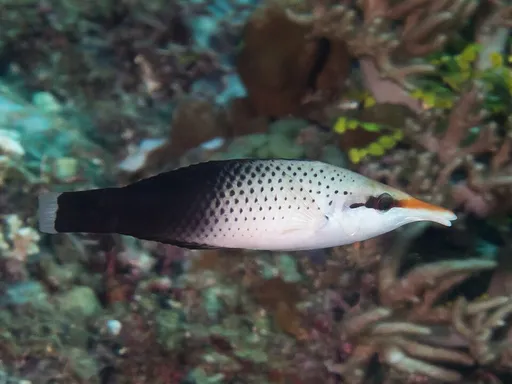 11.8 in (30 cm)125 gal (473 L)72–79°F (22–26°C)
Green bird wrasse
Gomphosus varius
11.8 in (30 cm) · 125 gal (473 L)
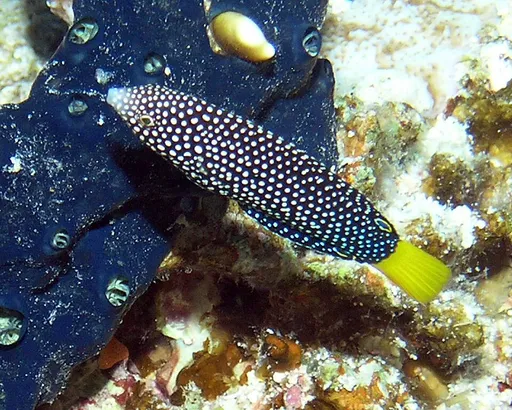 8.7 in (22 cm)90 gal (340 L)73–81°F (23–27°C)
Yellowtail tamarin wrasse
Anampses meleagrides
8.7 in (22 cm) · 90 gal (340 L)
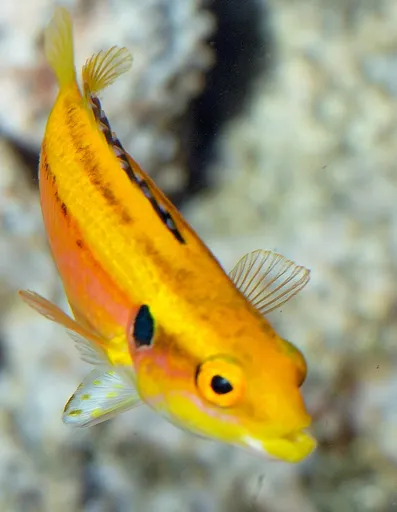 3.9 in (10 cm)30 gal (114 L)72–79°F (22–26°C)
Twospot hogfish
Bodianus bimaculatus
3.9 in (10 cm) · 30 gal (114 L)