Green bird wrasse
Gomphosus varius
Also known as Bird Wrasse, Birdmouth Wrasse, Birdnose Wrasse, Blue-Green Bird Wrasse
SaltwaterFish
Care at a glance
- Temperature
- 72–79°F
- 22–26°C
- pH
- 8.1–8.4
- Adult size
- 11.8 in
- 30 cm
- Minimum tank
- 125 gal
- 473 L
- Temperament
- Mostly peaceful
- Social behavior
- Social
- Tankmates
- With caution
- Swim level
- Middle
- Difficulty
- Medium
- Breeding
- No record
- Rarity
- Common
- Reef safe
- Not reef safe
- Family
- Labridae
- Origin
- Indo-Pacific reefs, from the Cocos-Keeling Islands to Hawaii and the Marquesas Islands, north to southern Japan, south to Lord Howe Island
Overview
Energetic and bold rather than outright mean toward fish tankmates, it does best with similarly confident species like tangs, larger angelfish, triggerfish, or puffers rather than small, timid fish. It is not reef safe: that long beak is built for hunting, and it will clean out a cleanup crew of snails and hermit crabs and pick off small ornamental shrimp and worms in short order. Two can sometimes be kept together as a pair if introduced to the tank at the same time. Feed a varied carnivore diet of mysis, brine shrimp, krill, and other meaty foods, including some with algae content for color.
In the wild
Ranges across the Indo-Pacific from the Cocos-Keeling Islands to Hawaii and the Marquesas, north to southern Japan and south to Lord Howe Island, on reef flats and lagoons at roughly 2–30 m. It is a fast, active swimmer that needs a lot of unobstructed open water, so plan for at least 473 litres (125 gallons) with live rock arranged to leave long swimming lanes rather than a maze of tight caves. A tight fitting lid with no gaps is not optional, since bird wrasses are determined jumpers.
Good to know
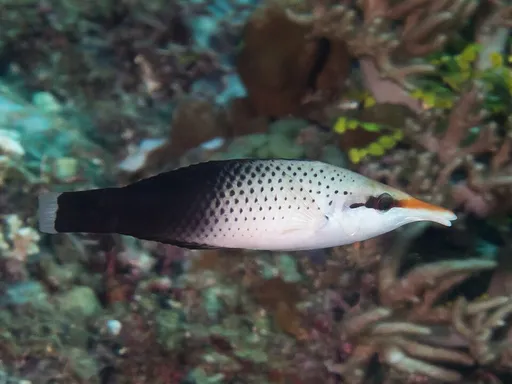
Gomphosus varius is a protogynous hermaphrodite. Females are a duller grayish brown with a pale belly and a reddish orange patch on the upper snout, while terminal phase males turn a striking blue-green all over, which is why this fish is sold as the green bird wrasse even though females and juveniles are brown or black. Its most distinctive feature is a long, tweezer-like snout, used to pick shrimp, crabs, and worms out of narrow holes in the reef that most other fish cannot reach. Adults can reach about 30 cm.
Did you know
That elongated, beak-like snout is basically a pair of tweezers built into the fish's face, letting it reach shrimp and worms hiding in cracks and holes that a normal, blunt-nosed wrasse could never get its mouth into.
Common questions
What size tank does a Green bird wrasse need?
A Green bird wrasse needs at least 125 gal (473 L). It spends most of its time in the middle.
What temperature and pH does a Green bird wrasse need?
A Green bird wrasse is comfortable at 72–79°F (22–26°C) with a pH of 8.1–8.4.
How big does a Green bird wrasse get?
An adult Green bird wrasse reaches about 11.8 in (30 cm).
Related species
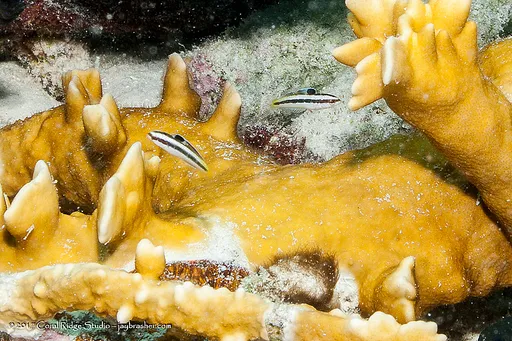 7.1 in (18 cm)74 gal (280 L)73–81°F (23–27°C)
Bluehead wrasse
Thalassoma bifasciatum
7.1 in (18 cm) · 74 gal (280 L)
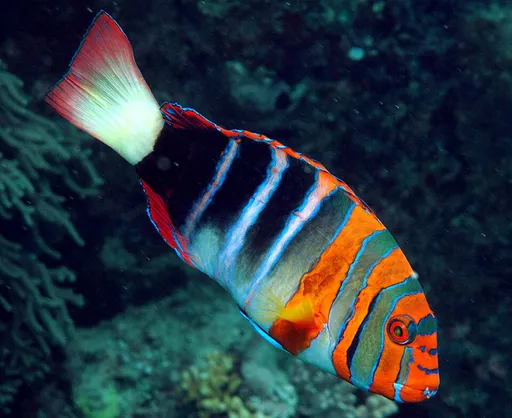 11.8 in (30 cm)125 gal (473 L)72–79°F (22–26°C)
Harlequin tuskfish
Choerodon fasciatus
11.8 in (30 cm) · 125 gal (473 L)
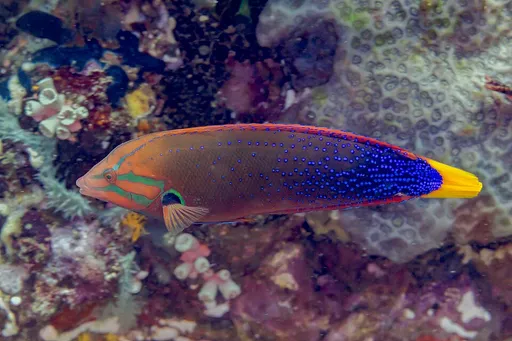 11.8 in (30 cm)150 gal (568 L)72–79°F (22–26°C)
Red coris wrasse
Coris gaimard
11.8 in (30 cm) · 150 gal (568 L)
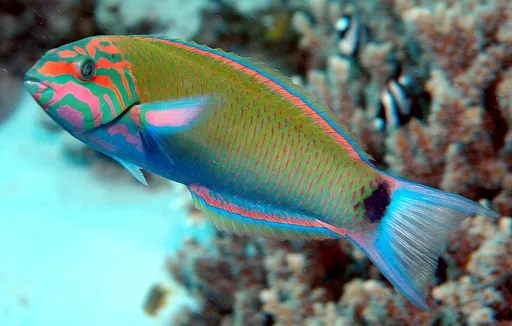 9.8 in (25 cm)125 gal (473 L)72–79°F (22–26°C)
Lunare wrasse
Thalassoma lunare
9.8 in (25 cm) · 125 gal (473 L)
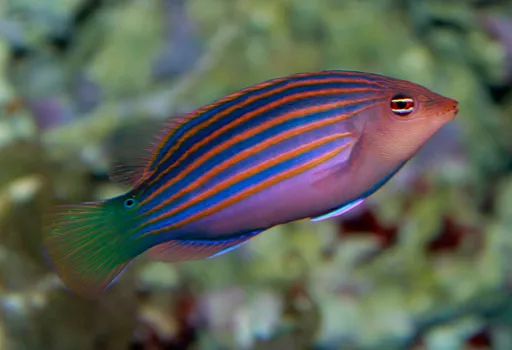 3.1 in (8 cm)29 gal (110 L)72–79°F (22–26°C)
Six-line wrasse
Pseudocheilinus hexataenia
3.1 in (8 cm) · 29 gal (110 L)
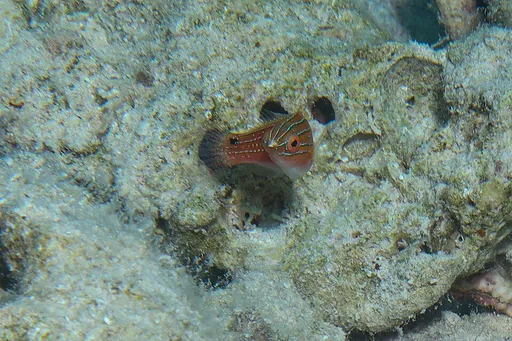 2.8 in (7 cm)53 gal (200 L)73–81°F (23–27°C)
Social fairy wrasse
Cirrhilabrus rubriventralis
2.8 in (7 cm) · 53 gal (200 L)