Bluehead wrasse
Thalassoma bifasciatum
Also known as Bluehead, Blue-Headed Wrasse, Two-Band Wrasse
SaltwaterFish
Care at a glance
- Temperature
- 73–81°F
- 23–27°C
- pH
- 8.1–8.4
- Adult size
- 7.1 in
- 18 cm
- Minimum tank
- 74 gal
- 280 L
- Temperament
- Mostly peaceful
- Social behavior
- Social
- Tankmates
- With caution
- Swim level
- Middle
- Difficulty
- Easy
- Breeding
- No record
- Rarity
- Common
- Reef safe
- Not reef safe
- Family
- Labridae
- Origin
- Native to coral reefs of the tropical western Atlantic, including Florida, the Bahamas, the Gulf of Mexico, and the Caribbean.
Overview
Give it a 280 litre or larger tank at 23 to 27 C and pH 8.1 to 8.4 with a lid, as it can jump. It is not reef safe and will eat ornamental shrimp, small crabs, and feather dusters, though it leaves corals alone. Feed meaty foods such as mysis and chopped seafood. It is a fast, semi peaceful fish that may harass new additions, so add it late.
In the wild
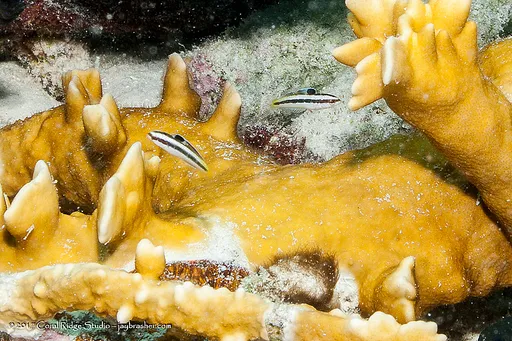
The bluehead wrasse is one of the most common fish on Caribbean reefs, where it swims actively over coral and sand. Large terminal males have a blue head and green body split by black bars, while smaller fish are yellow. It cleans parasites off other fish when young and hunts small invertebrates as it grows. It uses rockwork for shelter and sleeps buried in sand at night.
Good to know
Thalassoma bifasciatum is an Atlantic member of the wrasse family Labridae and a classic subject in studies of fish sex change and mating. Individuals can mature as females or males, and dominant females can switch to become large terminal males. On the reef it works as a cleaner fish in its juvenile phase.
Did you know
Young bluehead wrasses set up cleaning stations and pick parasites off much larger fish that line up for the service.
Common questions
What size tank does a Bluehead wrasse need?
A Bluehead wrasse needs at least 74 gal (280 L). It spends most of its time in the middle.
What temperature and pH does a Bluehead wrasse need?
A Bluehead wrasse is comfortable at 73–81°F (23–27°C) with a pH of 8.1–8.4.
How big does a Bluehead wrasse get?
An adult Bluehead wrasse reaches about 7.1 in (18 cm).
Related species
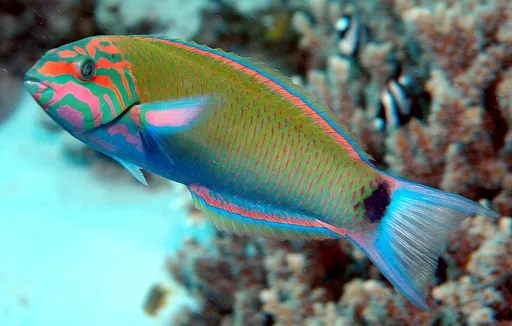 9.8 in (25 cm)125 gal (473 L)72–79°F (22–26°C)
Lunare wrasse
Thalassoma lunare
9.8 in (25 cm) · 125 gal (473 L)
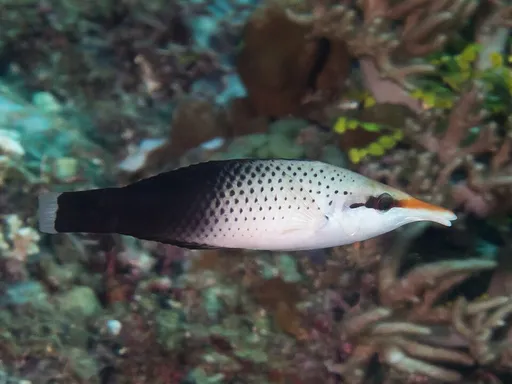 11.8 in (30 cm)125 gal (473 L)72–79°F (22–26°C)
Green bird wrasse
Gomphosus varius
11.8 in (30 cm) · 125 gal (473 L)
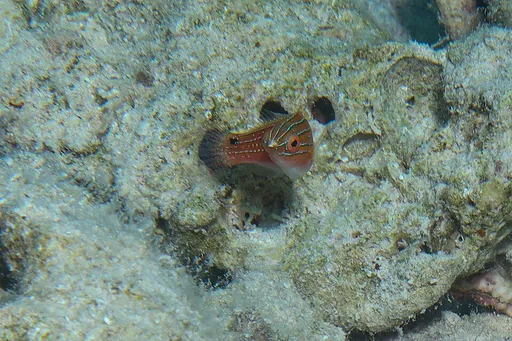
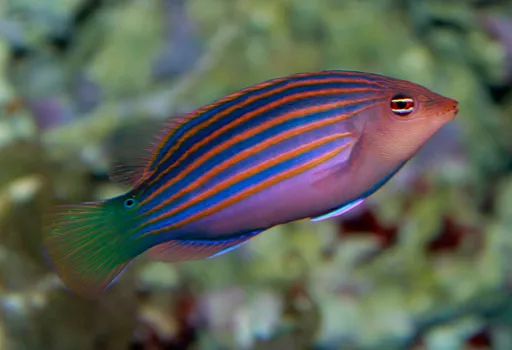 3.1 in (8 cm)29 gal (110 L)72–79°F (22–26°C)
Six-line wrasse
Pseudocheilinus hexataenia
3.1 in (8 cm) · 29 gal (110 L)
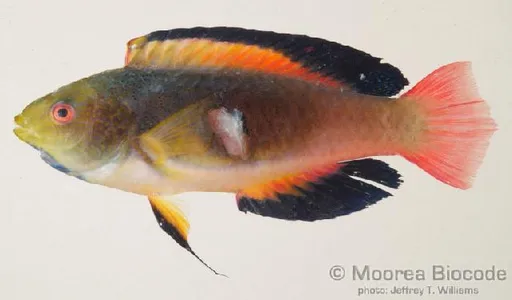
 2.8 in (7 cm)53 gal (200 L)73–81°F (23–27°C)
Social fairy wrasse
Cirrhilabrus rubriventralis
2.8 in (7 cm) · 53 gal (200 L)
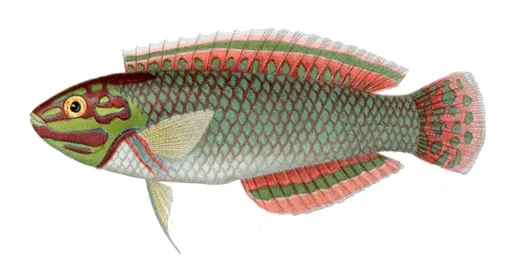
 5.1 in (13 cm)90 gal (340 L)73–81°F (23–27°C)
Scott's fairy wrasse
Cirrhilabrus scottorum
5.1 in (13 cm) · 90 gal (340 L)
 5.9 in (15 cm)70 gal (265 L)72–79°F (22–26°C)
Christmas wrasse
Halichoeres ornatissimus
5.9 in (15 cm) · 70 gal (265 L)