Porcupine puffer
Diodon holocanthus
Also known as Balloonfish, Long-Spine Porcupinefish, Freckled Porcupinefish
SaltwaterFish
Care at a glance
- Temperature
- 75–81°F
- 24–27°C
- pH
- 8.1–8.4
- Adult size
- 11.8 in
- 30 cm
- Minimum tank
- 180 gal
- 680 L
- Temperament
- Mostly peaceful
- Social behavior
- Solitary
- Tankmates
- With caution
- Swim level
- Bottom
- Difficulty
- Medium
- Breeding
- Hard
- Rarity
- Common
- Reef safe
- Not reef safe
- Family
- Diodontidae
- Origin
- Circumtropical reefs across the Atlantic, Indian, and Pacific oceans
Overview
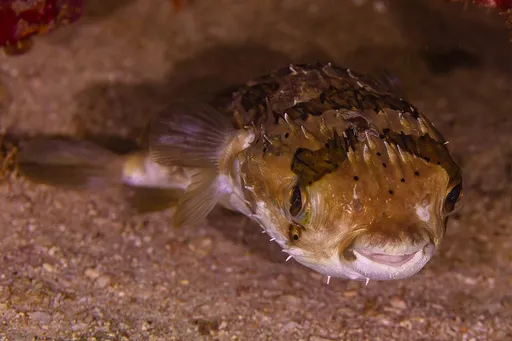
Mostly peaceful with fish too large to swallow, but it will eat snails, hermit crabs, shrimp, and other invertebrates on sight, so it is not reef safe and belongs in a fish-only or FOWLR tank. It has a well-earned reputation as one of the more personable large puffers, often recognizing its keeper and begging at the glass at feeding time. Its beak grows continuously, so feed hard-shelled foods such as snails, clams, and shell-on crab or shrimp regularly alongside squid and other meaty fare. Avoid netting it if you can help it: startled or handled roughly, it will inflate and can gulp air that is difficult to release afterward.
In the wild
One of the few reef fish found nearly worldwide in warm water, turning up on grass flats, coral reefs, and around mangroves across the Atlantic, Indian, and Pacific oceans at depths of about 2–35 m. It spends the day tucked into a cave or ledge and comes out at night to forage over sand and rubble, so it appreciates a tank with a few real hiding spots as well as open room to patrol after dark. Plan on at least 680 litres (180 US gal), since it is a heavy waste producer that needs strong filtration on top of the swimming space.
Good to know
It belongs to the porcupinefish family Diodontidae, named for a beak formed from just two fused tooth plates, one per jaw, rather than the four-plate beak of true puffers in Tetraodontidae. That beak still needs hard food to wear it down. Its long, sharp spines lie flat against the body normally and only stand erect when the fish pumps water into its stomach and inflates, a defense that can double or triple its size in seconds. Unlike Arothron and Canthigaster puffers, it carries only trace amounts of tetrodotoxin, mostly in the ovaries, making it considerably less toxic than its Tetraodontidae relatives, though its flesh is still not safe to eat.
Did you know
When it inflates, folded skin and an oversized, non-digestive stretch of stomach unfurl to hold the extra water, and the stiff, elastic skin around that water-filled core is what forces the spines, normally flat, to snap upright until the fish deflates again.
Common questions
What size tank does a Porcupine puffer need?
A Porcupine puffer needs at least 180 gal (680 L). It spends most of its time in the bottom.
What temperature and pH does a Porcupine puffer need?
A Porcupine puffer is comfortable at 75–81°F (24–27°C) with a pH of 8.1–8.4.
How big does a Porcupine puffer get?
An adult Porcupine puffer reaches about 11.8 in (30 cm).
Related species
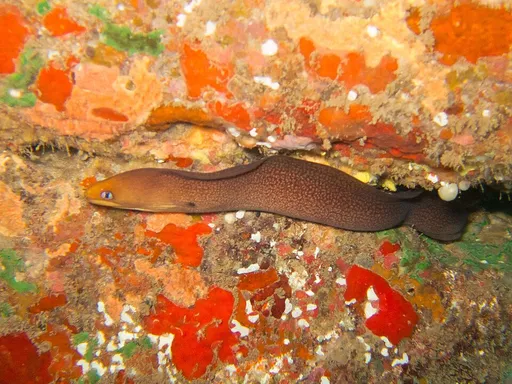 11.8 in (30 cm)65 gal (246 L)72–79°F (22–26°C)
Golden dwarf moray
Gymnothorax melatremus
11.8 in (30 cm) · 65 gal (246 L)
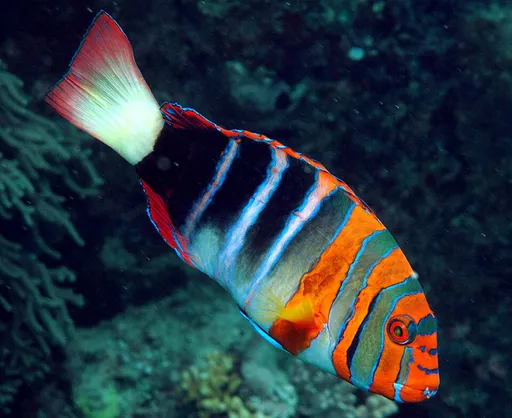 11.8 in (30 cm)125 gal (473 L)72–79°F (22–26°C)
Harlequin tuskfish
Choerodon fasciatus
11.8 in (30 cm) · 125 gal (473 L)
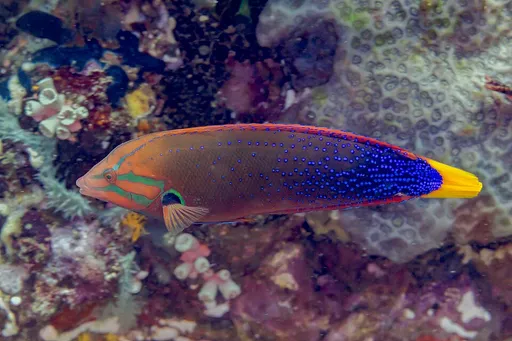 11.8 in (30 cm)150 gal (568 L)72–79°F (22–26°C)
Red coris wrasse
Coris gaimard
11.8 in (30 cm) · 150 gal (568 L)
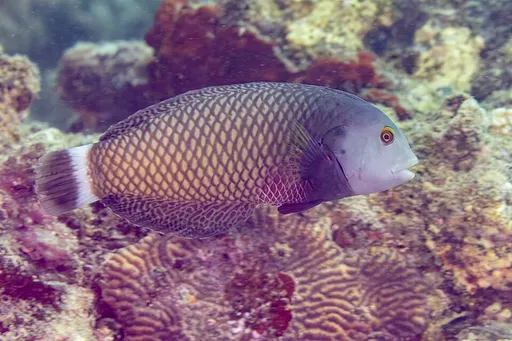 11.8 in (30 cm)106 gal (400 L)73–81°F (23–27°C)
Dragon wrasse
Novaculichthys taeniourus
11.8 in (30 cm) · 106 gal (400 L)
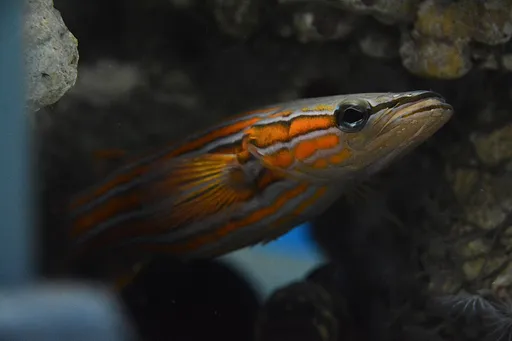 5.9 in (15 cm)79 gal (300 L)72–79°F (22–26°C)
Australian flathead perch
Rainfordia opercularis
5.9 in (15 cm) · 79 gal (300 L)
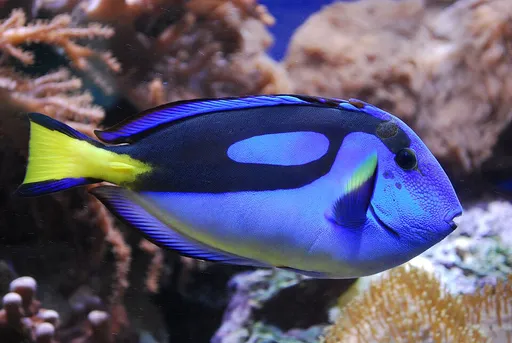 11.8 in (30 cm)180 gal (680 L)73–81°F (23–27°C)
Blue hippo tang
Paracanthurus hepatus
11.8 in (30 cm) · 180 gal (680 L)