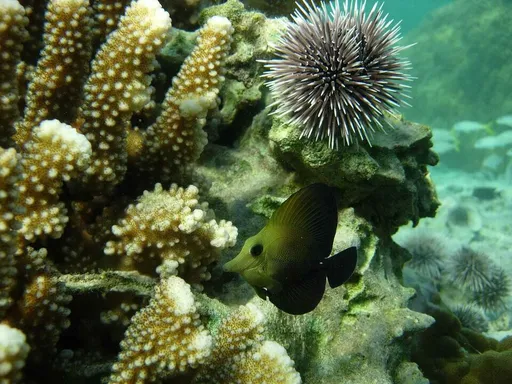
Black tang
Zebrasoma rostratum
Also known as Black Longnose Tang, Longnose Surgeonfish, Black Sailfin Tang, Longnose Tang
SaltwaterFish
Care at a glance
- Temperature
- 75–81°F
- 24–27°C
- pH
- 8.1–8.4
- Adult size
- 8.3 in
- 21 cm
- Minimum tank
- 119 gal
- 450 L
- Temperament
- Mostly peaceful
- Social behavior
- Solitary
- Swim level
- Middle
- Diet
- Herbivore
- Difficulty
- Medium
- Breeding
- No record
- Rarity
- Rare
- Reef safe
- Reef safe
- Family
- Acanthuridae
- Origin
- Central and western Pacific including Hawaii and the Line Islands, on coral-rich reef slopes.
Overview
The black tang is a solid, velvety black Zebrasoma for a large reef tank, where its color makes a strong contrast. It suits a keeper who has some experience with marine fish.
Caring for the black tang
Give a black tang at least 119 gal (450 L), with rockwork for grazing and open lanes for swimming. Keep the water at 75 to 81°F (24 to 27°C) with a pH of 8.1 to 8.4.
The black tang is a dedicated herbivore. Feed it nori, spirulina and marine algae every day, plus a little meaty food. It is reef safe and only rarely nips corals when its algae supply runs short.
Adults are territorial toward other Zebrasoma but get along with dissimilar fish. Keep only one Zebrasoma per tank, and avoid mixing it with other similar tangs.
Good to know
Zebrasoma rostratum gets its other name, longnose tang, from that elongated snout. It belongs to the surgeonfish family, Acanthuridae, and is uncommon in the trade.
In the wild
Black tangs live on coral-rich reef slopes in the central and western Pacific, including Hawaii and the Line Islands. They graze the reef rock through the day and are strong, steady swimmers.
Weekly picks
Tank mates
The black tang is a mostly peaceful, solitary species that keeps to the middle. These picks share a community profile with it, are safe together in both directions, and overlap on water type, temperature and pH.
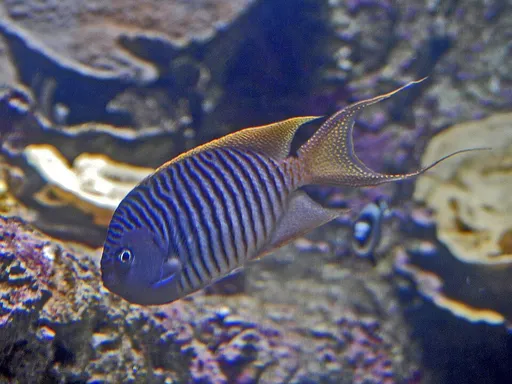
Swallowtail angelfish
Genicanthus melanospilos
Saltwater7.1 in (18 cm) · 106 gal (400 L)72–79°F (22–26°C)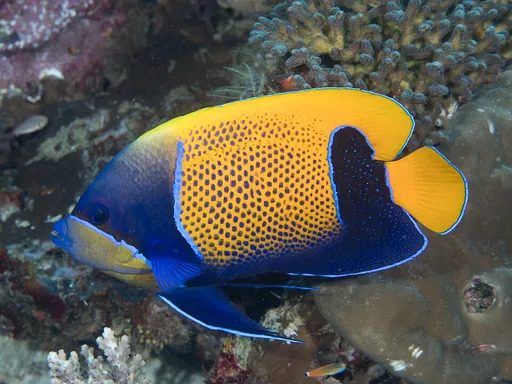
Majestic angelfish
Pomacanthus navarchus
Saltwater11.8 in (30 cm) · 145 gal (550 L)73–81°F (23–27°C)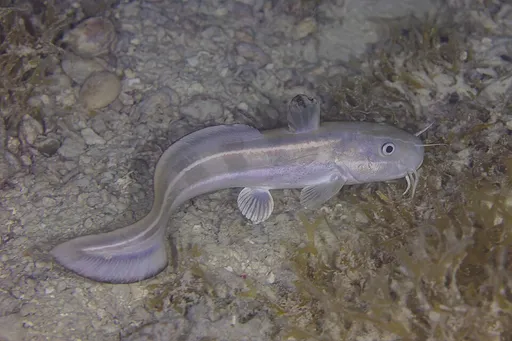
Striped eel catfish
Plotosus lineatus
Saltwater12.6 in (32 cm) · 106 gal (400 L)75–82°F (24–28°C)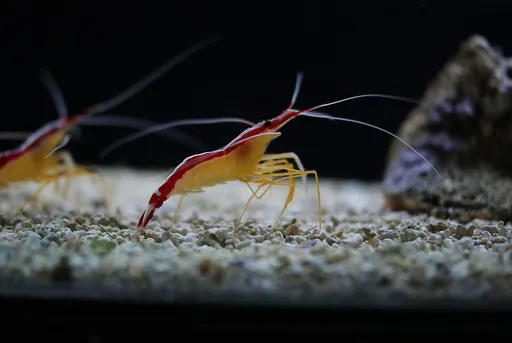
Skunk cleaner shrimp
Lysmata amboinensis
Saltwater2.4 in (6 cm) · 20 gal (75 L)73–81°F (23–27°C)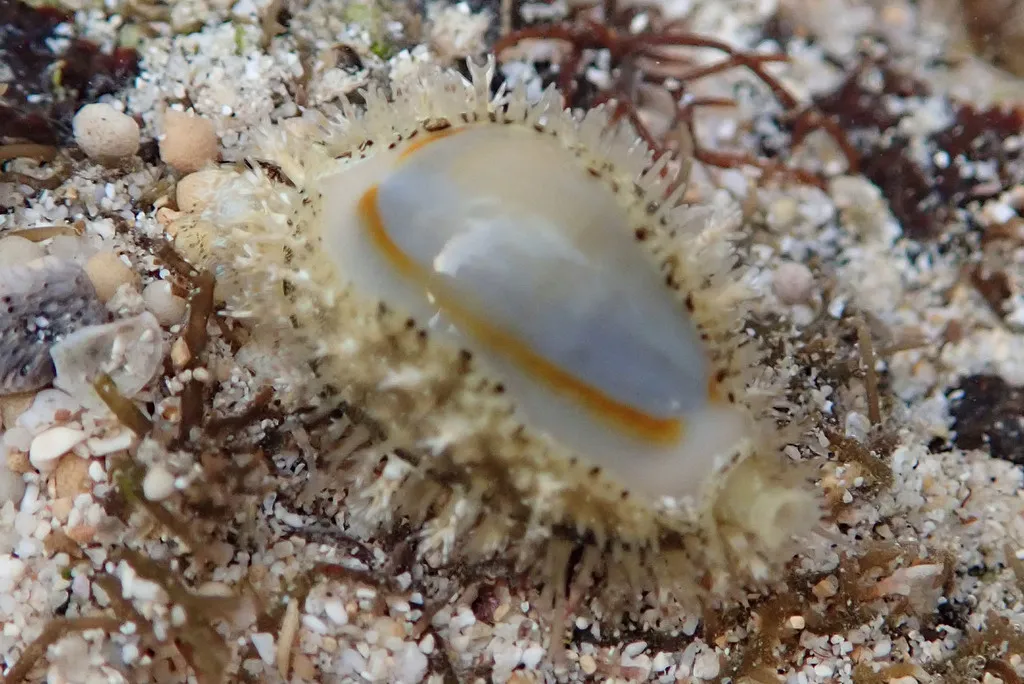
Ring cowrie
Monetaria annulus
Saltwater1.2 in (3 cm) · 20 gal (75 L)75–81°F (24–27°C)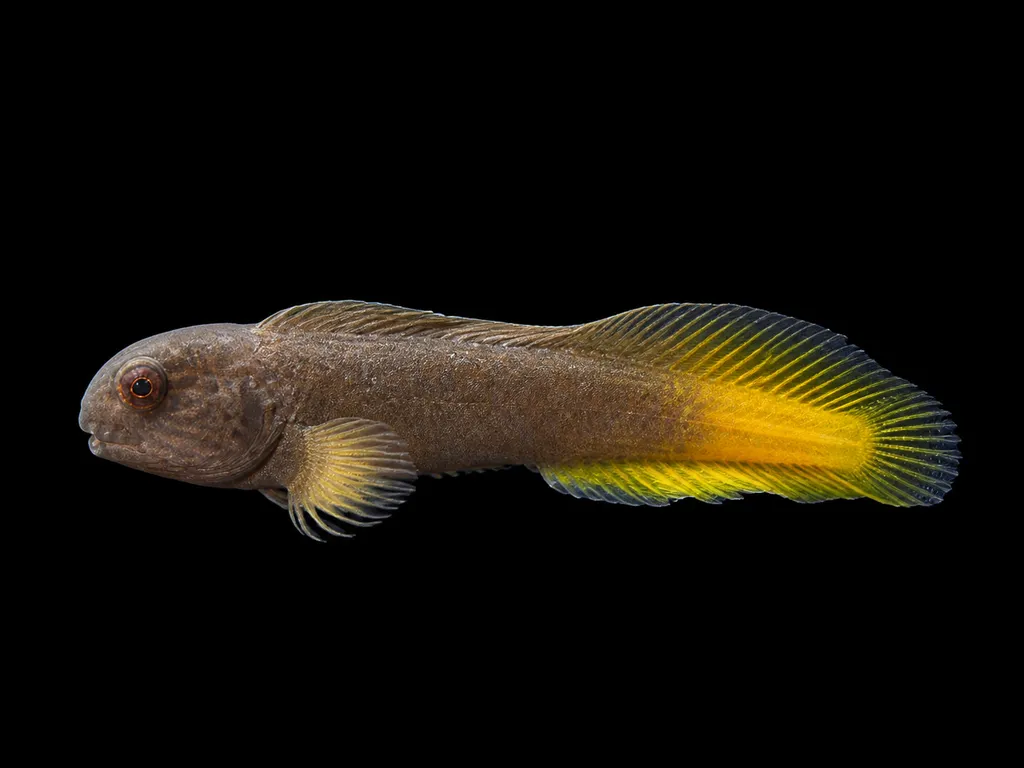
Flametail blenny
Enchelyurus flavipes
Saltwater3 in (7.5 cm) · 29 gal (110 L)72–79°F (22–26°C)
Common questions
What size tank does a black tang need?
A black tang needs at least 119 gal (450 L). It spends most of its time in the middle.
What temperature and pH does a black tang need?
A black tang is comfortable at 75–81°F (24–27°C) with a pH of 8.1–8.4.
What does a black tang eat?
A black tang eats nori, spirulina and marine algae every day, with a little meaty food on the side.
How big does a black tang get?
An adult black tang reaches about 8.3 in (21 cm).
Related species
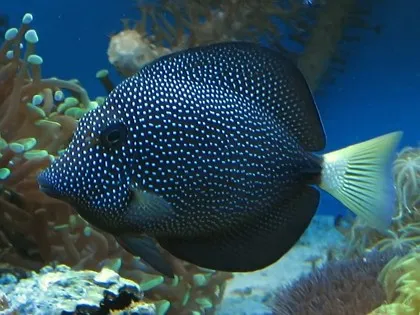 8.7 in (22 cm)151 gal (570 L)75–81°F (24–27°C)
Gem tang
Zebrasoma gemmatum
8.7 in (22 cm) · 151 gal (570 L)
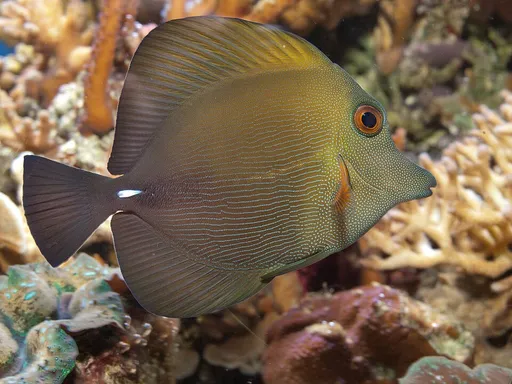 7.9 in (20 cm)90 gal (340 L)75–82°F (24–28°C)
Scopas tang
Zebrasoma scopas
7.9 in (20 cm) · 90 gal (340 L)
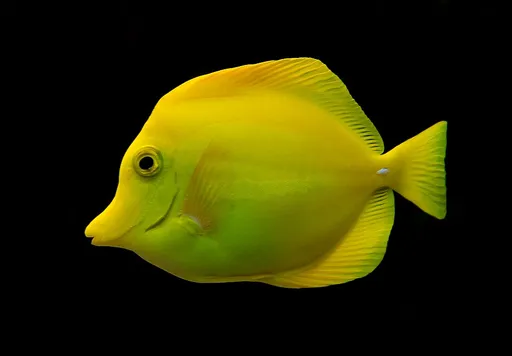 7.9 in (20 cm)100 gal (380 L)72–79°F (22–26°C)
Yellow tang
Zebrasoma flavescens
7.9 in (20 cm) · 100 gal (380 L)
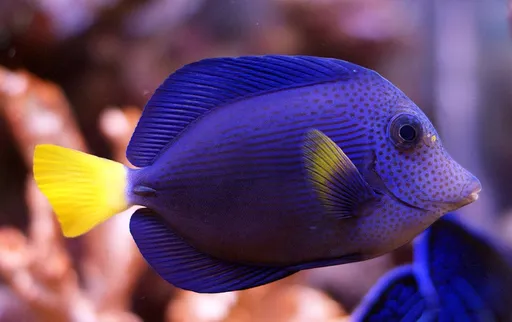 9.8 in (25 cm)106 gal (400 L)75–82°F (24–28°C)
Purple tang
Zebrasoma xanthurum
9.8 in (25 cm) · 106 gal (400 L)
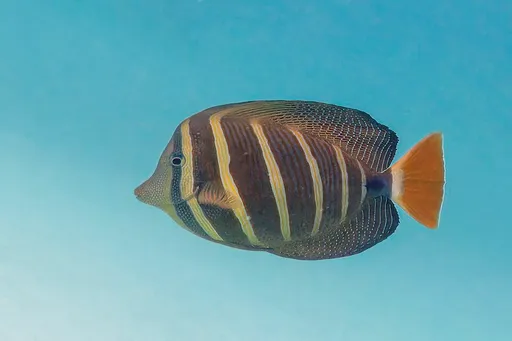 11.8 in (30 cm)145 gal (550 L)75–82°F (24–28°C)
Sailfin tang
Zebrasoma veliferum
11.8 in (30 cm) · 145 gal (550 L)
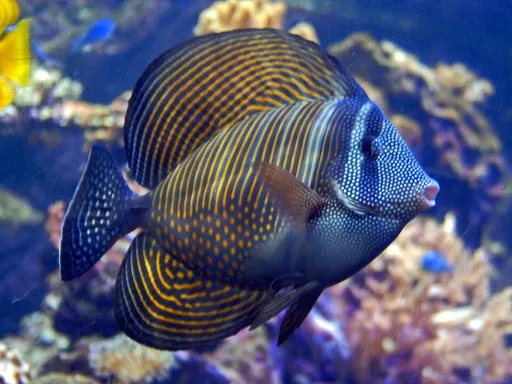 15.7 in (40 cm)180 gal (680 L)75–82°F (24–28°C)
Red Sea sailfin tang
Zebrasoma desjardinii
15.7 in (40 cm) · 180 gal (680 L)