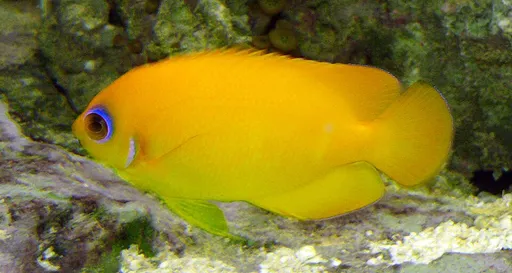
Lemonpeel angelfish
Centropyge flavissima
Also known as Lemon Peel Angel, Yellow Dwarf Angelfish
SaltwaterFish
Care at a glance
- Temperature
- 72–79°F
- 22–26°C
- pH
- 8.1–8.4
- Adult size
- 5.5 in
- 14 cm
- Minimum tank
- 55 gal
- 210 L
- Temperament
- Mostly peaceful
- Social behavior
- Solitary
- Own kind
- One male per tank
- Tankmates
- With caution
- Swim level
- Middle
- Diet
- Omnivore
- Difficulty
- Medium
- Breeding
- Hard
- Rarity
- Common
- Reef safe
- Reef safe with caution
- Family
- Pomacanthidae
- Origin
- Western and central Pacific, including islands such as the Marshalls, Line Islands, and areas of Micronesia
Overview
The lemonpeel angelfish is an algae-grazing dwarf angel for a mature saltwater tank. It is a step up from the easiest fish.
Did you know
Juvenile lemonpeel angelfish wear a bright blue ring around each eye, which stands out against the solid yellow body. The marking fades as the fish matures.
Caring for the lemonpeel angelfish
Give the lemonpeel angelfish a mature tank of at least 55 gal (210 L), with abundant live rock and hiding spots. It needs steady algae growth and a strong algae film on the rock.
Keep the water at 72 to 79°F (22 to 26°C) and a pH of 8.1 to 8.4. It is considered less hardy than the coral beauty, and it benefits from a slow drip acclimation into a well-established tank. It is a dedicated algae grazer, feeding primarily on algae and detritus. Offer frequent small feedings of nori and other greens, with occasional meaty foods.
The lemonpeel angelfish is mostly peaceful, but it is territorial toward other dwarf angels and similarly shaped or colored fish. It does best as the only dwarf angel in the tank. Choose its other tank mates with caution.
It is one of the dwarf angels most likely to nip LPS corals, soft corals and clam mantles. Reef keepers rate it caution, and it leans toward the riskier end. Many keepers avoid it in prized mixed reefs. It is a hard fish to breed.
Good to know
Centropyge flavissima is a dwarf angel in the family Pomacanthidae, also known as the lemon peel angel or yellow dwarf angelfish. It grows larger than many of its genus. It is a protogynous hermaphrodite.
In the wild
The lemonpeel angelfish lives in the western and central Pacific, including the Marshalls, the Line Islands and parts of Micronesia. It keeps to shallow, sunlit lagoon and reef-flat habitats with heavy algae growth, usually in less than 25 meters of water. It grazes constantly over rock and rubble and keeps near cover it can bolt into.
Common questions
What size tank does a lemonpeel angelfish need?
A lemonpeel angelfish needs at least 55 gal (210 L). It spends most of its time in the middle.
What temperature and pH does a lemonpeel angelfish need?
A lemonpeel angelfish is comfortable at 72–79°F (22–26°C) with a pH of 8.1–8.4.
What does a lemonpeel angelfish eat?
A lemonpeel angelfish is a dedicated algae grazer, feeding primarily on algae and detritus. Give it frequent small feedings of nori and other greens, with occasional meaty foods.
How big does a lemonpeel angelfish get?
An adult lemonpeel angelfish reaches about 5.5 in (14 cm).
Related species
 5.9 in (15 cm)55 gal (210 L)72–81°F (22–27°C)
Bicolor angelfish
Centropyge bicolor
5.9 in (15 cm) · 55 gal (210 L)
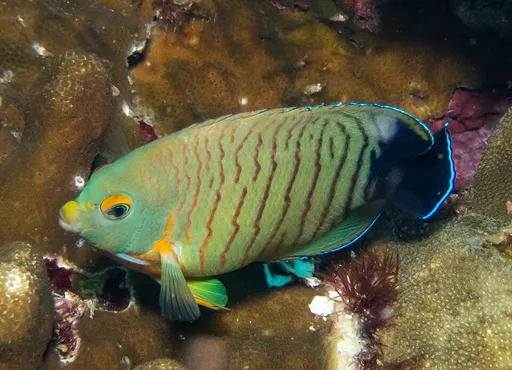 5.9 in (15 cm)55 gal (210 L)72–79°F (22–26°C)
Eibli angelfish
Centropyge eibli
5.9 in (15 cm) · 55 gal (210 L)
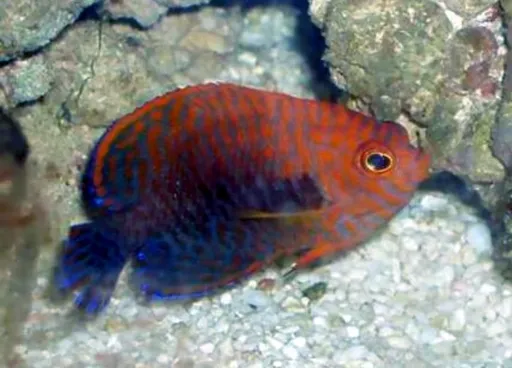 5.1 in (13 cm)65 gal (245 L)72–79°F (22–26°C)
Potter's angelfish
Centropyge potteri
5.1 in (13 cm) · 65 gal (245 L)
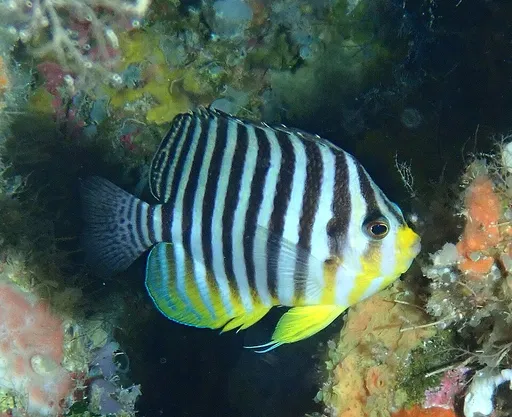 4.7 in (12 cm)59 gal (225 L)72–79°F (22–26°C)
Multibarred angelfish
Centropyge multifasciata
4.7 in (12 cm) · 59 gal (225 L)
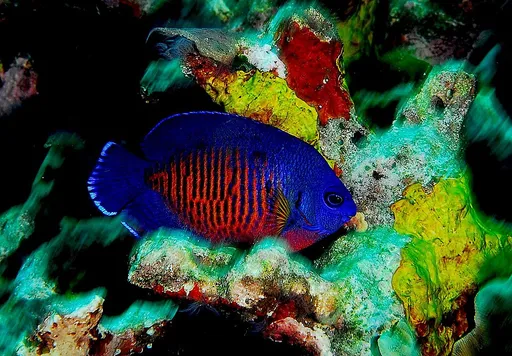 3.9 in (10 cm)50 gal (190 L)72–79°F (22–26°C)
Coral beauty angelfish
Centropyge bispinosa
3.9 in (10 cm) · 50 gal (190 L)
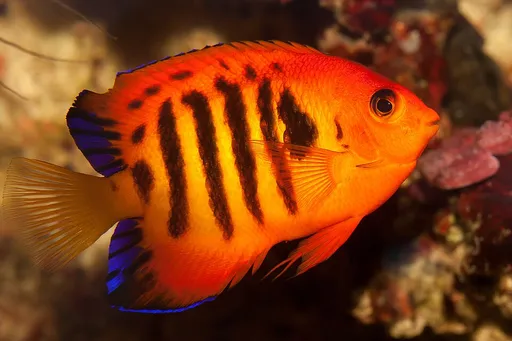 3.9 in (10 cm)50 gal (190 L)72–79°F (22–26°C)
Flame angelfish
Centropyge loriculus
3.9 in (10 cm) · 50 gal (190 L)