Eibli angelfish
Centropyge eibli
Also known as Red Stripe Angelfish, Blacktail Angelfish, Orangeline Angelfish
SaltwaterFish
Care at a glance
- Temperature
- 72–79°F
- 22–26°C
- pH
- 8.1–8.4
- Adult size
- 5.9 in
- 15 cm
- Minimum tank
- 55 gal
- 210 L
- Temperament
- Mostly peaceful
- Social behavior
- Solitary
- Own kind
- One male per tank
- Tankmates
- With caution
- Swim level
- Middle
- Difficulty
- Medium
- Breeding
- Hard
- Rarity
- Common
- Reef safe
- Reef safe with caution
- Family
- Pomacanthidae
- Origin
- Eastern Indian Ocean to the western Pacific, from Christmas Island and Indonesia across to the Philippines and the Great Barrier Reef
Overview
An omnivorous grazer that needs steady algae growth in the tank plus at least two small feedings a day of algae-based and meaty foods. It settles in slowly and does best given time to acclimate in a stable, established system, and it will not tolerate another dwarf angel in the same tank. Reef keepers rate it caution: many stay out of the coral, but it can nip LPS polyps, soft corals, or clam mantles, and the risk climbs if it is underfed.
In the wild
Lives on outer reef slopes and drop-offs with strong current and rich coral growth, grazing algae off rock and rubble through the day. It keeps close to structure it can retreat into. In the aquarium it wants a mature tank with abundant live rock, an established algae film, and plenty of hiding spots to settle into.
Good to know
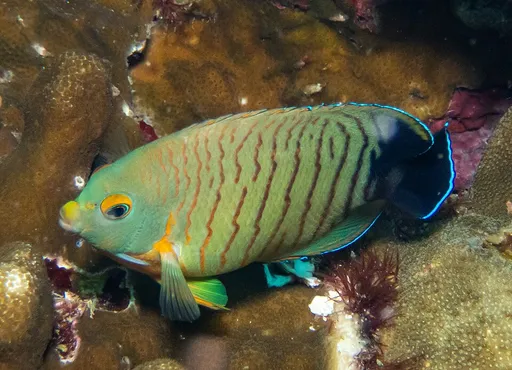
Centropyge eibli grows to roughly 15 cm, on the larger side for the genus, and is a protogynous hermaphrodite that lives in small harems led by one male. Adults show a grey body crossed with thin, wavy orange-rust lines, an orange eye-ring, and a black tail edged in blue; juveniles start out a lighter greenish-grey with the same black-tailed pattern before the fine striping develops.
Did you know
Its fine wavy orange stripes over a grey body are the reason for the trade name red stripe angelfish, even though the overall impression in the tank reads more amber and grey than red.
Common questions
What size tank does an Eibli angelfish need?
An Eibli angelfish needs at least 55 gal (210 L). It spends most of its time in the middle.
What temperature and pH does an Eibli angelfish need?
An Eibli angelfish is comfortable at 72–79°F (22–26°C) with a pH of 8.1–8.4.
How big does an Eibli angelfish get?
An adult Eibli angelfish reaches about 5.9 in (15 cm).
Related species
 5.9 in (15 cm)55 gal (210 L)72–81°F (22–27°C)
Bicolor angelfish
Centropyge bicolor
5.9 in (15 cm) · 55 gal (210 L)
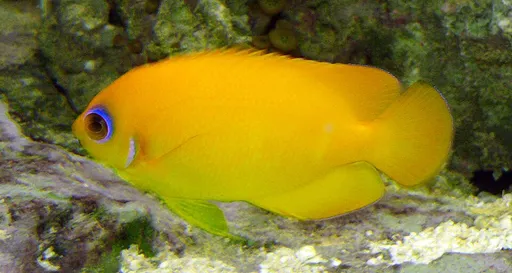 5.5 in (14 cm)55 gal (210 L)72–79°F (22–26°C)
Lemonpeel angelfish
Centropyge flavissima
5.5 in (14 cm) · 55 gal (210 L)
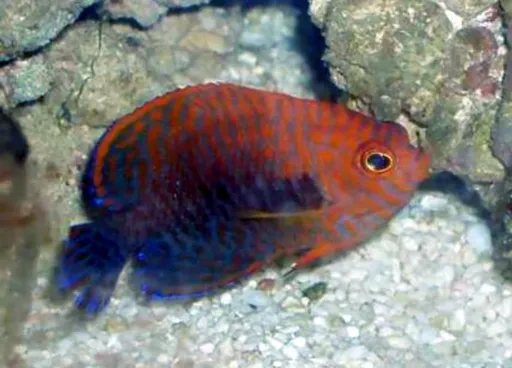 5.1 in (13 cm)65 gal (245 L)72–79°F (22–26°C)
Potter's angelfish
Centropyge potteri
5.1 in (13 cm) · 65 gal (245 L)
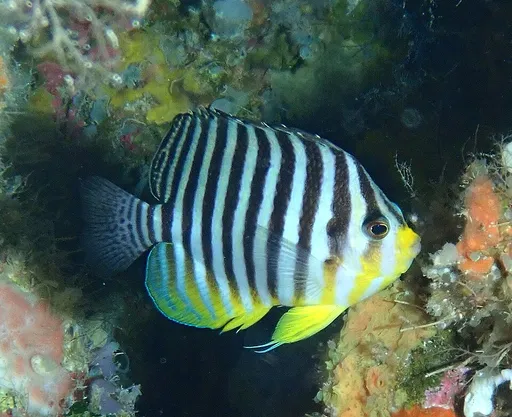 4.7 in (12 cm)59 gal (225 L)72–79°F (22–26°C)
Multibarred angelfish
Centropyge multifasciata
4.7 in (12 cm) · 59 gal (225 L)
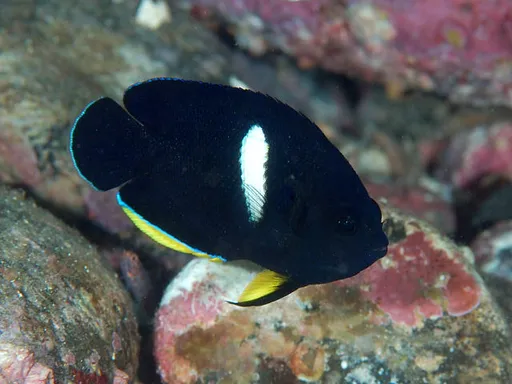 7.9 in (20 cm)70 gal (265 L)72–79°F (22–26°C)
Keyhole angelfish
Centropyge tibicen
7.9 in (20 cm) · 70 gal (265 L)
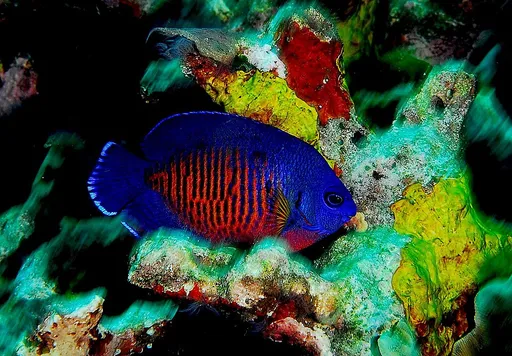 3.9 in (10 cm)50 gal (190 L)72–79°F (22–26°C)
Coral beauty angelfish
Centropyge bispinosa
3.9 in (10 cm) · 50 gal (190 L)