Potter's angelfish
Centropyge potteri
Also known as Hawaiian Angelfish, Potter's Dwarf Angelfish
SaltwaterFish
Care at a glance
- Temperature
- 72–79°F
- 22–26°C
- pH
- 8.1–8.4
- Adult size
- 5.1 in
- 13 cm
- Minimum tank
- 65 gal
- 245 L
- Temperament
- Mostly peaceful
- Social behavior
- Solitary
- Own kind
- One male per tank
- Tankmates
- With caution
- Swim level
- Middle
- Diet
- Omnivore
- Difficulty
- Difficult
- Breeding
- Hard
- Rarity
- Rare
- Reef safe
- Reef safe with caution
- Family
- Pomacanthidae
- Origin
- Endemic to the Hawaiian Islands and Johnston Atoll
Overview
The Potter's angelfish is a grazing dwarf angel from Hawaii for an established saltwater tank. It suits an experienced keeper.
Did you know
The Potter's angelfish is one of relatively few Hawaiian endemic reef fish in the aquarium trade. Its limited range and Hawaii's tightened collecting rules keep wild supply tighter and pricier than most Pacific dwarf angels.
Caring for the Potter's angelfish
Give the Potter's angelfish a long-established tank of at least 65 gal (245 L), with heavy live rock cover and a mature algae film. It is notably slow to settle into a new tank and has little patience for unstable conditions. A mature, stable system suits it better than a new setup.
Keep the water at 72 to 79°F (22 to 26°C) and a pH of 8.1 to 8.4. It is a committed grazer that needs plenty of established algae growth. Add two to three small feedings a day of algae-based and meaty foods. A new arrival can go off food for a stretch.
The Potter's angelfish is mostly peaceful. Keep only one male per tank, and choose its tank mates with caution. Reef keepers rate it caution. It will usually leave corals alone if well fed, but otherwise it may pick at soft corals or clam mantles.
Breeding it is hard, and the species is tricky to reproduce even outside the home aquarium. Researchers have only recently begun to work out how to rear its larvae in aquaculture.
Good to know
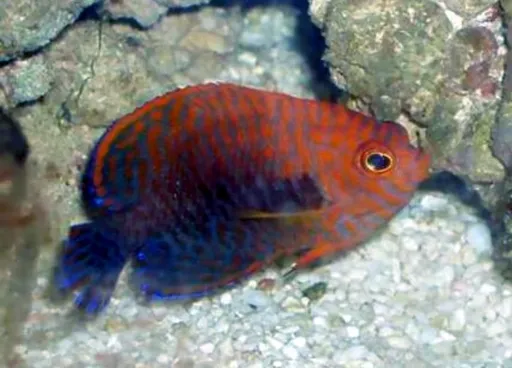
Centropyge potteri belongs to the family Pomacanthidae and also goes by Hawaiian angelfish and Potter's dwarf angelfish. Like other Centropyge, it is a protogynous hermaphrodite living in a harem with one dominant male. Its orange body is marbled with blue, and its tail is a dark blue-black.
In the wild
The Potter's angelfish is endemic to the Hawaiian Islands and Johnston Atoll. It lives over coral, rock and rubble on seaward reefs. Juveniles stay shallow, while adults range down to considerably deeper water. It grazes algae constantly and never wanders far from shelter.
Common questions
What size tank does a Potter's angelfish need?
A Potter's angelfish needs at least 65 gal (245 L). It spends most of its time in the middle.
What temperature and pH does a Potter's angelfish need?
A Potter's angelfish is comfortable at 72–79°F (22–26°C) with a pH of 8.1–8.4.
What does a Potter's angelfish eat?
A Potter's angelfish is a committed grazer that needs plenty of established algae growth. Give it two to three small feedings a day of algae-based and meaty foods.
How big does a Potter's angelfish get?
An adult Potter's angelfish reaches about 5.1 in (13 cm).
Related species
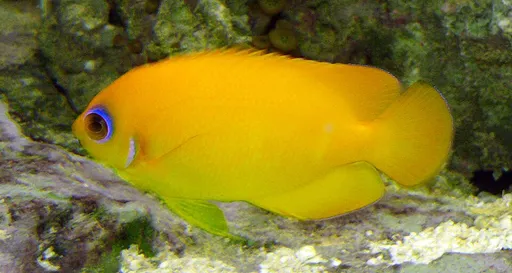 5.5 in (14 cm)55 gal (210 L)72–79°F (22–26°C)
Lemonpeel angelfish
Centropyge flavissima
5.5 in (14 cm) · 55 gal (210 L)
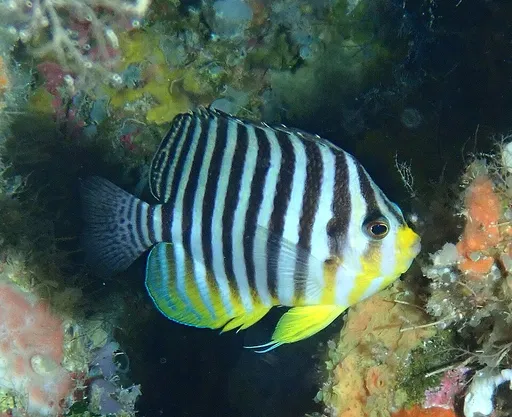 4.7 in (12 cm)59 gal (225 L)72–79°F (22–26°C)
Multibarred angelfish
Centropyge multifasciata
4.7 in (12 cm) · 59 gal (225 L)
 5.9 in (15 cm)55 gal (210 L)72–81°F (22–27°C)
Bicolor angelfish
Centropyge bicolor
5.9 in (15 cm) · 55 gal (210 L)
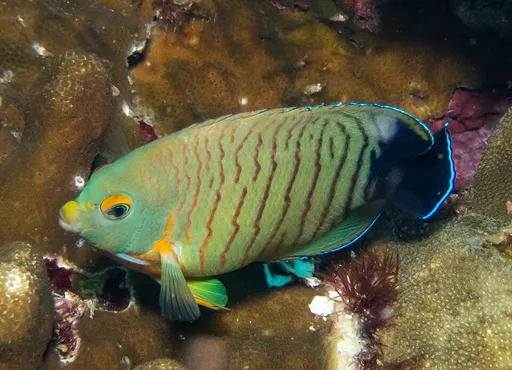 5.9 in (15 cm)55 gal (210 L)72–79°F (22–26°C)
Eibli angelfish
Centropyge eibli
5.9 in (15 cm) · 55 gal (210 L)
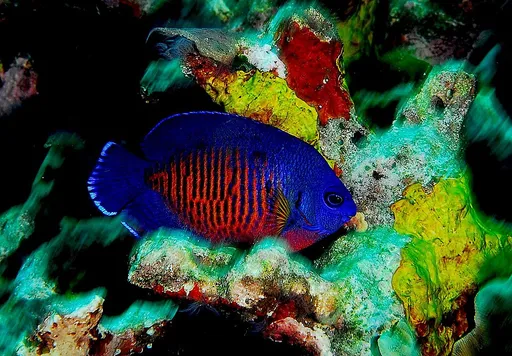 3.9 in (10 cm)50 gal (190 L)72–79°F (22–26°C)
Coral beauty angelfish
Centropyge bispinosa
3.9 in (10 cm) · 50 gal (190 L)
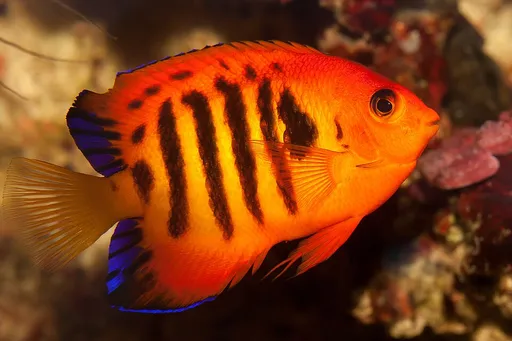 3.9 in (10 cm)50 gal (190 L)72–79°F (22–26°C)
Flame angelfish
Centropyge loriculus
3.9 in (10 cm) · 50 gal (190 L)