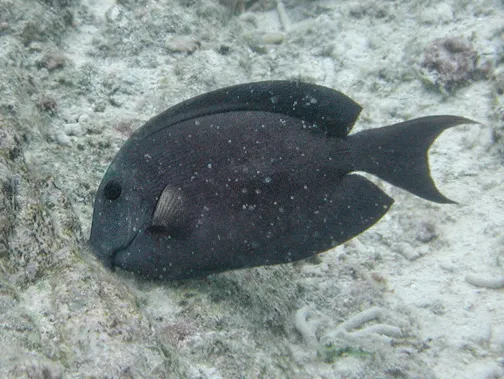
Chevron tang
Ctenochaetus hawaiiensis
Also known as Hawaiian Bristletooth, Hawaiian Surgeonfish, Black Surgeonfish
SaltwaterFish
Care at a glance
- Temperature
- 75–81°F
- 24–27°C
- pH
- 8.1–8.4
- Adult size
- 11 in
- 28 cm
- Minimum tank
- 180 gal
- 680 L
- Temperament
- Mostly peaceful
- Social behavior
- Solitary
- Own kind
- One per tank
- Swim level
- Middle
- Difficulty
- Medium
- Breeding
- No record
- Rarity
- Rare
- Reef safe
- Reef safe
- Family
- Acanthuridae
- Origin
- Central and western Pacific reefs, most commonly collected around the Hawaiian Islands
Overview
This tang is mostly peaceful with other fish and less pushy than many surgeonfish, though it still won't tolerate other tangs sharing the tank. It's reef safe and spends its day combing rock and substrate for algae, so a tank with mature live rock suits it well. Marine algae should still make up most of the diet even though it grazes constantly, since grazing alone rarely covers a bristletooth's nutritional needs in captivity.
In the wild
Chevron tangs live on reefs across Micronesia and the central Pacific, most commonly collected around the Hawaiian Islands, where they graze algae and detritus off rock and rubble. Most of the supply in the trade comes from Hawaiian collection, which keeps availability tight. It needs at least 680 litres (180 US gal) with mature live rock to work over.
Good to know
Ctenochaetus hawaiiensis is a bristletooth tang, named for the fine, comb-like teeth it uses to sift algae film and detritus from rock surfaces rather than biting off whole strands the way an Acanthurus does. Juveniles are bright orange with violet lines; as they mature the body darkens to an olive brown covered in fine orange-brown striping, which is where the chevron pattern in the name comes from.
Did you know
Because wild supply is limited to Hawaiian collection, prices for chevron tangs swing widely from one batch to the next, and healthy adults can be one of the more expensive tangs in the hobby.
Weekly picks
Tank mates
Chevron tang is a mostly peaceful, solitary species that keeps to the middle. Keep one per tank of its own kind. These picks share a community profile with it, are safe together in both directions, and overlap on water type, temperature and pH.
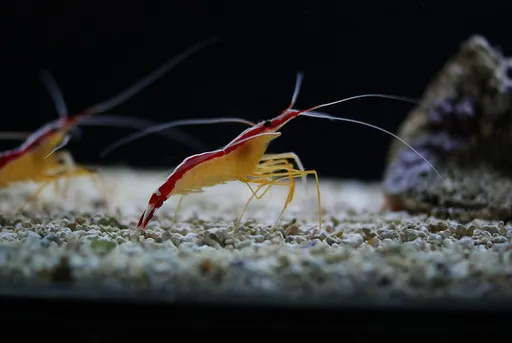
Skunk cleaner shrimp
Lysmata amboinensis
Saltwater2.4 in (6 cm) · 20 gal (75 L)73–81°F (23–27°C)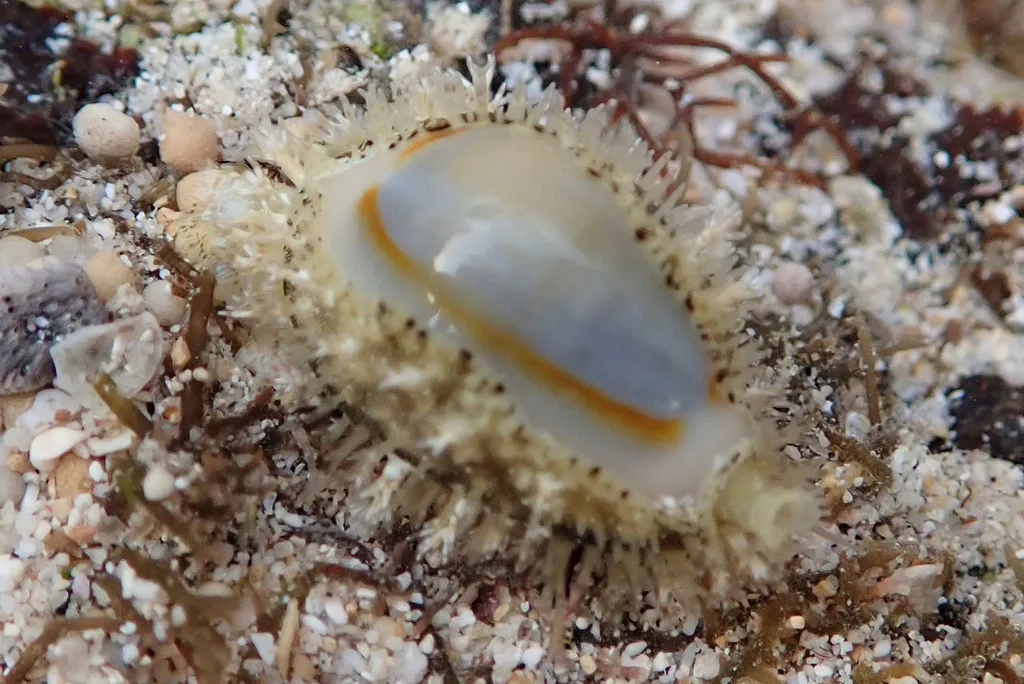
Ring cowrie
Monetaria annulus
Saltwater1.2 in (3 cm) · 20 gal (75 L)75–81°F (24–27°C)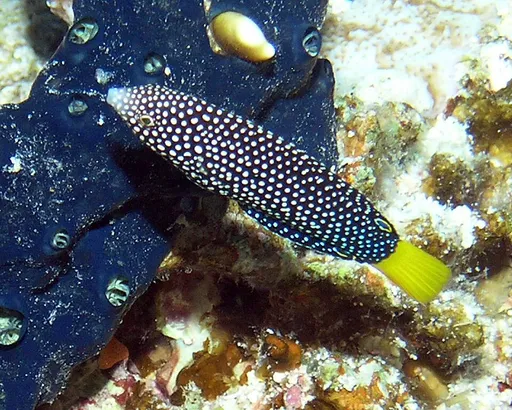
Yellowtail tamarin wrasse
Anampses meleagrides
Saltwater8.7 in (22 cm) · 90 gal (340 L)73–81°F (23–27°C)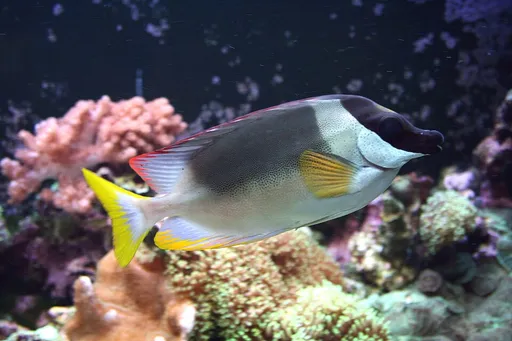
Magnificent foxface
Siganus magnificus
Saltwater9.1 in (23 cm) · 124 gal (470 L)75–81°F (24–27°C)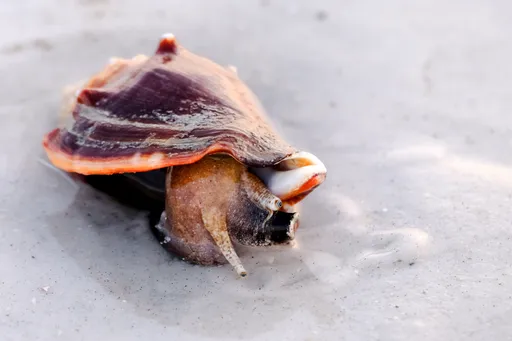
Fighting conch
Strombus alatus
Saltwater3.1 in (8 cm) · 20 gal (75 L)75–81°F (24–27°C)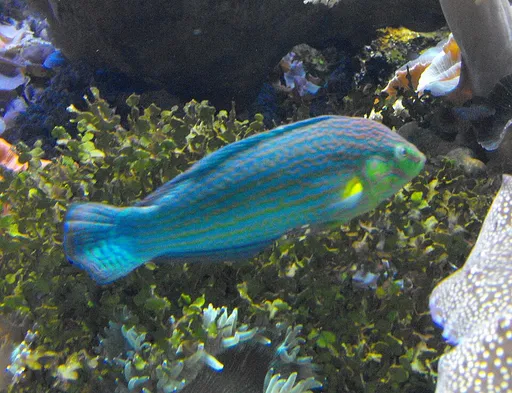
Melanurus wrasse
Halichoeres melanurus
Saltwater5.5 in (14 cm) · 100 gal (380 L)72–79°F (22–26°C)
Common questions
What size tank does a Chevron tang need?
A Chevron tang needs at least 180 gal (680 L). It spends most of its time in the middle.
What temperature and pH does a Chevron tang need?
A Chevron tang is comfortable at 75–81°F (24–27°C) with a pH of 8.1–8.4.
How big does a Chevron tang get?
An adult Chevron tang reaches about 11 in (28 cm).
Related species
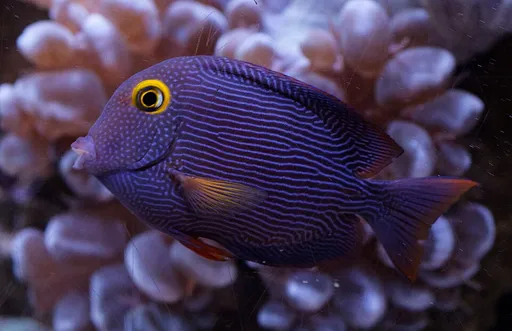 7.1 in (18 cm)79 gal (300 L)75–81°F (24–27°C)
Kole tang
Ctenochaetus strigosus
7.1 in (18 cm) · 79 gal (300 L)
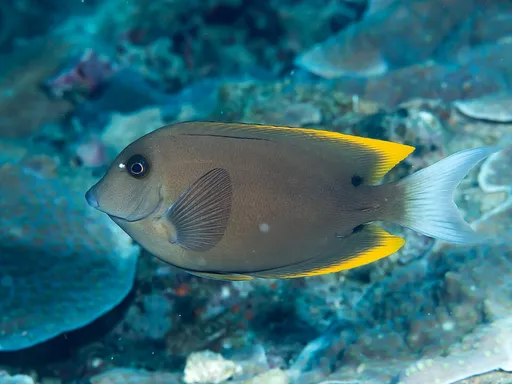 6.3 in (16 cm)70 gal (265 L)75–81°F (24–27°C)
Tomini tang
Ctenochaetus tominiensis
6.3 in (16 cm) · 70 gal (265 L)
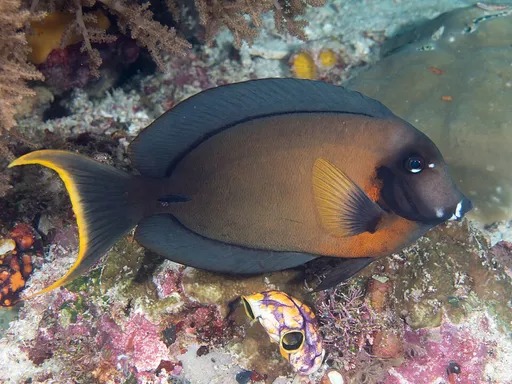 11.4 in (29 cm)129 gal (490 L)75–82°F (24–28°C)
Mimic tang
Acanthurus pyroferus
11.4 in (29 cm) · 129 gal (490 L)
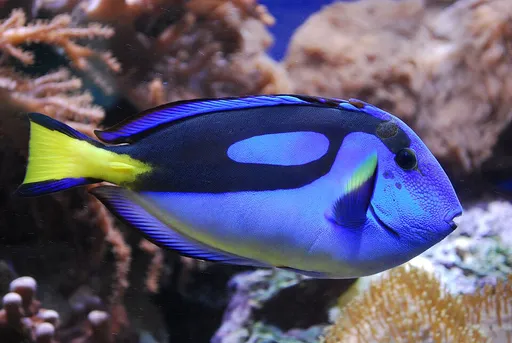 11.8 in (30 cm)180 gal (680 L)73–81°F (23–27°C)
Blue hippo tang
Paracanthurus hepatus
11.8 in (30 cm) · 180 gal (680 L)
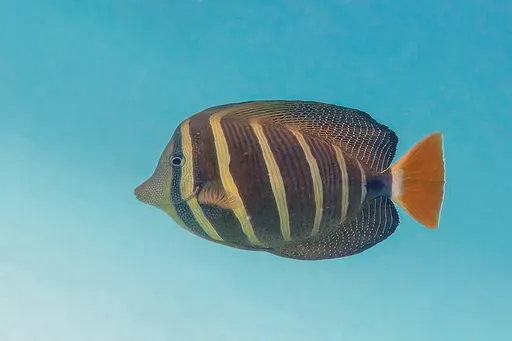 11.8 in (30 cm)145 gal (550 L)75–82°F (24–28°C)
Sailfin tang
Zebrasoma veliferum
11.8 in (30 cm) · 145 gal (550 L)
 9.8 in (25 cm)106 gal (400 L)75–82°F (24–28°C)
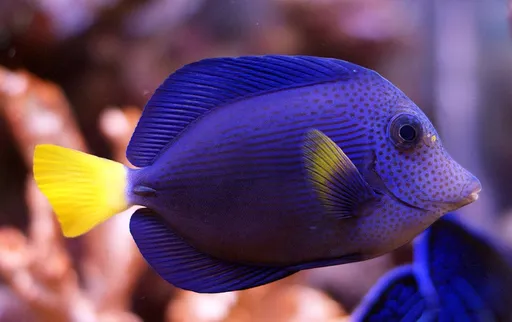
Purple tang
Zebrasoma xanthurum
9.8 in (25 cm) · 106 gal (400 L)