Koran angelfish
Pomacanthus semicirculatus
Also known as Semicircle Angelfish, Blue Koran Angelfish
SaltwaterFish
Care at a glance
- Temperature
- 73–81°F
- 23–27°C
- pH
- 8.1–8.4
- Adult size
- 15.7 in
- 40 cm
- Minimum tank
- 132 gal
- 500 L
- Temperament
- Mostly peaceful
- Social behavior
- Solitary
- Own kind
- One per tank
- Tankmates
- With caution
- Swim level
- Middle
- Difficulty
- Difficult
- Breeding
- Hard
- Rarity
- Common
- Reef safe
- Not reef safe
- Family
- Pomacanthidae
- Origin
- Indo-Pacific, from the Red Sea and East Africa to Samoa, north to southern Japan and south to Western Australia
Overview
Koran angelfish are semi-aggressive, mainly toward other angelfish and similarly shaped fish, so plan on keeping just one unless the tank is very large. They graze sponges, tunicates, and algae in the wild, so offer nori and other marine algae alongside frozen meaty foods like mysis and brine shrimp. They are not reef safe: expect them to nip at soft and stony coral polyps and clam mantles if kept around them.
In the wild
Koran angelfish range across a huge stretch of the Indo-Pacific, from the Red Sea and East Africa to Samoa, living on reef flats, lagoons, and outer slopes from the surface down to about 40 meters. They stay close to shelter, ducking into rock and coral cover when startled. A tank needs mature, extensive rockwork with caves and established algae growth to match the grazing and hiding they would do in the wild.
Good to know
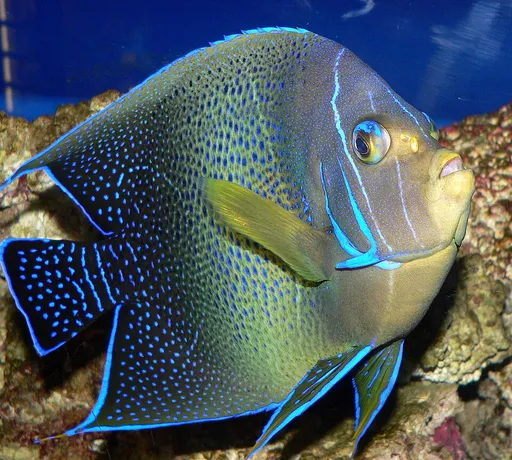
Pomacanthus semicirculatus reaches about 40 cm and can live two decades or more in good care. The juvenile is dark blue black with concentric white and pale blue swirling rings, the 'semicircle' pattern the scientific name refers to, while the adult turns olive green to blue grey with fine scale markings, a pale blue mouth, and a dark comma-shaped mark ringed in blue behind the gill cover. The two color phases look so different that early collectors sometimes sold them as separate species.
Did you know
This is one of the few large angelfish to have had its natural spawning, eggs, and larvae documented under research aquarium conditions, a 2009 study that gave scientists a rare look at how a Pomacanthus angel actually breeds.
Common questions
What size tank does a Koran angelfish need?
A Koran angelfish needs at least 132 gal (500 L). It spends most of its time in the middle.
What temperature and pH does a Koran angelfish need?
A Koran angelfish is comfortable at 73–81°F (23–27°C) with a pH of 8.1–8.4.
How big does a Koran angelfish get?
An adult Koran angelfish reaches about 15.7 in (40 cm).
Related species
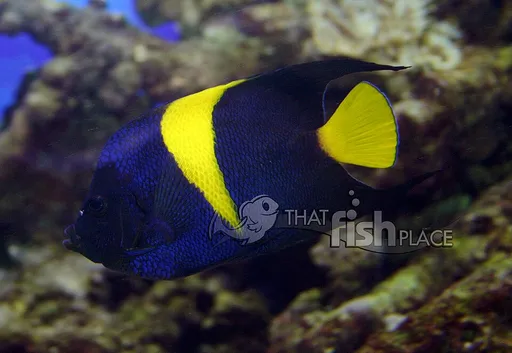 15.7 in (40 cm)135 gal (510 L)75–82°F (24–28°C)
Asfur angelfish
Pomacanthus asfur
15.7 in (40 cm) · 135 gal (510 L)
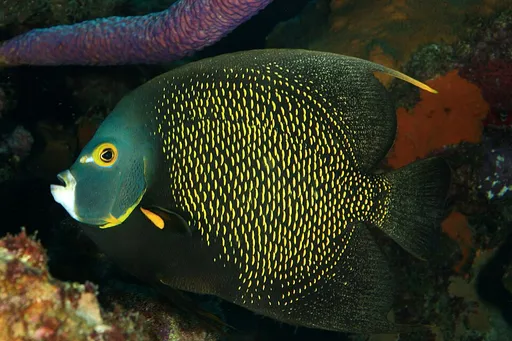 16.1 in (41 cm)201 gal (760 L)72–81°F (22–27°C)
French angelfish
Pomacanthus paru
16.1 in (41 cm) · 201 gal (760 L)
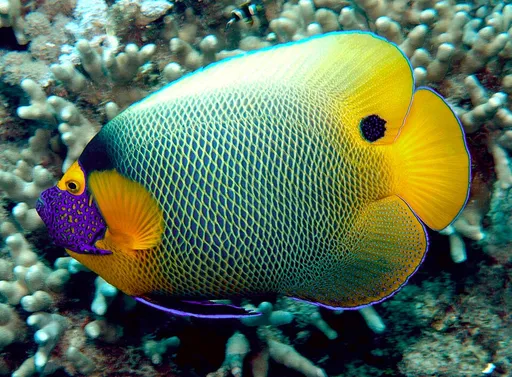 15 in (38 cm)219 gal (830 L)73–81°F (23–27°C)
Blueface angelfish
Pomacanthus xanthometopon
15 in (38 cm) · 219 gal (830 L)
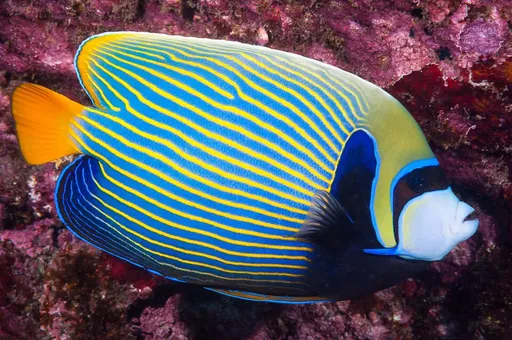 15 in (38 cm)185 gal (700 L)73–81°F (23–27°C)
Emperor angelfish
Pomacanthus imperator
15 in (38 cm) · 185 gal (700 L)
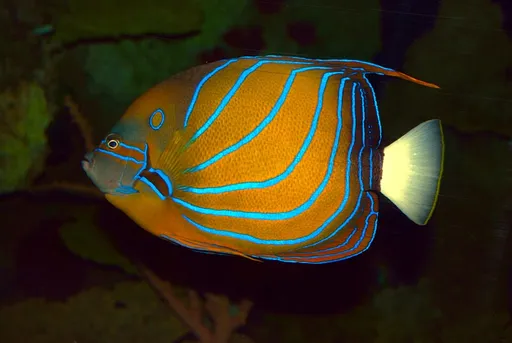 17.7 in (45 cm)219 gal (830 L)73–81°F (23–27°C)
Annularis angelfish
Pomacanthus annularis
17.7 in (45 cm) · 219 gal (830 L)
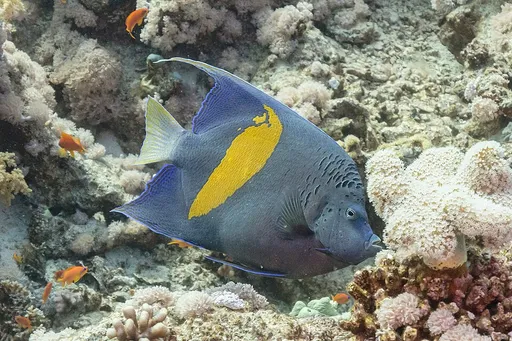 19.7 in (50 cm)180 gal (680 L)75–82°F (24–28°C)
Yellowbar angelfish
Pomacanthus maculosus
19.7 in (50 cm) · 180 gal (680 L)