Blueface angelfish
Pomacanthus xanthometopon
Also known as Yellowface Angelfish, Yellowmask Angelfish
SaltwaterFish
Care at a glance
- Temperature
- 73–81°F
- 23–27°C
- pH
- 8.1–8.4
- Adult size
- 15 in
- 38 cm
- Minimum tank
- 219 gal
- 830 L
- Temperament
- Mostly peaceful
- Social behavior
- Solitary
- Tankmates
- With caution
- Swim level
- Middle
- Difficulty
- Difficult
- Breeding
- Hard
- Rarity
- Common
- Reef safe
- Not reef safe
- Family
- Pomacanthidae
- Origin
- Indo-Pacific, from the Maldives to Vanuatu, north to the Yaeyama Islands and Palau
Overview
Blueface angelfish are mostly peaceful but become territorial once they are the largest fish in the tank, and they will not tolerate other angelfish, so keep just one. They graze sponges and encrusting invertebrates in the wild, so feed spirulina, marine algae, angelfish preparations, and mysis or frozen shrimp several times a day in a large, mature setup. They are not reef safe: most individuals nip at stony and soft corals and clam mantles, and a genuinely reef-safe blueface is the exception, not the rule.
In the wild
Blueface angelfish live on coral-rich lagoons, channels, and outer reef slopes across the Indo-Pacific, from the Maldives to Vanuatu, typically at 5 to 30 meters and often near caves. They spend their time foraging over rock and retreating to cover when threatened. A tank needs to be large with abundant live rock arranged into caves, since this is an active, deliberate swimmer that does not do well boxed into a small footprint.
Good to know
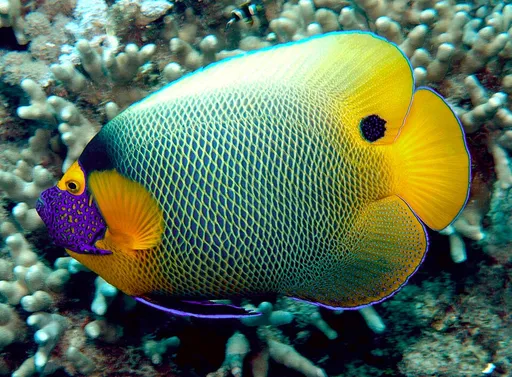
Pomacanthus xanthometopon reaches about 38 cm. Juveniles are black with vertical white and blue bars, while adults develop the fish's namesake look: a bright blue face with a yellow bar across the eyes, a dark patch on top of the head, and a reticulated pattern of yellow-edged scales over a blue body. The species was long placed in its own genus, Euxiphipops, before taxonomists folded it back into Pomacanthus as a subgenus.
Did you know
A specialist Indonesian angelfish hatchery has bred this species in captivity in limited numbers, one of only a handful of large angelfish anyone has managed to spawn and rear commercially rather than collect from the wild.
Common questions
What size tank does a Blueface angelfish need?
A Blueface angelfish needs at least 219 gal (830 L). It spends most of its time in the middle.
What temperature and pH does a Blueface angelfish need?
A Blueface angelfish is comfortable at 73–81°F (23–27°C) with a pH of 8.1–8.4.
How big does a Blueface angelfish get?
An adult Blueface angelfish reaches about 15 in (38 cm).
Related species
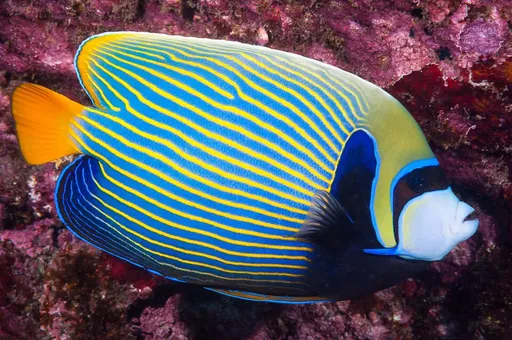 15 in (38 cm)185 gal (700 L)73–81°F (23–27°C)
Emperor angelfish
Pomacanthus imperator
15 in (38 cm) · 185 gal (700 L)
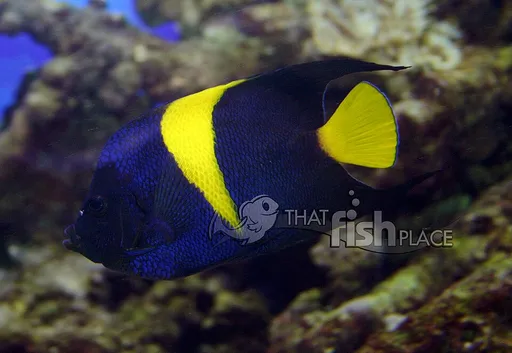 15.7 in (40 cm)135 gal (510 L)75–82°F (24–28°C)
Asfur angelfish
Pomacanthus asfur
15.7 in (40 cm) · 135 gal (510 L)
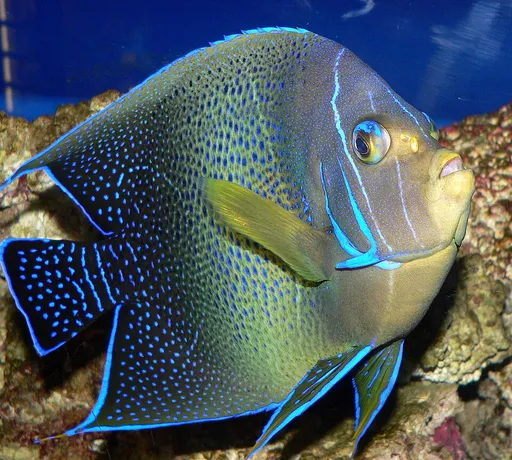 15.7 in (40 cm)132 gal (500 L)73–81°F (23–27°C)
Koran angelfish
Pomacanthus semicirculatus
15.7 in (40 cm) · 132 gal (500 L)
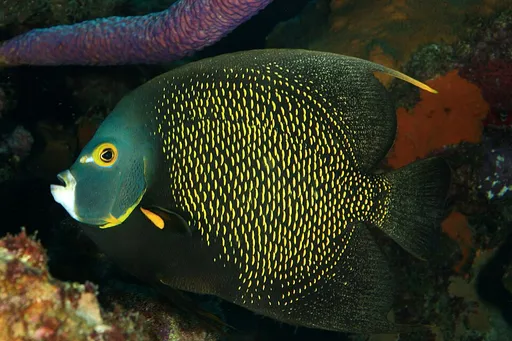 16.1 in (41 cm)201 gal (760 L)72–81°F (22–27°C)
French angelfish
Pomacanthus paru
16.1 in (41 cm) · 201 gal (760 L)
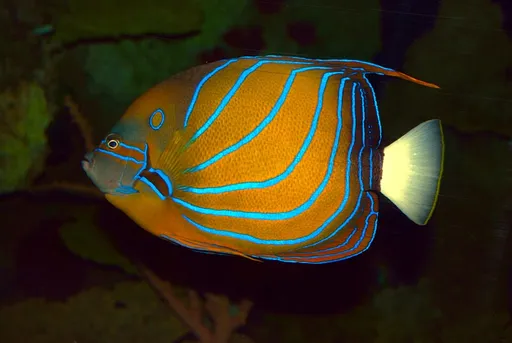 17.7 in (45 cm)219 gal (830 L)73–81°F (23–27°C)
Annularis angelfish
Pomacanthus annularis
17.7 in (45 cm) · 219 gal (830 L)
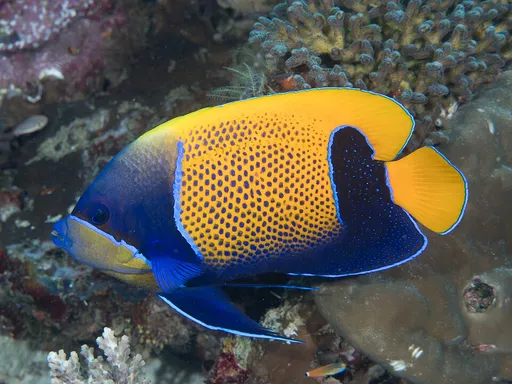 11.8 in (30 cm)145 gal (550 L)73–81°F (23–27°C)
Majestic angelfish
Pomacanthus navarchus
11.8 in (30 cm) · 145 gal (550 L)