Emperor angelfish
Pomacanthus imperator
Also known as Imperator Angelfish, Imperial Angelfish
SaltwaterFish
Care at a glance
- Temperature
- 73–81°F
- 23–27°C
- pH
- 8.1–8.4
- Adult size
- 15 in
- 38 cm
- Minimum tank
- 185 gal
- 700 L
- Temperament
- Mostly peaceful
- Social behavior
- Solitary
- Own kind
- One male per tank
- Tankmates
- With caution
- Swim level
- Middle
- Difficulty
- Difficult
- Breeding
- Hard
- Rarity
- Common
- Reef safe
- Not reef safe
- Family
- Pomacanthidae
- Origin
- Indo-Pacific, from the Red Sea and East Africa to the Hawaiian, Line, and Tuamotu islands, north to southern Japan and south to the Great Barrier Reef
Overview
A large, active, deliberate swimmer that becomes highly territorial as an adult, especially toward other angelfish, so it is kept one per tank unless the system is enormous. It grazes constantly on sponges, algae, and encrusting life and needs a spacious mature tank plus a sponge-rich varied diet. It is a difficult, demanding fish sensitive to water quality and prone to feeding and disease problems if rushed.
In the wild
Emperor angels live on clear coral-rich reefs, channels, and outer slopes across the Indo-Pacific, from shallow reef flats to about 100 metres. Juveniles hide in caves and holes on the reef while adults roam open reef territory. In the aquarium they need a very large mature tank with abundant live rock arranged into caves and overhangs for grazing and shelter.
Good to know
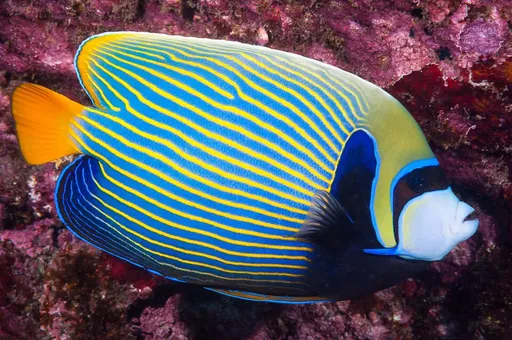
Pomacanthus imperator is one of the largest marine angelfish, reaching about 38 to 40 cm. Juveniles and adults look completely different: juveniles are dark blue with concentric white and electric-blue rings, while adults develop the iconic yellow-and-blue horizontal stripes with a dark mask. This dramatic ontogenetic color change once led early ichthyologists to describe the two forms as separate species.
Did you know
The juvenile's blue-and-white bullseye pattern is so different from the striped adult that hobbyists sometimes buy the two color phases thinking they are different fish. Captive-bred emperors are now available and adapt better than wild-caught specimens.
Common questions
What size tank does an Emperor angelfish need?
An Emperor angelfish needs at least 185 gal (700 L). It spends most of its time in the middle.
What temperature and pH does an Emperor angelfish need?
An Emperor angelfish is comfortable at 73–81°F (23–27°C) with a pH of 8.1–8.4.
How big does an Emperor angelfish get?
An adult Emperor angelfish reaches about 15 in (38 cm).
Related species
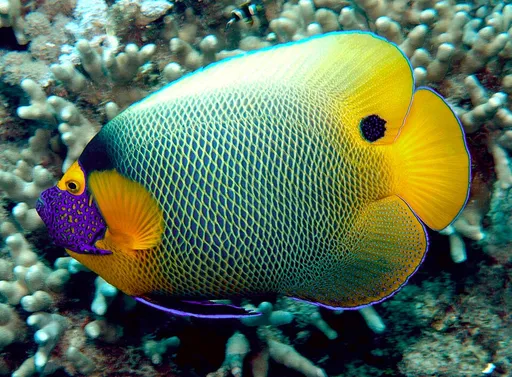 15 in (38 cm)219 gal (830 L)73–81°F (23–27°C)
Blueface angelfish
Pomacanthus xanthometopon
15 in (38 cm) · 219 gal (830 L)
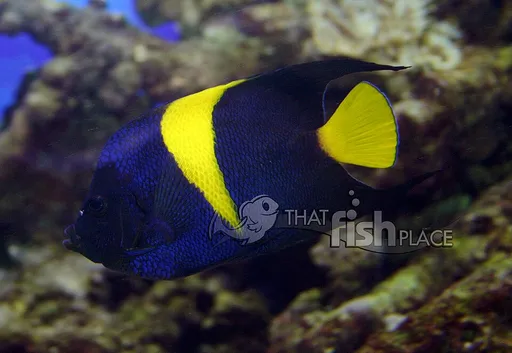 15.7 in (40 cm)135 gal (510 L)75–82°F (24–28°C)
Asfur angelfish
Pomacanthus asfur
15.7 in (40 cm) · 135 gal (510 L)
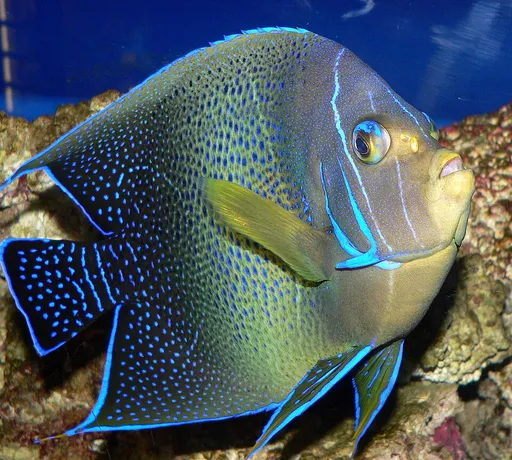 15.7 in (40 cm)132 gal (500 L)73–81°F (23–27°C)
Koran angelfish
Pomacanthus semicirculatus
15.7 in (40 cm) · 132 gal (500 L)
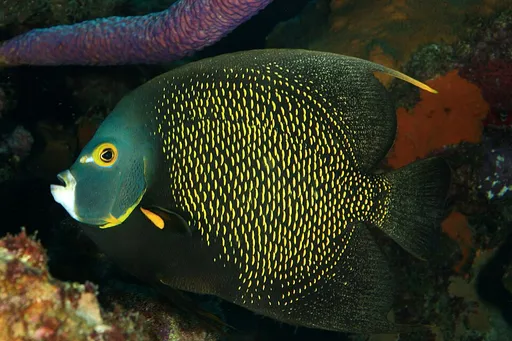 16.1 in (41 cm)201 gal (760 L)72–81°F (22–27°C)
French angelfish
Pomacanthus paru
16.1 in (41 cm) · 201 gal (760 L)
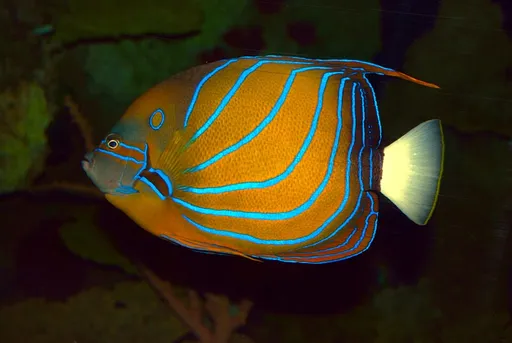 17.7 in (45 cm)219 gal (830 L)73–81°F (23–27°C)
Annularis angelfish
Pomacanthus annularis
17.7 in (45 cm) · 219 gal (830 L)
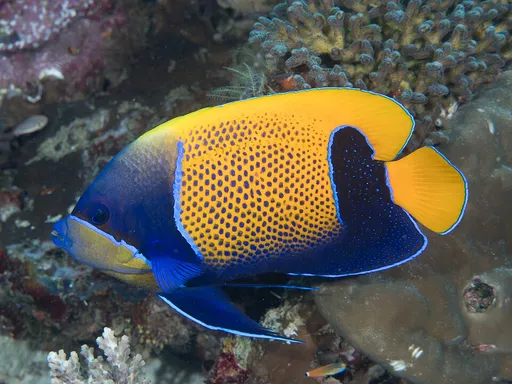 11.8 in (30 cm)145 gal (550 L)73–81°F (23–27°C)
Majestic angelfish
Pomacanthus navarchus
11.8 in (30 cm) · 145 gal (550 L)