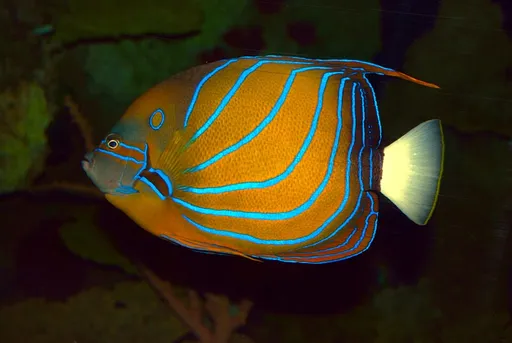
Annularis angelfish
Pomacanthus annularis
Also known as Blue Ring Angelfish, Bluering Angelfish, Blue-ringed Angelfish
SaltwaterFish
Care at a glance
- Temperature
- 73–81°F
- 23–27°C
- pH
- 8.1–8.4
- Adult size
- 17.7 in
- 45 cm
- Minimum tank
- 219 gal
- 830 L
- Temperament
- Mostly peaceful
- Social behavior
- Solitary
- Tankmates
- With caution
- Swim level
- Middle
- Difficulty
- Difficult
- Breeding
- Hard
- Rarity
- Common
- Reef safe
- Not reef safe
- Family
- Pomacanthidae
- Origin
- Indo-West Pacific, from East Africa through Indonesia and New Guinea to New Caledonia, north to southern Japan
Overview
Annularis angelfish are mostly peaceful but grow territorial toward other large angels as they mature, and they do best as the only large angel in anything under roughly 1300 to 1500 liters. They graze sponges and tunicates in the wild, so offer a varied diet with sponge-based angelfish preparations, spirulina, and marine algae several times a day. They are not reef safe and are especially prone to nipping large-polyp stony corals, zoanthids, soft corals, and clam mantles once they learn to see them as food.
In the wild
Annularis angelfish live on coastal and lagoon reefs across the Indo-West Pacific, from East Africa through Indonesia to New Caledonia, from about 1 to 60 meters. Juveniles settle into very shallow, algae-covered inshore habitat before working their way out to deeper reef as they grow, where adults are often found paired up near caves. A tank needs to be long, 2.4 meters or more is best, to give an adult the open swimming space it wants, plus heavy rockwork for grazing and shelter.
Good to know
Pomacanthus annularis reaches about 45 cm, among the largest angelfish in this group. The juvenile is black with tight concentric white and blue rings, while the adult is blue with narrow yellow-gold horizontal stripes, a yellow tail, and the blue ring behind the gill cover that gives the species its common and scientific names. It is regularly collected for the aquarium trade, particularly out of Sri Lanka.
Did you know
An Indonesian hatchery was among the first to successfully captive-breed this species, and has since produced a hybrid cross between the annularis and emperor angelfish that shows a mix of both parents' patterns.
Common questions
What size tank does an Annularis angelfish need?
An Annularis angelfish needs at least 219 gal (830 L). It spends most of its time in the middle.
What temperature and pH does an Annularis angelfish need?
An Annularis angelfish is comfortable at 73–81°F (23–27°C) with a pH of 8.1–8.4.
How big does an Annularis angelfish get?
An adult Annularis angelfish reaches about 17.7 in (45 cm).
Related species
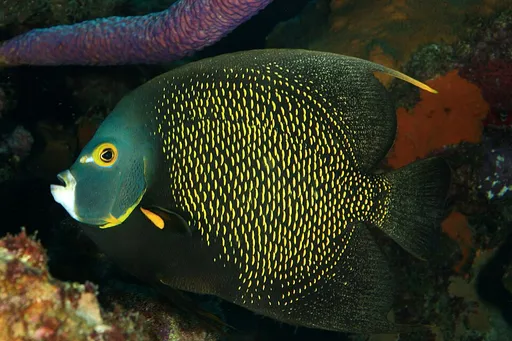 16.1 in (41 cm)201 gal (760 L)72–81°F (22–27°C)
French angelfish
Pomacanthus paru
16.1 in (41 cm) · 201 gal (760 L)
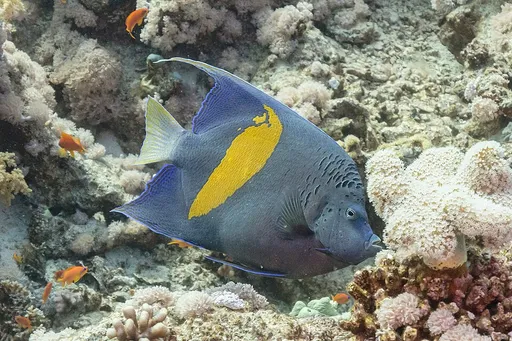 19.7 in (50 cm)180 gal (680 L)75–82°F (24–28°C)
Yellowbar angelfish
Pomacanthus maculosus
19.7 in (50 cm) · 180 gal (680 L)
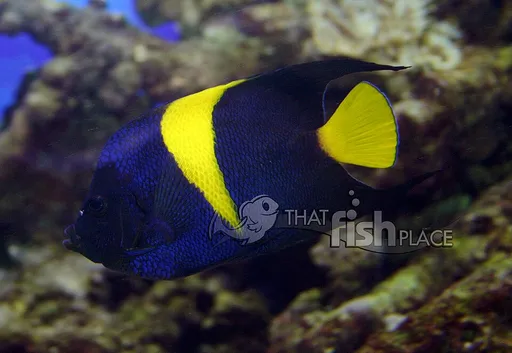 15.7 in (40 cm)135 gal (510 L)75–82°F (24–28°C)
Asfur angelfish
Pomacanthus asfur
15.7 in (40 cm) · 135 gal (510 L)
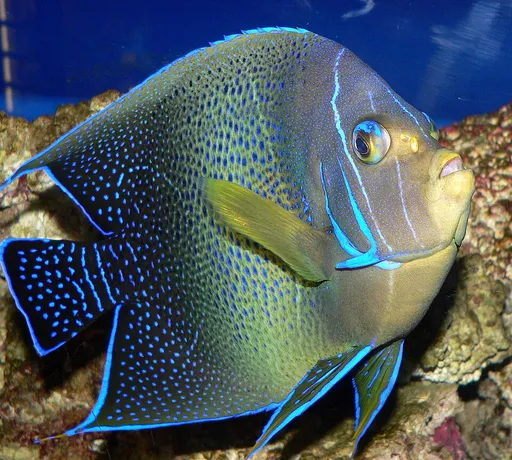 15.7 in (40 cm)132 gal (500 L)73–81°F (23–27°C)
Koran angelfish
Pomacanthus semicirculatus
15.7 in (40 cm) · 132 gal (500 L)
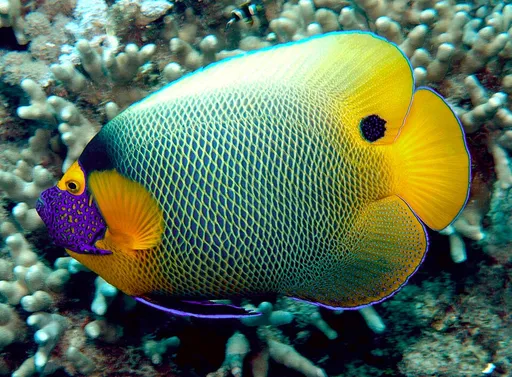 15 in (38 cm)219 gal (830 L)73–81°F (23–27°C)
Blueface angelfish
Pomacanthus xanthometopon
15 in (38 cm) · 219 gal (830 L)
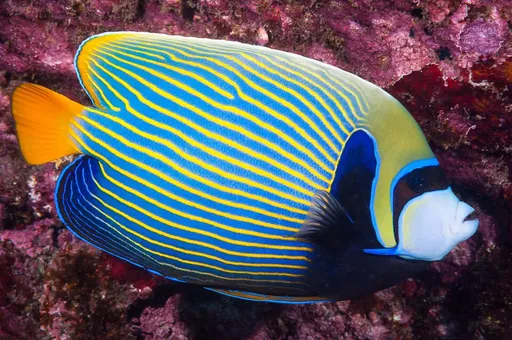 15 in (38 cm)185 gal (700 L)73–81°F (23–27°C)
Emperor angelfish
Pomacanthus imperator
15 in (38 cm) · 185 gal (700 L)