Yellowbar angelfish
Pomacanthus maculosus
Also known as Maculosus Angelfish, Yellowband Angelfish, Map Angelfish, Yellow-bar Angelfish
SaltwaterFish
Care at a glance
- Temperature
- 75–82°F
- 24–28°C
- pH
- 8.1–8.4
- Adult size
- 19.7 in
- 50 cm
- Minimum tank
- 180 gal
- 680 L
- Temperament
- Mostly peaceful
- Social behavior
- Solitary
- Tankmates
- With caution
- Swim level
- Middle
- Difficulty
- Medium
- Breeding
- No record
- Rarity
- Common
- Reef safe
- Reef safe with caution
- Family
- Pomacanthidae
- Origin
- Red Sea, western Indian Ocean and the Persian Gulf, on coastal and inshore reefs including silty areas.
Overview
Plan on at least 680 litres of open water with big rock caves at 24 to 28 C and pH 8.1 to 8.4. It is one of the hardier large angels and readily eats spirulina, marine algae, mysis and angelfish preparations, but it is semi-aggressive, so keep one per tank with sturdy tankmates. It nips stony and soft corals and clam mantles, so it is reef safe only with caution. Best suited to fish-only or robust mixed systems.
In the wild
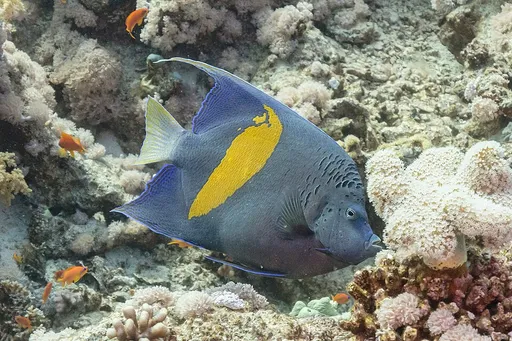
The yellowbar angelfish is a large blue angel marked with a bright yellow bar across the mid-body. It lives on coastal reefs and tolerates silty inshore water well. Adults graze sponges and algae over live rock. It is a hardy fish that grows large and becomes dominant.
Good to know
Pomacanthus maculosus grows to about 50 cm and is common across the Red Sea, Arabian Gulf and East Africa. The broad yellow saddle distinguishes it from similar Pomacanthus. Juveniles are dark blue with pale curved lines.
Did you know
It shrugs off the murky inshore water that would stress many reef angels, which is part of why it is so hardy in aquariums.
Common questions
What size tank does a Yellowbar angelfish need?
A Yellowbar angelfish needs at least 180 gal (680 L). It spends most of its time in the middle.
What temperature and pH does a Yellowbar angelfish need?
A Yellowbar angelfish is comfortable at 75–82°F (24–28°C) with a pH of 8.1–8.4.
How big does a Yellowbar angelfish get?
An adult Yellowbar angelfish reaches about 19.7 in (50 cm).
Related species
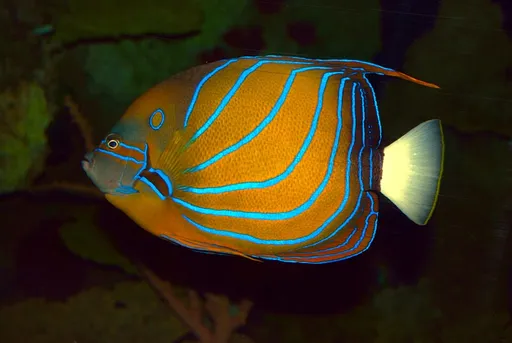 17.7 in (45 cm)219 gal (830 L)73–81°F (23–27°C)
Annularis angelfish
Pomacanthus annularis
17.7 in (45 cm) · 219 gal (830 L)
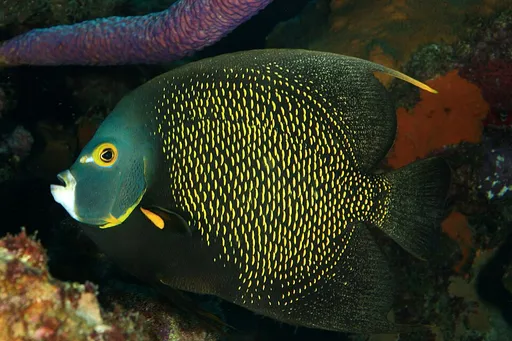 16.1 in (41 cm)201 gal (760 L)72–81°F (22–27°C)
French angelfish
Pomacanthus paru
16.1 in (41 cm) · 201 gal (760 L)
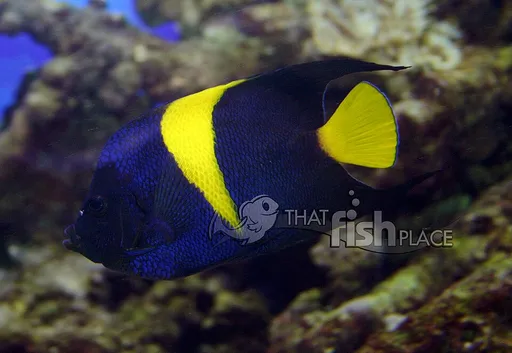 15.7 in (40 cm)135 gal (510 L)75–82°F (24–28°C)
Asfur angelfish
Pomacanthus asfur
15.7 in (40 cm) · 135 gal (510 L)
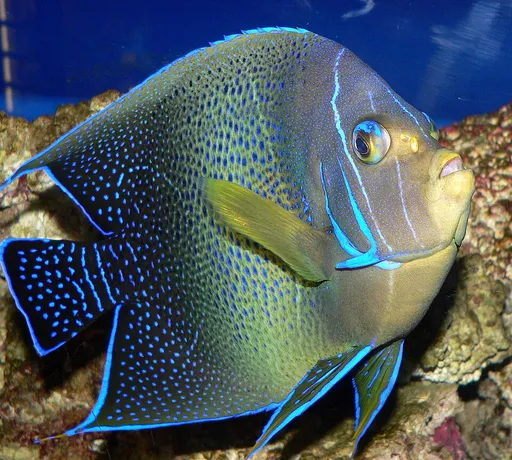 15.7 in (40 cm)132 gal (500 L)73–81°F (23–27°C)
Koran angelfish
Pomacanthus semicirculatus
15.7 in (40 cm) · 132 gal (500 L)
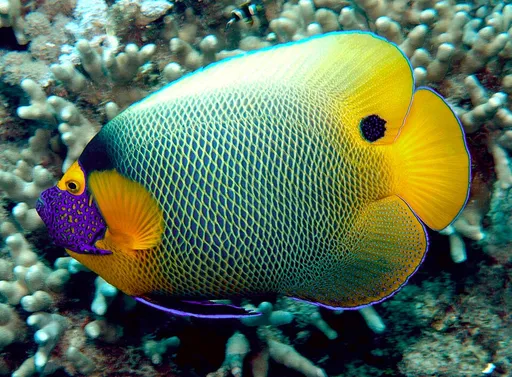 15 in (38 cm)219 gal (830 L)73–81°F (23–27°C)
Blueface angelfish
Pomacanthus xanthometopon
15 in (38 cm) · 219 gal (830 L)
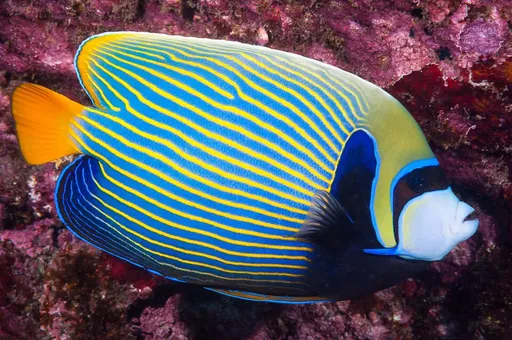 15 in (38 cm)185 gal (700 L)73–81°F (23–27°C)
Emperor angelfish
Pomacanthus imperator
15 in (38 cm) · 185 gal (700 L)