Fisher's angelfish
Centropyge fisheri
Also known as Fisher's Pygmy Angelfish, Fisher's Angel, Fisher's Dwarf Angelfish
SaltwaterFish
Care at a glance
- Temperature
- 75–81°F
- 24–27°C
- pH
- 8.1–8.4
- Adult size
- 2.8 in
- 7 cm
- Minimum tank
- 53 gal
- 200 L
- Temperament
- Mostly peaceful
- Social behavior
- Solitary
- Own kind
- One male per tank
- Swim level
- Middle
- Diet
- Omnivore
- Difficulty
- Easy
- Breeding
- Hard
- Rarity
- Common
- Reef safe
- Reef safe with caution
- Family
- Pomacanthidae
- Origin
- Hawaiian Islands and the central Pacific, on rubble slopes and reef flats.
Overview
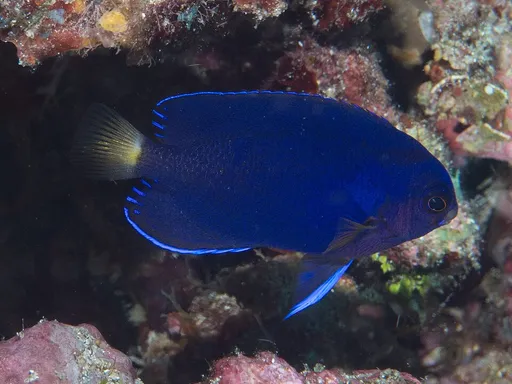
The Fisher's angelfish is a small, mild dwarf angel whose size suits smaller reef tanks. It is a good first dwarf angel.
Did you know
The Fisher's angelfish is one of the few marine angelfish that hobby-scale breeders have raised from egg to adult.
Caring for the Fisher's angelfish
Give a Fisher's angelfish a mature tank of at least 53 gal (200 L), with live rock to graze. Keep the water at 75 to 81°F (24 to 27°C) with a pH of 8.1 to 8.4.
It is hardy and readily takes spirulina, mysis and frozen preparations. It also nibbles algae off the rock.
The Fisher's angelfish is one of the more peaceful and forgiving pygmy angels, and it is safe with community fish. Keep just one dwarf angel per tank, though, since they squabble with their own kind. It is among the more reef-tolerant pygmy angels, but it may still nip corals and clams, so watch it in a reef.
Breeding it is hard. Specialist breeders have bred it in captivity, working with its pelagic larvae.
Good to know
The Fisher's angelfish is one of the smallest dwarf angels, in soft orange-brown with a dusky eye spot. It belongs to the family Pomacanthidae. The species is common and inexpensive in Hawaiian collections. It is also sold as Fisher's pygmy angelfish.
In the wild
Fisher's angelfish live around the Hawaiian Islands and the central Pacific, on rubble slopes and reef flats. They graze algae and pick at the rockwork.
Weekly picks
Tank mates
The Fisher's angelfish is a mostly peaceful, solitary species that keeps to the middle. Keep only one male per tank. These picks share a community profile with it, are safe together in both directions, and overlap on water type, temperature and pH.
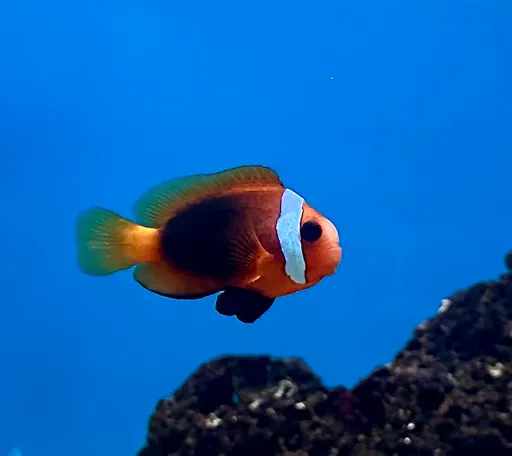
Cinnamon clownfish
Amphiprion melanopus
Saltwater4.7 in (12 cm) · 30 gal (115 L)75–82°F (24–28°C)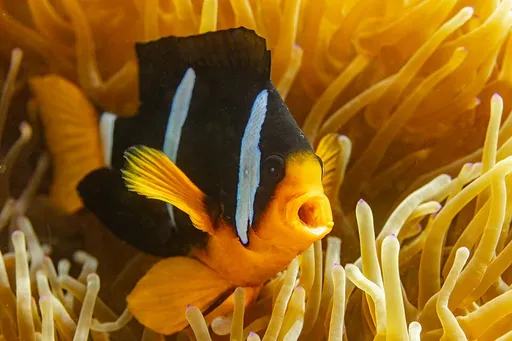
Clark's clownfish
Amphiprion clarkii
Saltwater5.5 in (14 cm) · 30 gal (115 L)75–82°F (24–28°C)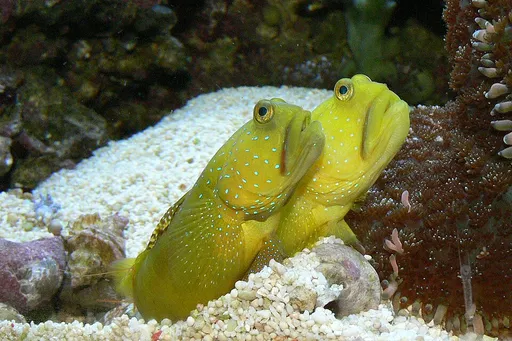
Yellow watchman goby
Cryptocentrus cinctus
Saltwater3.5 in (9 cm) · 20 gal (75 L)72–81°F (22–27°C)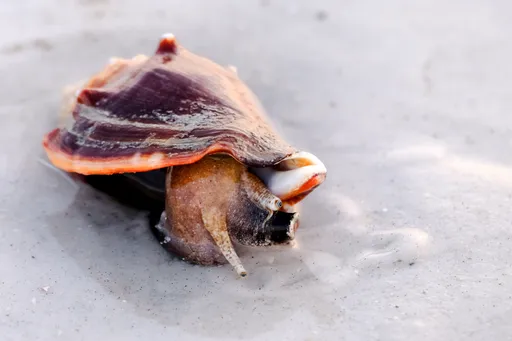
Fighting conch
Strombus alatus
Saltwater3.1 in (8 cm) · 20 gal (75 L)75–81°F (24–27°C)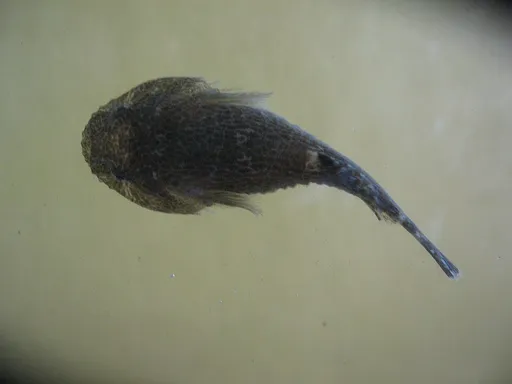
Skilletfish
Gobiesox strumosus
Saltwater3.1 in (8 cm) · 20 gal (76 L)72–79°F (22–26°C)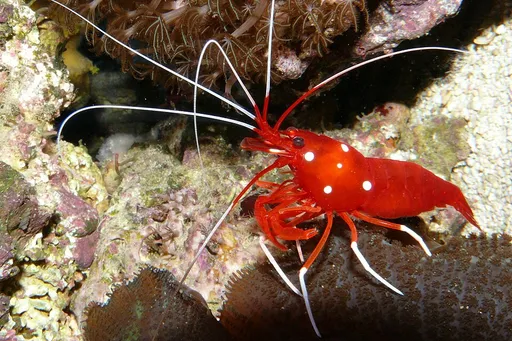
Fire shrimp
Lysmata debelius
Saltwater2.4 in (6 cm) · 20 gal (75 L)72–79°F (22–26°C)
Common questions
What size tank does a Fisher's angelfish need?
A Fisher's angelfish needs at least 53 gal (200 L). It spends most of its time in the middle.
What temperature and pH does a Fisher's angelfish need?
A Fisher's angelfish is comfortable at 75–81°F (24–27°C) with a pH of 8.1–8.4.
What does a Fisher's angelfish eat?
A Fisher's angelfish readily takes spirulina, mysis and frozen preparations. It also nibbles algae off the rock.
How big does a Fisher's angelfish get?
An adult Fisher's angelfish reaches about 2.8 in (7 cm).
How does a Fisher's angelfish breed?
A Fisher's angelfish is hard to breed. Specialist breeders have managed it in captivity by working with its pelagic larvae.
Related species
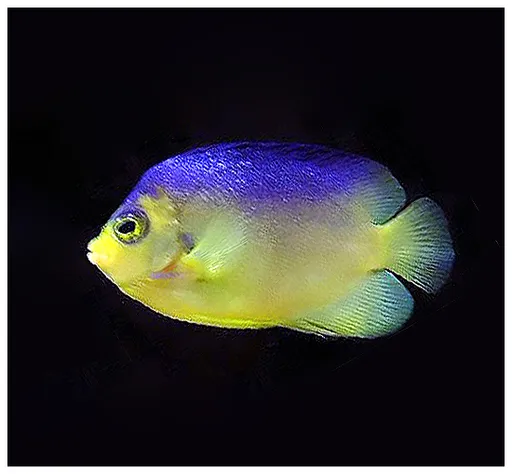 3.5 in (9 cm)55 gal (210 L)72–79°F (22–26°C)
Colin's angelfish
Centropyge colini
3.5 in (9 cm) · 55 gal (210 L)
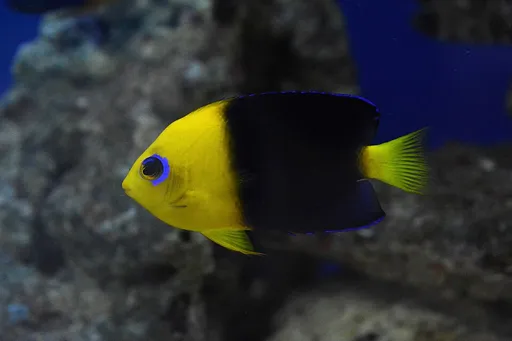 3.5 in (9 cm)70 gal (265 L)75–81°F (24–27°C)
Joculator angelfish
Centropyge joculator
3.5 in (9 cm) · 70 gal (265 L)
 3.5 in (9 cm)70 gal (265 L)75–81°F (24–27°C)
Multicolor angelfish
Centropyge multicolor
3.5 in (9 cm) · 70 gal (265 L)
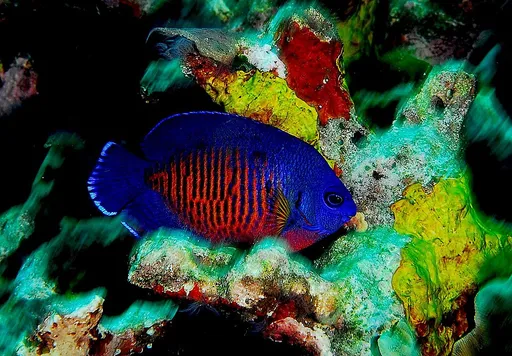 3.9 in (10 cm)50 gal (190 L)72–79°F (22–26°C)
Coral beauty angelfish
Centropyge bispinosa
3.9 in (10 cm) · 50 gal (190 L)
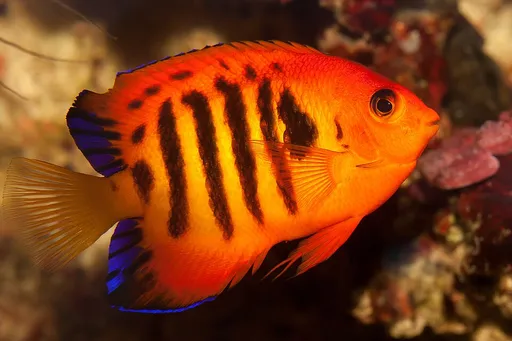 3.9 in (10 cm)50 gal (190 L)72–79°F (22–26°C)
Flame angelfish
Centropyge loriculus
3.9 in (10 cm) · 50 gal (190 L)
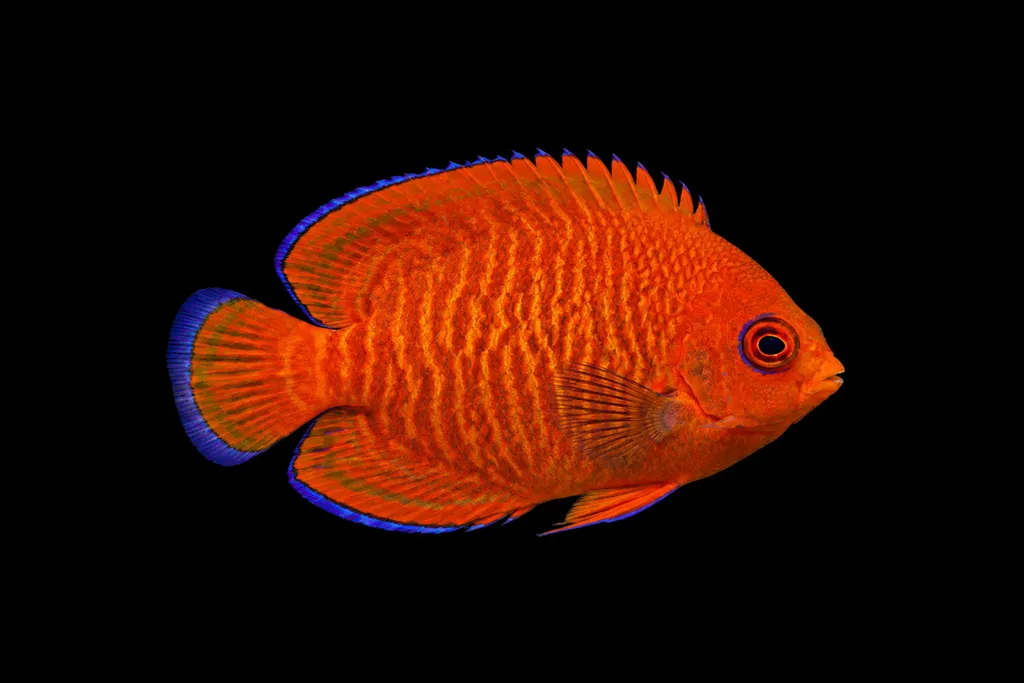 3.9 in (10 cm)55 gal (210 L)72–79°F (22–26°C)
Golden angelfish
Centropyge aurantia
3.9 in (10 cm) · 55 gal (210 L)