Camel / dancing shrimp
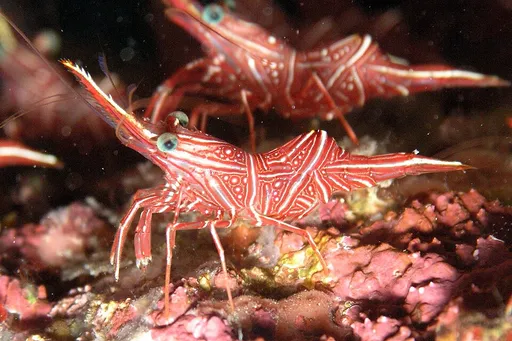
Rhynchocinetes durbanensis
Also known as Hinge-beak Shrimp, Candy Shrimp
SaltwaterShrimp
Care at a glance
- Temperature
- 75–81°F
- 24–27°C
- pH
- 8.1–8.4
- Adult size
- 2 in
- 5 cm
- Minimum tank
- 16 gal
- 60 L
- Temperament
- Peaceful
- Social behavior
- Social
- Swim level
- Bottom
- Difficulty
- Easy
- Breeding
- No record
- Rarity
- Very common
- Reef safe
- Reef safe with caution
- Family
- Rhynchocinetidae
- Origin
- Indo-West Pacific (South Africa to Japan and the Philippines)
Overview
Reef safe with caution. It's cheap, hardy, and a decent scavenger, but it will pick at soft corals, zoanthids, and colonial anemone polyps when there isn't enough uneaten food around, and it's easily confused with peppermint shrimp on a store shelf, so a close look before buying matters. Peaceful toward fish and other shrimp, and does best in a small group of four to six rather than as a single specimen. Mostly nocturnal, hiding by day and coming out to scavenge after the lights go off.
In the wild
Native to the Indo-West Pacific from South Africa and the Red Sea through India and Southeast Asia to Japan and the Philippines. Found in shallow, rocky reef habitat from about 5–35 m, tucked into caves, overhangs, and crevices in loose groups. The aquarium setup should match that: plenty of rockwork with shaded hiding spots and other camel shrimp for company.
Good to know
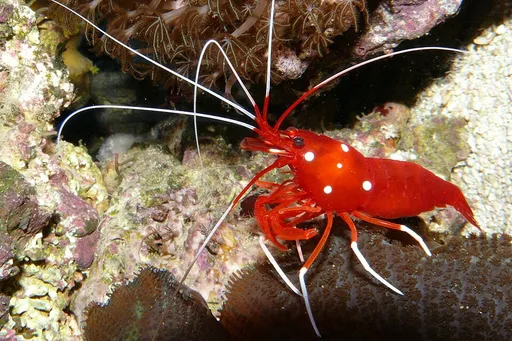
Named for the humped, camel like curve of its back and the long, hinged rostrum that angles up from its face, which is where the hinge-beak shrimp name comes from. Red and white banding and large red eyes make it easy to identify. It's a true omnivore and opportunistic scavenger, unlike the more predatory banded shrimp species it sometimes gets mistaken for.
Did you know
Its eyes are made of thousands of individual facets that give it strong low light vision, which is why most of its jerky, rocking 'dancing' walk happens well after dark.
Weekly picks
Tank mates
Camel / dancing shrimp is a peaceful, social species that keeps to the bottom. These picks share a community profile with it, are safe together in both directions, and overlap on water type, temperature and pH.
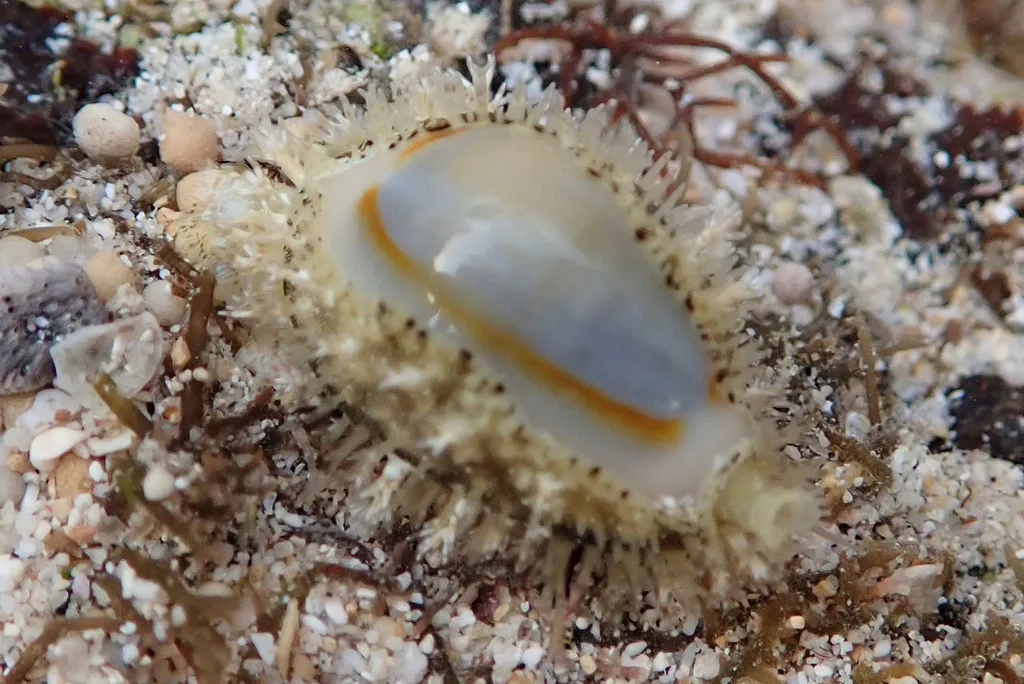
Ring cowrie
Monetaria annulus
Saltwater1.2 in (3 cm) · 20 gal (75 L)75–81°F (24–27°C)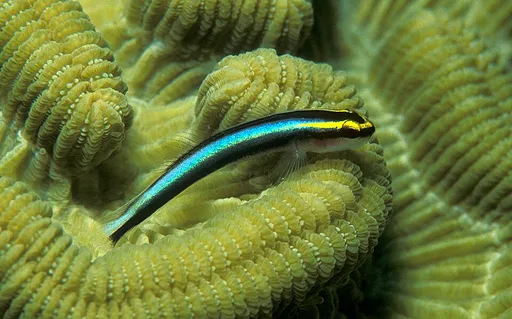
Sharknose goby
Elacatinus evelynae
Saltwater1.6 in (4 cm) · 13 gal (50 L)75–79°F (24–26°C)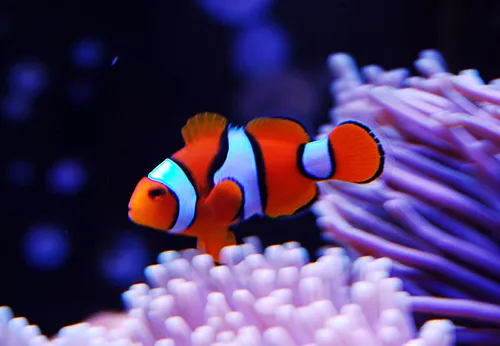
Percula clownfish
Amphiprion percula
Saltwater3.1 in (8 cm) · 20 gal (75 L)75–82°F (24–28°C)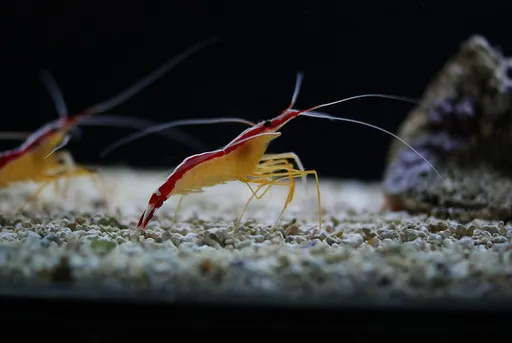
Skunk cleaner shrimp
Lysmata amboinensis
Saltwater2.4 in (6 cm) · 20 gal (75 L)73–81°F (23–27°C)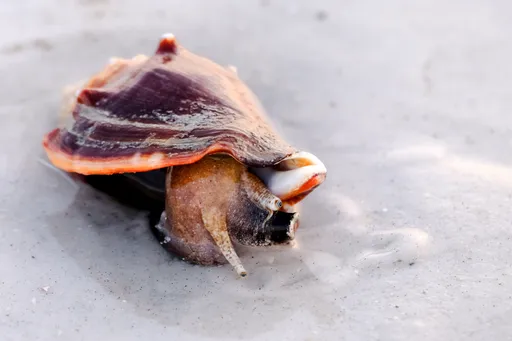
Fighting conch
Strombus alatus
Saltwater3.1 in (8 cm) · 20 gal (75 L)75–81°F (24–27°C)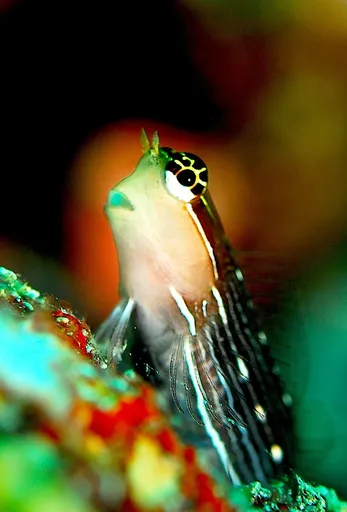
Pictus blenny
Ecsenius pictus
Saltwater2 in (5 cm) · 20 gal (75 L)73–81°F (23–27°C)
Common questions
What size tank does a Camel / dancing shrimp need?
A Camel / dancing shrimp needs at least 16 gal (60 L). It spends most of its time in the bottom.
What temperature and pH does a Camel / dancing shrimp need?
A Camel / dancing shrimp is comfortable at 75–81°F (24–27°C) with a pH of 8.1–8.4.
How big does a Camel / dancing shrimp get?
An adult Camel / dancing shrimp reaches about 2 in (5 cm).
Related species
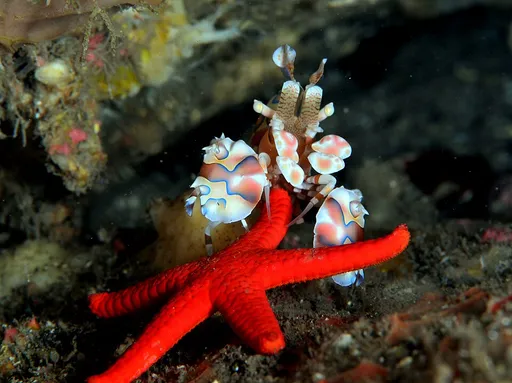 2 in (5 cm)11 gal (40 L)75–81°F (24–27°C)
Harlequin shrimp
Hymenocera picta
2 in (5 cm) · 11 gal (40 L)
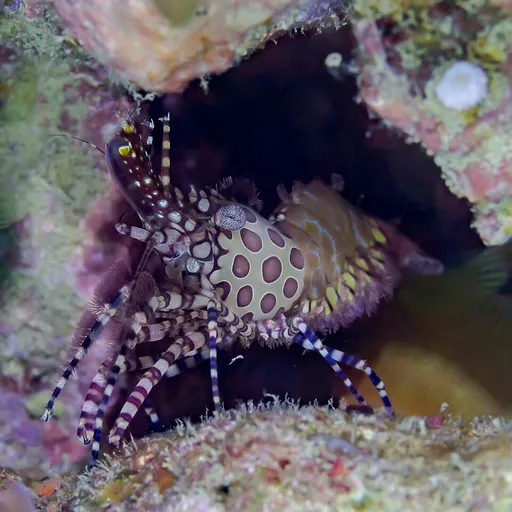 2 in (5 cm)11 gal (40 L)75–81°F (24–27°C)
Marble shrimp
Saron marmoratus
2 in (5 cm) · 11 gal (40 L)
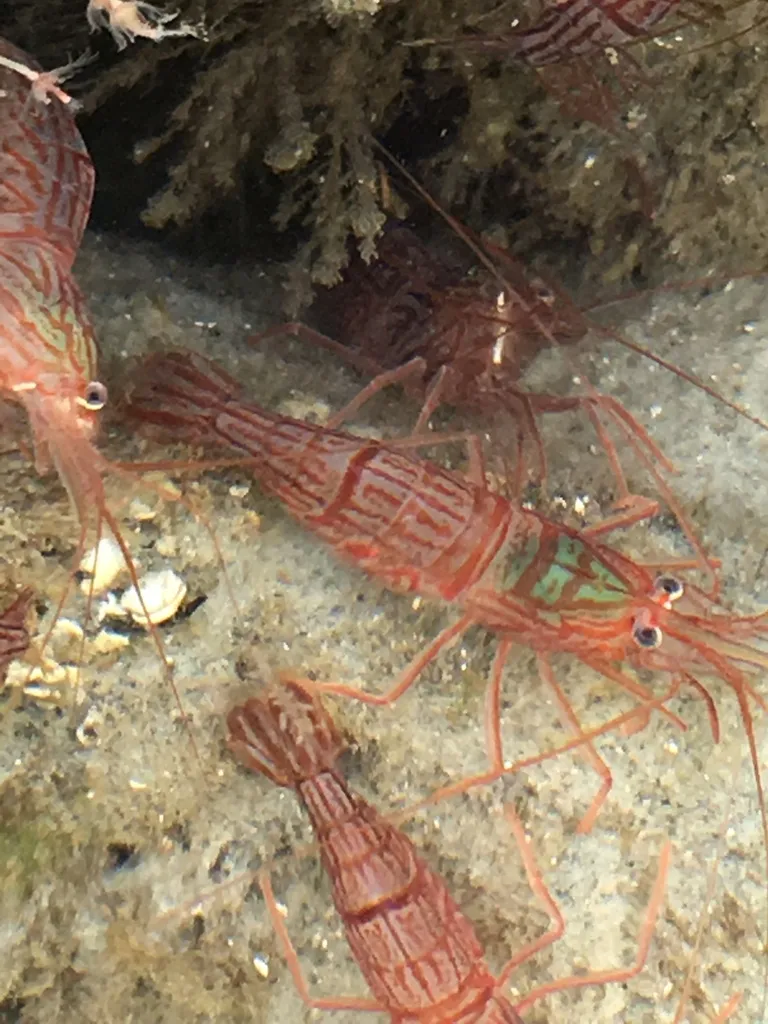 2 in (5 cm)11 gal (40 L)72–81°F (22–27°C)
Peppermint shrimp
Lysmata wurdemanni
2 in (5 cm) · 11 gal (40 L)
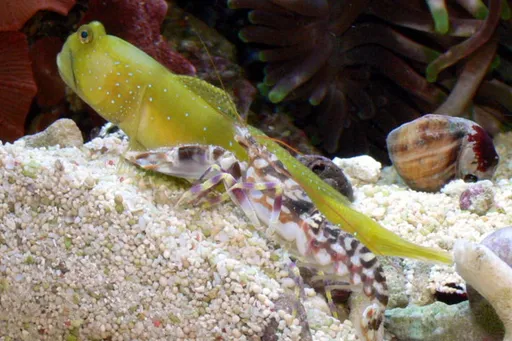 2 in (5 cm)11 gal (40 L)75–81°F (24–27°C)
Tiger pistol shrimp
Alpheus bellulus
2 in (5 cm) · 11 gal (40 L)
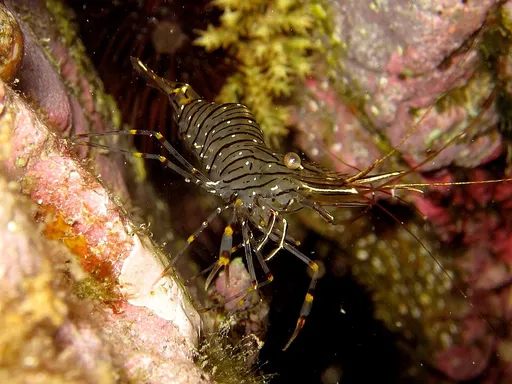 2.4 in (6 cm)11 gal (40 L)61–79°F (16–26°C)
Elegant rockpool shrimp
Palaemon elegans
2.4 in (6 cm) · 11 gal (40 L)
 2.4 in (6 cm)20 gal (75 L)72–79°F (22–26°C)
Fire shrimp
Lysmata debelius
2.4 in (6 cm) · 20 gal (75 L)