Wheeler's prawn goby
Amblyeleotris wheeleri
Also known as Wheeler's Watchman Goby, Gorgeous Prawn-Goby, Wheeler's Shrimp Goby
SaltwaterFish
Care at a glance
- Temperature
- 72–79°F
- 22–26°C
- pH
- 8.1–8.4
- Adult size
- 3.9 in
- 10 cm
- Minimum tank
- 30 gal
- 114 L
- Temperament
- Peaceful
- Social behavior
- Social
- Tankmates
- With caution
- Swim level
- Bottom
- Difficulty
- Easy
- Breeding
- Hard
- Rarity
- Common
- Reef safe
- Reef safe
- Family
- Gobiidae
- Origin
- Indo-Pacific reefs (East Africa to Fiji, north to Japan, south to the Great Barrier Reef)
Overview
A calm, hardy goby that gets along with other peaceful reef fish and does not bother corals or sessile invertebrates. It can be kept singly or as an established pair, but new individuals should be added to the tank at the same time to avoid disputes over the burrow. Feed mysis, brine shrimp, and other finely chopped seafood twice a day.
In the wild
Found on rubble patches near reef bases and in sandy lagoons, usually in the top 15 meters of water. Give it a few inches of sand mixed with coral rubble so its pistol shrimp partner can dig a proper burrow, plus plenty of live rock nearby for extra cover. It jumps well, so the tank needs a tight lid.
Good to know
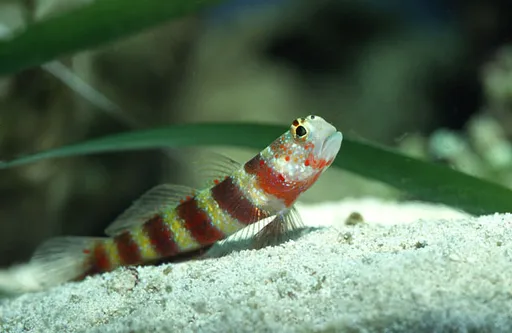
One of the most commonly encountered shrimp gobies on shallow coral reefs, this species most often teams up with the pistol shrimp Alpheus ochrostriatus. Its white body carries broad orange-red bars and a scatter of small blue spots, with a sail-like first dorsal fin used to signal its shrimp partner. It has been recorded spawning in home aquariums, though raising the free-swimming larvae to juveniles is rarely done outside of research settings.
Did you know
Considered one of the hardiest and most disease-resistant shrimp gobies in the trade, it is often recommended as a first species for hobbyists trying the pistol shrimp partnership for the first time.
Symbiotic relationships
Shrimp gobies and pistol shrimp
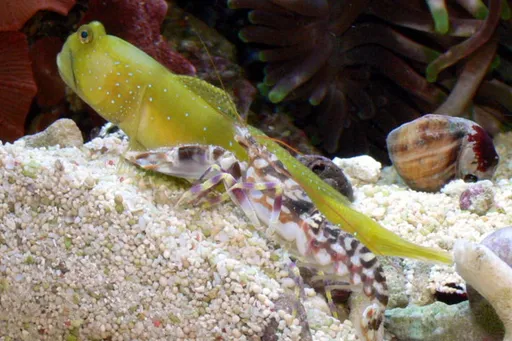
A pistol shrimp can barely see, but it digs and maintains a burrow all day. The goby that shares it has sharp eyes and does no digging. It sits at the entrance as a lookout, and the shrimp keeps one antenna resting on the goby's body whenever it is outside. A flick of the goby's tail sends the shrimp back down the hole, and a harder threat sends them both. At dusk they retire together and the shrimp seals the entrance for the night. The shrimp gets an early warning system, and the goby gets a home it could not build.
This partnership is easy to keep and it rewards watching. Give them a sand bed at least 2 inches (5 cm) deep with some rubble to hold the tunnel, add the two together or the shrimp first, and feed sinking food near the burrow mouth. The snap of the shrimp's claw is a small cavitation bubble collapsing, and you will hear it across the room. Pairs form readily between strangers, but the genera matter: the yellow watchman, pink-spotted, Wheeler's, orange-spot and Randall's gobies take a tiger pistol shrimp, while the yasha, hi-fin red banded and pinkbar gobies pair with Randall's pistol shrimp.
Common questions
What size tank does a Wheeler's prawn goby need?
A Wheeler's prawn goby needs at least 30 gal (114 L). It spends most of its time in the bottom.
What temperature and pH does a Wheeler's prawn goby need?
A Wheeler's prawn goby is comfortable at 72–79°F (22–26°C) with a pH of 8.1–8.4.
How big does a Wheeler's prawn goby get?
An adult Wheeler's prawn goby reaches about 3.9 in (10 cm).
Related species
 4.3 in (11 cm)30 gal (114 L)72–79°F (22–26°C)
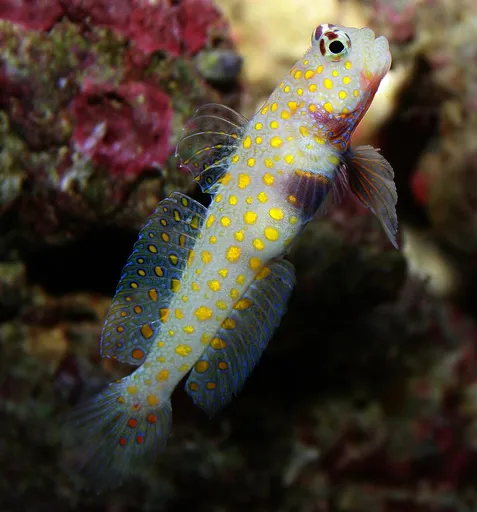
Orange-spot prawn goby
Amblyeleotris guttata
4.3 in (11 cm) · 30 gal (114 L)
 4.3 in (11 cm)30 gal (115 L)73–81°F (23–27°C)
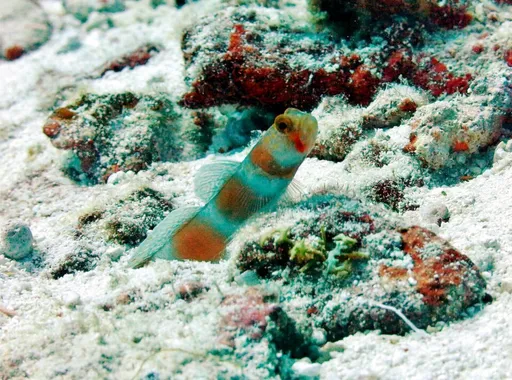
Pinkbar goby
Amblyeleotris aurora
4.3 in (11 cm) · 30 gal (115 L)
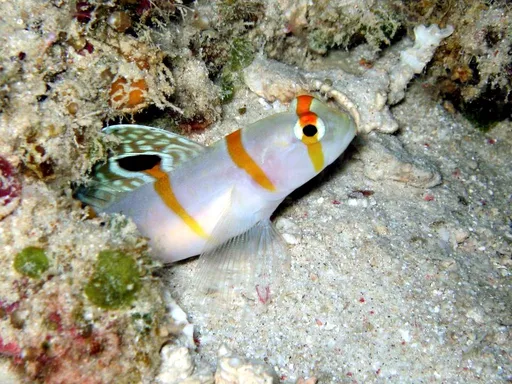 4.7 in (12 cm)30 gal (114 L)72–79°F (22–26°C)
Randall's prawn goby
Amblyeleotris randalli
4.7 in (12 cm) · 30 gal (114 L)
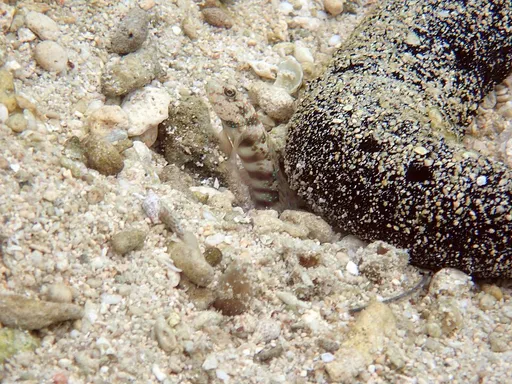 3.9 in (10 cm)30 gal (115 L)73–81°F (23–27°C)
Pink-spotted watchman goby
Cryptocentrus leptocephalus
3.9 in (10 cm) · 30 gal (115 L)
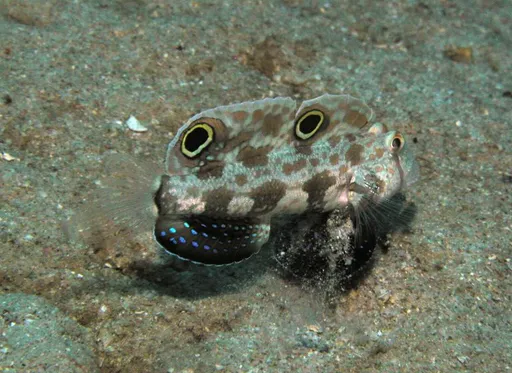 3.9 in (10 cm)30 gal (115 L)73–81°F (23–27°C)
Twinspot goby
Signigobius biocellatus
3.9 in (10 cm) · 30 gal (115 L)
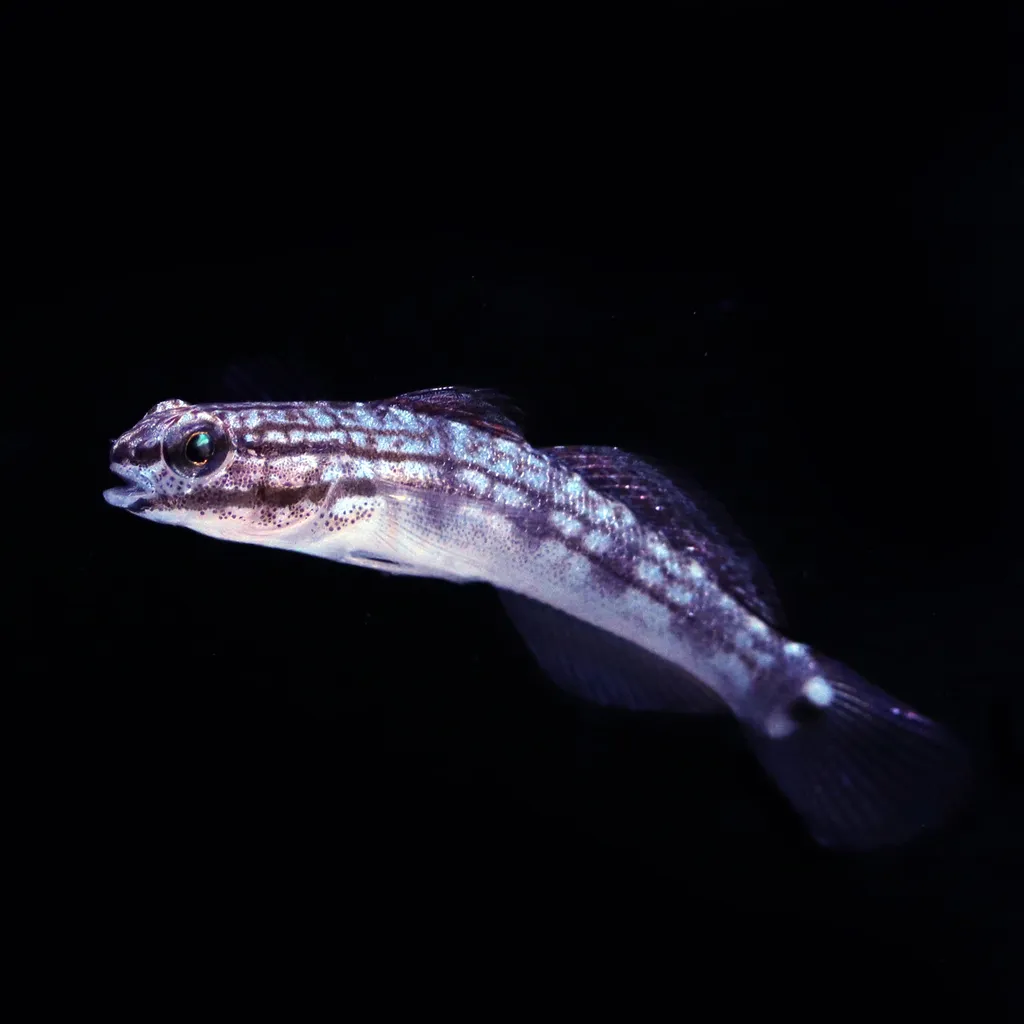 3.1 in (8 cm)20 gal (75 L)73–81°F (23–27°C)
Buan's sleeper goby
Amblygobius buanensis
3.1 in (8 cm) · 20 gal (75 L)