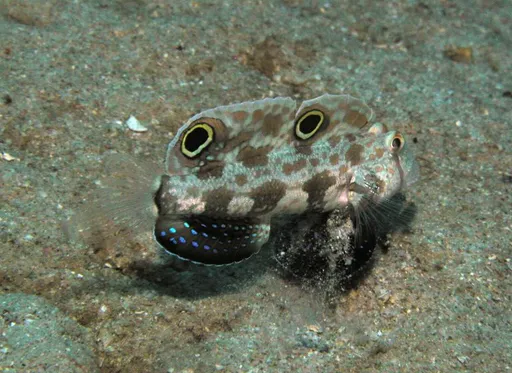
Twinspot goby
Signigobius biocellatus
Also known as Signal Goby, Two-Spot Goby, Crabeye Goby, Four-Wheel Drive Goby
SaltwaterFish
Care at a glance
- Temperature
- 73–81°F
- 23–27°C
- pH
- 8.1–8.4
- Adult size
- 3.9 in
- 10 cm
- Minimum tank
- 30 gal
- 115 L
- Temperament
- Peaceful
- Social behavior
- Social
- Tankmates
- With caution
- Swim level
- Bottom
- Difficulty
- Difficult
- Breeding
- Hard
- Rarity
- Common
- Reef safe
- Reef safe
- Family
- Gobiidae
- Origin
- Found in the western Pacific from Indonesia and the Philippines to Papua New Guinea and northern Australia, on silty sand near coastal reefs.
Overview
This is a difficult fish that needs a mature 115 litre or larger tank with a deep fine sand bed and a strong population of tiny sand life, ideally fed by a refugium. Keep it at 23 to 27 C and pH 8.1 to 8.4. It is reef safe but spits sand, so keep corals off the bottom. Offer live and enriched frozen brine, mysis, and black worms often, as many specimens slowly starve in tanks that cannot supply enough small prey.
In the wild
The twinspot goby lives in monogamous pairs on open silty sand near coastal reefs. It feeds by scooping mouthfuls of sand, filtering out tiny animals, and letting the sand fall from its gills. Two large eyespots on the dorsal fins make its back end look like the face of a larger animal. It builds and hides in burrows under rocks.
Good to know
Signigobius biocellatus is the only species in its genus, in the goby family Gobiidae. The paired eyespots are thought to bluff predators by mimicking the face of a crab or larger fish. Pairs may fan their fins in a jerky display that looks like a small crab scuttling over the sand.
Did you know
The bold spots on its back give the fish its other common name, the four-wheel drive goby, from the way a pair trundles across the sand together.
Common questions
What size tank does a Twinspot goby need?
A Twinspot goby needs at least 30 gal (115 L). It spends most of its time in the bottom.
What temperature and pH does a Twinspot goby need?
A Twinspot goby is comfortable at 73–81°F (23–27°C) with a pH of 8.1–8.4.
How big does a Twinspot goby get?
An adult Twinspot goby reaches about 3.9 in (10 cm).
Related species
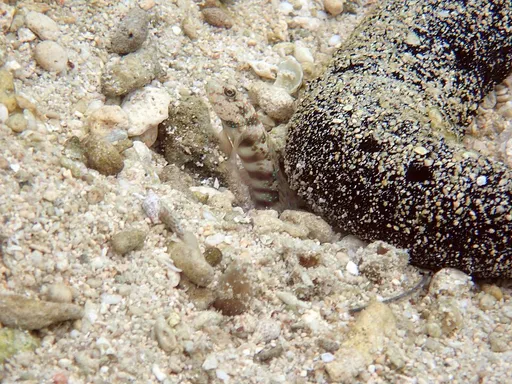 3.9 in (10 cm)30 gal (115 L)73–81°F (23–27°C)
Pink-spotted watchman goby
Cryptocentrus leptocephalus
3.9 in (10 cm) · 30 gal (115 L)
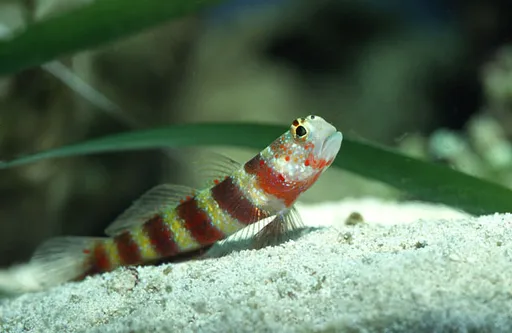 3.9 in (10 cm)30 gal (114 L)72–79°F (22–26°C)
Wheeler's prawn goby
Amblyeleotris wheeleri
3.9 in (10 cm) · 30 gal (114 L)
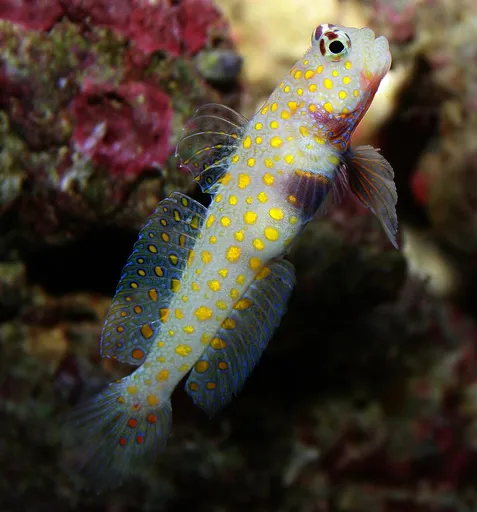 4.3 in (11 cm)30 gal (114 L)72–79°F (22–26°C)
Orange-spot prawn goby
Amblyeleotris guttata
4.3 in (11 cm) · 30 gal (114 L)
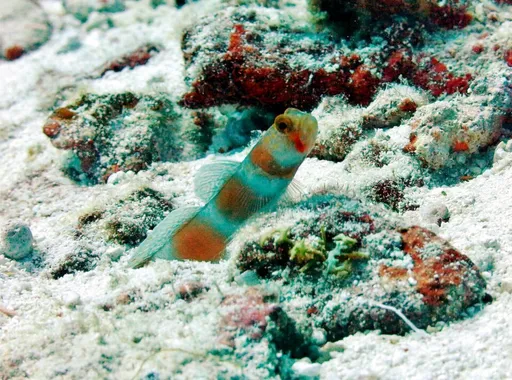 4.3 in (11 cm)30 gal (115 L)73–81°F (23–27°C)
Pinkbar goby
Amblyeleotris aurora
4.3 in (11 cm) · 30 gal (115 L)
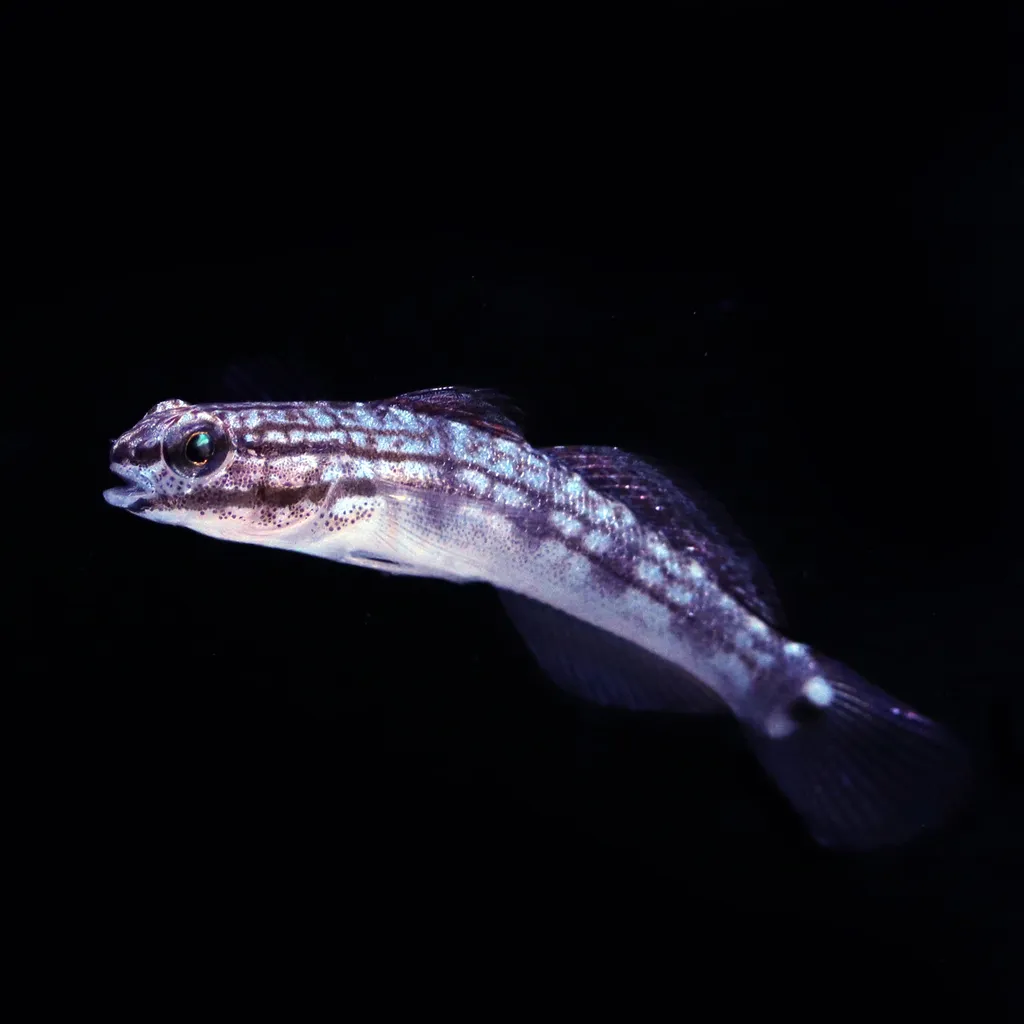 3.1 in (8 cm)20 gal (75 L)73–81°F (23–27°C)
Buan's sleeper goby
Amblygobius buanensis
3.1 in (8 cm) · 20 gal (75 L)
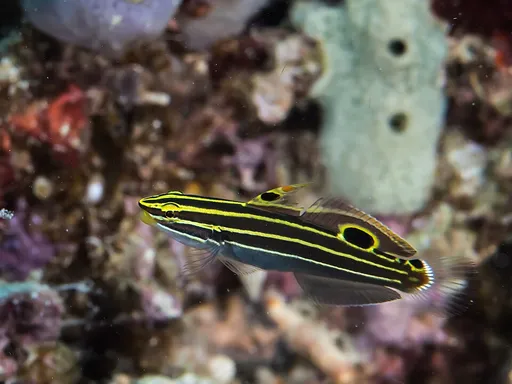 3.1 in (8 cm)20 gal (75 L)73–81°F (23–27°C)
Hector's goby
Koumansetta hectori
3.1 in (8 cm) · 20 gal (75 L)