Lyretail grouper
Variola louti
Also known as Yellow-edged lyretail, Louti grouper, Moon grouper, Coronation trout
SaltwaterFish
Care at a glance
- Temperature
- 75–81°F
- 24–27°C
- pH
- 8.0–8.4
- Adult size
- 31.5 in
- 80 cm
- Minimum tank
- 291 gal
- 1,100 L
- Temperament
- Aggressive
- Social behavior
- Solitary
- Own kind
- One per tank
- Tankmates
- With caution
- Swim level
- Bottom
- Diet
- Carnivore
- Difficulty
- Difficult
- Breeding
- No record
- Rarity
- Common
- Reef safe
- Not reef safe
- Family
- Serranidae
- Origin
- Native to the Indo-Pacific from the Red Sea to the central Pacific, living on outer reef slopes and drop-offs.
Overview
The lyretail grouper is a large, aggressive reef predator for a huge fish-only aquarium. It is for experienced keepers only.
Did you know
The lyretail grouper is a picky roamer that patrols steep outer reef walls, despite its size and appetite. Dive guides prize a sighting, because adults are wary and rarely let people get close.
Caring for the lyretail grouper
The lyretail grouper is a serious commitment, because brightly colored, heavily traded juveniles grow into tank-busting adults of around 31.5 in (80 cm). It needs a fish-only tank of at least 291 gal (1,100 L), realistically far more, with powerful filtration and large caves.
Keep the water at 75 to 81°F (24 to 27°C) and a pH of 8.0 to 8.4. Feed meaty seafood a couple of times a week, and do not overfeed.
It is an aggressive, fast and hungry hunter that dominates any system it is in. It will eat any fish or invertebrate it can catch, so it is not reef safe. Keep only one per tank, with big, aggressive tank mates such as large angels, triggers or eels.
Good to know
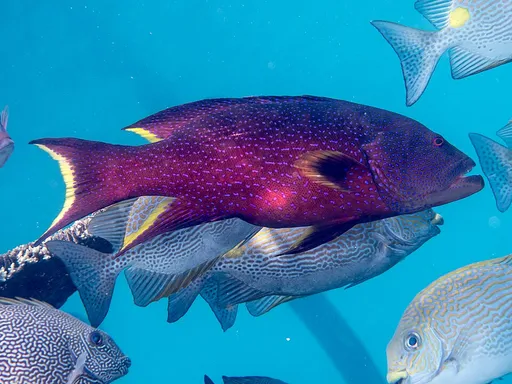
Variola louti is one of the larger reef groupers and, like most serranids, a protogynous hermaphrodite. It is deep red to orange and covered in blue and pink spots. Its crescent, lyre-shaped tail is edged in yellow, which gives the species its common name. Large wild adults can accumulate ciguatera toxin.
In the wild
The lyretail grouper is native to the Indo-Pacific, from the Red Sea to the central Pacific. It lives on outer reef slopes and drop-offs.
Common questions
What size tank does a lyretail grouper need?
A lyretail grouper needs at least 291 gal (1,100 L). It spends most of its time in the bottom.
What temperature and pH does a lyretail grouper need?
A lyretail grouper is comfortable at 75–81°F (24–27°C) with a pH of 8.0–8.4.
What does a lyretail grouper eat?
A lyretail grouper eats meaty seafood, fed a couple of times a week without overfeeding. It will also eat any fish or invertebrate it can catch.
How big does a lyretail grouper get?
An adult lyretail grouper reaches about 31.5 in (80 cm).
Related species
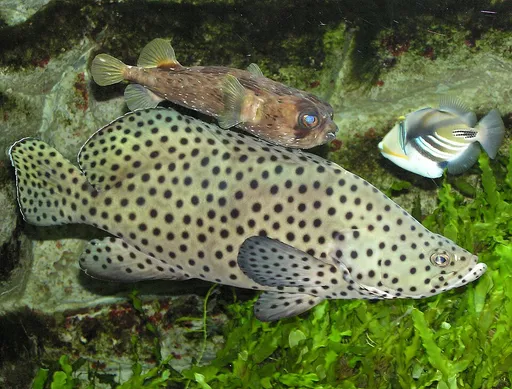 27.6 in (70 cm)300 gal (1,135 L)72–79°F (22–26°C)
Panther grouper
Cromileptes altivelis
27.6 in (70 cm) · 300 gal (1,135 L)
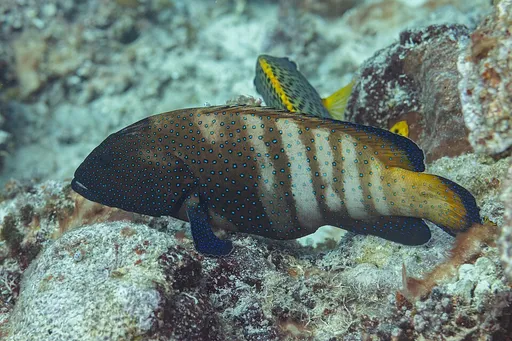 23.6 in (60 cm)251 gal (950 L)75–81°F (24–27°C)
Peacock grouper
Cephalopholis argus
23.6 in (60 cm) · 251 gal (950 L)
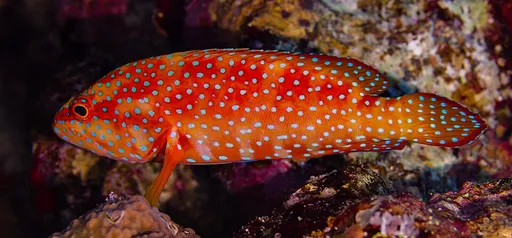 17.7 in (45 cm)180 gal (680 L)72–79°F (22–26°C)
Miniatus grouper
Cephalopholis miniata
17.7 in (45 cm) · 180 gal (680 L)
 16.1 in (41 cm)106 gal (400 L)73–81°F (23–27°C)
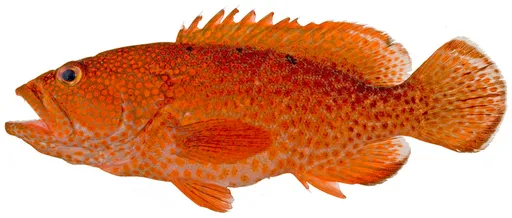
Coney
Cephalopholis fulva
16.1 in (41 cm) · 106 gal (400 L)
 11.8 in (30 cm)180 gal (680 L)75–81°F (24–27°C)
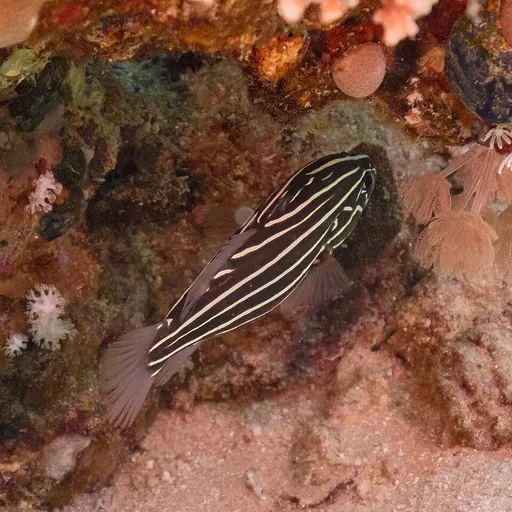
Sixline soapfish
Grammistes sexlineatus
11.8 in (30 cm) · 180 gal (680 L)
 5.9 in (15 cm)79 gal (300 L)72–79°F (22–26°C)
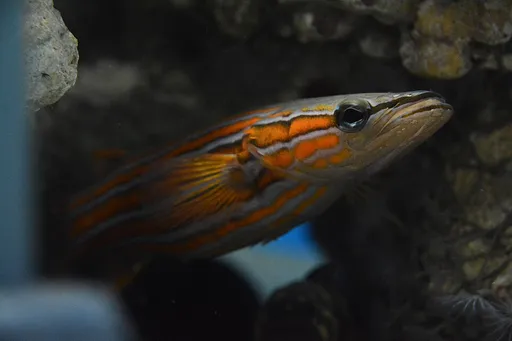
Australian flathead perch
Rainfordia opercularis
5.9 in (15 cm) · 79 gal (300 L)