Peacock grouper
Cephalopholis argus
Also known as Blue-spotted grouper, Argus grouper, Peacock hind, Blue dot grouper
SaltwaterFish
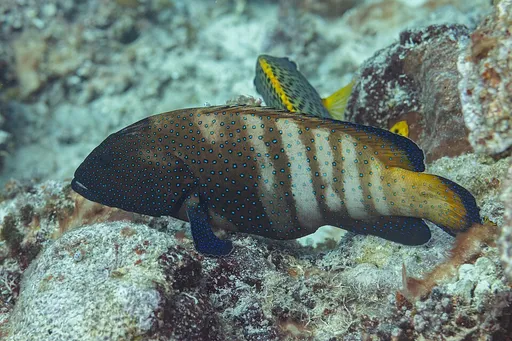
Care at a glance
- Temperature
- 75–81°F
- 24–27°C
- pH
- 8.0–8.4
- Adult size
- 23.6 in
- 60 cm
- Minimum tank
- 251 gal
- 950 L
- Temperament
- Aggressive
- Social behavior
- Solitary
- Own kind
- One per tank
- Tankmates
- With caution
- Swim level
- Bottom
- Diet
- Carnivore
- Difficulty
- Difficult
- Breeding
- No record
- Rarity
- Common
- Reef safe
- Reef safe with caution
- Family
- Serranidae
- Origin
- Native to the Indo-Pacific and introduced to Hawaii, living on coral reefs and lagoon slopes where it hunts small fish.
Overview
The peacock grouper is a powerful ambush predator that grows into a genuinely large, greedy fish. It is for experienced keepers with a very big saltwater tank.
Did you know
In Hawaii, where it is known locally as roi, the peacock grouper is targeted by spearfishing tournaments. It competes with native reef fish that people prefer to eat.
Caring for the peacock grouper
Plan for a tank of at least 251 gal (950 L), and more is far better. A carnivore this size makes a mess, so run heavy filtration, and give it big caves. Cute palm-sized juveniles are sold cheaply, but they quickly outgrow most tanks.
Keep the water at 75 to 81°F (24 to 27°C) with a pH of 8.0 to 8.4. Feed meaty seafood a few times a week, and expect fast growth.
The peacock grouper is aggressive and solitary, so keep only one per tank. It will swallow any fish or shrimp that fits in its wide mouth. Pair it only with equally large, tough tank mates. That appetite also makes it reef safe only with caution.
Good to know
The peacock grouper, Cephalopholis argus, belongs to the family Serranidae. It is also sold as the blue-spotted grouper, argus grouper, peacock hind and blue dot grouper. This hind is dark brown to olive, speckled with electric blue spots, with pale vertical bars that flare when it is excited. It is a protogynous hermaphrodite, and on the reef it defends harems of females. Adults can carry ciguatera toxin from their wild diet.
In the wild
The peacock grouper is native to the Indo-Pacific, where it lives on coral reefs and lagoon slopes and hunts small fish. It was deliberately introduced to Hawaiian waters in the 1950s as a food fish. It is now considered an invasive predator there.
Common questions
What size tank does a peacock grouper need?
A peacock grouper needs at least 251 gal (950 L). It spends most of its time in the bottom.
What temperature and pH does a peacock grouper need?
A peacock grouper is comfortable at 75–81°F (24–27°C) with a pH of 8.0–8.4.
What does a peacock grouper eat?
A peacock grouper is a carnivore that eats meaty seafood a few times a week. It will also swallow any fish or shrimp that fits in its wide mouth.
How big does a peacock grouper get?
An adult peacock grouper reaches about 23.6 in (60 cm).
Related species
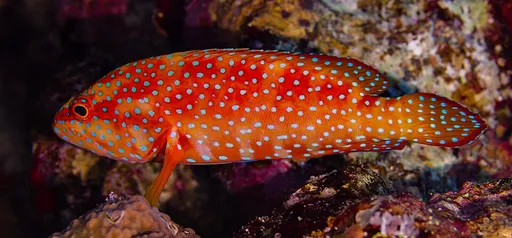 17.7 in (45 cm)180 gal (680 L)72–79°F (22–26°C)
Miniatus grouper
Cephalopholis miniata
17.7 in (45 cm) · 180 gal (680 L)
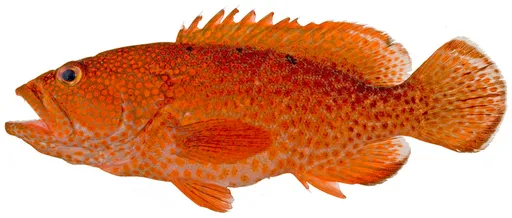 16.1 in (41 cm)106 gal (400 L)73–81°F (23–27°C)
Coney
Cephalopholis fulva
16.1 in (41 cm) · 106 gal (400 L)
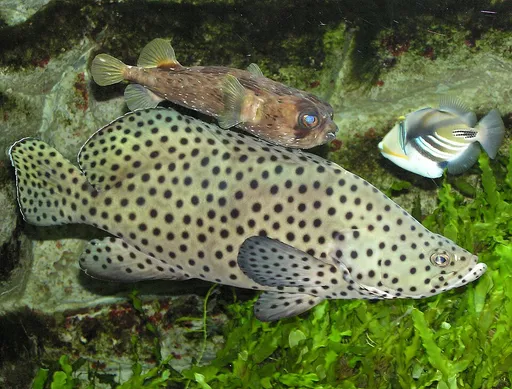 27.6 in (70 cm)300 gal (1,135 L)72–79°F (22–26°C)
Panther grouper
Cromileptes altivelis
27.6 in (70 cm) · 300 gal (1,135 L)
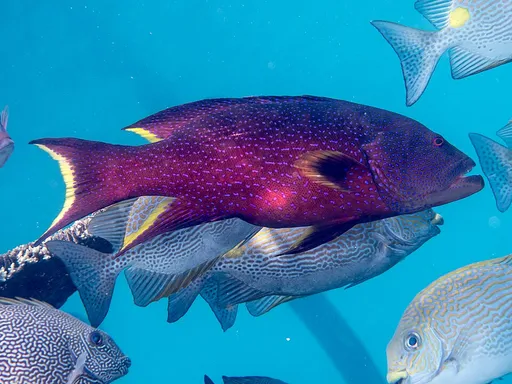 31.5 in (80 cm)291 gal (1,100 L)75–81°F (24–27°C)
Lyretail grouper
Variola louti
31.5 in (80 cm) · 291 gal (1,100 L)
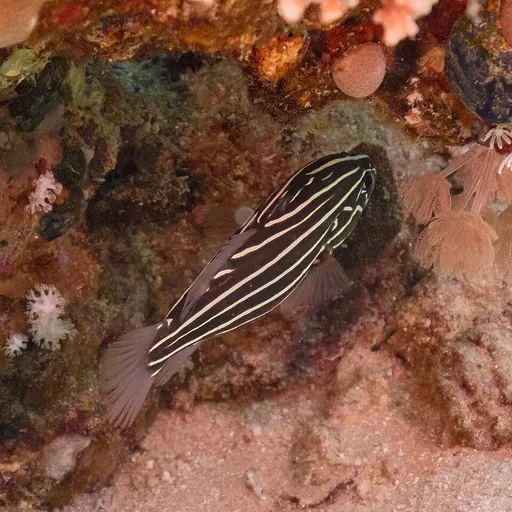 11.8 in (30 cm)180 gal (680 L)75–81°F (24–27°C)
Sixline soapfish
Grammistes sexlineatus
11.8 in (30 cm) · 180 gal (680 L)
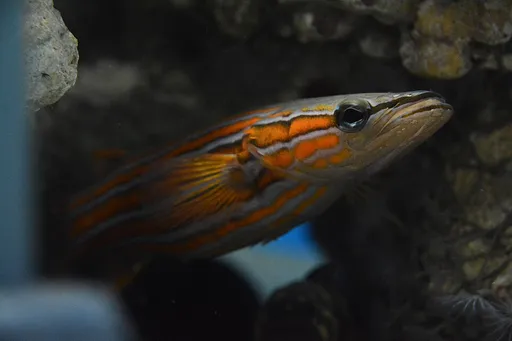 5.9 in (15 cm)79 gal (300 L)72–79°F (22–26°C)
Australian flathead perch
Rainfordia opercularis
5.9 in (15 cm) · 79 gal (300 L)