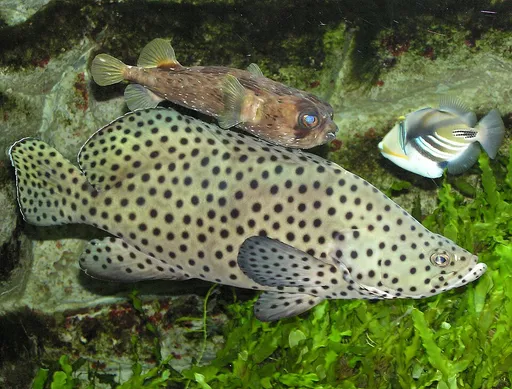
Panther grouper
Cromileptes altivelis
Also known as Humpback Grouper, Polka-Dot Grouper, Barramundi Cod, High-Fin Grouper
SaltwaterFish
Care at a glance
- Temperature
- 72–79°F
- 22–26°C
- pH
- 8.1–8.4
- Adult size
- 27.6 in
- 70 cm
- Minimum tank
- 300 gal
- 1,135 L
- Temperament
- Aggressive
- Social behavior
- Solitary
- Tankmates
- With caution
- Swim level
- Bottom
- Difficulty
- Medium
- Breeding
- Hard
- Rarity
- Common
- Reef safe
- Not reef safe
- Family
- Serranidae
- Origin
- Western Pacific and eastern Indian Ocean reefs, from southern Japan to Palau, New Caledonia, and southern Queensland, west to the Nicobar Islands and northwestern Australia
Overview
This is a bold, aggressive predator that will eat any fish, shrimp, or crab small enough to swallow whole, so tankmates need to already be too large to fit in its mouth. It is not reef safe: it leaves coral tissue alone, but a reef tank's fish, shrimp, and other invertebrates are exactly the small prey it's built to hunt, so anything that fits in its mouth is at risk. Feed a varied diet of silversides, krill, shrimp, and other meaty foods. New arrivals are also surprisingly good at finding gaps in a lid, so keep the tank covered until it settles in, and go in already planning for the large, long-term tank this fish will need rather than a temporary starter setup.
In the wild
Panther groupers live on lagoon and seaward reefs across the western Pacific, from southern Japan to Palau, New Caledonia, and southern Queensland, and in the eastern Indian Ocean from the Nicobar Islands to northwestern Australia. Survey work suggests wild populations are actually patchy and uncommon across much of that range. In the aquarium it starts life as a cute 8–10 cm juvenile but grows fast, and a tank of at least 1,135 litres (300 US gal) with strong filtration and open swimming room is what it needs once grown, not what it can start in.
Good to know
Cromileptes altivelis gets both its arched, humpbacked profile and its cream body covered in small black spots as it matures past the juvenile stage, and can reach about 70 cm in length. It's an ambush predator with a large, protrusible mouth built to engulf prey whole in a rush of suction rather than chew it. Despite being genuinely scarce on wild reefs, the species is also a prized food fish across Southeast Asia and is farmed in large numbers in places like Indonesia, a supply chain entirely separate from the smaller, wild-collected juveniles sold for aquariums.
Did you know
The same fish sold as a small, appealing juvenile in the aquarium trade is also raised by the ton in Southeast Asian aquaculture as a high-value food fish, so most of the humpback groupers in the world are destined for a dinner plate rather than a home aquarium.
Common questions
What size tank does a Panther grouper need?
A Panther grouper needs at least 300 gal (1,135 L). It spends most of its time in the bottom.
What temperature and pH does a Panther grouper need?
A Panther grouper is comfortable at 72–79°F (22–26°C) with a pH of 8.1–8.4.
How big does a Panther grouper get?
An adult Panther grouper reaches about 27.6 in (70 cm).
Related species
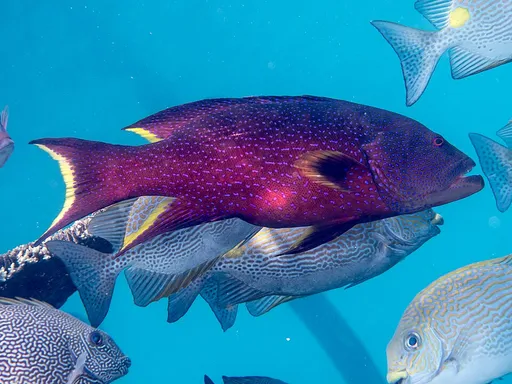 31.5 in (80 cm)291 gal (1,100 L)75–81°F (24–27°C)
Lyretail grouper
Variola louti
31.5 in (80 cm) · 291 gal (1,100 L)
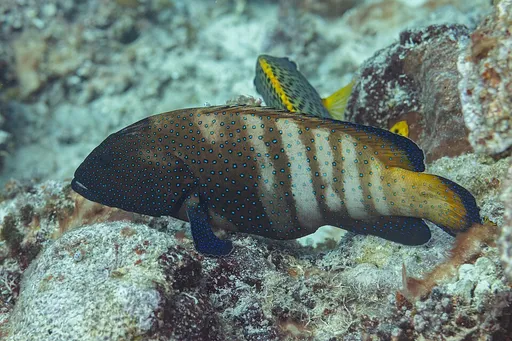 23.6 in (60 cm)251 gal (950 L)75–81°F (24–27°C)
Peacock grouper
Cephalopholis argus
23.6 in (60 cm) · 251 gal (950 L)
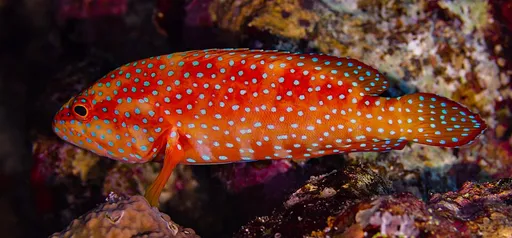 17.7 in (45 cm)180 gal (680 L)72–79°F (22–26°C)
Miniatus grouper
Cephalopholis miniata
17.7 in (45 cm) · 180 gal (680 L)
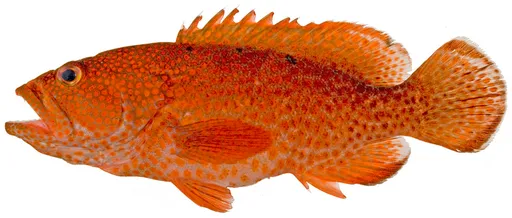 16.1 in (41 cm)106 gal (400 L)73–81°F (23–27°C)
Coney
Cephalopholis fulva
16.1 in (41 cm) · 106 gal (400 L)
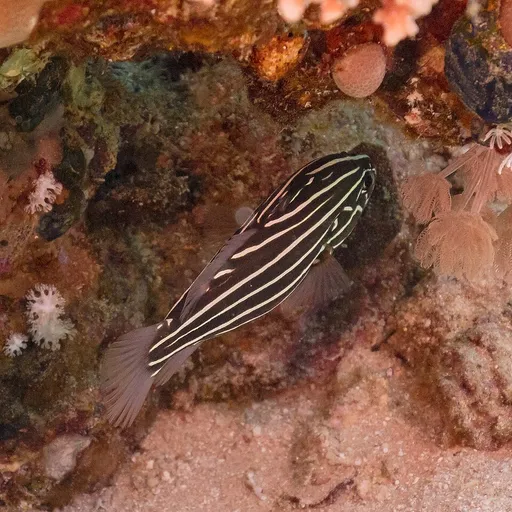 11.8 in (30 cm)53 gal (200 L)75–81°F (24–27°C)
Sixline soapfish
Grammistes sexlineatus
11.8 in (30 cm) · 53 gal (200 L)
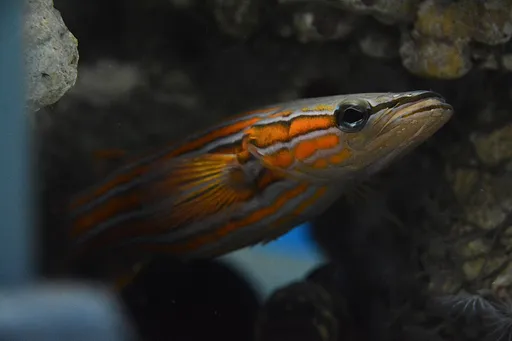 5.9 in (15 cm)79 gal (300 L)72–79°F (22–26°C)
Australian flathead perch
Rainfordia opercularis
5.9 in (15 cm) · 79 gal (300 L)