Maze angelfish
Chaetodontoplus cephalareticulatus
Also known as Maze Angel, Blue Maze Angelfish
SaltwaterFish
Care at a glance
- Temperature
- 72–79°F
- 22–26°C
- pH
- 8.1–8.4
- Adult size
- 11 in
- 28 cm
- Minimum tank
- 251 gal
- 950 L
- Temperament
- Mostly peaceful
- Social behavior
- Solitary
- Tankmates
- With caution
- Swim level
- Middle
- Diet
- Omnivore
- Difficulty
- Difficult
- Breeding
- Hard
- Rarity
- Very rare
- Reef safe
- Not reef safe
- Family
- Pomacanthidae
- Origin
- Northwest Pacific, Taiwan to central Japan
Overview
The maze angelfish is a large angelfish for a very big, fish-only saltwater tank. It is best left to experienced keepers.
Did you know
Wild maze angelfish almost never enter the aquarium trade. The species sat on hobbyist wish lists for decades, until Bali Aquarich began producing captive-bred juveniles.
Caring for the maze angelfish
Give the maze angelfish at least 251 gal (950 L), with substantial rockwork. Keep the water stable, at 72 to 79°F (22 to 26°C) and a pH of 8.1 to 8.4.
Captive-bred fish feed eagerly on pellets, mysis and nori. Wild fish have historically adapted poorly to aquarium life.
The maze angelfish is solitary and mostly peaceful. Keep it with a calm community, choosing its tank mates with caution. It cannot be trusted with corals or clams. It is hard to breed.
Good to know
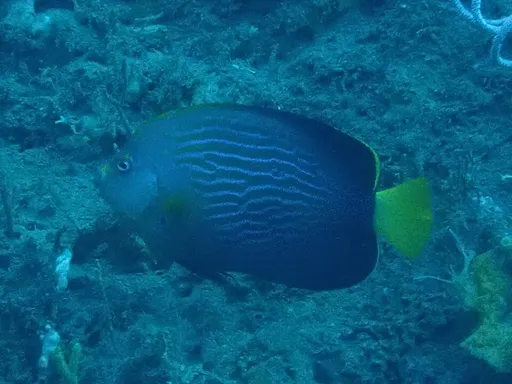
Chaetodontoplus cephalareticulatus belongs to the family Pomacanthidae and also goes by blue maze angelfish. It was described from northeastern Taiwan in 1975, and it is large for its genus. Adults carry a maze of pale blue lines and whorls over a dark body, with an orange patterned face. No two fish wear quite the same pattern. Juveniles start out velvety black with yellow markings.
In the wild
The maze angelfish is found only in the northwest Pacific, from Taiwan north along southern Japan to the Pacific coast of central Japan. It keeps to rocky subtropical reefs and is rarely encountered. Much of what is known about it comes from a small number of collected fish. Like its relatives, it grazes sponges and tunicates.
Common questions
What size tank does a maze angelfish need?
A maze angelfish needs at least 251 gal (950 L). It spends most of its time in the middle.
What temperature and pH does a maze angelfish need?
A maze angelfish is comfortable at 72–79°F (22–26°C) with a pH of 8.1–8.4.
What does a maze angelfish eat?
A captive-bred maze angelfish feeds eagerly on pellets, mysis and nori. Wild fish have historically adapted poorly to aquarium life.
How big does a maze angelfish get?
An adult maze angelfish reaches about 11 in (28 cm).
Related species
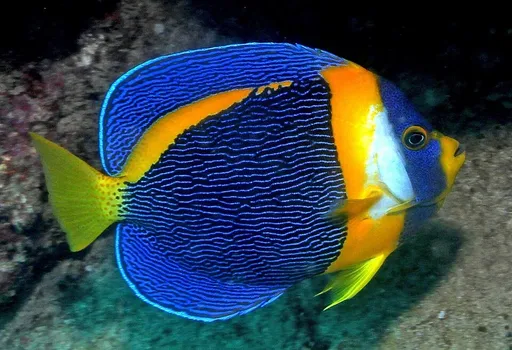 11 in (28 cm)180 gal (680 L)72–79°F (22–26°C)
Scribbled angelfish
Chaetodontoplus duboulayi
11 in (28 cm) · 180 gal (680 L)
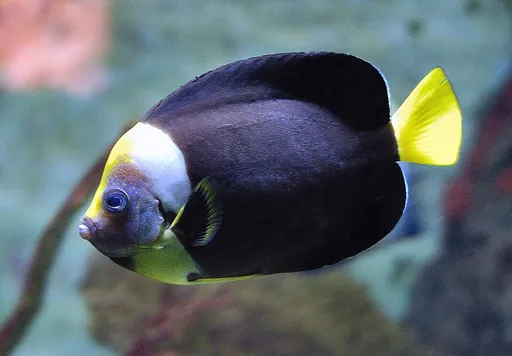 11.8 in (30 cm)180 gal (680 L)72–79°F (22–26°C)
False personifer angelfish
Chaetodontoplus meredithi
11.8 in (30 cm) · 180 gal (680 L)
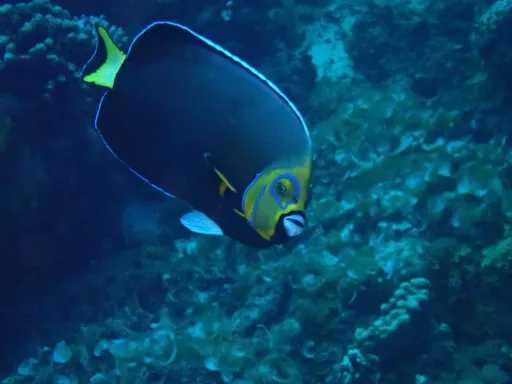 9.8 in (25 cm)198 gal (750 L)72–79°F (22–26°C)
Conspicuous angelfish
Chaetodontoplus conspicillatus
9.8 in (25 cm) · 198 gal (750 L)
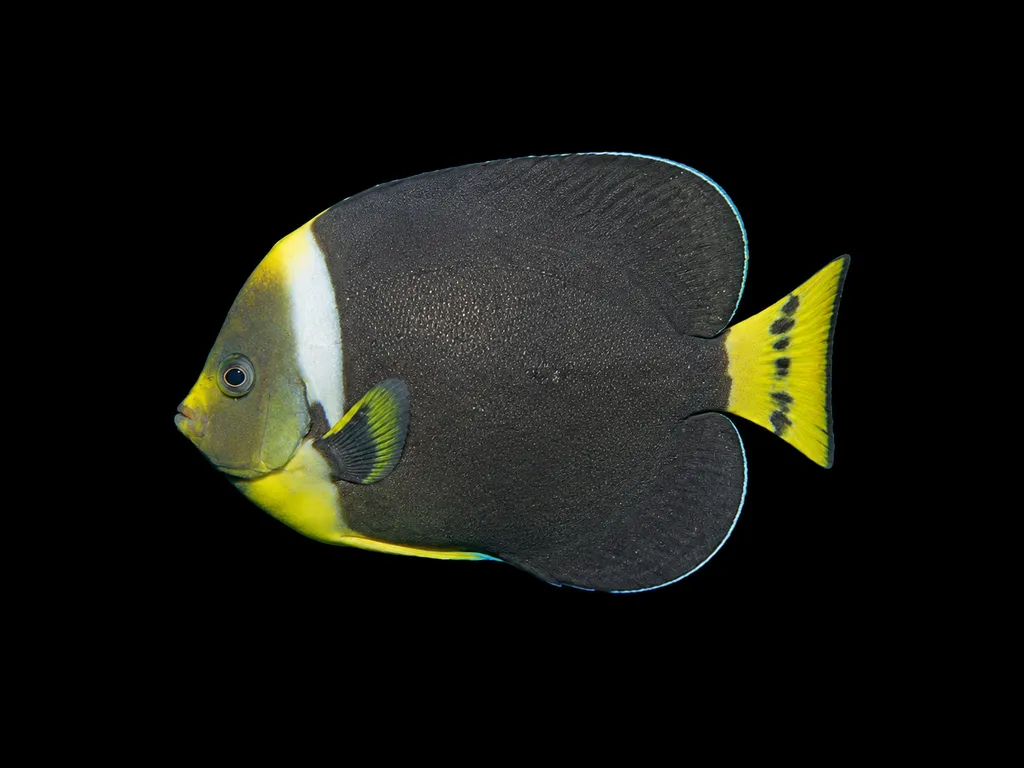 13.8 in (35 cm)180 gal (680 L)72–79°F (22–26°C)
Personifer angelfish
Chaetodontoplus personifer
13.8 in (35 cm) · 180 gal (680 L)
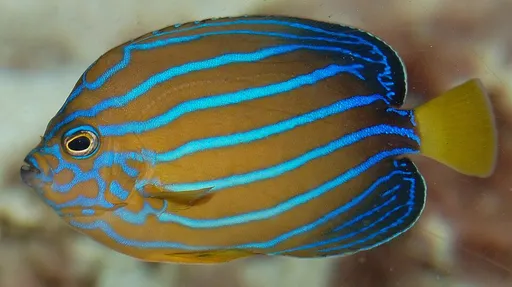 8.7 in (22 cm)185 gal (700 L)72–79°F (22–26°C)
Blueline angelfish
Chaetodontoplus septentrionalis
8.7 in (22 cm) · 185 gal (700 L)
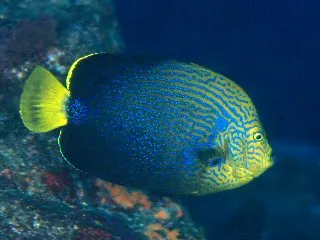 8.7 in (22 cm)151 gal (570 L)72–79°F (22–26°C)
Labyrinth angelfish
Chaetodontoplus chrysocephalus
8.7 in (22 cm) · 151 gal (570 L)