Labyrinth angelfish
Chaetodontoplus chrysocephalus
Also known as Orangeface Angelfish, Blue Vermiculate Angelfish
SaltwaterFish
Care at a glance
- Temperature
- 72–79°F
- 22–26°C
- pH
- 8.1–8.4
- Adult size
- 8.7 in
- 22 cm
- Minimum tank
- 151 gal
- 570 L
- Temperament
- Mostly peaceful
- Social behavior
- Solitary
- Tankmates
- With caution
- Swim level
- Middle
- Diet
- Omnivore
- Difficulty
- Difficult
- Breeding
- No record
- Rarity
- Very rare
- Reef safe
- Not reef safe
- Family
- Pomacanthidae
- Origin
- Western Pacific, Indonesia to the Philippines and southern Japan
Overview
The labyrinth angelfish is a western Pacific angelfish for a large, mature fish-only tank. It needs an experienced keeper.
Did you know
True wild labyrinth angelfish are almost never exported. Most fish sold under the name today are hatchery-bred lookalikes, produced by crossing the phantom and maze angelfish.
Caring for the labyrinth angelfish
Give the labyrinth angelfish a mature tank of at least 151 gal (570 L), with caves it can retreat to while it settles. Keep the water at 72 to 79°F (22 to 26°C) and a pH of 8.1 to 8.4. Offer sponge- and tunicate-based angelfish foods alongside mysis, brine shrimp and spirulina.
The labyrinth angelfish is solitary and mostly peaceful, but choose its tank mates with caution. It nips clams and both stony and soft corals, so leave it out of reef displays.
Good to know
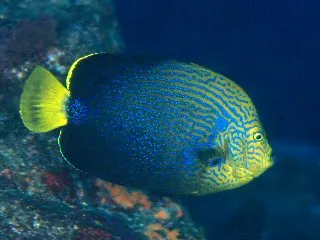
Chaetodontoplus chrysocephalus belongs to the family Pomacanthidae and also goes by orangeface angelfish and blue vermiculate angelfish. It wears greenish blue scribbles over a dark body, with an orange-toned face. Eschmeyer's Catalog of Fishes treats it as a valid species, described by Bleeker in 1855. Some researchers suspect it arose as a natural hybrid between related Chaetodontoplus species. Hatchery crosses that look remarkably like it keep that debate alive.
In the wild
The labyrinth angelfish lives on deep rocky reefs in the western Pacific, from Indonesia east to the Philippines and north to southern Japan. It is found mostly between 15 and 25 meters. It is scarce in the wild and hardly ever collected. Sponges and tunicates form the bulk of its diet.
Common questions
What size tank does a labyrinth angelfish need?
A labyrinth angelfish needs at least 151 gal (570 L). It spends most of its time in the middle.
What temperature and pH does a labyrinth angelfish need?
A labyrinth angelfish is comfortable at 72–79°F (22–26°C) with a pH of 8.1–8.4.
What does a labyrinth angelfish eat?
A labyrinth angelfish eats sponge- and tunicate-based angelfish foods alongside mysis, brine shrimp and spirulina.
How big does a labyrinth angelfish get?
An adult labyrinth angelfish reaches about 8.7 in (22 cm).
Related species
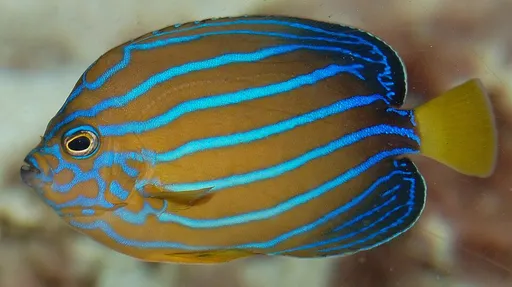 8.7 in (22 cm)185 gal (700 L)72–79°F (22–26°C)
Blueline angelfish
Chaetodontoplus septentrionalis
8.7 in (22 cm) · 185 gal (700 L)
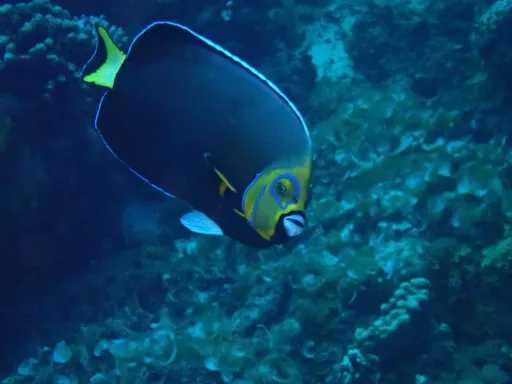 9.8 in (25 cm)198 gal (750 L)72–79°F (22–26°C)
Conspicuous angelfish
Chaetodontoplus conspicillatus
9.8 in (25 cm) · 198 gal (750 L)
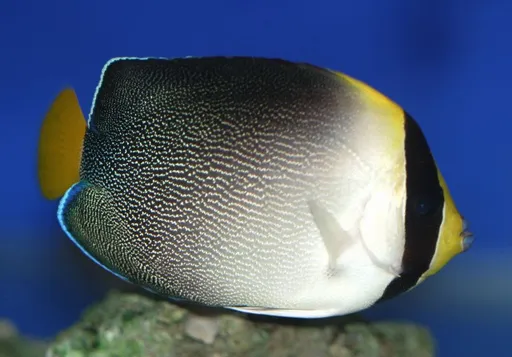 7.1 in (18 cm)66 gal (250 L)75–81°F (24–27°C)
Vermiculated angelfish
Chaetodontoplus mesoleucus
7.1 in (18 cm) · 66 gal (250 L)
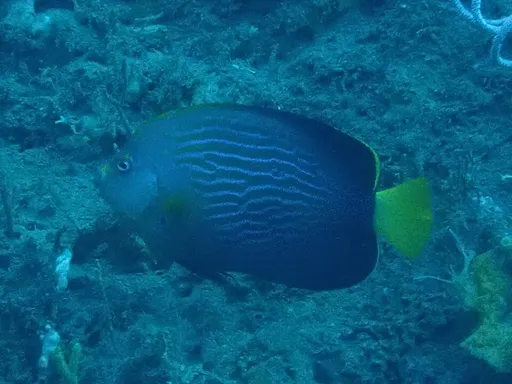 11 in (28 cm)251 gal (950 L)72–79°F (22–26°C)
Maze angelfish
Chaetodontoplus cephalareticulatus
11 in (28 cm) · 251 gal (950 L)
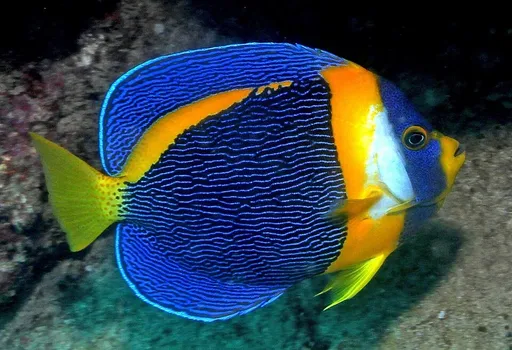 11 in (28 cm)180 gal (680 L)72–79°F (22–26°C)
Scribbled angelfish
Chaetodontoplus duboulayi
11 in (28 cm) · 180 gal (680 L)
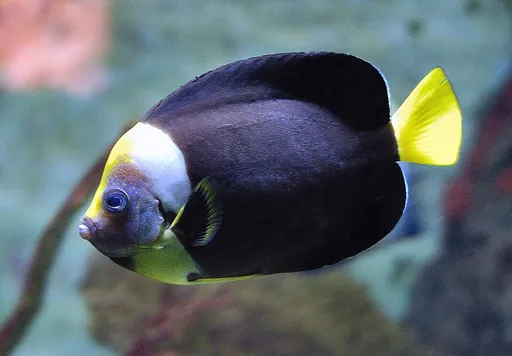 11.8 in (30 cm)180 gal (680 L)72–79°F (22–26°C)
False personifer angelfish
Chaetodontoplus meredithi
11.8 in (30 cm) · 180 gal (680 L)