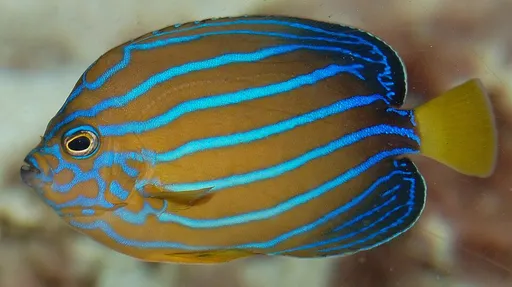
Blueline angelfish
Chaetodontoplus septentrionalis
Also known as Bluestriped Angelfish, Blue Line Angelfish
SaltwaterFish
Care at a glance
- Temperature
- 72–79°F
- 22–26°C
- pH
- 8.1–8.4
- Adult size
- 8.7 in
- 22 cm
- Minimum tank
- 185 gal
- 700 L
- Temperament
- Mostly peaceful
- Social behavior
- Solitary
- Tankmates
- With caution
- Swim level
- Middle
- Diet
- Omnivore
- Difficulty
- Medium
- Breeding
- Hard
- Rarity
- Rare
- Reef safe
- Not reef safe
- Family
- Pomacanthidae
- Origin
- Northwest Pacific, Malay Peninsula north to Taiwan and southern Japan
Overview
The blueline angelfish is a mid-water angel for a rocky saltwater display without corals. It is a moderate challenge to keep.
Did you know
The blueline angelfish was a touchy import until Bali Aquarich worked out captive breeding for the species. Farmed bluelines are far more dependable aquarium fish.
Caring for the blueline angelfish
Give a blueline angelfish at least 185 gal (700 L), with mature rockwork. Keep the water at 72 to 79°F (22 to 26°C) with a pH of 8.1 to 8.4. It is a subtropical fish, so hold the temperature toward the cooler end where possible.
Wild imports have a reputation for refusing food, so seek out captive-bred stock. Captive-bred fish take pellets, mysis and nori readily.
The blueline angelfish is mostly peaceful, but choose its tank mates with caution. It picks at corals, clams and tubeworms, so it is not reef safe. Keep it in a rocky or fish-only display. Breeding it is hard.
Good to know
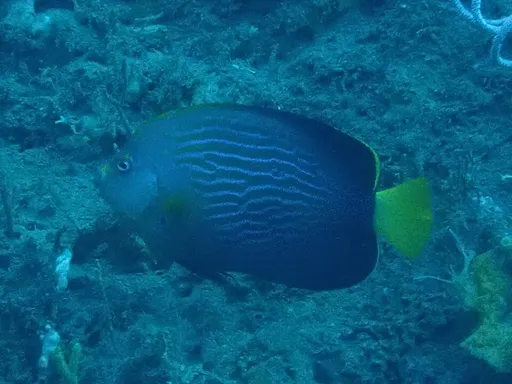
The blueline angelfish belongs to the family Pomacanthidae, and it is also called the bluestriped angelfish. Adults have electric blue lines over a brownish body. Juveniles look completely different, black with a single yellow bar behind the head, and gain the lines only with age. In southern Japan it naturally hybridizes with the black velvet angelfish, Chaetodontoplus melanosoma. Its species name, septentrionalis, means northern, since it ranges farther north than most angelfish.
In the wild
Blueline angelfish live on rocky coastal reefs of the northwest Pacific, from the Malay Peninsula north through Taiwan to southern Japan. They stay shallow, mostly between 5 and 15 meters, working over rock faces for sponges and tunicates.
Common questions
What size tank does a blueline angelfish need?
A blueline angelfish needs at least 185 gal (700 L). It spends most of its time in the middle.
What temperature and pH does a blueline angelfish need?
A blueline angelfish is comfortable at 72–79°F (22–26°C) with a pH of 8.1–8.4.
What does a blueline angelfish eat?
A captive-bred blueline angelfish takes pellets, mysis and nori readily. Wild imports have a reputation for refusing food.
How big does a blueline angelfish get?
An adult blueline angelfish reaches about 8.7 in (22 cm).
Related species
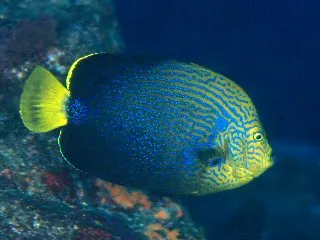 8.7 in (22 cm)151 gal (570 L)72–79°F (22–26°C)
Labyrinth angelfish
Chaetodontoplus chrysocephalus
8.7 in (22 cm) · 151 gal (570 L)
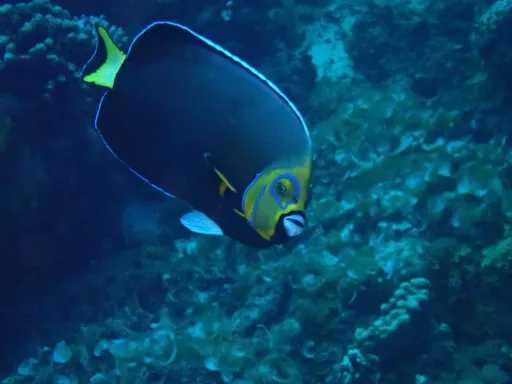 9.8 in (25 cm)198 gal (750 L)72–79°F (22–26°C)
Conspicuous angelfish
Chaetodontoplus conspicillatus
9.8 in (25 cm) · 198 gal (750 L)
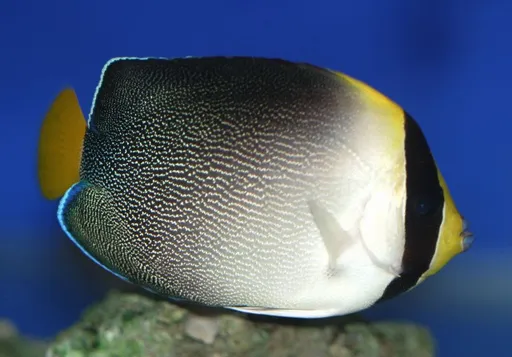 7.1 in (18 cm)66 gal (250 L)75–81°F (24–27°C)
Vermiculated angelfish
Chaetodontoplus mesoleucus
7.1 in (18 cm) · 66 gal (250 L)
 11 in (28 cm)251 gal (950 L)72–79°F (22–26°C)
Maze angelfish
Chaetodontoplus cephalareticulatus
11 in (28 cm) · 251 gal (950 L)
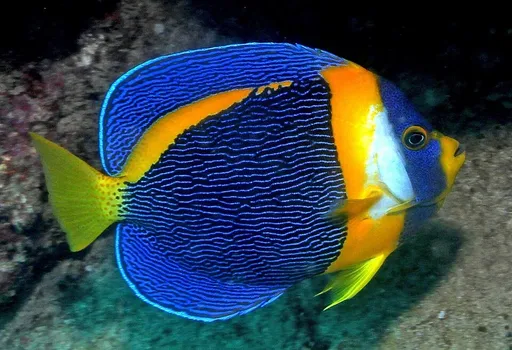 11 in (28 cm)180 gal (680 L)72–79°F (22–26°C)
Scribbled angelfish
Chaetodontoplus duboulayi
11 in (28 cm) · 180 gal (680 L)
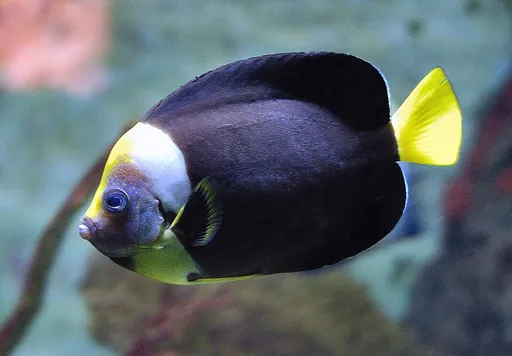 11.8 in (30 cm)180 gal (680 L)72–79°F (22–26°C)
False personifer angelfish
Chaetodontoplus meredithi
11.8 in (30 cm) · 180 gal (680 L)