Harlequin filefish
Oxymonacanthus longirostris
Also known as Orange spotted filefish, Longnose filefish, Beaked leatherjacket, Harlequin leatherjacket
SaltwaterFish
Care at a glance
- Temperature
- 75–81°F
- 24–27°C
- pH
- 8.0–8.4
- Adult size
- 4.3 in
- 11 cm
- Minimum tank
- 53 gal
- 200 L
- Temperament
- Peaceful
- Social behavior
- Social
- Tankmates
- With caution
- Swim level
- Middle
- Diet
- Carnivore
- Difficulty
- Difficult
- Breeding
- Hard
- Rarity
- Rare
- Reef safe
- Not reef safe
- Family
- Monacanthidae
- Origin
- Native to the Indo-Pacific, living among branching Acropora coral thickets on which it depends for food and shelter.
Overview
The harlequin filefish is a small, delicate reef fish and one of the most difficult to feed. It is only for advanced reef keepers.
Did you know
The harlequin filefish takes on the smell of the coral it eats. This chemical camouflage stops predators that hunt by scent from telling the fish apart from the coral it hides in.
Caring for the harlequin filefish
Keep a harlequin filefish only in an established reef tank of at least 53 gal (200 L). The tank needs a healthy growth of live Acropora coral for it to graze.
Hold the water at 75 to 81°F (24 to 27°C) and a pH of 8.0 to 8.4. It is an obligate corallivore that feeds almost entirely on the polyps of living Acropora in the wild. Without live SPS coral to eat, most starve. Some can slowly be trained onto live baby brine and enriched frozen foods.
It is not reef safe with Acropora, since eating those polyps is the whole point of the fish. Keep it as a peaceful pair with gentle tank mates and no food competitors. Breeding it is hard.
Good to know
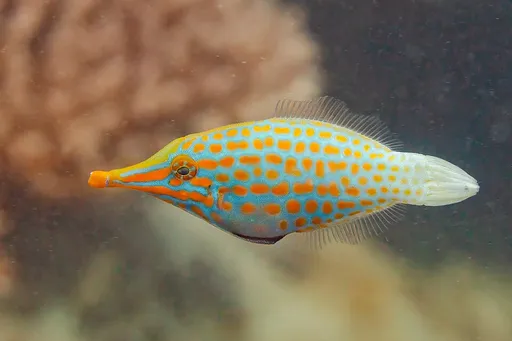
The harlequin filefish belongs to the filefish family, Monacanthidae. It is patterned in pale blue-green and covered in bright orange spots, with a long tube snout for picking at coral polyps. The loss of Acropora reefs to bleaching directly threatens the species. It is also sold as the longnose filefish or the orange spotted filefish.
In the wild
The harlequin filefish is native to the Indo-Pacific. It lives among branching Acropora coral thickets and depends on them for shelter. It hovers head-down among the branches and blends into the thicket. Pairs stay together and defend a patch of coral.
Common questions
What size tank does a harlequin filefish need?
A harlequin filefish needs at least 53 gal (200 L). It spends most of its time in the middle.
What temperature and pH does a harlequin filefish need?
A harlequin filefish is comfortable at 75–81°F (24–27°C) with a pH of 8.0–8.4.
What does a harlequin filefish eat?
A harlequin filefish eats the polyps of live Acropora coral, and most starve without live coral. Some can slowly learn to take live baby brine and enriched frozen foods.
How big does a harlequin filefish get?
An adult harlequin filefish reaches about 4.3 in (11 cm).
Related species
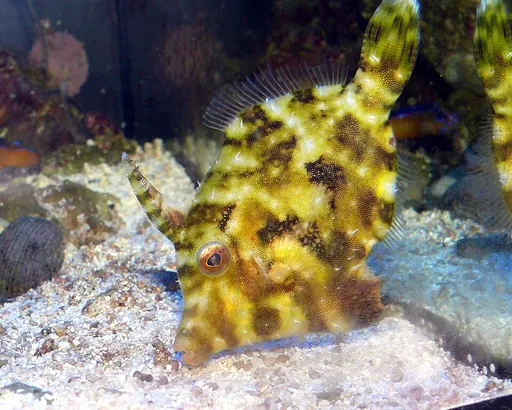 5.5 in (14 cm)30 gal (114 L)72–79°F (22–26°C)
Aiptasia eating filefish
Acreichthys tomentosus
5.5 in (14 cm) · 30 gal (114 L)
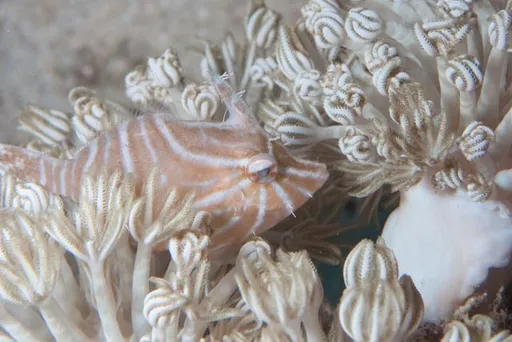 3 in (7.6 cm)20 gal (76 L)72–79°F (22–26°C)
Radial filefish
Acreichthys radiatus
3 in (7.6 cm) · 20 gal (76 L)
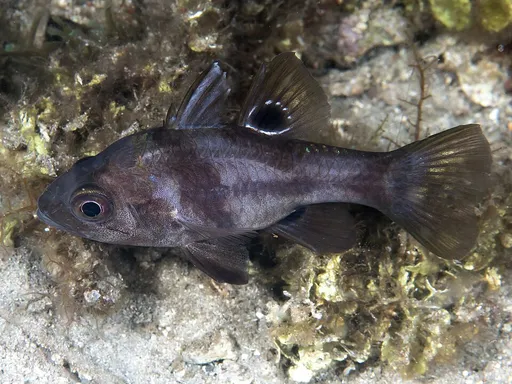 4.3 in (11 cm)29 gal (110 L)72–79°F (22–26°C)
Black cardinalfish
Apogonichthyoides melas
4.3 in (11 cm) · 29 gal (110 L)
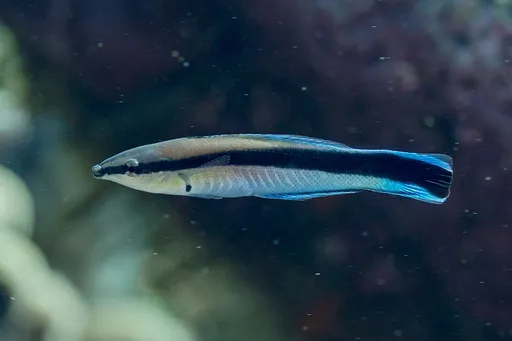 4.3 in (11 cm)106 gal (400 L)75–81°F (24–27°C)
Bluestreak cleaner wrasse
Labroides dimidiatus
4.3 in (11 cm) · 106 gal (400 L)
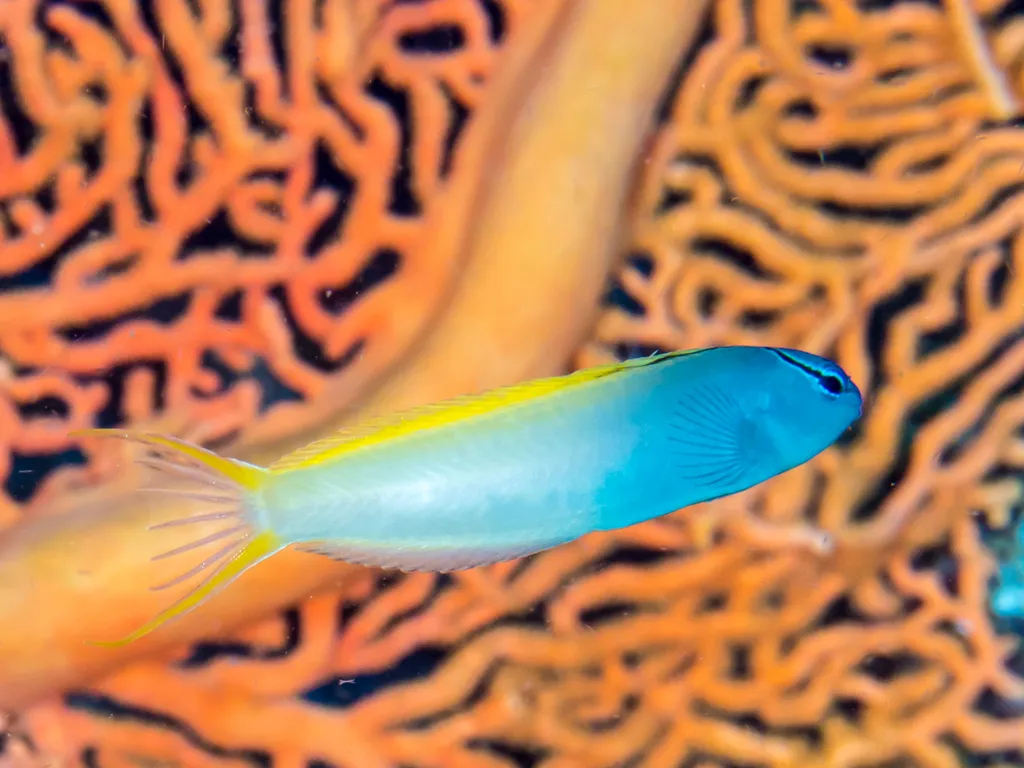 4.3 in (11 cm)30 gal (114 L)72–79°F (22–26°C)
Forktail fang blenny
Meiacanthus atrodorsalis
4.3 in (11 cm) · 30 gal (114 L)
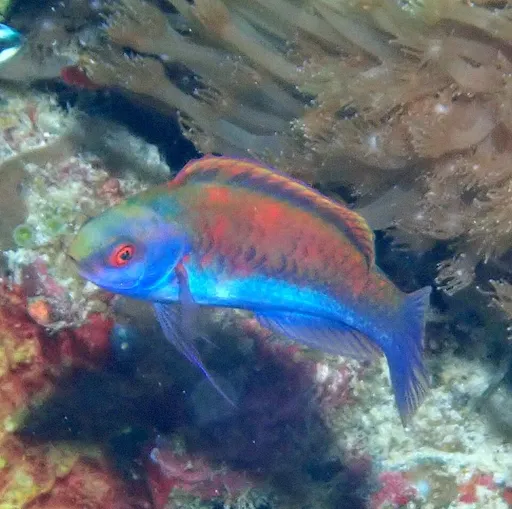 4.3 in (11 cm)90 gal (340 L)72–79°F (22–26°C)
Solar fairy wrasse
Cirrhilabrus solorensis
4.3 in (11 cm) · 90 gal (340 L)