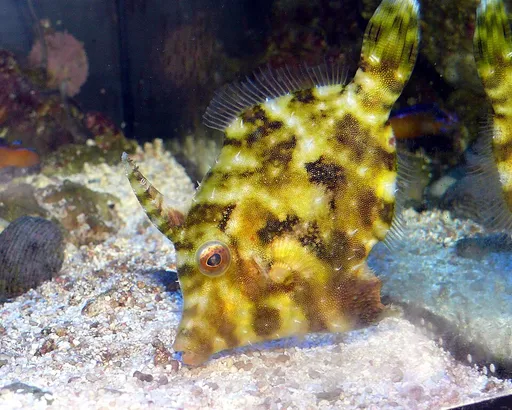
Aiptasia eating filefish
Acreichthys tomentosus
Also known as Bristletail Filefish, Matted Filefish, Matted Leatherjacket, Tomentosus Filefish
SaltwaterFish
Care at a glance
- Temperature
- 72–79°F
- 22–26°C
- pH
- 8.1–8.4
- Adult size
- 5.5 in
- 14 cm
- Minimum tank
- 30 gal
- 114 L
- Temperament
- Peaceful
- Social behavior
- Solitary
- Tankmates
- With caution
- Swim level
- Middle
- Difficulty
- Medium
- Breeding
- Medium
- Rarity
- Common
- Reef safe
- Reef safe with caution
- Family
- Monacanthidae
- Origin
- Indo-West Pacific reefs, from East Africa and Sri Lanka to Indonesia, New Caledonia, and Fiji, north to southern Japan
Overview
This filefish is peaceful and often shy at first, generally leaving other fish alone apart from its own kind. It's popular specifically for its appetite for pest aiptasia anemones, though that habit isn't guaranteed in every individual, and it's reef safe only with caution since some fish nip at soft coral polyps, stony coral tissue, or clam mantles, especially once the aiptasia supply runs out. Keep feeding it a varied diet of mysis, brine shrimp, and other meaty foods even after it's cleared a tank's aiptasia, since relying on it to go hungry afterward just shifts the nipping toward corals instead.
In the wild
Aiptasia eating filefish live across the Indo-West Pacific, from East Africa and Sri Lanka to Indonesia, New Caledonia, and Fiji, north to southern Japan, keeping to shallow reef margins, rubble, and seagrass beds where their mottled brown and green pattern blends in well. In the aquarium it does fine in a modest tank of at least 114 litres (30 US gal) with live rock and some open swimming room, and it settles in better when there's cover nearby to duck into if it feels exposed.
Good to know
Acreichthys tomentosus belongs to the filefish family, Monacanthidae, named for the fine, sandpaper-like texture of their scales rather than a smooth, slimy coat like most fish. Like other filefish it carries a single, lockable spine on its back that it can raise and wedge into a crevice to avoid being pulled out by a predator. Adults reach about 14 cm, and males can be told apart from females by a patch of fine, bristle-like hairs near the base of the tail, the source of the bristletail name.
Did you know
Some hatcheries raise captive-bred aiptasia filefish on a diet of actual aiptasia from birth, so the fish arriving at the store already has a proven taste for the pest anemone instead of being a wild-caught gamble that may never take an interest in eating it.
Common questions
What size tank does an Aiptasia eating filefish need?
An Aiptasia eating filefish needs at least 30 gal (114 L). It spends most of its time in the middle.
What temperature and pH does an Aiptasia eating filefish need?
An Aiptasia eating filefish is comfortable at 72–79°F (22–26°C) with a pH of 8.1–8.4.
How big does an Aiptasia eating filefish get?
An adult Aiptasia eating filefish reaches about 5.5 in (14 cm).
Related species
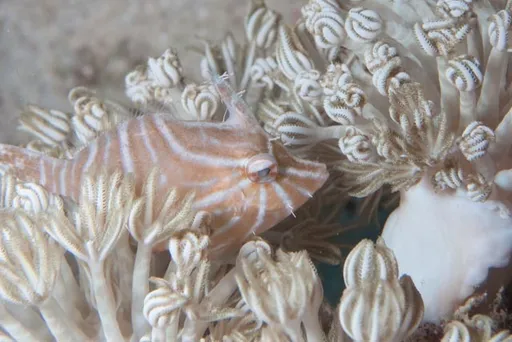 3 in (7.6 cm)20 gal (76 L)72–79°F (22–26°C)
Radial filefish
Acreichthys radiatus
3 in (7.6 cm) · 20 gal (76 L)
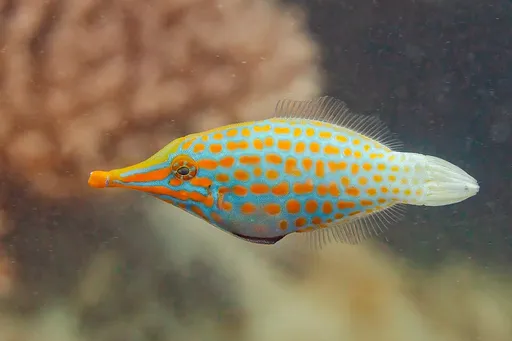 4.3 in (11 cm)53 gal (200 L)75–81°F (24–27°C)
Harlequin filefish
Oxymonacanthus longirostris
4.3 in (11 cm) · 53 gal (200 L)
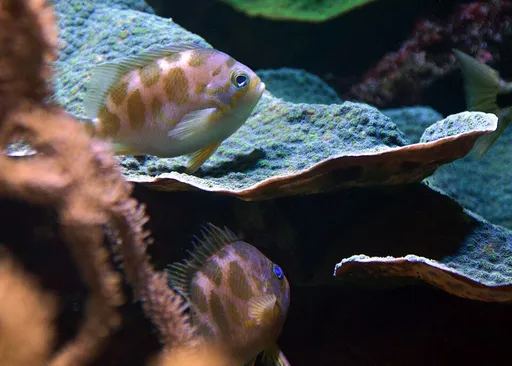 5.9 in (15 cm)100 gal (380 L)72–79°F (22–26°C)
Blotched anthias
Odontanthias borbonius
5.9 in (15 cm) · 100 gal (380 L)
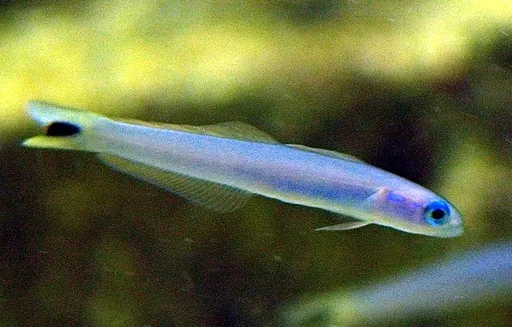 5.1 in (13 cm)29 gal (110 L)72–79°F (22–26°C)
Blue gudgeon dartfish
Ptereleotris heteroptera
5.1 in (13 cm) · 29 gal (110 L)
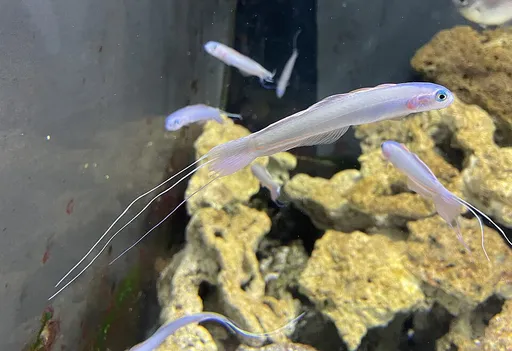 4.7 in (12 cm)40 gal (150 L)73–81°F (23–27°C)
Blue hana goby
Ptereleotris hanae
4.7 in (12 cm) · 40 gal (150 L)
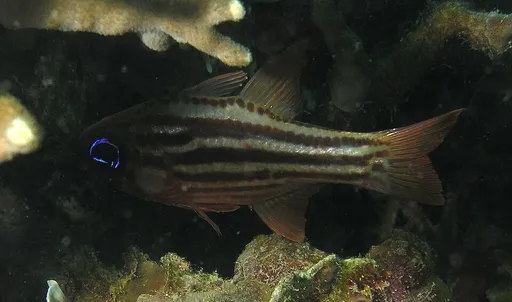 4.7 in (12 cm)53 gal (200 L)72–79°F (22–26°C)
Blue-eye cardinalfish
Ostorhinchus compressus
4.7 in (12 cm) · 53 gal (200 L)