Scissortail dartfish
Ptereleotris evides
Also known as Scissortail Goby, Blackfin Dartfish, Arrow Dartfish
SaltwaterFish
Care at a glance
- Temperature
- 72–79°F
- 22–26°C
- pH
- 8.1–8.4
- Adult size
- 5.5 in
- 14 cm
- Minimum tank
- 29 gal
- 110 L
- Temperament
- Peaceful
- Social behavior
- Social
- Swim level
- Middle
- Difficulty
- Easy
- Breeding
- Hard
- Rarity
- Common
- Reef safe
- Reef safe
- Family
- Ptereleotridae
- Origin
- Indo-Pacific, from the Red Sea and East Africa to the Line and Society Islands, north to the Ryukyu Islands and south to Lord Howe Island
Overview
Scissortail dartfish are peaceful and fully reef safe, ignoring corals, clams, and other invertebrates entirely. They are social and do best in a group of three or more, hovering together above the sand in a loose formation and behaving far more confidently than a single fish kept alone. They get along with other peaceful tankmates but should not be paired with boisterous fish that will bully them away from the open water they like to patrol. Feed a variety of small meaty foods, mysis, brine shrimp, and finely chopped seafood, a couple of times a day since they are constant, energetic feeders. Their biggest risk in captivity is jumping, so a secure lid is not optional.
In the wild
Ranges across the Indo-Pacific from the Red Sea and East Africa to the Line and Society Islands, on outer reef slopes and in lagoons at depths of about 2 to 15 meters. It hovers just above a shared burrow system in sand or rubble and drops down out of sight the instant it feels threatened. The aquarium should have a few inches of sand for burrowing, loose rubble or rockwork nearby, open water for hovering, and a tight fitting lid, since this is a strong jumper when startled.
Good to know
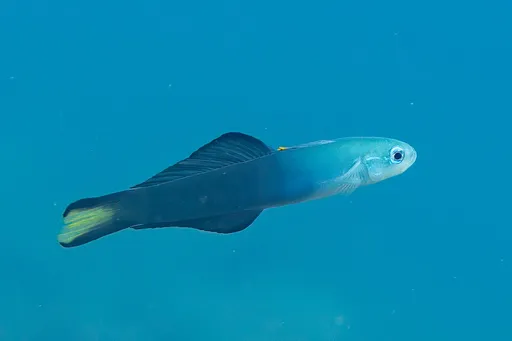
A dartfish in the family Ptereleotridae, also called the blackfin dartfish, reaching about 14 cm, with a two tone body, pale blue-grey up front shading to black across the rear half and tail. The tall, forked tail gives rise to the scissortail name, since the two lobes open and close like blades as it swims. Unlike true gobies it has no fused pelvic sucker and swims freely in open water, retreating to a shared burrow rather than resting flat on the bottom.
Did you know
When startled, a scissortail dartfish does not bolt for the nearest rock like most fish. It drops straight down into its burrow in the sand, vanishing from view in a fraction of a second before cautiously easing back up minutes later.
Weekly picks
Tank mates
Scissortail dartfish is a peaceful, social species that keeps to the middle. These picks share a community profile with it, are safe together in both directions, and overlap on water type, temperature and pH.
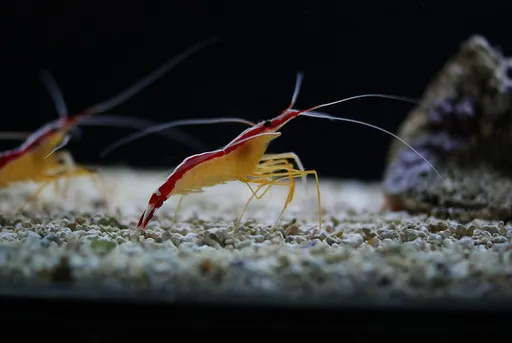
Skunk cleaner shrimp
Lysmata amboinensis
Saltwater2.4 in (6 cm) · 20 gal (75 L)73–81°F (23–27°C)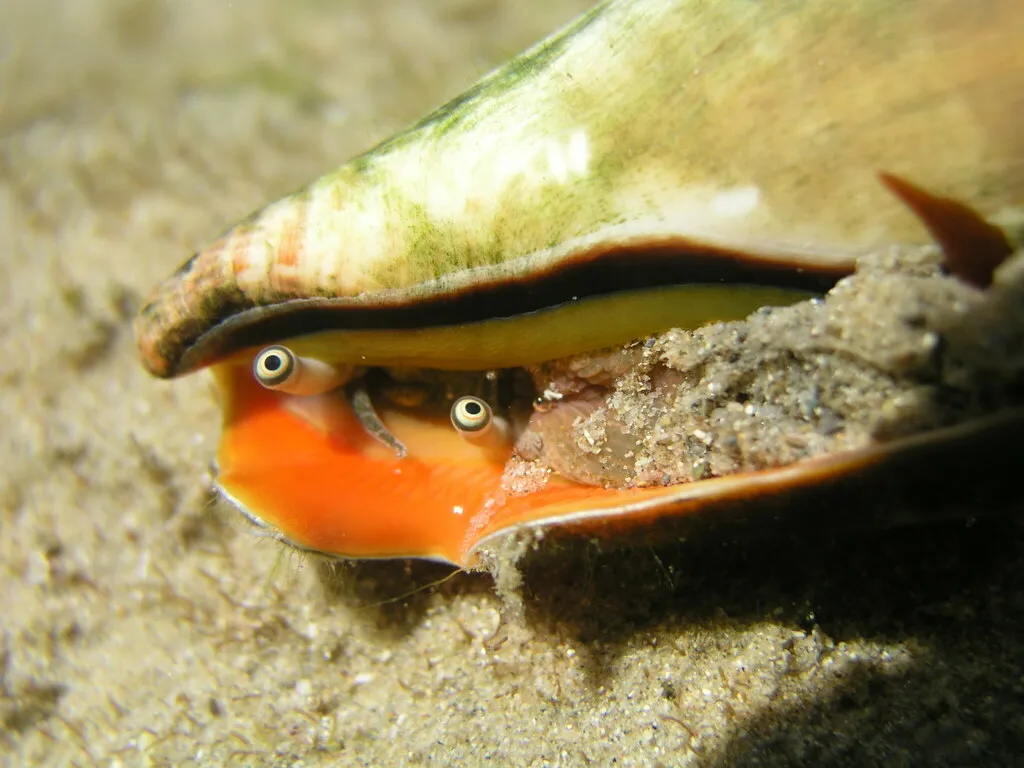
Tiger / strawberry conch
Conomurex luhuanus
Saltwater2.8 in (7 cm) · 20 gal (75 L)75–81°F (24–27°C)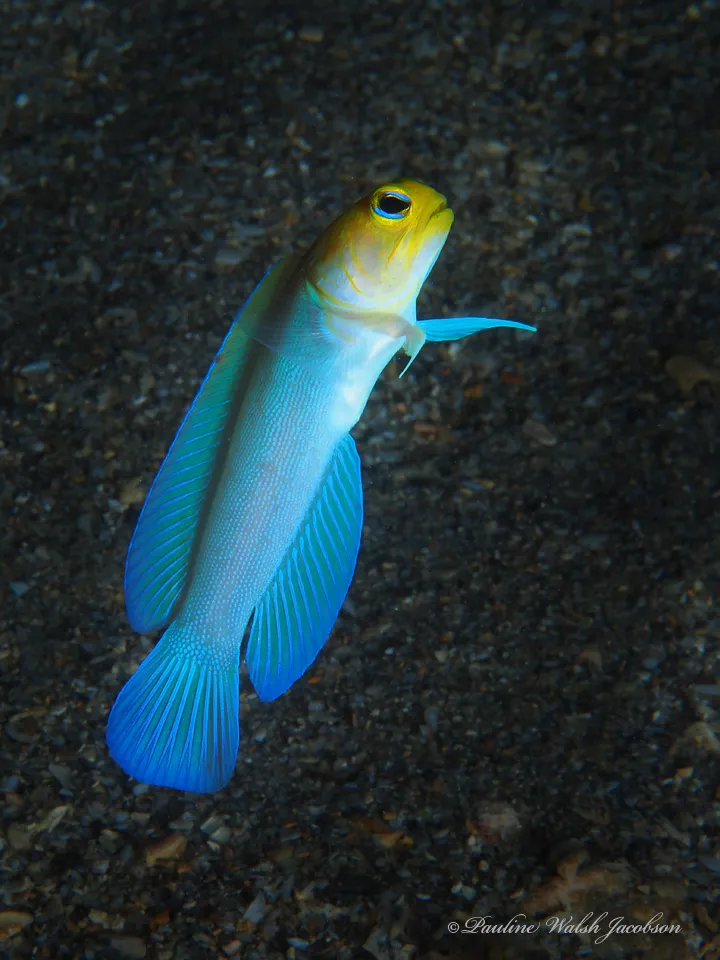
Pearly jawfish
Opistognathus aurifrons
Saltwater3.9 in (10 cm) · 29 gal (110 L)73–81°F (23–27°C)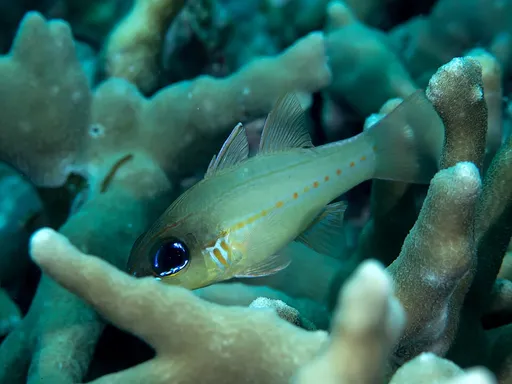
Seale's cardinalfish
Ostorhinchus sealei
Saltwater3.9 in (10 cm) · 29 gal (110 L)72–79°F (22–26°C)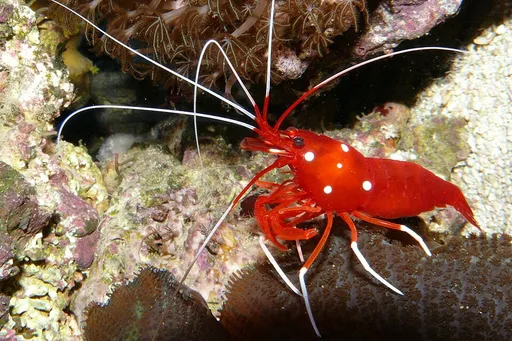
Fire shrimp
Lysmata debelius
Saltwater2.4 in (6 cm) · 20 gal (75 L)72–79°F (22–26°C)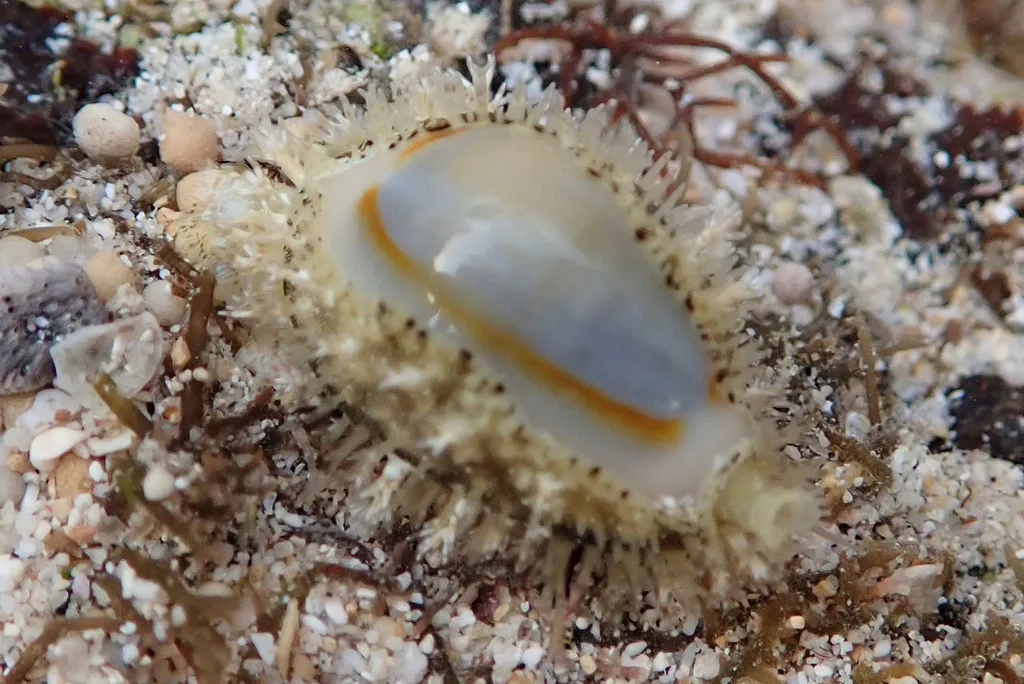
Ring cowrie
Monetaria annulus
Saltwater1.2 in (3 cm) · 20 gal (75 L)75–81°F (24–27°C)
Common questions
What size tank does a Scissortail dartfish need?
A Scissortail dartfish needs at least 29 gal (110 L). It spends most of its time in the middle.
What temperature and pH does a Scissortail dartfish need?
A Scissortail dartfish is comfortable at 72–79°F (22–26°C) with a pH of 8.1–8.4.
How big does a Scissortail dartfish get?
An adult Scissortail dartfish reaches about 5.5 in (14 cm).
Related species
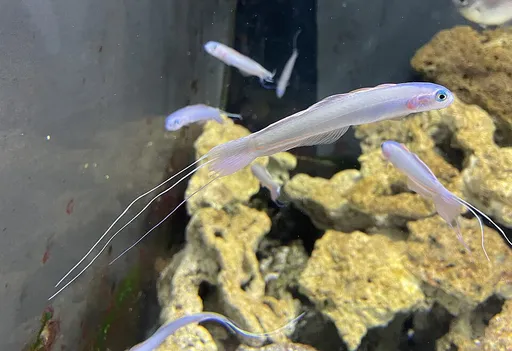
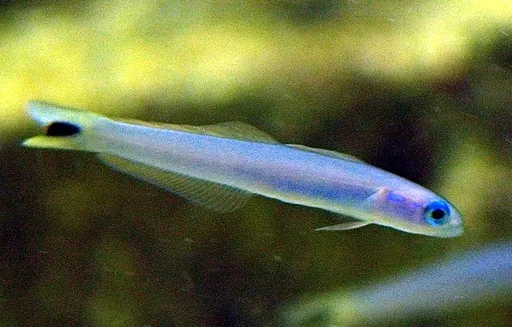 5.1 in (13 cm)29 gal (110 L)72–79°F (22–26°C)
Blue gudgeon dartfish
Ptereleotris heteroptera
5.1 in (13 cm) · 29 gal (110 L)
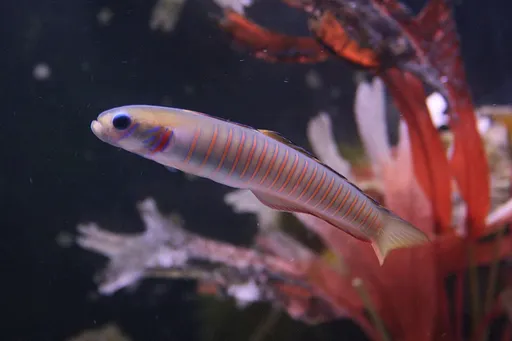
 4.7 in (12 cm)40 gal (150 L)73–81°F (23–27°C)
Blue hana goby
Ptereleotris hanae
4.7 in (12 cm) · 40 gal (150 L)
 4.7 in (12 cm)29 gal (110 L)72–79°F (22–26°C)
Zebra dartfish
Ptereleotris zebra
4.7 in (12 cm) · 29 gal (110 L)
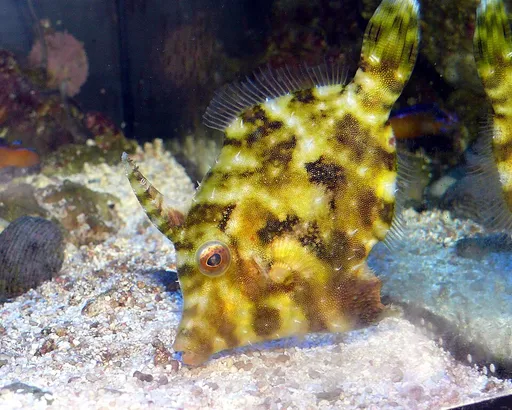 5.5 in (14 cm)30 gal (114 L)72–79°F (22–26°C)
Aiptasia eating filefish
Acreichthys tomentosus
5.5 in (14 cm) · 30 gal (114 L)
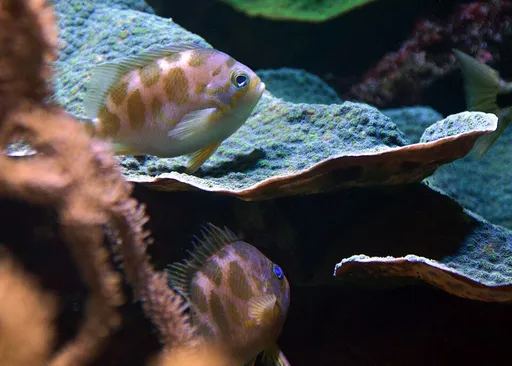 5.9 in (15 cm)100 gal (380 L)72–79°F (22–26°C)
Blotched anthias
Odontanthias borbonius
5.9 in (15 cm) · 100 gal (380 L)
 4.7 in (12 cm)53 gal (200 L)72–79°F (22–26°C)
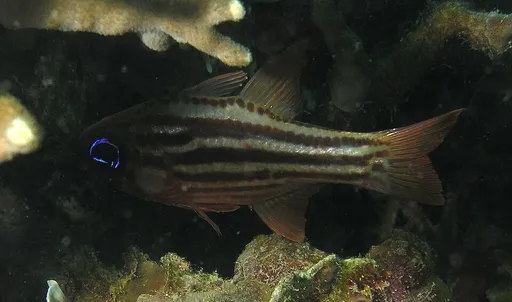
Blue-eye cardinalfish
Ostorhinchus compressus
4.7 in (12 cm) · 53 gal (200 L)