Zebra dartfish
Ptereleotris zebra
Also known as Zebra Barred Dartfish, Chinese Zebra Goby
SaltwaterFish
Care at a glance
- Temperature
- 72–79°F
- 22–26°C
- pH
- 8.1–8.4
- Adult size
- 4.7 in
- 12 cm
- Minimum tank
- 29 gal
- 110 L
- Temperament
- Peaceful
- Social behavior
- Social
- Swim level
- Middle
- Difficulty
- Easy
- Breeding
- Hard
- Rarity
- Common
- Reef safe
- Reef safe
- Family
- Ptereleotridae
- Origin
- Indo-Pacific, from the Red Sea to the Line and Marquesas Islands, north to the Ryukyu Islands of Japan and south to the Great Barrier Reef
Overview
Zebra dartfish are peaceful and reef safe, leaving corals and invertebrates alone and rarely causing trouble with other fish. They are social and settle in best when kept in a group of two to five added to the tank at the same time, hovering together and looking far bolder as a group than a lone fish tends to be. They should not be housed with aggressive or overly boisterous tankmates that will keep them pinned in their burrow. Offer small meaty foods, brine shrimp, mysis, and finely chopped krill, in small portions several times a day to match their steady picking at plankton in the wild. As with all dartfish, a secure lid is essential since they jump when startled.
In the wild
Distributed across the Indo-Pacific from the Red Sea to the Line and Marquesas Islands, and from the Ryukyu Islands of Japan south to the Great Barrier Reef, typically on exposed seaward reefs in shallow water around 2 to 4 meters. Small groups hover together over sand and rubble patches near the reef edge, sharing a network of burrows they dive into when alarmed. The aquarium needs a live sand bed for burrowing and refuge, open swimming space above it, and a tight fitting lid.
Good to know
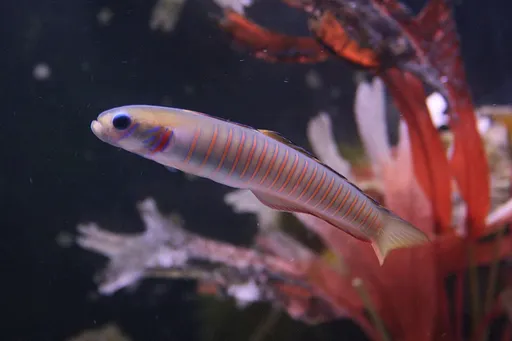
A member of the family Ptereleotridae, also called the Chinese zebra goby, reaching up to about 12 cm, pale blue-grey with a series of thin dark bars down the body that give it its common name. Like its dartfish relatives it lacks the fused pelvic disc of true gobies and swims freely rather than resting flat on rock. It shelters in rock crevices or barnacle holes and will also dig a burrow beneath a rock in sand, retreating there the instant it senses danger.
Did you know
The bold dark bars that give the zebra dartfish its name can fade lighter or flush darker within seconds depending on the fish's mood, going almost plain grey when it is relaxed and darkening when it feels threatened.
Weekly picks
Tank mates
Zebra dartfish is a peaceful, social species that keeps to the middle. These picks share a community profile with it, are safe together in both directions, and overlap on water type, temperature and pH.
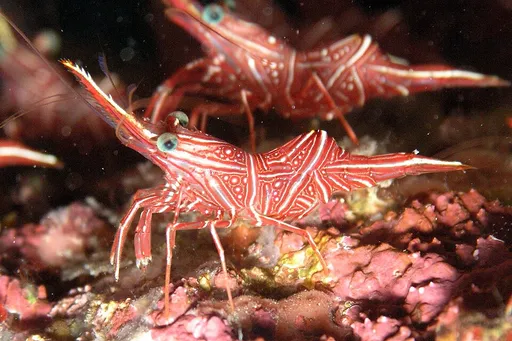
Camel / dancing shrimp
Rhynchocinetes durbanensis
Saltwater2 in (5 cm) · 16 gal (60 L)75–81°F (24–27°C)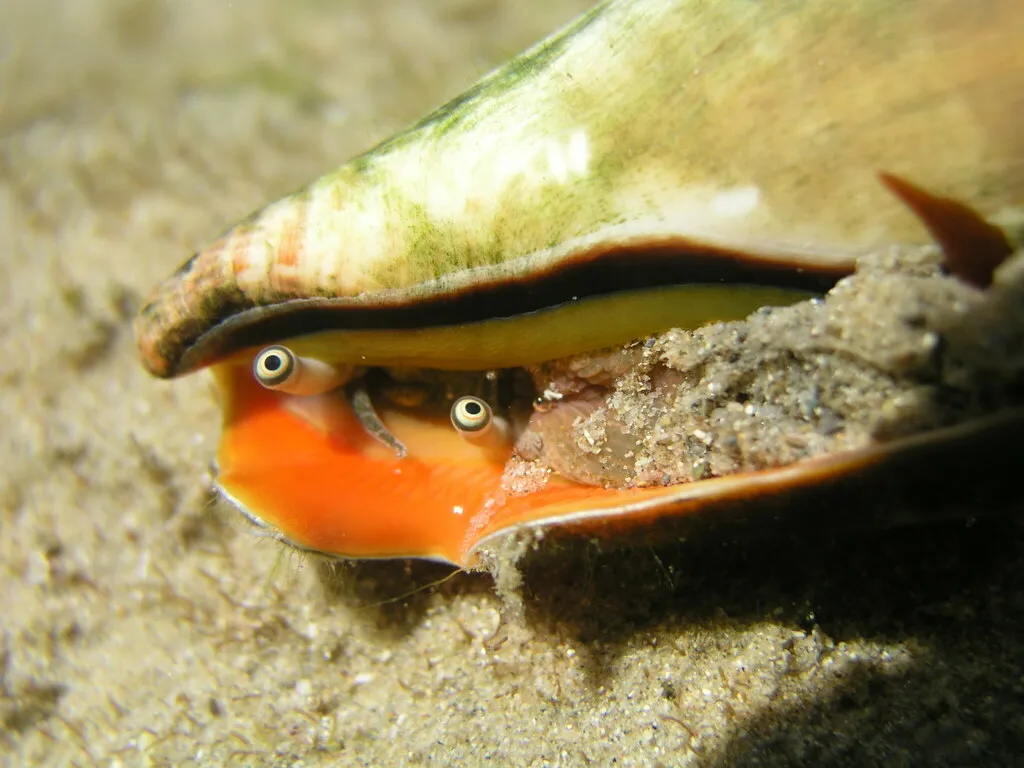
Tiger / strawberry conch
Conomurex luhuanus
Saltwater2.8 in (7 cm) · 20 gal (75 L)75–81°F (24–27°C)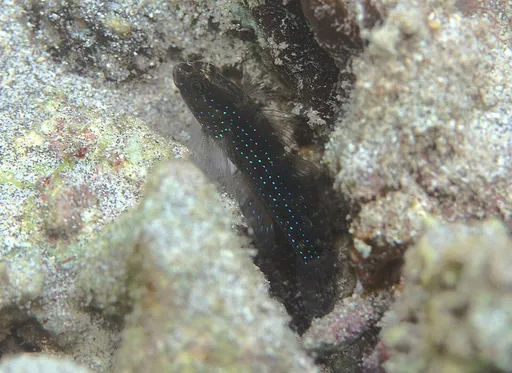
Starry goby
Asterropteryx semipunctata
Saltwater2.8 in (7 cm) · 13 gal (50 L)73–81°F (23–27°C)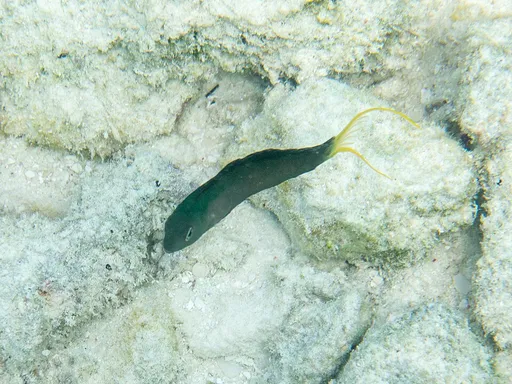
Mozambique fangblenny
Meiacanthus mossambicus
Saltwater3.5 in (9 cm) · 29 gal (110 L)72–79°F (22–26°C)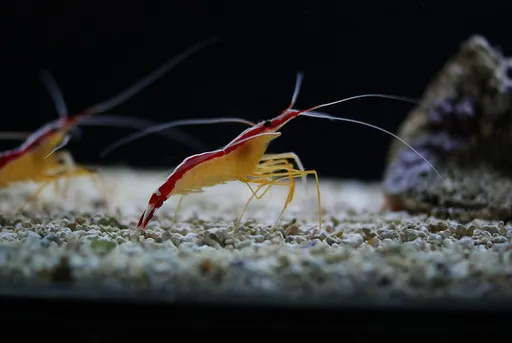
Skunk cleaner shrimp
Lysmata amboinensis
Saltwater2.4 in (6 cm) · 20 gal (75 L)73–81°F (23–27°C)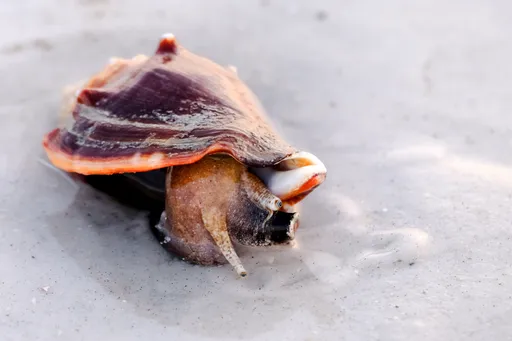
Fighting conch
Strombus alatus
Saltwater3.1 in (8 cm) · 20 gal (75 L)75–81°F (24–27°C)
Common questions
What size tank does a Zebra dartfish need?
A Zebra dartfish needs at least 29 gal (110 L). It spends most of its time in the middle.
What temperature and pH does a Zebra dartfish need?
A Zebra dartfish is comfortable at 72–79°F (22–26°C) with a pH of 8.1–8.4.
How big does a Zebra dartfish get?
An adult Zebra dartfish reaches about 4.7 in (12 cm).
Related species
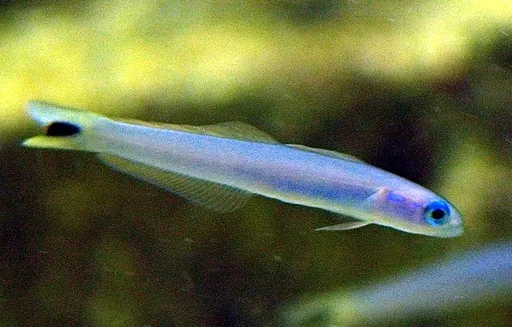
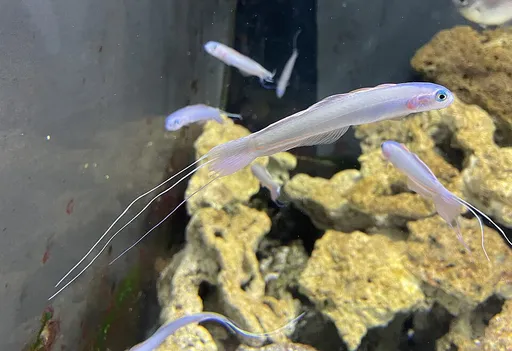 4.7 in (12 cm)40 gal (150 L)73–81°F (23–27°C)
Blue hana goby
Ptereleotris hanae
4.7 in (12 cm) · 40 gal (150 L)
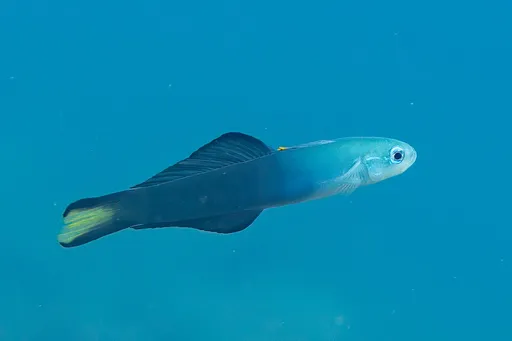
 5.1 in (13 cm)29 gal (110 L)72–79°F (22–26°C)
Blue gudgeon dartfish
Ptereleotris heteroptera
5.1 in (13 cm) · 29 gal (110 L)
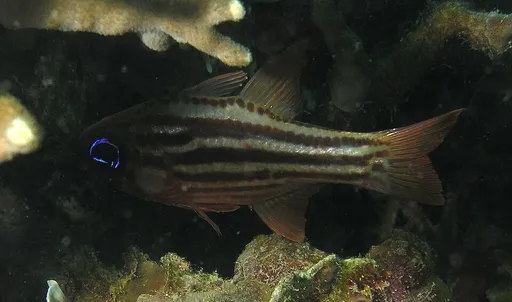
 5.5 in (14 cm)29 gal (110 L)72–79°F (22–26°C)
Scissortail dartfish
Ptereleotris evides
5.5 in (14 cm) · 29 gal (110 L)
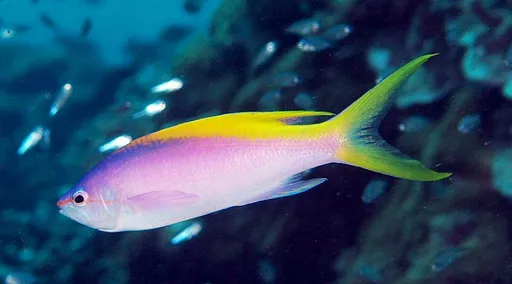
 4.7 in (12 cm)53 gal (200 L)72–79°F (22–26°C)
Blue-eye cardinalfish
Ostorhinchus compressus
4.7 in (12 cm) · 53 gal (200 L)
 4.7 in (12 cm)75 gal (285 L)75–81°F (24–27°C)
Evansi anthias
Pseudanthias evansi
4.7 in (12 cm) · 75 gal (285 L)
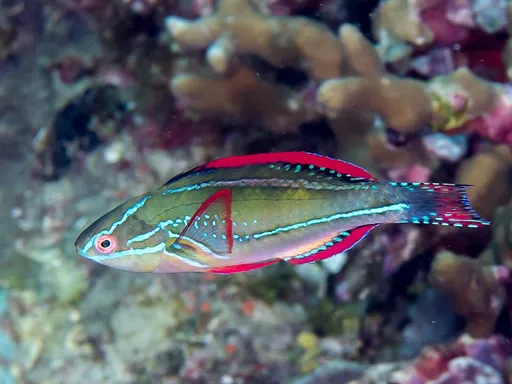 4.7 in (12 cm)90 gal (340 L)72–79°F (22–26°C)
Exquisite fairy wrasse
Cirrhilabrus exquisitus
4.7 in (12 cm) · 90 gal (340 L)