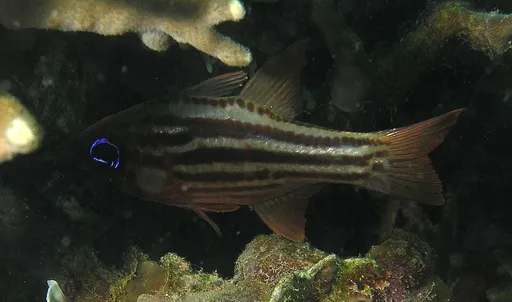
Blue-eye cardinalfish
Ostorhinchus compressus
Also known as Blue Oxide Cardinalfish, Ochre-striped Cardinalfish, Blue-eyed Cardinalfish, Split-banded Cardinalfish, Apogon compressus
SaltwaterFish
Care at a glance
- Temperature
- 72–79°F
- 22–26°C
- pH
- 8.1–8.4
- Adult size
- 4.7 in
- 12 cm
- Minimum tank
- 53 gal
- 200 L
- Temperament
- Peaceful
- Social behavior
- Schooling
- Swim level
- Middle
- Difficulty
- Easy
- Breeding
- Mouthbrooder · Medium
- Rarity
- Rare
- Reef safe
- Reef safe
- Family
- Apogonidae
- Origin
- Indo-West Pacific (Andaman Sea to the Solomon Islands)
Overview
The blue-eye cardinalfish is a peaceful, reef-safe schooling fish for the middle of a saltwater tank. It is easy to keep and a good choice for a calm reef.
Did you know
Young blue-eye cardinalfish are thought to mimic tooth-armed cardinalfish species with similar stripes. The borrowed resemblance is believed to let the harmless young venture into the open more freely.
Caring for the blue-eye cardinalfish
Keep blue-eye cardinalfish in at least 53 gal (200 L), with branching rockwork or coral to hover over and open water in front. They rarely stray far from their chosen thicket. They are slow, methodical swimmers that stay in the middle of the tank.
Hold the water at 72 to 79°F (22 to 26°C) and a pH of 8.1 to 8.4. Feed meaty frozen foods along with small pellets.
Keep them in a group of three or more, where a simple hierarchy forms without serious quarrels. They are peaceful and do best with peaceful tank mates, and only the smallest ornamental shrimp are at any real risk. Males brood the eggs in their mouths, and breeding them takes a little experience.
Good to know
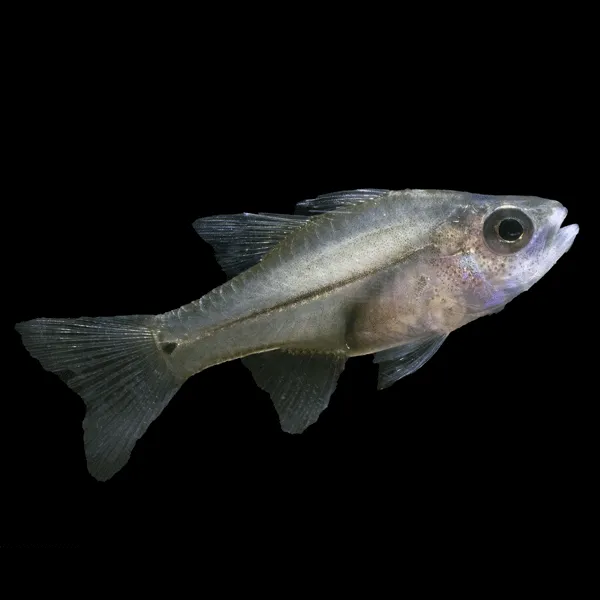
The blue-eye cardinalfish, Ostorhinchus compressus, is a cardinalfish in the family Apogonidae. Its body carries dark ochre stripes, and a ring of iridescent blue around each eye gives it its common name. It is also sold as the ochre-striped, split-banded or blue oxide cardinalfish.
In the wild
Blue-eye cardinalfish live in sheltered lagoons and coastal reefs from the Andaman Sea to the Solomon Islands. By day, small groups hover among the branches of Acropora and Porites corals.
Weekly picks
Tank mates
The blue-eye cardinalfish is a peaceful, schooling species that keeps to the middle. These picks share a community profile with it, are safe together in both directions, and overlap on water type, temperature and pH.
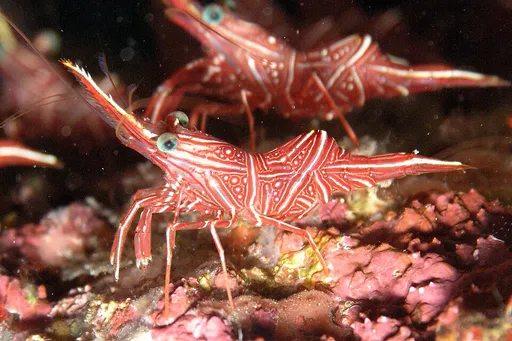
Camel / dancing shrimp
Rhynchocinetes durbanensis
Saltwater2 in (5 cm) · 16 gal (60 L)75–81°F (24–27°C)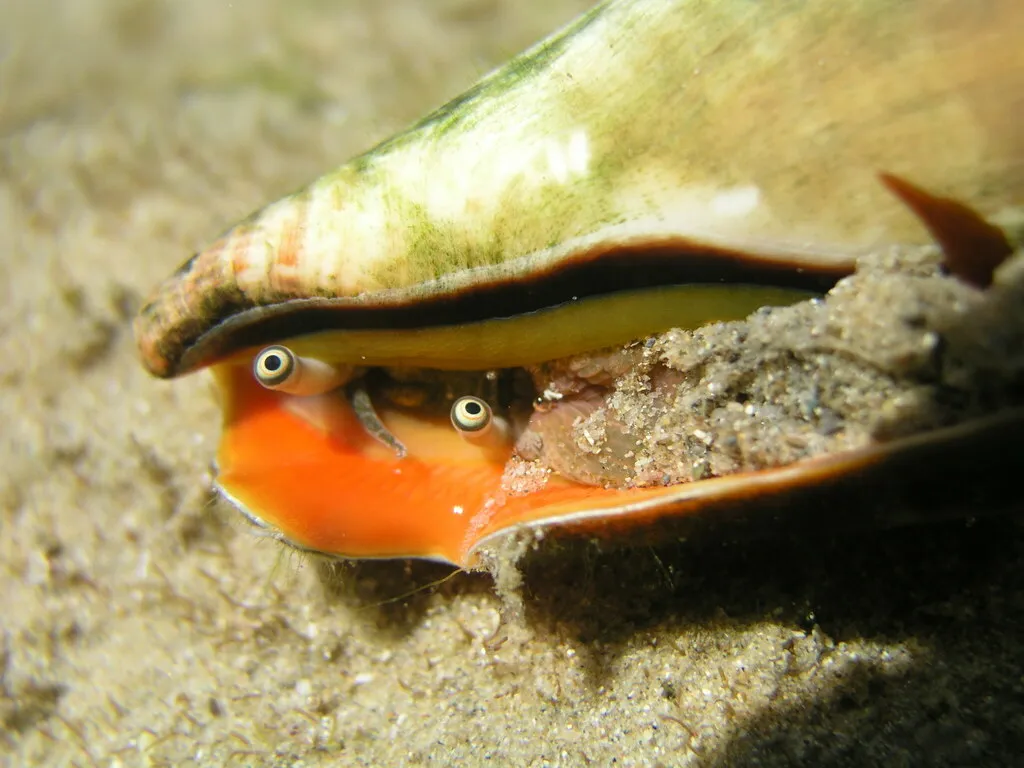
Tiger / strawberry conch
Conomurex luhuanus
Saltwater2.8 in (7 cm) · 20 gal (75 L)75–81°F (24–27°C)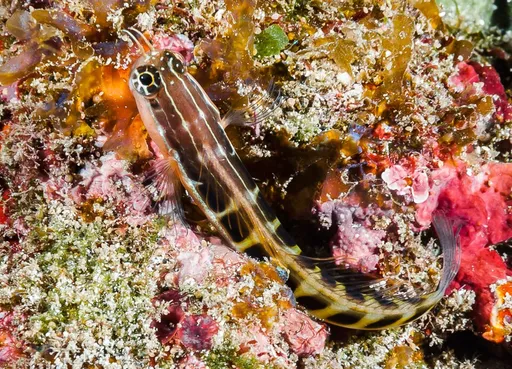
Lined blenny
Ecsenius lineatus
Saltwater3.5 in (9 cm) · 20 gal (75 L)72–79°F (22–26°C)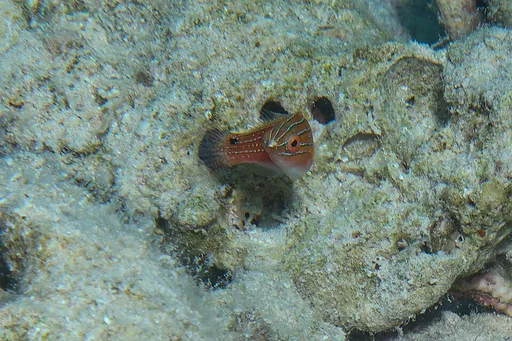
Social fairy wrasse
Cirrhilabrus rubriventralis
Saltwater2.8 in (7 cm) · 53 gal (200 L)73–81°F (23–27°C)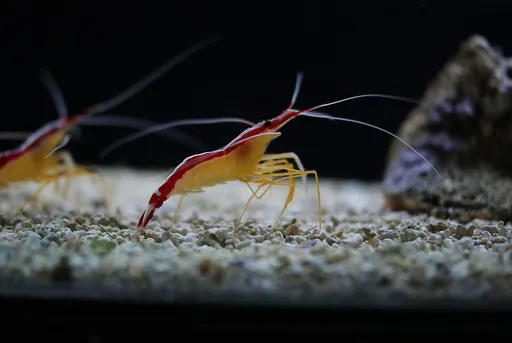
Skunk cleaner shrimp
Lysmata amboinensis
Saltwater2.4 in (6 cm) · 20 gal (75 L)73–81°F (23–27°C)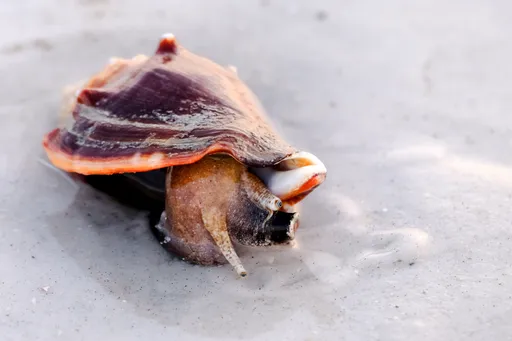
Fighting conch
Strombus alatus
Saltwater3.1 in (8 cm) · 20 gal (75 L)75–81°F (24–27°C)
Common questions
What size tank does a blue-eye cardinalfish need?
A blue-eye cardinalfish needs at least 53 gal (200 L). It spends most of its time in the middle.
What temperature and pH does a blue-eye cardinalfish need?
A blue-eye cardinalfish is comfortable at 72–79°F (22–26°C) with a pH of 8.1–8.4.
What does a blue-eye cardinalfish eat?
A blue-eye cardinalfish eats meaty frozen foods along with small pellets.
How big does a blue-eye cardinalfish get?
An adult blue-eye cardinalfish reaches about 4.7 in (12 cm).
Does a blue-eye cardinalfish need a group?
Yes. A blue-eye cardinalfish is a schooling species and should be kept in a group, not singly.
How does a blue-eye cardinalfish breed?
Blue-eye cardinalfish are mouthbrooders, and the males brood the eggs in their mouths. Breeding them takes a little experience.
Related species
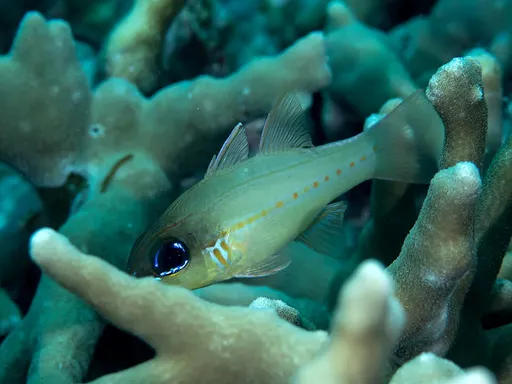 3.9 in (10 cm)29 gal (110 L)72–79°F (22–26°C)
Seale's cardinalfish
Ostorhinchus sealei
3.9 in (10 cm) · 29 gal (110 L)
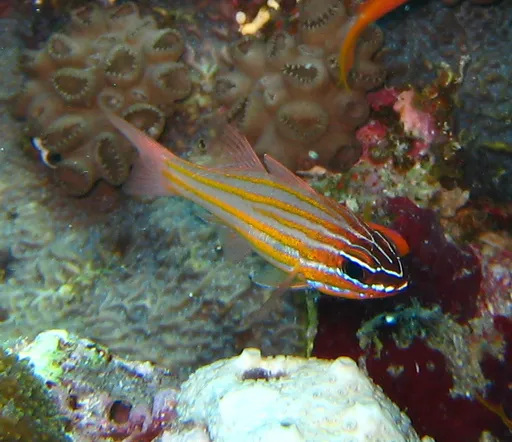 3.1 in (8 cm)30 gal (114 L)72–79°F (22–26°C)
Yellowstriped cardinalfish
Ostorhinchus cyanosoma
3.1 in (8 cm) · 30 gal (114 L)
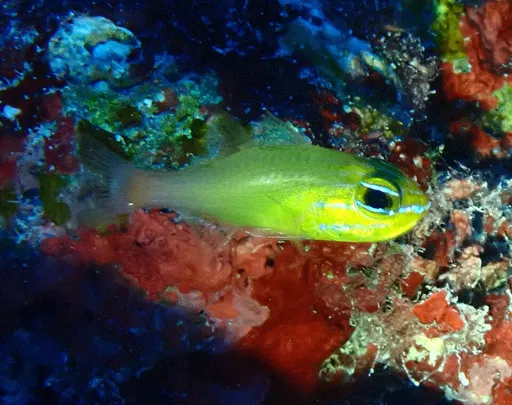 2 in (5 cm)20 gal (75 L)73–79°F (23–26°C)
Yellow cardinalfish
Ostorhinchus luteus
2 in (5 cm) · 20 gal (75 L)
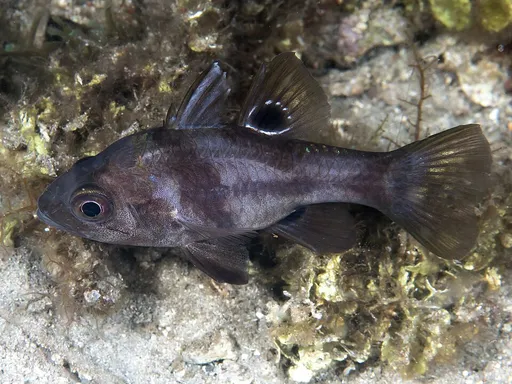 4.3 in (11 cm)29 gal (110 L)72–79°F (22–26°C)
Black cardinalfish
Apogonichthyoides melas
4.3 in (11 cm) · 29 gal (110 L)
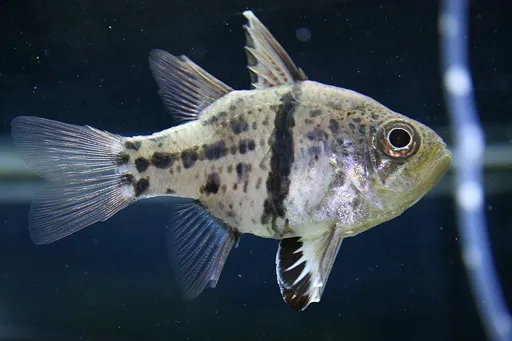 3.9 in (10 cm)30 gal (115 L)75–82°F (24–28°C)
Orbiculate cardinalfish
Sphaeramia orbicularis
3.9 in (10 cm) · 30 gal (115 L)
 3.5 in (9 cm)50 gal (190 L)72–79°F (22–26°C)
Amboina cardinalfish
Fibramia amboinensis
3.5 in (9 cm) · 50 gal (190 L)