Bursa triggerfish
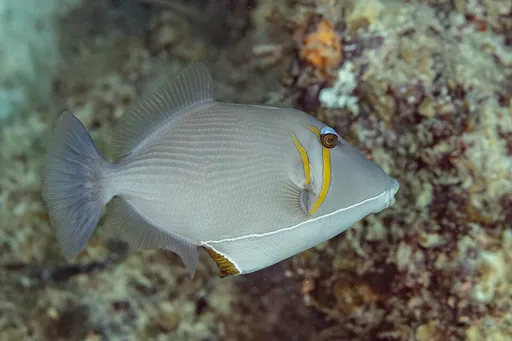
Sufflamen bursa
Also known as Boomerang Triggerfish, Blackbelly Triggerfish, Scythe Triggerfish, Lei Triggerfish
SaltwaterFish
Care at a glance
- Temperature
- 72–79°F
- 22–26°C
- pH
- 8.1–8.4
- Adult size
- 9.8 in
- 25 cm
- Minimum tank
- 125 gal
- 473 L
- Temperament
- Aggressive
- Social behavior
- Solitary
- Own kind
- One per tank
- Tankmates
- With caution
- Swim level
- Middle
- Difficulty
- Medium
- Breeding
- No record
- Rarity
- Common
- Reef safe
- Not reef safe
- Family
- Balistidae
- Origin
- Indo-Pacific, from East Africa to Hawaii and the Marquesas and Pitcairn islands, north to southern Japan
Overview
The Bursa is a smaller trigger than most on this list, but that is no indicator of mild manners: it is genuinely aggressive, especially toward smaller or slower fish, and it does not get along with other triggerfish in anything but a very large system. It is not reef safe and will eat crabs, snails, bivalves, and other invertebrates readily. Feed a varied carnivore diet of squid, krill, clams, and small fish, including hard-shelled foods to keep its teeth worn down. It is not venomous, but it bites, digs enthusiastically, and grunts audibly when it feels threatened, so give it a tank with secure rockwork and robust tankmates rather than anything timid.
In the wild
Lives on reef flats and slopes across the Indo-Pacific, from the surface down to about 120 meters. It forages over rock, rubble, and sand for crabs, mollusks, and other invertebrates, and retreats into a crevice at night or when threatened. In the tank it wants sturdy caves and rockwork, since it is a determined digger and rearranger.
Good to know
Sufflamen bursa is a triggerfish in the family Balistidae, reaching about 25 cm, identified by a face split diagonally into white and yellow halves by a dark line, and a large black patch on the lower body that gives it the alternate name blackbelly triggerfish. Like other triggerfish it can lock its first dorsal spine upright using a second smaller spine as a catch, wedging itself into a crevice so firmly that it is very difficult to remove by force.
Did you know
Its half white, half yellow face split by a dark line looks almost like a mask, and combined with the large dark patch low on its body, this pattern makes it one of the easier triggerfish to identify at a glance even for beginners who cannot yet tell most Balistidae apart.
Common questions
What size tank does a Bursa triggerfish need?
A Bursa triggerfish needs at least 125 gal (473 L). It spends most of its time in the middle.
What temperature and pH does a Bursa triggerfish need?
A Bursa triggerfish is comfortable at 72–79°F (22–26°C) with a pH of 8.1–8.4.
How big does a Bursa triggerfish get?
An adult Bursa triggerfish reaches about 9.8 in (25 cm).
Related species
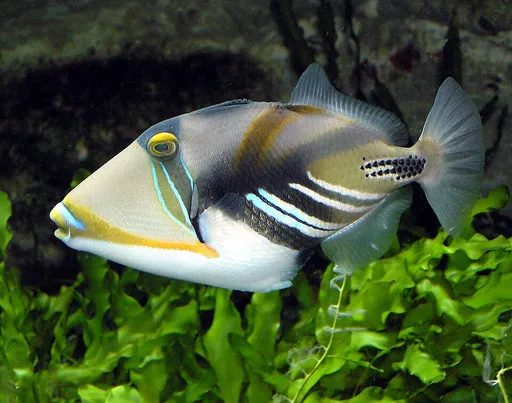 11.8 in (30 cm)180 gal (680 L)72–79°F (22–26°C)
Picasso triggerfish
Rhinecanthus aculeatus
11.8 in (30 cm) · 180 gal (680 L)
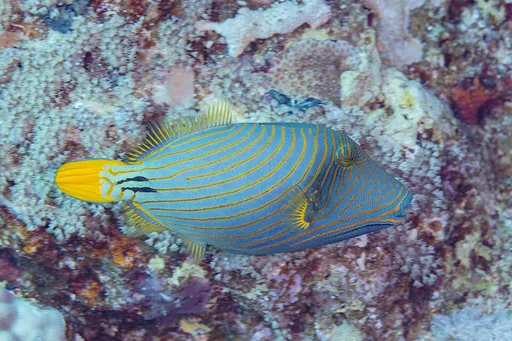 11.8 in (30 cm)180 gal (680 L)75–81°F (24–27°C)
Undulated triggerfish
Balistapus undulatus
11.8 in (30 cm) · 180 gal (680 L)
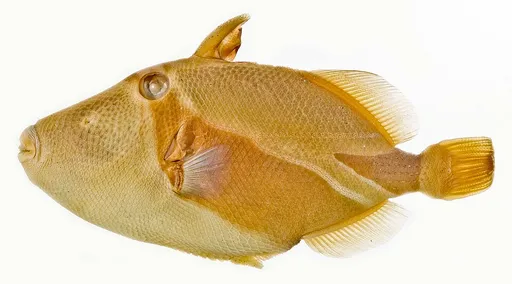 11.8 in (30 cm)106 gal (400 L)75–81°F (24–27°C)
Wedgetail triggerfish
Rhinecanthus rectangulus
11.8 in (30 cm) · 106 gal (400 L)
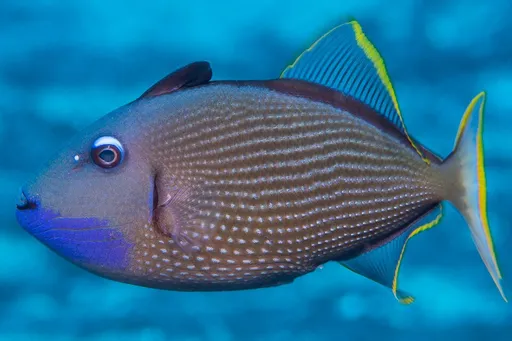 9.1 in (23 cm)125 gal (473 L)72–79°F (22–26°C)
Bluethroat triggerfish
Xanthichthys auromarginatus
9.1 in (23 cm) · 125 gal (473 L)
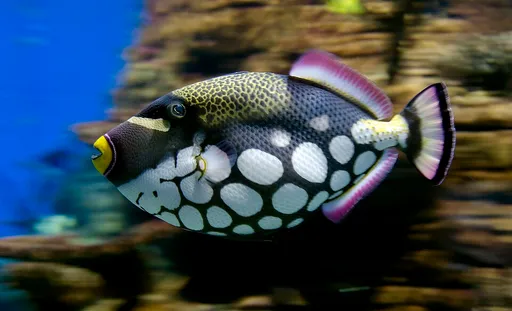 19.7 in (50 cm)300 gal (1,135 L)72–79°F (22–26°C)
Clown triggerfish
Balistoides conspicillum
19.7 in (50 cm) · 300 gal (1,135 L)
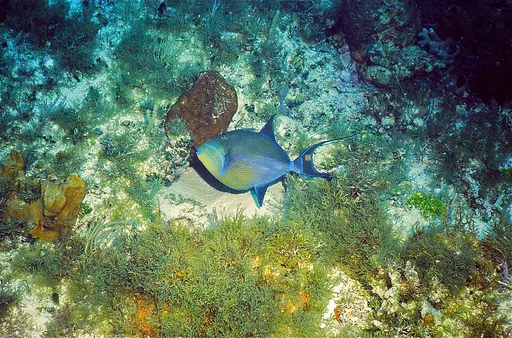 19.7 in (50 cm)238 gal (900 L)72–81°F (22–27°C)
Queen triggerfish
Balistes vetula
19.7 in (50 cm) · 238 gal (900 L)