Picasso triggerfish
Rhinecanthus aculeatus
Also known as Humu Picasso Triggerfish, Lagoon Triggerfish, Blackbar Triggerfish, White-banded Triggerfish
SaltwaterFish
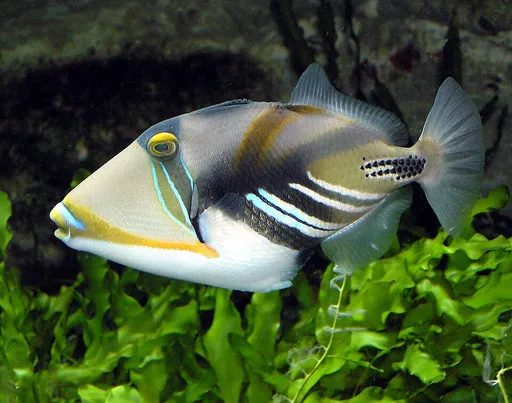
Care at a glance
- Temperature
- 72–79°F
- 22–26°C
- pH
- 8.1–8.4
- Adult size
- 11.8 in
- 30 cm
- Minimum tank
- 180 gal
- 680 L
- Temperament
- Aggressive
- Social behavior
- Solitary
- Own kind
- One per tank
- Tankmates
- With caution
- Swim level
- Middle
- Difficulty
- Medium
- Breeding
- No record
- Rarity
- Very common
- Reef safe
- Not reef safe
- Family
- Balistidae
- Origin
- Indo-Pacific, from the Red Sea and East Africa to Hawaii and the Marquesas and Tuamotu islands, north to southern Japan, with a separate population in the eastern Atlantic from Senegal to South Africa
Overview
The Picasso is one of the more outgoing and food-motivated triggers, quick to recognize its keeper and beg at feeding time, but it is genuinely aggressive: it will harass, injure, or kill smaller and slower tankmates, and it grows bolder and more territorial with age. It is not reef safe and will eat snails, crabs, shrimp, and small bivalves on sight, and it will happily dig up a sand bed or knock over loose rockwork. Feed a varied carnivore diet including something hard-shelled, like clams or crab, several times a week to help wear down its continuously growing teeth. It is not venomous, but it can bite hard enough to break skin, so keep hands out of the tank during aggressive moods and take care during maintenance.
In the wild
Lives in shallow lagoons, tide pools, and reef flats across a huge range spanning the Indo-Pacific and parts of the eastern Atlantic, typically from the surface down to about 50 meters. It patrols sandy patches near reef structure and blows jets of water into the sand to uncover buried prey. In the tank it wants a long aquarium with a sand bed to rearrange, solid rockwork wedged in tight so it cannot be toppled, and open swimming room.
Good to know
Rhinecanthus aculeatus is a triggerfish in the family Balistidae, reaching about 30 cm, named for the bold tan, black, and blue face markings that read like an abstract painting. Like all triggerfish it has a locking first dorsal spine that a second small spine holds erect until manually released, letting it wedge into a crevice and become almost impossible to pull out. In the wild it is an omnivore, eating algae, worms, mollusks, sea urchins, and small fish as it forages over sand and rubble.
Did you know
Despite the trade nickname, this fish is not the true Hawaiian state fish, humuhumunukunukuapuaa: that title belongs to its close relative the reef triggerfish, though the two are so often confused that the humu name has stuck to the Picasso as well.
Common questions
What size tank does a Picasso triggerfish need?
A Picasso triggerfish needs at least 180 gal (680 L). It spends most of its time in the middle.
What temperature and pH does a Picasso triggerfish need?
A Picasso triggerfish is comfortable at 72–79°F (22–26°C) with a pH of 8.1–8.4.
How big does a Picasso triggerfish get?
An adult Picasso triggerfish reaches about 11.8 in (30 cm).
Related species
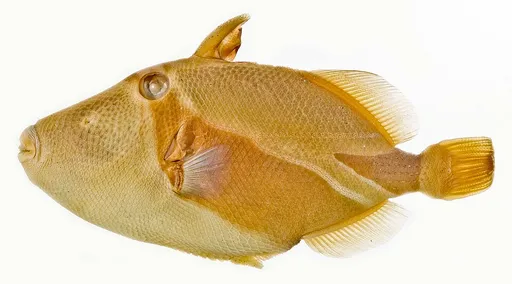 11.8 in (30 cm)106 gal (400 L)75–81°F (24–27°C)
Wedgetail triggerfish
Rhinecanthus rectangulus
11.8 in (30 cm) · 106 gal (400 L)
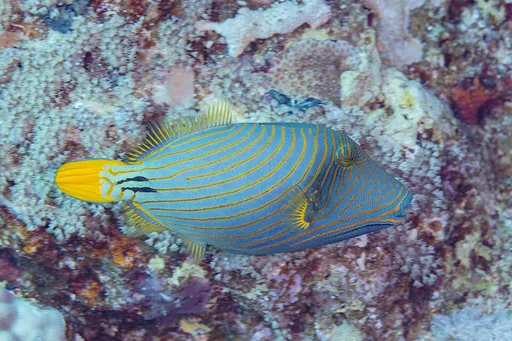 11.8 in (30 cm)180 gal (680 L)75–81°F (24–27°C)
Undulated triggerfish
Balistapus undulatus
11.8 in (30 cm) · 180 gal (680 L)
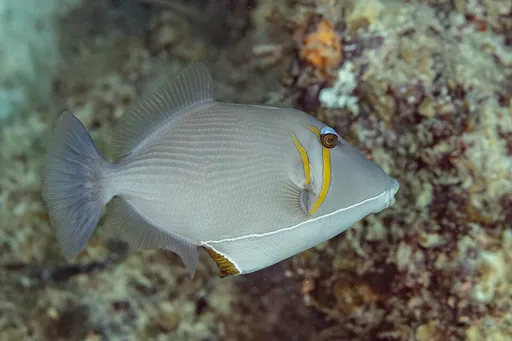 9.8 in (25 cm)125 gal (473 L)72–79°F (22–26°C)
Bursa triggerfish
Sufflamen bursa
9.8 in (25 cm) · 125 gal (473 L)
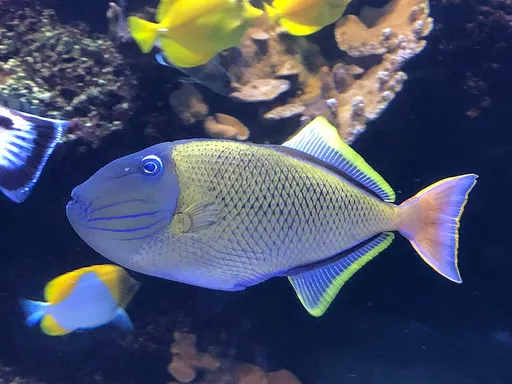 11.8 in (30 cm)106 gal (400 L)70–79°F (21–26°C)
Crosshatch triggerfish
Xanthichthys mento
11.8 in (30 cm) · 106 gal (400 L)
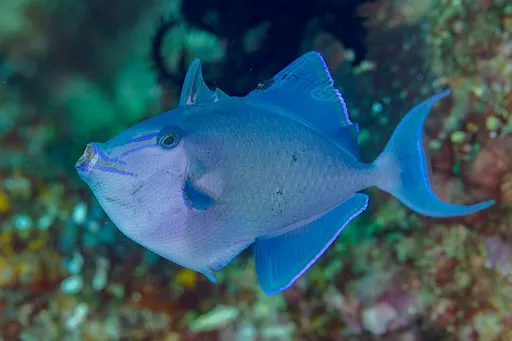 11.8 in (30 cm)180 gal (680 L)72–79°F (22–26°C)
Niger triggerfish
Odonus niger
11.8 in (30 cm) · 180 gal (680 L)
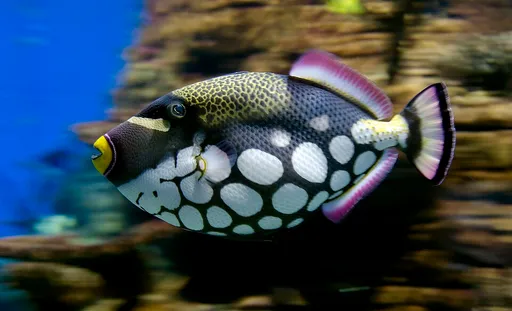 19.7 in (50 cm)300 gal (1,135 L)72–79°F (22–26°C)
Clown triggerfish
Balistoides conspicillum
19.7 in (50 cm) · 300 gal (1,135 L)