Queen angelfish
Holacanthus ciliaris
Also known as Yellow Angelfish
SaltwaterFish
Care at a glance
- Temperature
- 75–81°F
- 24–27°C
- pH
- 8.1–8.4
- Adult size
- 17.7 in
- 45 cm
- Minimum tank
- 251 gal
- 950 L
- Temperament
- Aggressive
- Social behavior
- Solitary
- Own kind
- One per tank
- Tankmates
- With caution
- Swim level
- Middle
- Difficulty
- Difficult
- Breeding
- Hard
- Rarity
- Common
- Reef safe
- Not reef safe
- Family
- Pomacanthidae
- Origin
- Western Atlantic, from Florida and the Gulf of Mexico south to Brazil, including the Caribbean
Overview
Queen angelfish are bold and can turn genuinely aggressive as they settle in, so they go into a tank last, after everything else has claimed its territory. They need a very large, mature system with room to patrol and a varied diet of sponge-based angelfish preparations, marine algae, and mysis or frozen shrimp fed several times a day. They are not reef safe: they routinely nip at soft and stony corals and clam mantles, so keep this one in a fish-only or FOWLR setup instead of a mixed reef.
In the wild
Queen angelfish live on Caribbean and western Atlantic coral reefs from about 1 to 70 meters deep, usually alone or in pairs that hold a patch of reef. Juveniles set up cleaning stations on the rocks and pick parasites off other fish that line up to be serviced, a job they retire from once they mature. In the aquarium they need a very large, mature tank with extensive live rock arranged into caves and ledges, since a young queen angelfish outgrows a modest setup fast.
Good to know
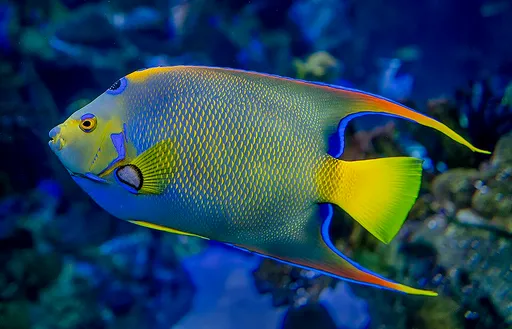
Holacanthus ciliaris can reach about 45 cm and 1.6 kg, one of the larger angelfish in the Atlantic. The juvenile is deep blue with curving pale blue and white bars, completely unlike the adult, which turns blue green with each scale rimmed in yellow and a dark spot ringed in electric blue on the forehead, the 'crown' that gives the species its common name. The shift from juvenile pattern to adult coloring happens gradually as the fish grows past about 10 to 12 cm.
Did you know
As juveniles, queen angelfish run cleaning stations where larger fish stop and hold still to have parasites picked off, a service the young angelfish drops entirely once it grows past its cleaner phase and starts holding its own reef territory.
Common questions
What size tank does a Queen angelfish need?
A Queen angelfish needs at least 251 gal (950 L). It spends most of its time in the middle.
What temperature and pH does a Queen angelfish need?
A Queen angelfish is comfortable at 75–81°F (24–27°C) with a pH of 8.1–8.4.
How big does a Queen angelfish get?
An adult Queen angelfish reaches about 17.7 in (45 cm).
Related species
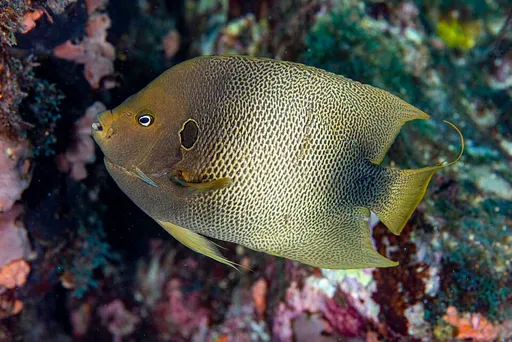 17.7 in (45 cm)251 gal (950 L)73–81°F (23–27°C)
African angelfish
Holacanthus africanus
17.7 in (45 cm) · 251 gal (950 L)
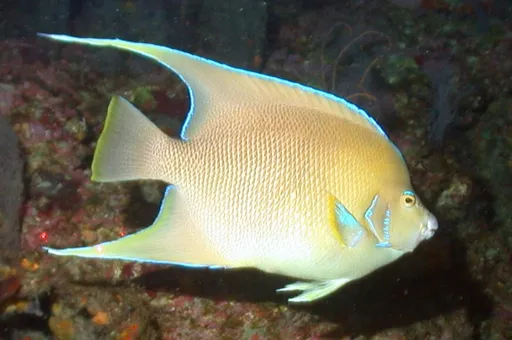 17.7 in (45 cm)251 gal (950 L)72–81°F (22–27°C)
Blue angelfish
Holacanthus bermudensis
17.7 in (45 cm) · 251 gal (950 L)
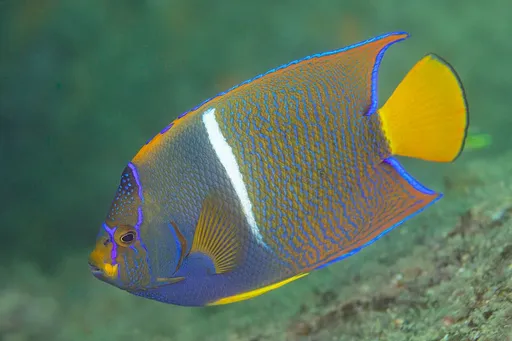 13.8 in (35 cm)151 gal (570 L)72–81°F (22–27°C)
King angelfish
Holacanthus passer
13.8 in (35 cm) · 151 gal (570 L)
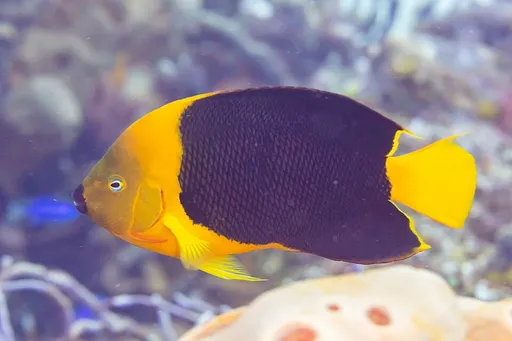 13.8 in (35 cm)90 gal (340 L)73–81°F (23–27°C)
Rock beauty angelfish
Holacanthus tricolor
13.8 in (35 cm) · 90 gal (340 L)
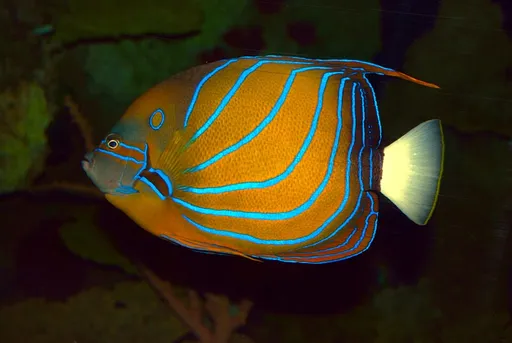 17.7 in (45 cm)219 gal (830 L)73–81°F (23–27°C)
Annularis angelfish
Pomacanthus annularis
17.7 in (45 cm) · 219 gal (830 L)
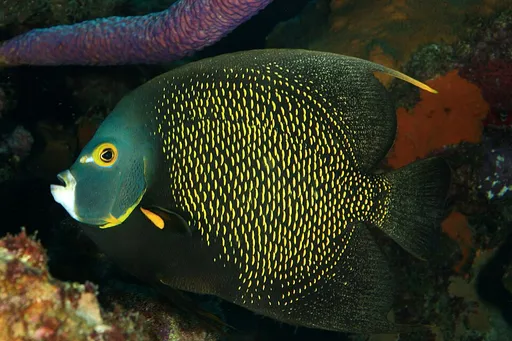 16.1 in (41 cm)201 gal (760 L)72–81°F (22–27°C)
French angelfish
Pomacanthus paru
16.1 in (41 cm) · 201 gal (760 L)