Rock beauty angelfish
Holacanthus tricolor
Also known as Rock Beauty, Rock Beauty Angel, Yellow and Black Angelfish
SaltwaterFish
Care at a glance
- Temperature
- 73–81°F
- 23–27°C
- pH
- 8.1–8.4
- Adult size
- 13.8 in
- 35 cm
- Minimum tank
- 90 gal
- 340 L
- Temperament
- Mostly peaceful
- Social behavior
- Solitary
- Own kind
- One per tank
- Tankmates
- With caution
- Swim level
- Middle
- Difficulty
- Difficult
- Breeding
- No record
- Rarity
- Common
- Reef safe
- Reef safe with caution
- Family
- Pomacanthidae
- Origin
- Western Atlantic from Florida and Bermuda through the Caribbean to Brazil, on rocky and coral reefs rich in sponges.
Overview
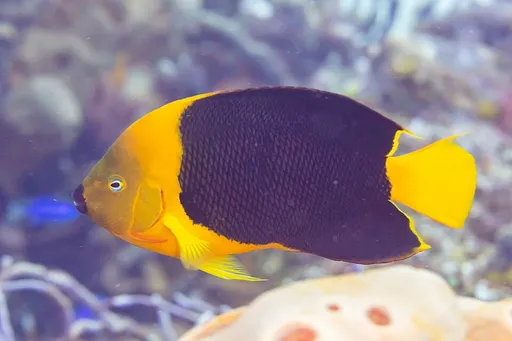
This is a difficult angel that needs a mature 340 litre or larger tank with abundant live rock and, ideally, sponge-based angelfish foods at 23 to 27 C. Many specimens refuse prepared food and slowly starve, so it is best left to experienced keepers who can provide sponge and vary the diet. It nips soft and stony corals and clam mantles, so treat it as reef safe only with caution. Keep one per tank in a calm, low-stress setting.
In the wild
The rock beauty is the smallest Atlantic Holacanthus, with a black body framed in bright yellow. It sticks close to reef ledges and caves and spends much of its day picking at sponges. It is more timid and easily stressed than other large angels. Wild adults rely heavily on sponge in their diet.
Good to know
Holacanthus tricolor reaches about 35 cm and feeds mainly on sponges in the wild. Its heavy sponge dependence makes it one of the harder marine angels to sustain in captivity. Juveniles wear a blue-ringed black spot that fades with age.
Did you know
Getting a rock beauty to accept prepared food is the whole challenge, since a wild diet of living sponge is nearly impossible to copy at home.
Common questions
What size tank does a Rock beauty angelfish need?
A Rock beauty angelfish needs at least 90 gal (340 L). It spends most of its time in the middle.
What temperature and pH does a Rock beauty angelfish need?
A Rock beauty angelfish is comfortable at 73–81°F (23–27°C) with a pH of 8.1–8.4.
How big does a Rock beauty angelfish get?
An adult Rock beauty angelfish reaches about 13.8 in (35 cm).
Related species
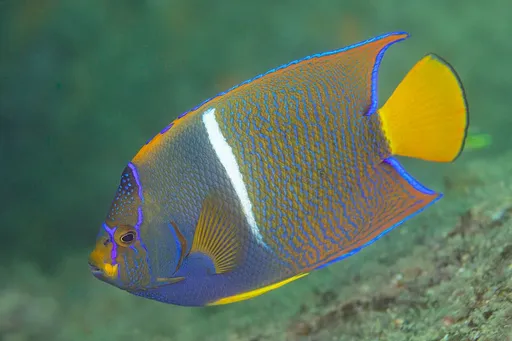 13.8 in (35 cm)151 gal (570 L)72–81°F (22–27°C)
King angelfish
Holacanthus passer
13.8 in (35 cm) · 151 gal (570 L)
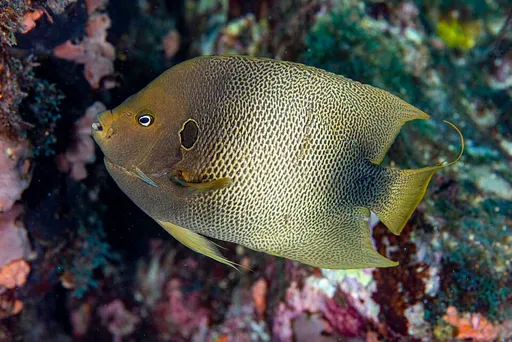 17.7 in (45 cm)251 gal (950 L)73–81°F (23–27°C)
African angelfish
Holacanthus africanus
17.7 in (45 cm) · 251 gal (950 L)
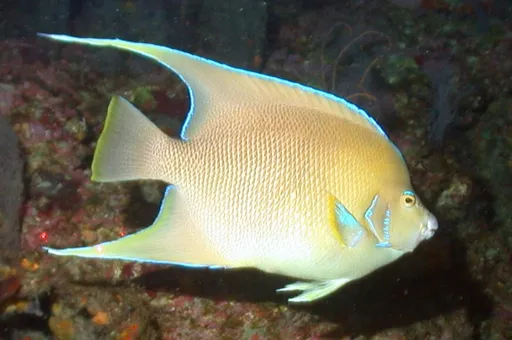 17.7 in (45 cm)251 gal (950 L)72–81°F (22–27°C)
Blue angelfish
Holacanthus bermudensis
17.7 in (45 cm) · 251 gal (950 L)
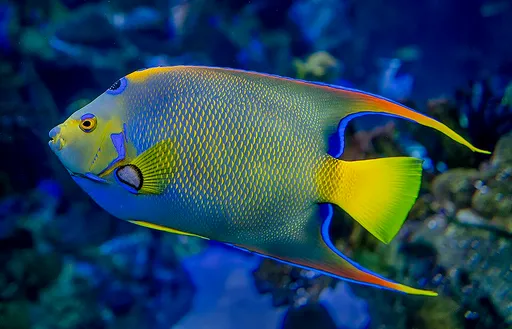 17.7 in (45 cm)251 gal (950 L)75–81°F (24–27°C)
Queen angelfish
Holacanthus ciliaris
17.7 in (45 cm) · 251 gal (950 L)
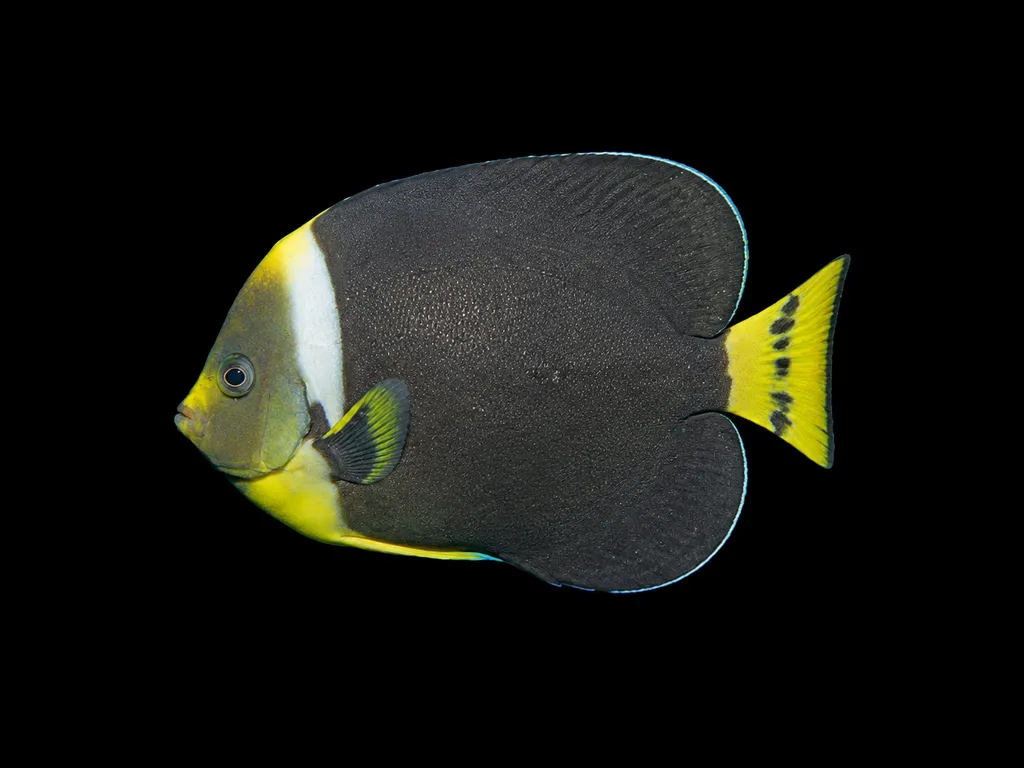 13.8 in (35 cm)180 gal (680 L)72–79°F (22–26°C)
Personifer angelfish
Chaetodontoplus personifer
13.8 in (35 cm) · 180 gal (680 L)
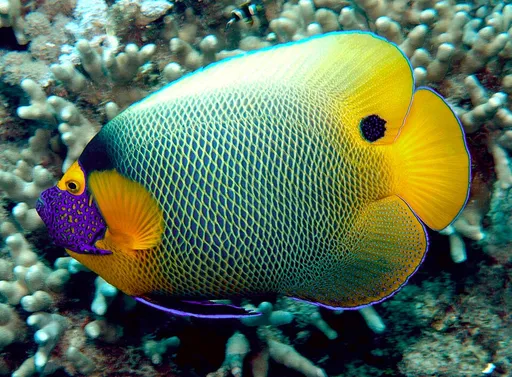 15 in (38 cm)219 gal (830 L)73–81°F (23–27°C)
Blueface angelfish
Pomacanthus xanthometopon
15 in (38 cm) · 219 gal (830 L)